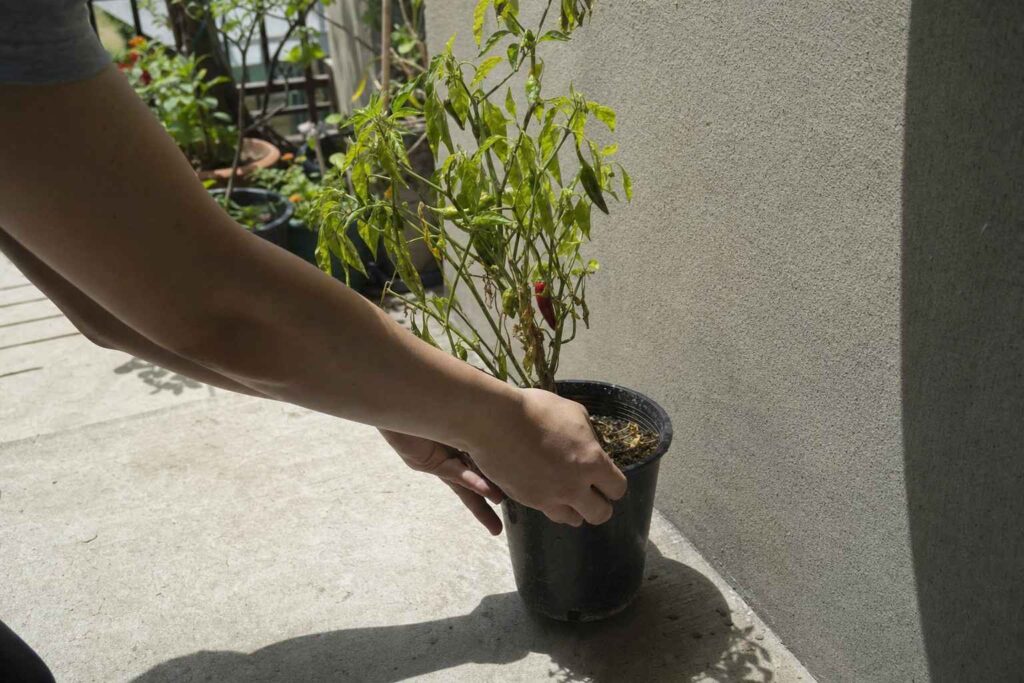
A black plastic pot left in full sun can push root zone temperatures to 104 to 120°F.
That is hot enough to injure roots long before the leaves show any damage.
That range has been reported in container-grown plants standing in the sun all day, per the greenhouse program at UConn Extension. That is the University of Connecticut’s free public advice service. Garden soil in the ground almost never gets close.
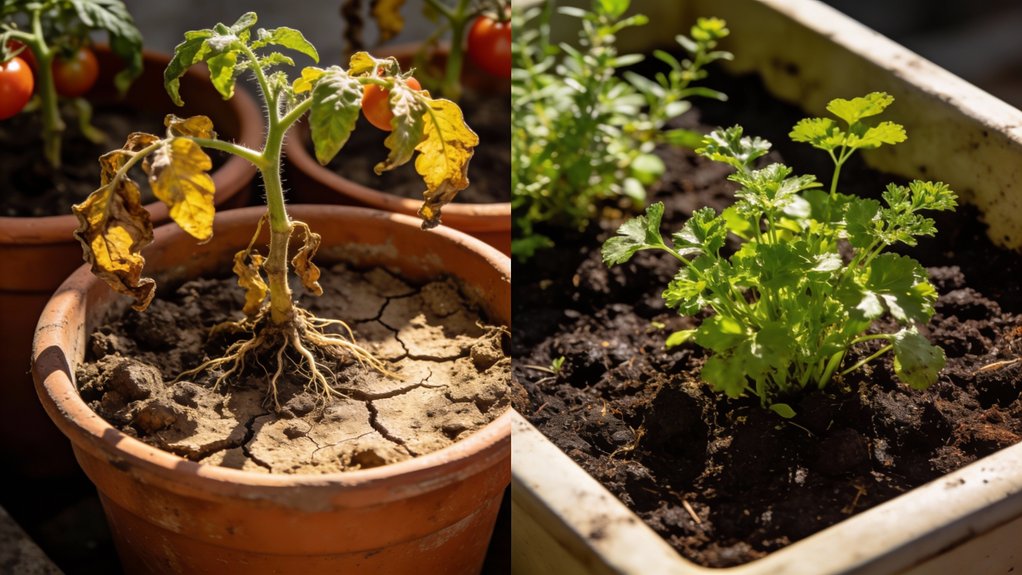
That gap explains a familiar July problem. A plant wilting hard in its pot at two in the afternoon is often heat stressed, not thirsty, and watering harder does not fix it.
Why a pot overheats when the ground never does
Plant roots tolerate temperature swings far worse than leaves and stems do, according to UConn Extension.
In an open garden bed, a large volume of surrounding soil buffers the roots from the worst of the day’s heat. A container holds a fraction of that soil.
Heat soaking into a dark plastic wall in full sun adds even more. There is nowhere in that small volume for the warmth to spread.
The pot itself becomes part of the heat problem, not just a place for the plant to sit.
Once the root zone crosses into that 104 to 120°F range, plants show reduced vigor and nutritional trouble. The chance of root rot climbs too, per the same UConn report.
How to tell it is heat, not thirst
Most plants grow best between 59 and 86°F, reports Oregon State University Extension. Once daytime temperatures sit above 90°F for long stretches, growth slows and stress starts to show.
A short list helps sort out what you are actually seeing:
- Wilts hard at midday, perks back up by evening. That is heat stress recovering on its own, not a plant asking for more water.
- Dry, crisp edges on otherwise healthy leaves. Oregon State Extension notes some plants sacrifice their outer margins on purpose, a survival move rather than a sign of neglect.
- Soil still damp an inch down, but the plant is still wilted. The problem is the pot’s temperature, not its moisture.
A plant wilting hard in its pot at two in the afternoon is often heat stressed, not thirsty, and watering harder does not fix it.
Water deep, and water before the heat, not during it
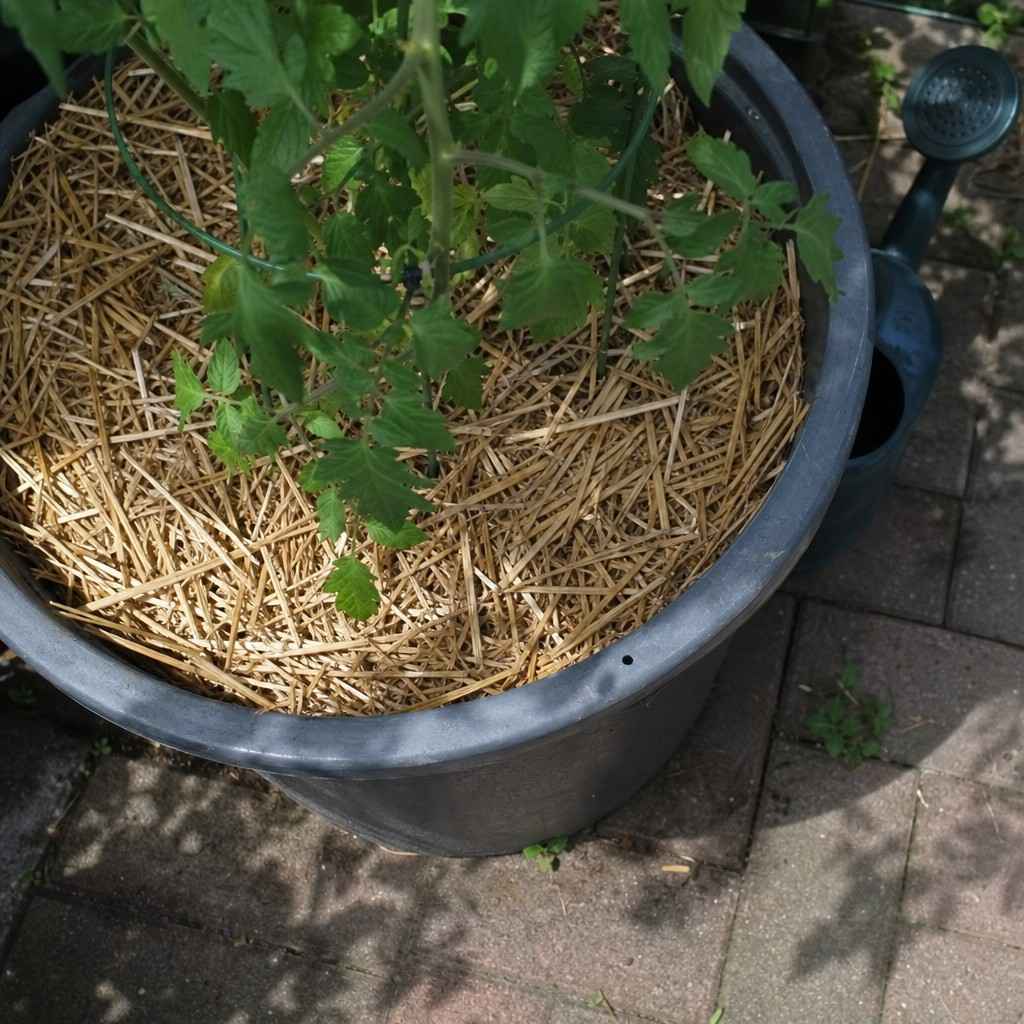
Water container plants deeply in the early morning, the day before a forecast heat wave arrives.
That gives roots a reserve to draw on before the worst hours hit, advise University of California garden advisors.
How often that watering needs to happen changes once real heat sets in. The guide to how often you should water container plants covers the ordinary-weather rhythm this builds on.
Check the hose before you use it, too. A hose left coiled in the sun holds seriously hot water, and that heat goes straight to the roots on contact.
Let it run until it turns cool.
Shade, pot color, mulch, and size all buy you a buffer
Four adjustments matter most once real heat sets in.
- Shade. When moving a pot is not an option, 30 to 50 percent shade cloth helps. Hold it up so it never touches the leaves, per University of California garden advisors. You can compare shade cloth for balconies on Amazon to see the mesh weights sold for exactly this.
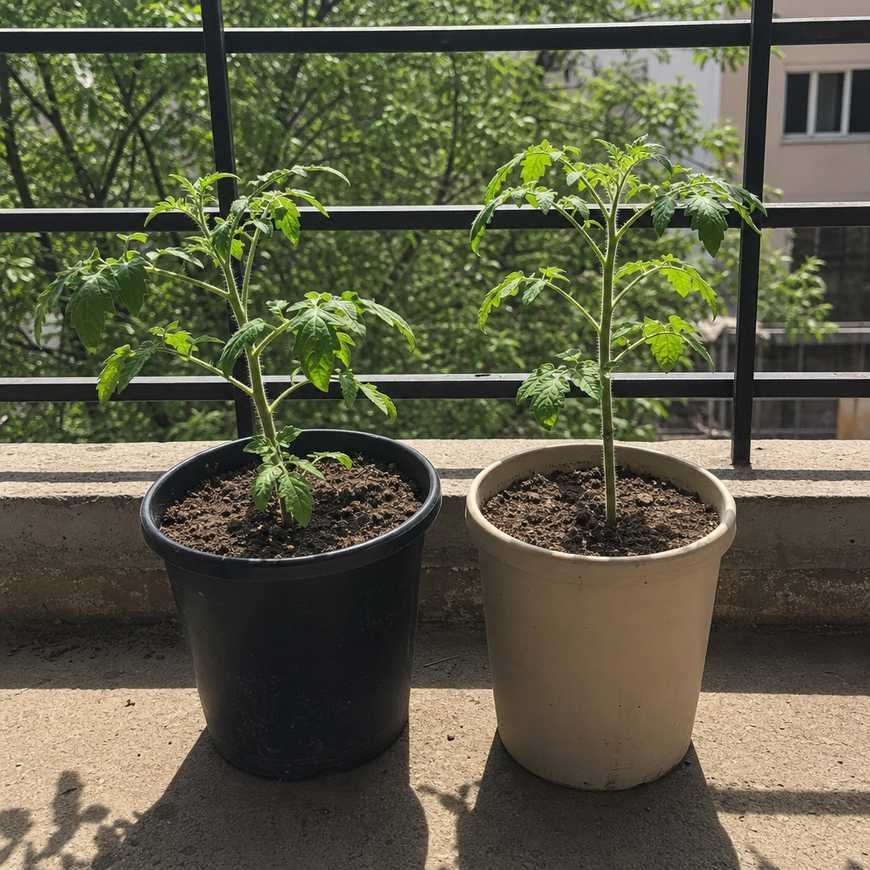
- Pot color. Soil inside a white or green container can run 9 to 18°F cooler than the same pot in black, reports UConn Extension. Fiber pots also absorb less radiant heat than plastic ones.
- Mulch. A layer over the soil surface slows evaporation. It also evens out the swing between a hot afternoon and a cool night, note both Oregon State and University of California Extension advisors.
- Size. Go bigger than you think. More soil around the roots means a slower swing between the hottest hour of the day and the coolest.
Heads up: some links on this page are affiliate links. Buying through them supports the site with a small commission and does not raise your price.
Soil inside a white or green container can run 9 to 18°F cooler than the same pot in black.
Setting containers on bare soil instead of a concrete patio keeps the root zone cooler too.
If you have not settled on pot dimensions yet, the guide to picking the right container size has the sizes worth starting with.
A big enough pot also leaves room for that mulch layer without crowding the plant.
A wilted pot is not a verdict on you
Heat stress belongs on the short list of things that go wrong in containers, alongside the causes covered in a guide to common container mistakes.
Combine shade in the worst hours, a mulch layer, and a big enough pot, and a heat wave stops being a threat. None of that is complicated once you know the numbers.
Containers dry out far faster than the ground; in summer, check the soil every day. That single habit, paired with shade and the right pot, gets a container through its hottest stretch.