You have probably killed a container plant. So has everyone who started out. The difference between people who quit and people who keep going is not talent. It is knowing which mistake to look for.
This page is for working out what already went wrong. If nothing has died yet and you want the setup checklist instead, start with the nine things to get right before you plant.
Find the Symptom, Then the Fix
Match what you see to a row. Most fixes take one afternoon.
| Symptom | Likely cause | Fix |
|---|---|---|
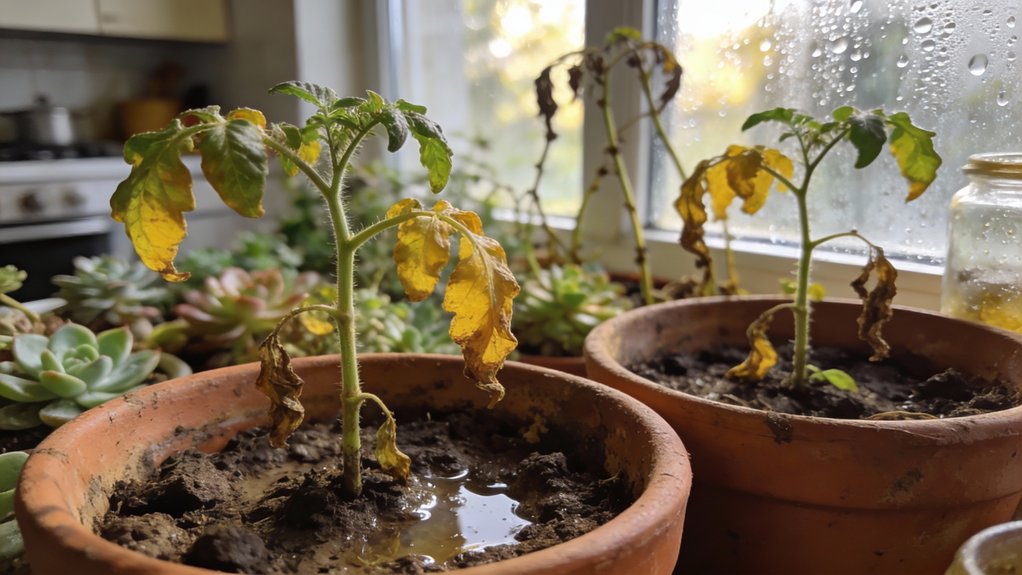
| Yellow lower leaves | Soggy soil or no plant food | Let the top inch dry, then feed |
| Wilting, soil wet | Roots short of air | Add holes, pause the watering |
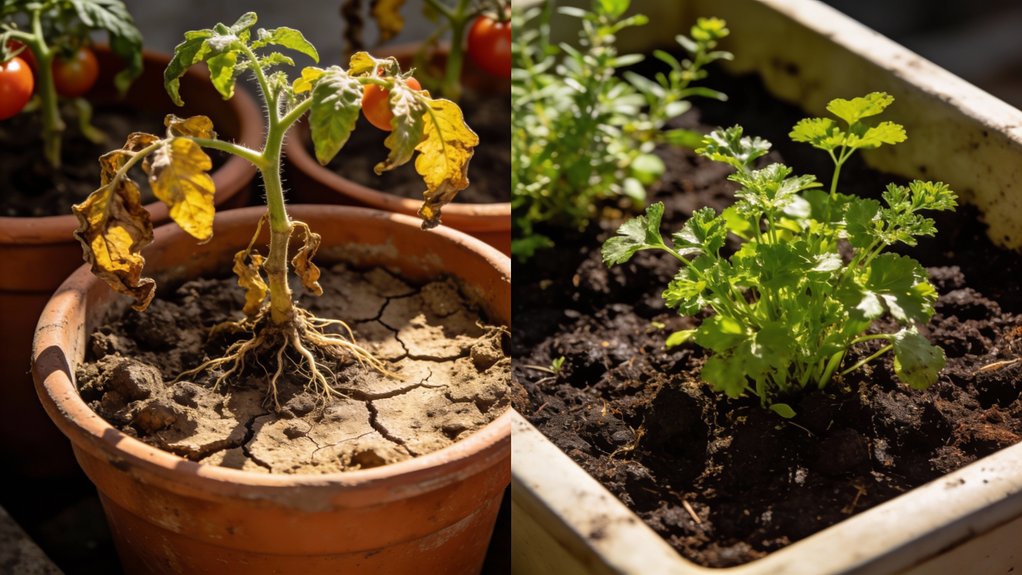
| Wilting, soil dry | Pot dried out fully | Soak the pot in a tub |
| Tomato flowers, no fruit | Nights under 55°F, days over 95°F | Water evenly and wait |
| Black patch on tomato base | Uneven watering | Water on a steady rhythm |
| White crust on soil | Fertilizer or mineral salts | Flush with clear water |
| Scorched leaf edges | Hot sun on a small pot | Shade the afternoon sun |
| Pale leaves, tiny fruit | Pot too small | Go up a size |
The fixes in a little more detail:
- Yellow leaves: Iowa State University Extension, the university’s public gardening advice service, says water at 1 to 2 inches dry and feed every 1 to 3 weeks in summer.
- Dry wilting: stand the pot in a tub of water for 20 to 30 minutes, per the same Iowa State page.
- No fruit on a tomato: the University of Maryland Extension, a state university’s gardening office, says fruiting weakens below 55°F or above 95°F.
- Pollen: Colorado State University Extension, another state university’s gardening advice office, adds that tomatoes need nights above 55°F.
- Black patch: Colorado State calls blossom end rot a sign of uneven watering or a mix that stores too little water.
- White crust: Maryland Extension says to flush the pot several times, using at least the pot’s volume each time.
In a small pot with a heavy crust, fresh mix works better. Check pots every day in summer.
Pot Too Small
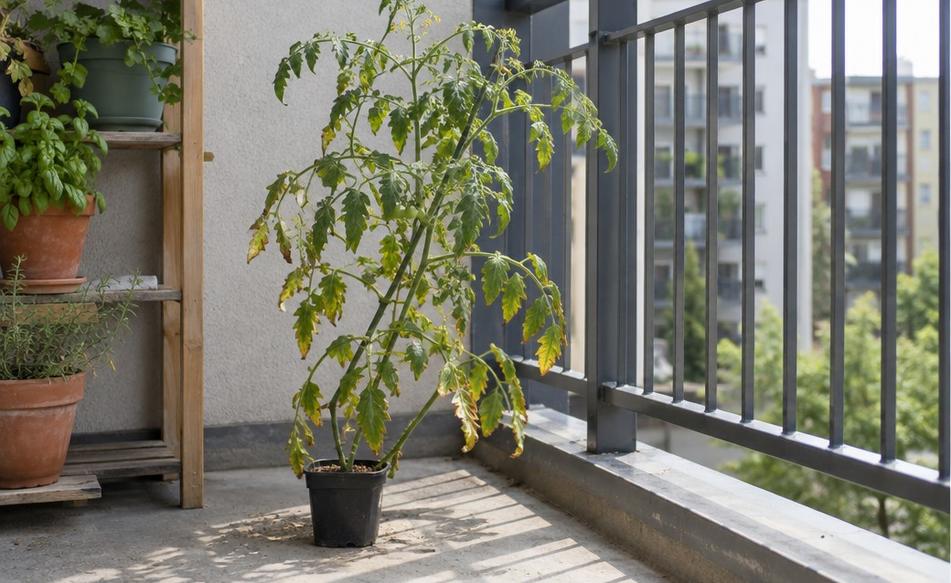
A plant that wilts every afternoon or has roots circling the surface is telling you the pot is cramped. The fixes for sizing and soil are in the setup checklist above, and the pot size guide lists each crop.
Wrong Soil
A bargain bag or yard soil packs down, stays soggy and starves roots. Why the difference between garden soil and potting mix matters is covered on its own page, and the checklist says what to buy.
No Drainage Holes
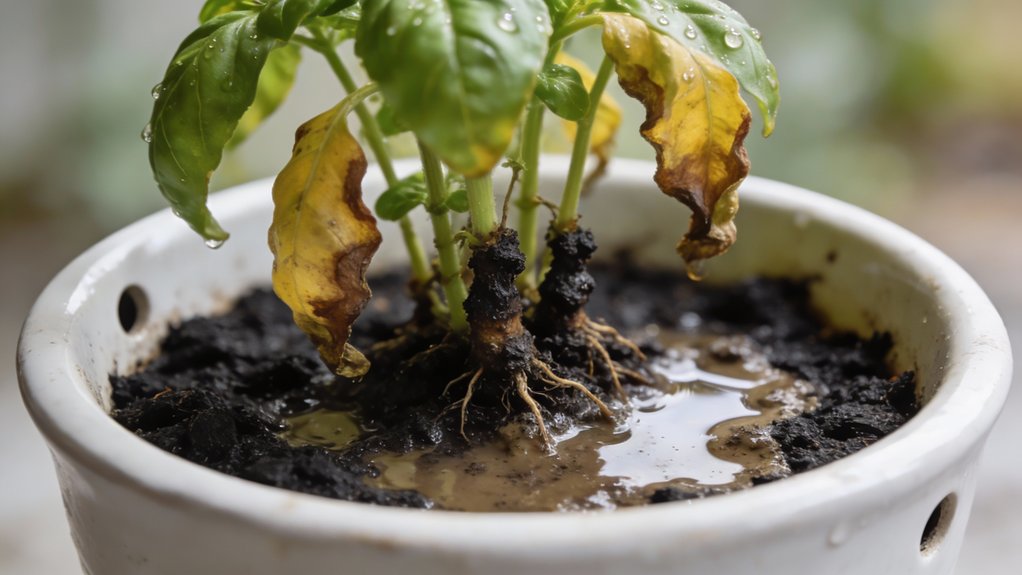
Yellow leaves, a sour smell and soil that stays wet for days point to roots sitting in water. Drill holes or switch pots, then follow the root rot guide if the roots are already dark and soft.
Scorching in Afternoon Sun
Why do container plants scorch so easily when the same plant in the ground copes with identical conditions?
A pot holds a few quarts of mix, so it cannot ride out a hot afternoon the way a garden bed can.
Illinois Extension, the University of Illinois’s public gardening advice service, counts six or more hours of direct sun as full sun. Four to six hours is partial shade.
If a plant scorches, move the pot or add afternoon shade, and water it before the soil dries out completely. The summer heat guide covers hot spells in more detail.
Heavy Feeders in Small Pots
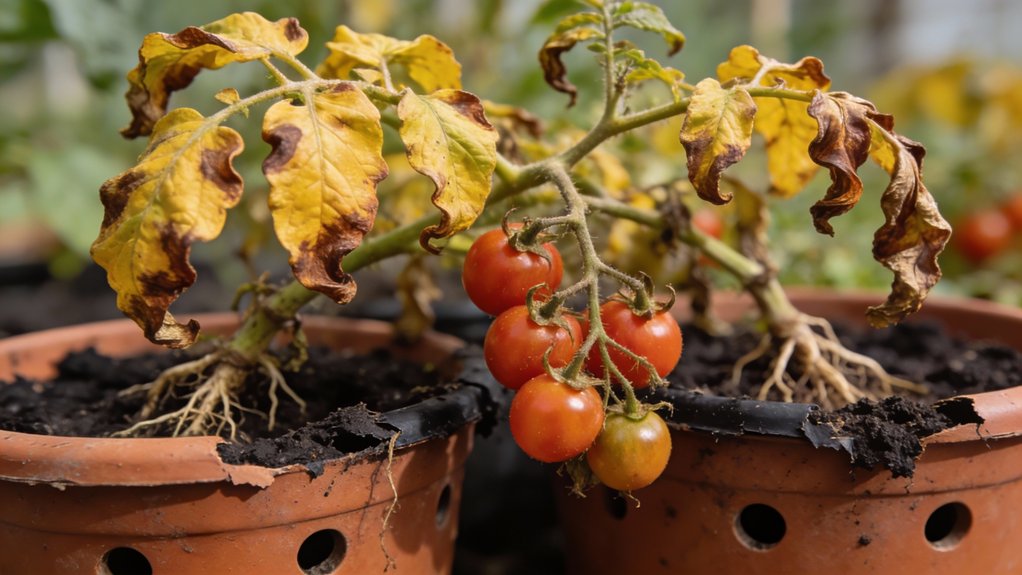
Tomatoes and squash run short of water and nutrients fastest. Colorado State University Extension gives a tomato 12 inches of depth and two to five gallons per plant, and a summer squash five gallons.
Signs of a pot that is too small: fast drying, pale leaves, and fruit that drops or stays tiny. When in doubt, go up a size for tomatoes and squash.
Watering by Memory
Inconsistent watering is one of the biggest reasons plants die before the season ends.
Push a finger into the mix every day in summer, and water when it is dry 1 to 2 inches down. Keep going until water drains from the bottom holes.
Dark Pots Cook Roots
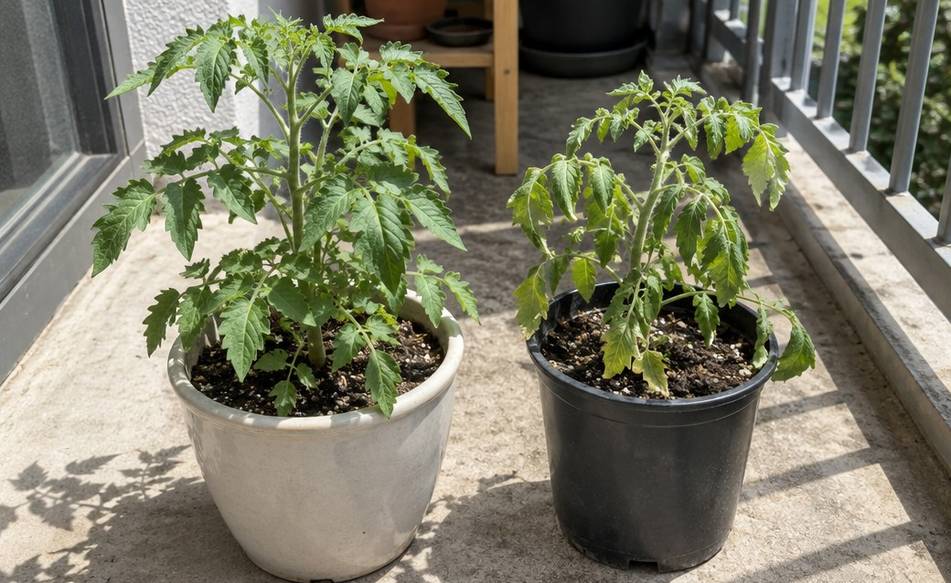
Your container’s color and material change how hot the roots get.
Dark pots absorb heat in direct sun, and metal pots heat up fast. Hot roots lose water quickly and stop working properly.
Light-colored ceramic and plastic reflect more sunlight, so the roots stay cooler. Terra cotta is porous and dries faster than glazed pots, which means more frequent watering.
On a sunny balcony, a light-colored pot is the safer choice for roots.
Overcrowded Pots
How often do you check a plant’s mature size before dropping it into a container? Most people do not, and the plant pays for it.
Overcrowding means too many plants, or a plant too big for its pot. The usual results:
- A tomato in a pot under the recommended size runs short of water and nutrients.
- A squash plant spreads well past the pot and shades its neighbors.
- Several species in one pot compete for water and nutrients, and all of them suffer.
Colorado State University Extension notes that crowding cuts yields and raises disease risk.
Read the plant tag for mature size, and give each plant its own pot or its own share of a large one.
Group Pots Close, but Not Cramped
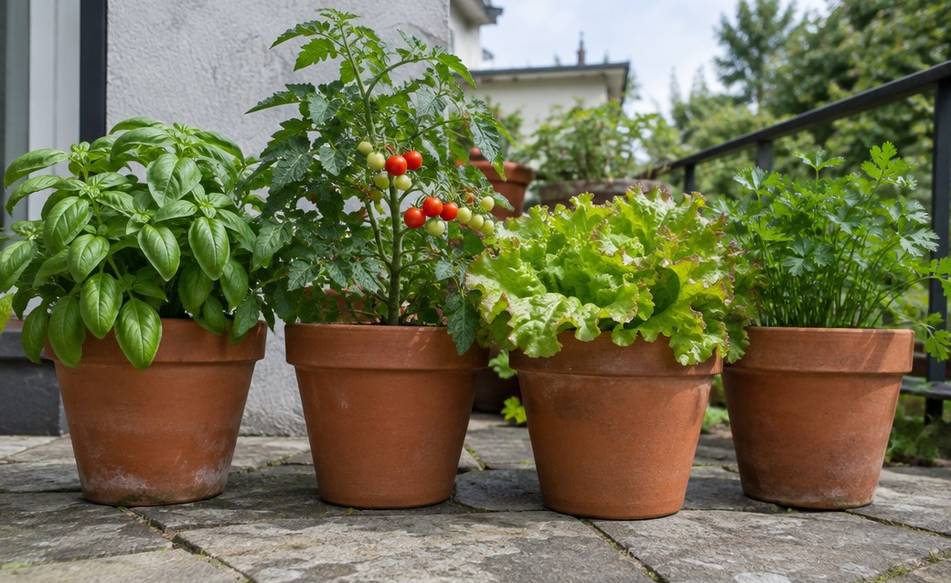
Pots set close together shade each other’s sides and slow the drying of the soil. That helps most when you are away for a few days.
Grouping has a downside. Leaves that touch stay damp, air barely moves, and disease and pests pass easily from one plant to the next.
Leave a few inches between pots so air can flow, and look over the whole group often. A pest caught on one plant is easy to deal with. A pest that has spread to every pot is not.
Group pots for shade, but keep gaps between them for airflow. Move any plant that shows pests away from the others.
For what to expect from a first container garden overall, see the container gardening statistics and beginner expectations guide.