If you have a few pots, a sunny spot, and a bag of soil, you can grow food. No yard required.
Container gardening is just growing plants in pots instead of the ground. That small change is what makes it work for renters, balconies, patios, and windowsills, the exact places a normal garden cannot go.
A sunny balcony or a bright windowsill is enough to start. This guide covers the whole basics: what to buy, what to grow, and how not to kill it.
Why grow in containers
Pots give you control that ground gardens cannot.
You skip bad native soil, because you fill the pot with the right mix yourself. There is no digging and almost no weeding. You can move a pot to chase the sun or escape a frost.
Pests reach a raised pot less easily than a ground bed.
The trade-off is that a pot is a small, exposed world. There is less soil to hold water and nutrients, so the plant depends on you more than a ground plant does.
A container puts you fully in charge of the soil, the water, and the spot, which is both the challenge and the advantage.
That dependence is not a problem once you know the four things every container needs.
The four things every container needs
Get these right and most of container gardening takes care of itself.
- 1. A big enough pot. Container size is the thing beginners get wrong most, so go bigger than you think, 12 inches minimum. Small pots dry out by noon and choke roots. If you are unsure, the guide to choosing the right container size matches pots to plants.
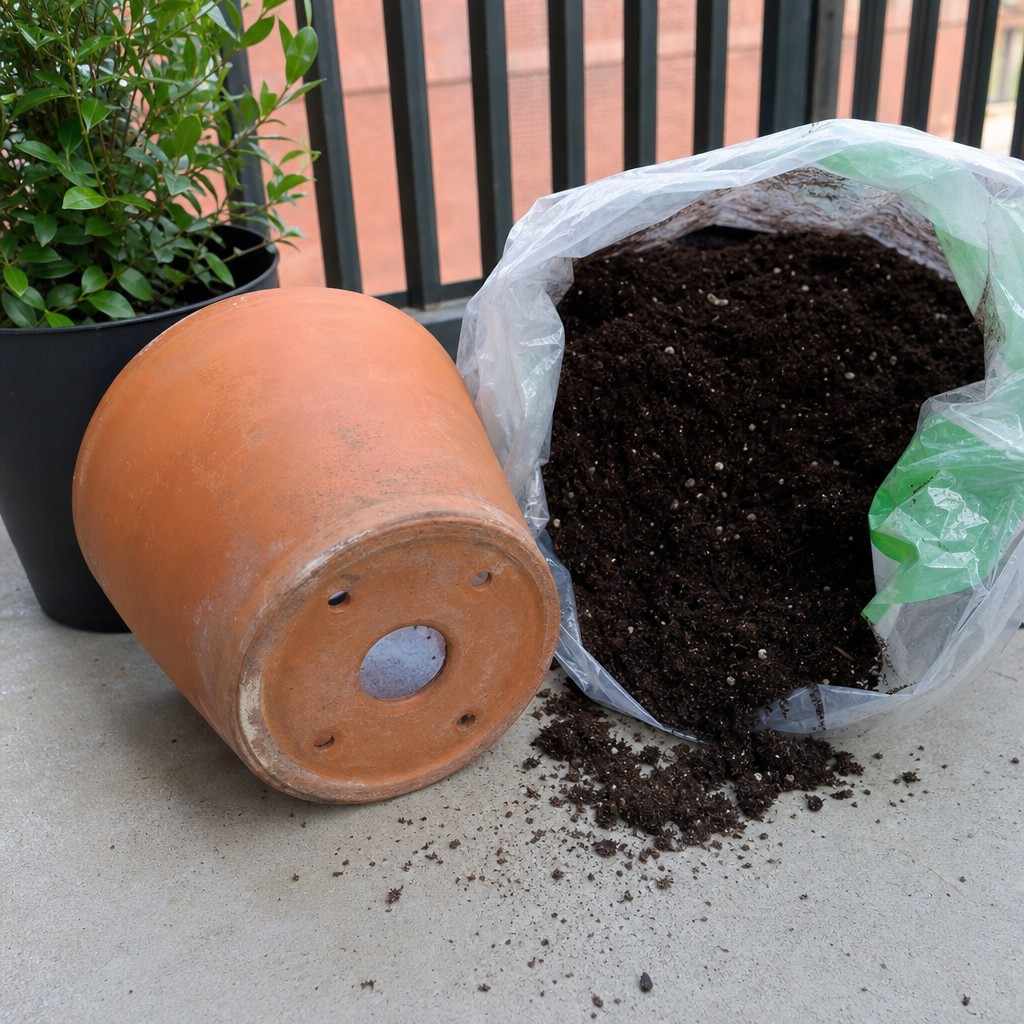
- 2. Drainage holes. Drainage holes are non-negotiable, because a pot that cannot drain drowns the roots. If a pretty pot has no holes, drill some or use it as a cover for a plain nursery pot.
- 3. The right soil. Fill pots with potting mix, not garden soil. Garden soil packs down in a pot and suffocates roots. It is the single most common beginner mistake, and there is a real difference between garden soil and potting mix worth knowing before you buy.
- 4. Enough light. Most vegetables want six or more hours of direct sun; leafy greens and herbs get by on less. Before you plant, it pays to know how much sun your space actually gets.
If you would rather not assemble these piece by piece, you can compare starter container garden kits on Amazon to see what a basic setup includes.
Heads up: some links on this page are affiliate links. Buying through them supports the site with a small commission and does not raise your price.
What to grow your first season
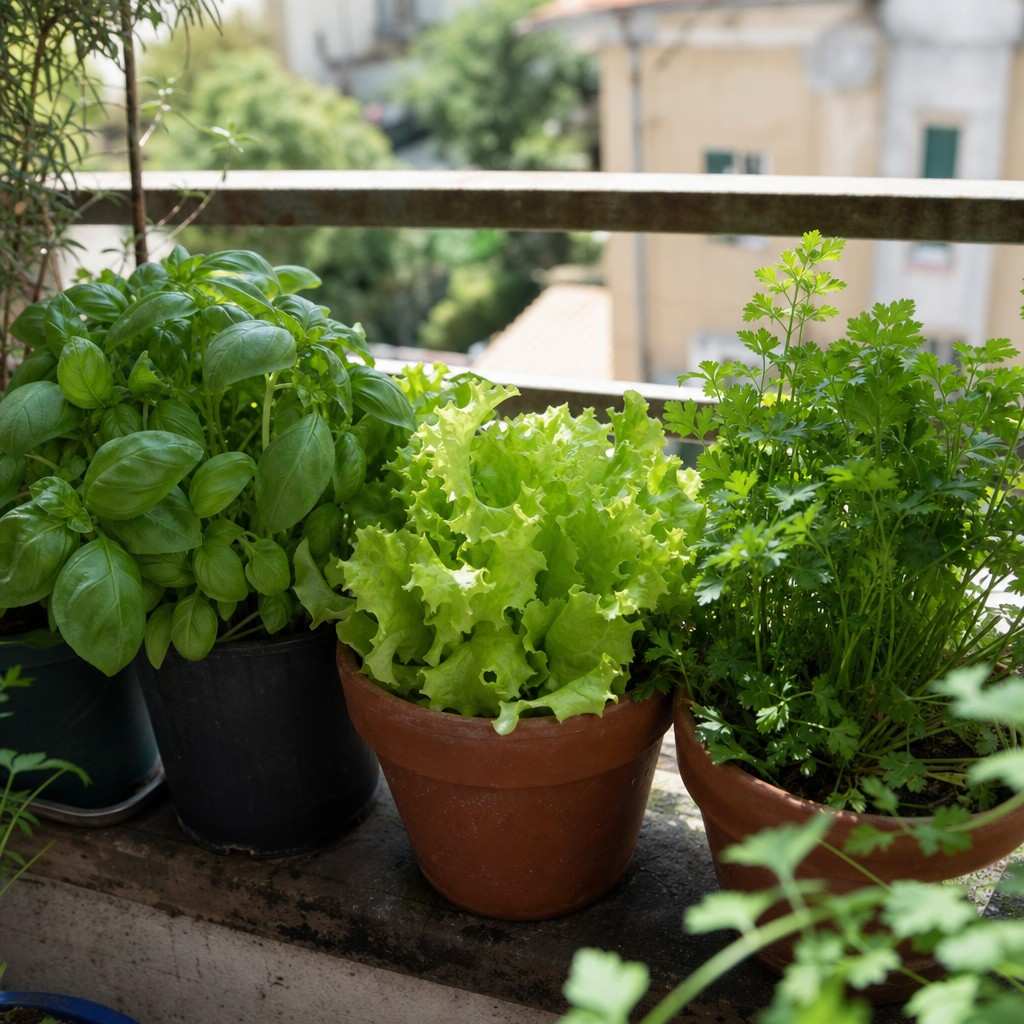
Start with a handful of easy plants, and add more once watering them feels routine.
The most beginner-proof choices:
- Herbs: basil, mint, parsley, and chives thrive in small pots and give you the fastest win.
- Salad greens: lettuce and spinach grow in shallow pots and are ready in a month or so.
- One easy vegetable: a cherry tomato or a pepper in a large pot, once you have the watering habit down.
Tomatoes are popular, but they are not the easiest starter. They want a big pot, steady water, and patience.
If you want a full list of what does well in pots, see the best vegetables to grow in containers.
Keeping them alive
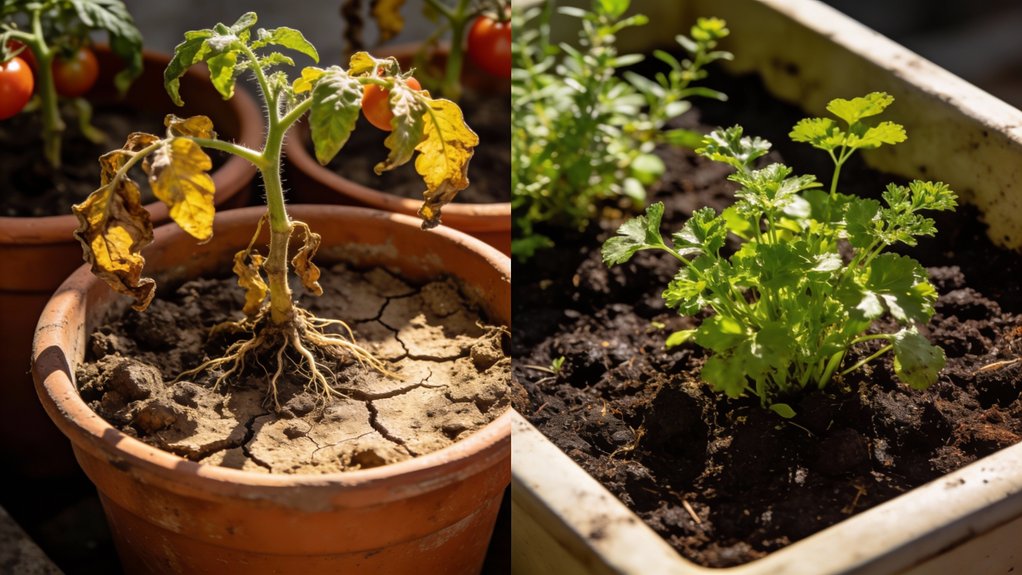
This is the habit that decides everything. More container plants die from watering than from anything else, usually from too much, not too little.
Containers dry out far faster than the ground, so in summer, check the soil every day. The test is simple.
Stick a finger into the soil. Dry past the first knuckle? Water. Still damp? Wait.
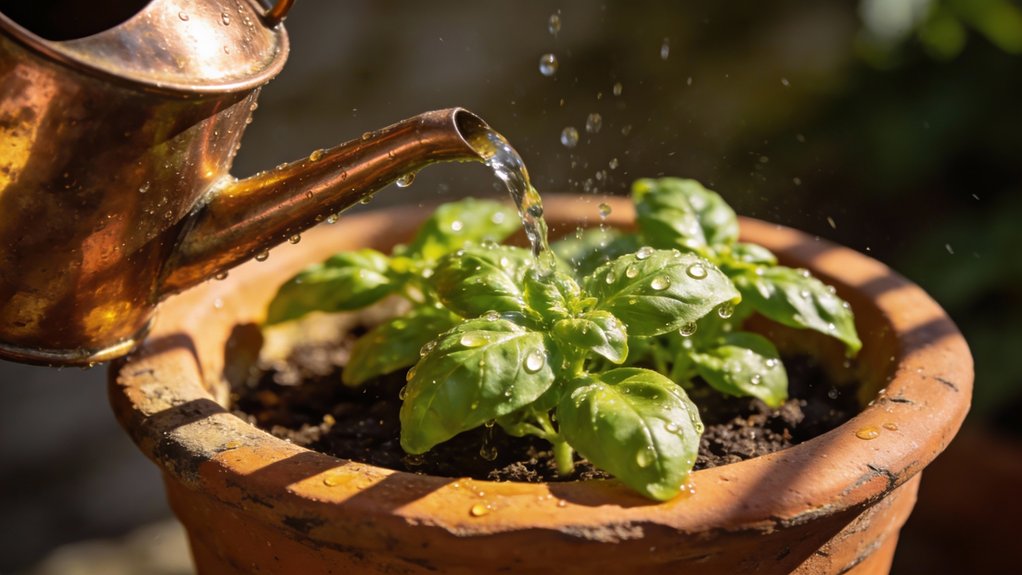
Water in the morning or evening, soak until it runs from the drainage holes, then stop. For the full picture on timing, the guide to how often to water container plants goes deeper.
The rest is light upkeep. Feed every few weeks during the growing season, pinch off dead leaves, and watch for the early signs of trouble. Small problems are easy to fix before they spread.
Start small, then grow
You do not need to plan a perfect garden before you begin.
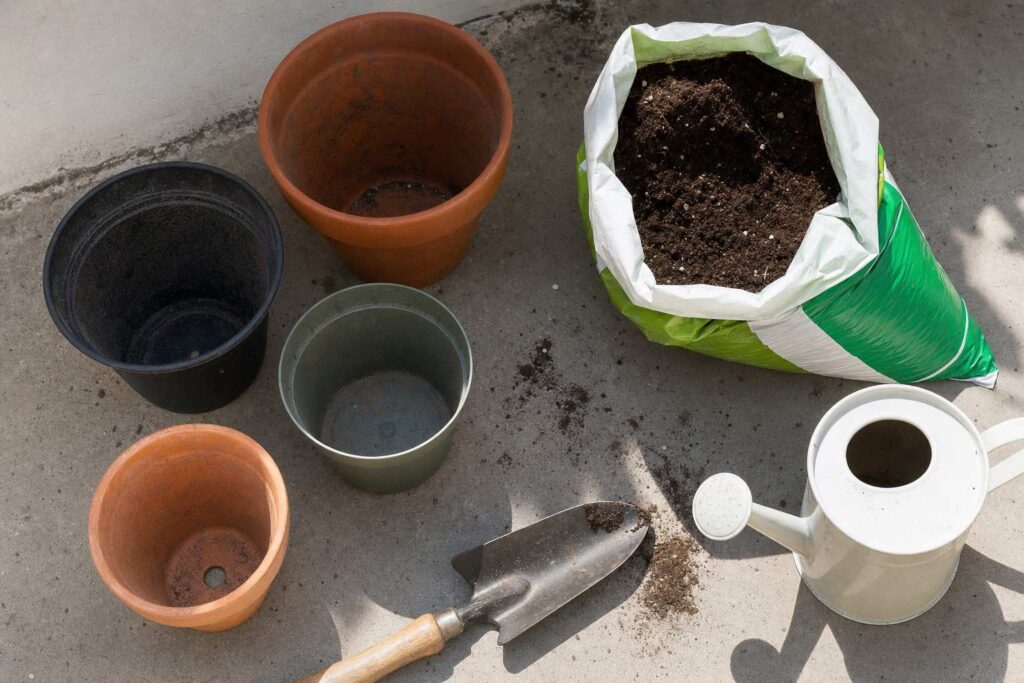
Pick a sunny spot, get three pots and a bag of mix, and plant something you would actually eat.
If you are on a balcony, a four-week balcony starter plan walks you through the first month one step at a time.
Some things will go well. Something will struggle. That is how every gardener learns their own space.
Keep the pots that work, add one more next month, and you have a container garden.