Plants that handle dry spells make a first pot far easier.
The five below are tough once established, though none is truly “no work”. Most bloom longer if you deadhead them, and a few are short-lived.
Two things decide most outcomes: hours of sun and how well the pot drains. Every plant here gets a pot at least 12 inches across, with drainage holes.
1. Gaillardia: Easy-Care Blooms in Full Sun
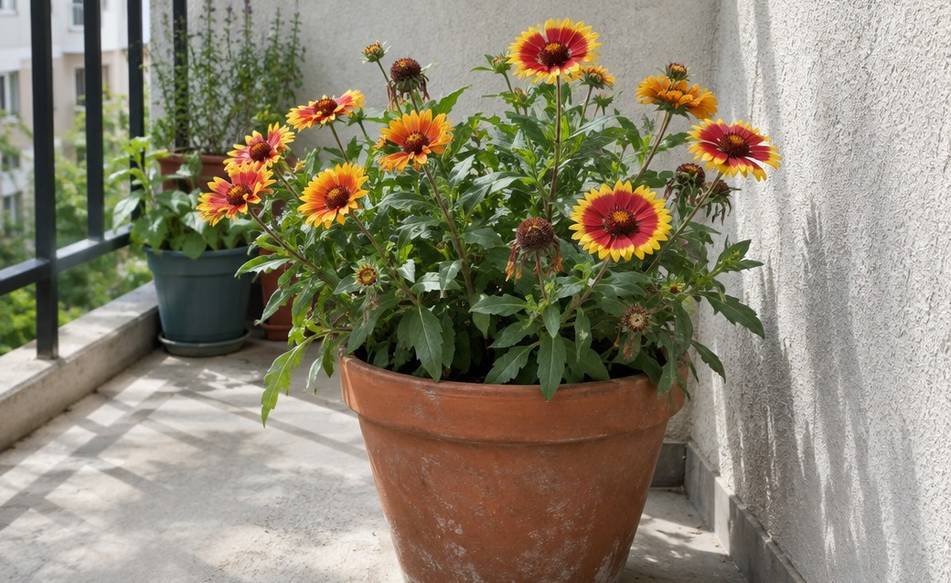
Blanket flower (Gaillardia) bears daisy-like blooms in shades of red, yellow and orange.
It takes full sun, grows 18 to 24 inches tall and blooms from June through October.
It prefers well-drained to dry soil with low fertility, and it tolerates drought, heat and salt. Water it regularly at first, until the roots settle in.
Deadhead to keep new flowers coming, and go light on fertilizer. It needs very well-drained soil to survive winter, so a free-draining mix matters.
University of Wisconsin Extension calls the common garden hybrids relatively short-lived perennials. Plan to replace them every few years.
Give gaillardia full sun and sharp drainage, and it asks for very little else.
2. Sedum: A Low Spreader for Dry Pots
While gaillardia adds upright color, sedum trails over the pot’s edge.
Sedum tolerates poor soil and establishes quickly. Its succulent leaves make it drought tolerant. It works in hanging baskets, and most species need sun to part sun.
Hardiness varies a lot from species to species, so check the plant tag against your climate. Some sedums are tender and are sold as houseplants.
Stem cuttings root easily, so one plant can fill a basket over time. The same page calls sedum not poisonous, though a large amount eaten can upset the stomach.
Choose a sedum rated for your winters, because the genus runs from tender to very hardy.
3. Agastache: Pollinator Plant With Minty-Scented Flowers
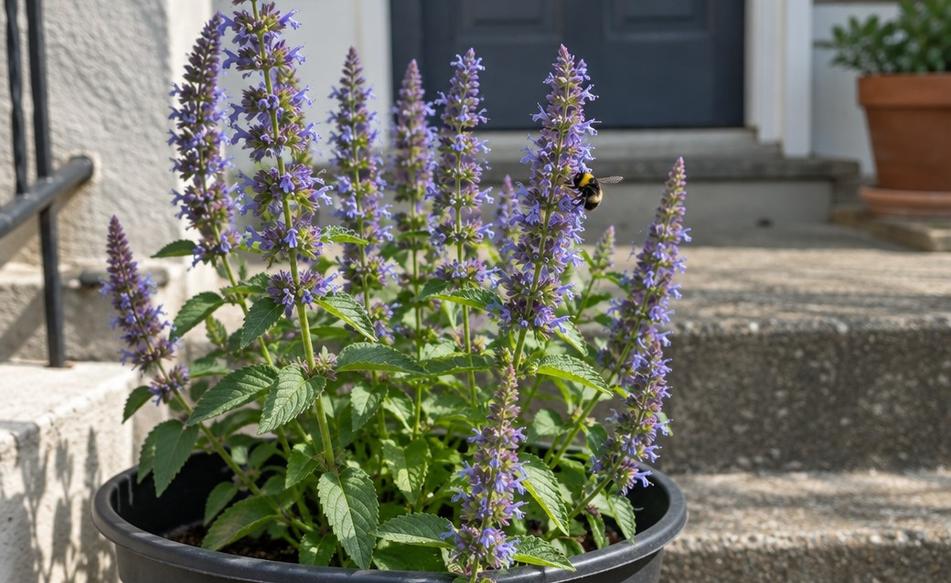
Agastache, sometimes called giant hyssop or hummingbird mint, carries spikes of flowers that bloom through most of the summer.
It is heat and drought tolerant, resistant to deer and rabbits, and attractive to pollinators and hummingbirds. Colors run from white through blue to red and purple.
Height varies by variety, so read the tag before you plant. Give it full sun.
The same page says wet winter roots in poorly drained soil will do the plant in, and that a container is a fix if needed. A pot only helps if the mix drains freely.
Agastache gives you months of flowers with little watering once it is established.
4. Heuchera: Colorful Foliage for Shady Spots
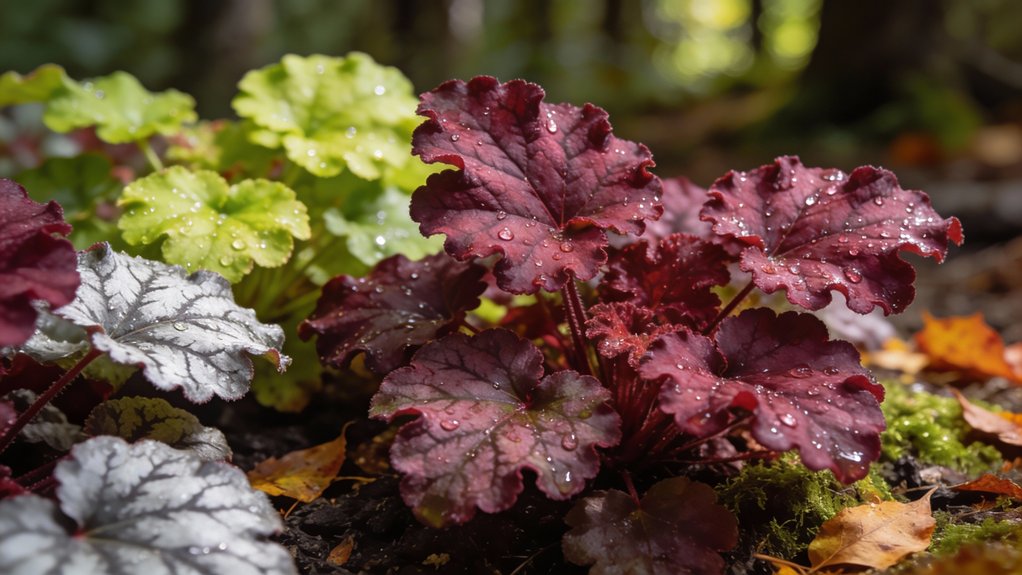
Heuchera (coral bells) forms a neat mound of purple, red, silver or green leaves. It grows 12 to 18 inches tall and is hardy in zones 3 to 8.
Zones come from the USDA, the US Department of Agriculture, which rates how cold a region gets in winter.
Heuchera is easy, but it is not a dry-spot plant. It prefers rich soil that is uniformly moist and well-drained, and most kinds do best in shade to light shade.
Good drainage is essential for successful overwintering. Deadhead after bloom to improve the look and encourage a slight rebloom.
Put heuchera where it gets shade and steady moisture, not in a dry, hot corner.
5. Russian Sage: A Fragrant Silvery Plant for Dry Sun
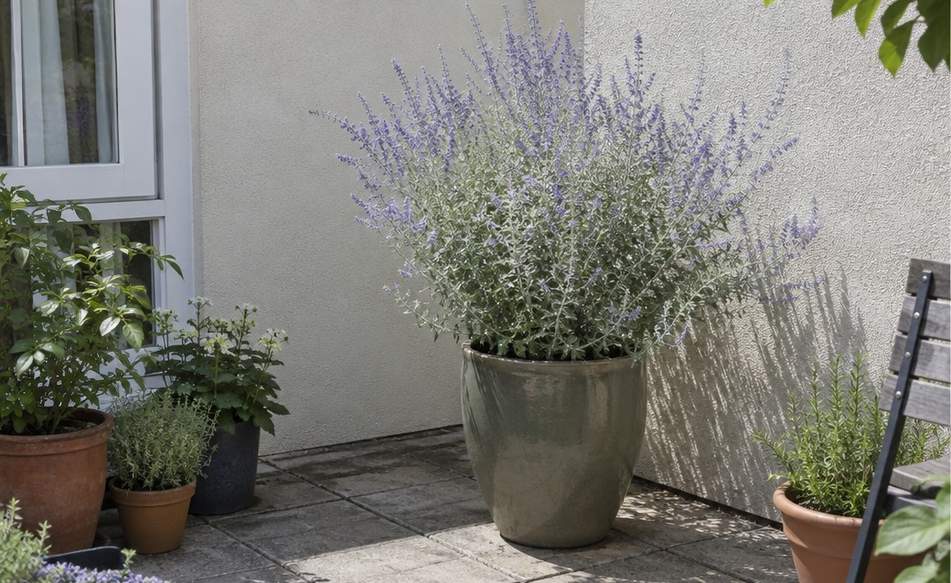
Russian sage fills a sunny, dry spot with silver-gray foliage and blue flowers late in the season.
It grows 2 to 3 feet tall, is hardy in zones 5 to 9 and blooms from July through September. It is drought tolerant and seldom needs dividing.
At that height it wants the biggest pot you have, not the 12-inch minimum. The one hard requirement is drainage, since very well-drained soil in a sunny spot is critical for survival.
Russian sage survives neglect, but it does not survive wet feet.
Getting These Plants Through Winter in a Pot
Hardiness figures such as the ones above describe a plant in the ground.
In a pot, Illinois Extension says to pick perennials rated two zones colder than yours. It adds that large containers protect roots better than small ones.
Gaillardia, agastache, heuchera and Russian sage each name drainage as a condition for surviving winter or staying alive. A free-draining mix is the first protection.
Start with two or three of these that match your sun, and give each the biggest pot you have.