1. Why Containers Work When You Have No Yard
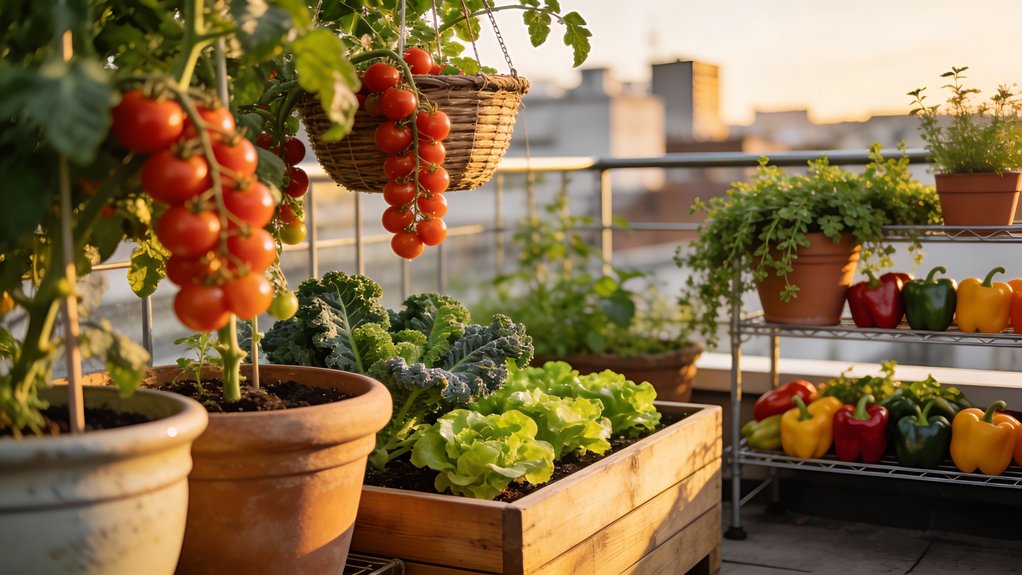
Container mobility lets you chase the sun throughout the day, ensuring your tomatoes and peppers receive optimal light for maximum growth.Poor soil conditions won’t limit your success since containers provide controlled environments with proper drainage. You’ll maximize vertical space using stacking techniques and hanging baskets, increasing your crop yield considerably. Sub-irrigated planters cut the watering right down, making container gardening remarkably efficient for small spaces.
2. Tomatoes, Peppers, and Eggplants for Pots
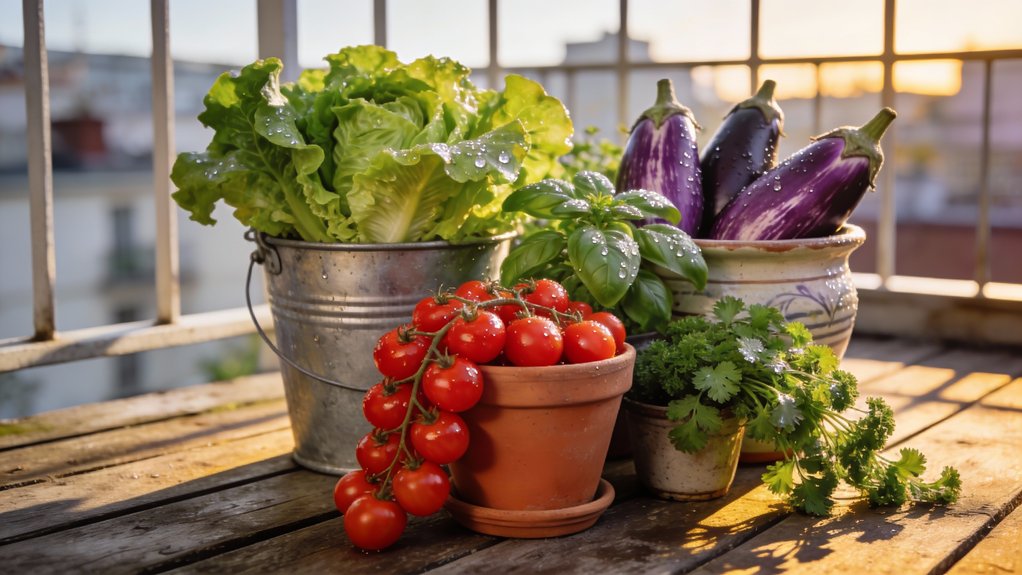
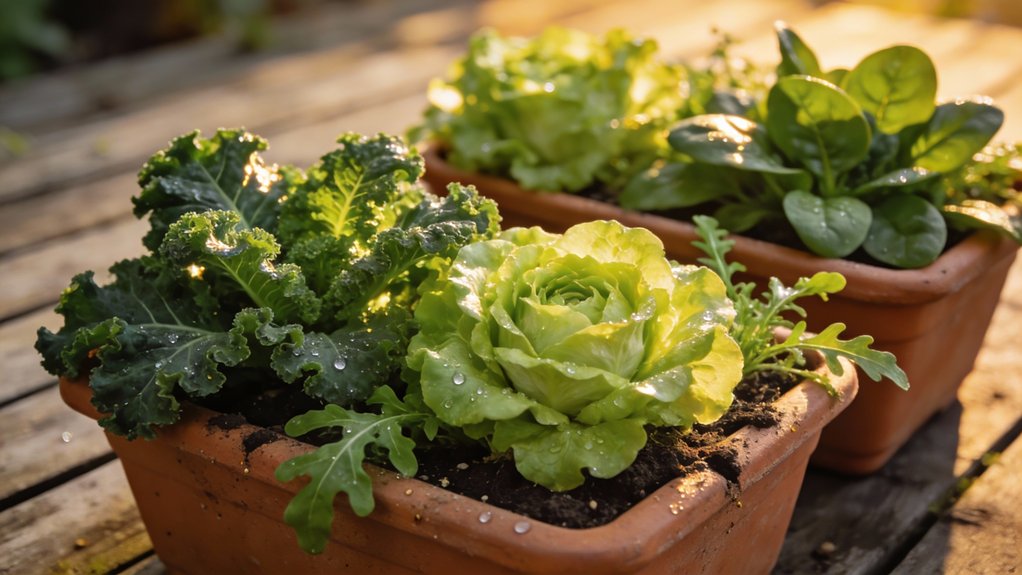
Container gardens reach their peak productivity when you plant heat-loving nightshade vegetables that transform compact spaces into abundant harvests. Choose bush tomatoes in 10-gallon pots with trellis support for spectacular yields. Peppers flourish in 5-gallon containers, benefiting from warmer soil temperatures that enable earlier spring planting. For compact container gardening, select eggplant varieties like Fairytale and Bambino, which offer ornamental flowers alongside productive harvests. All three vegetable varieties demand 6-8 hours of direct sunlight daily. Consistent watering proves essential since containers dry faster than garden beds. Consider self-watering pots or ollas for rewarding results.3. Lettuce, Kale, and Greens That Grow Fast
4. Root Vegetables: Carrots, Radishes, and Potatoes
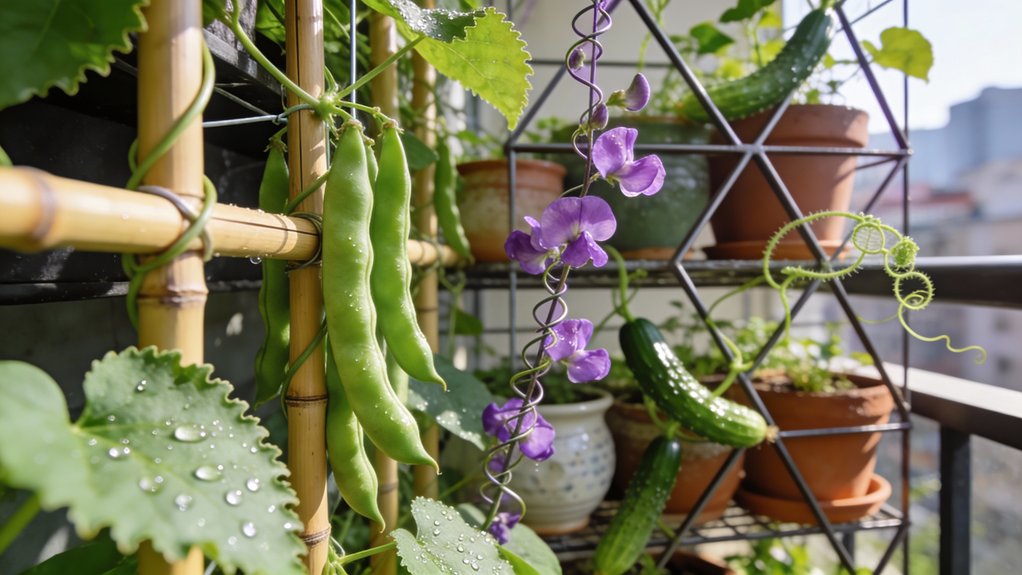
Root vegetables bring exciting new dimensions to your container garden beyond leafy greens. You’ll find carrot varieties like ‘Paris Market’ thrive in containers with 10-12 inches of container depth, requiring loose, well-draining soil for proper development. Radish types mature spectacularly fast in 25-30 days, making them perfect for quick harvests in small spaces. Potatoes need 5-gallon containers minimum, with fingerling varieties offering rewarding results and straightforward potato care. You can plant carrots and radishes successionally every two weeks for continuous harvests throughout the season. These root vegetables transform limited spaces into productive growing areas with minimal effort.5. Beans, Peas, and Vining Crops for Vertical Space
6. Herbs That Thrive in Windowsill Containers
Windowsill herb gardens transform ordinary kitchen spaces into productive growing zones that deliver fresh flavors year-round. You’ll find that proper container selection and choosing the right herb varieties make all the difference in your success. These herbs thrive in windowsill containers:- Chives and parsley: Compact growth habits require minimal space
- Basil and mint: Flourish in sunny spots with frequent harvests
- Rosemary and thyme: Drought-resistant varieties need limited watering
- Well-drained soil: Essential for preventing root rot
7. Container Sizes: What Each Vegetable Needs
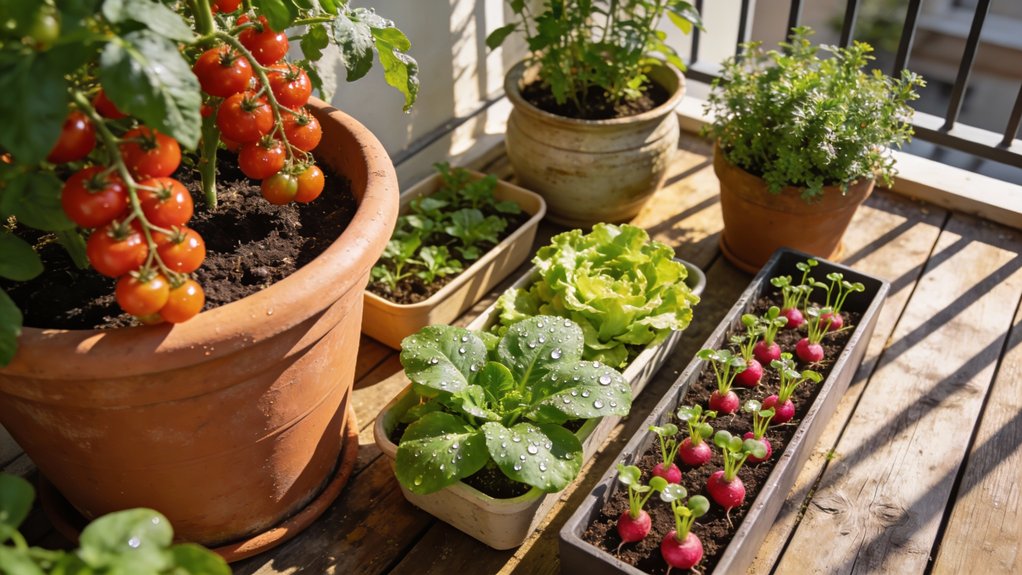
- Tomatoes need at least 10 gallons for root development and structural support.
- Peppers perform best in 5-gallon containers with excellent container drainage and warm soil conditions.
- Lettuce varieties are perfect for limited spaces with a small 2-gallon pots.
- Carrots require specific container depth of 10-12 inches and 3-gallon capacity for proper taproot formation.
- Large zucchini plants demand 5-gallon minimum containers to accommodate their extensive root systems and spreading foliage successfully.
8. Soil Mix and Watering Schedule for Containers
Because container plants depend entirely on the growing medium you provide, selecting the right soil mix becomes critical to your gardening success. Here’s what you’ll need:- Choose high-quality potting mix designed for containers, which offers superior drainage and aeration compared to garden soil.
- Incorporate organic matter like compost or well-rotted manure to boost fertility and support spectacular growth.
- Verify your containers have drainage holes to prevent waterlogging and root rot.
- Check soil moisture daily and adjust your watering techniques based on weather conditions.
9. When to Plant and Harvest Container Vegetables
10. Why Your Container Plants Are Dying and How to Save Them
Your container vegetables might be struggling despite your best intentions, and identifying the root cause quickly transforms struggling plants into thriving producers. Master these essential plant care practices to restore container health:- Check drainage holes and soil moisture before watering to prevent root rot from overwatering.
- Relocate containers to receive 6-8 hours of direct sunlight daily for ideal growth.
- Replace poor soil with high-quality potting mix designed for proper root development.
- Apply balanced fertilizer regularly to combat nutrient deficiencies from leaching.
Conclusion
You’ve got everything you need to transform your balcony, patio, or windowsill into a productive garden. Start with one container, maybe cherry tomatoes or crisp lettuce, and watch your confidence grow alongside your plants. Container gardening isn’t just about working around limited space; it’s about creating an accessible, rewarding system that puts fresh vegetables within arm’s reach. Your first harvest will prove that small spaces can yield spectacular results.For the same vegetables ranked by how easy or hard they are for beginners, see what grows best in containers, ranked by difficulty.