Six hours of direct sun is the line that decides what your balcony can grow.
Above it, tomatoes and peppers are on the table. Below it, you grow leaves, not fruit. Most beginners skip this measurement, buy a tomato for a shady rail, and blame themselves when it sulks.
The sun your balcony gets is fixed. Your plant choices are not. Match the plant to the light and a “bad” balcony becomes a productive one. The fix is almost never more effort. It is a better-matched plant.
Start by learning the three light levels, then measure honestly.
The three light levels, defined
Garden advice throws around “full sun” and “part shade” as if everyone agrees on the numbers. They do, roughly, and the numbers come from horticulture, not vibes.
Illinois Extension, the University of Illinois’s free advice service for gardeners, says most vegetables need six or more hours of direct sun a day. That six-hour mark is the standard definition of full sun.
Here is the working scale:
- Full sun: six or more hours of direct sunlight. The widest range of crops, including fruiting vegetables.
- Part sun or part shade: roughly four to six hours. Many vegetables still produce a good crop in this band.
- Shade: under four hours of direct sun. Leaves and a few herbs, not fruit.
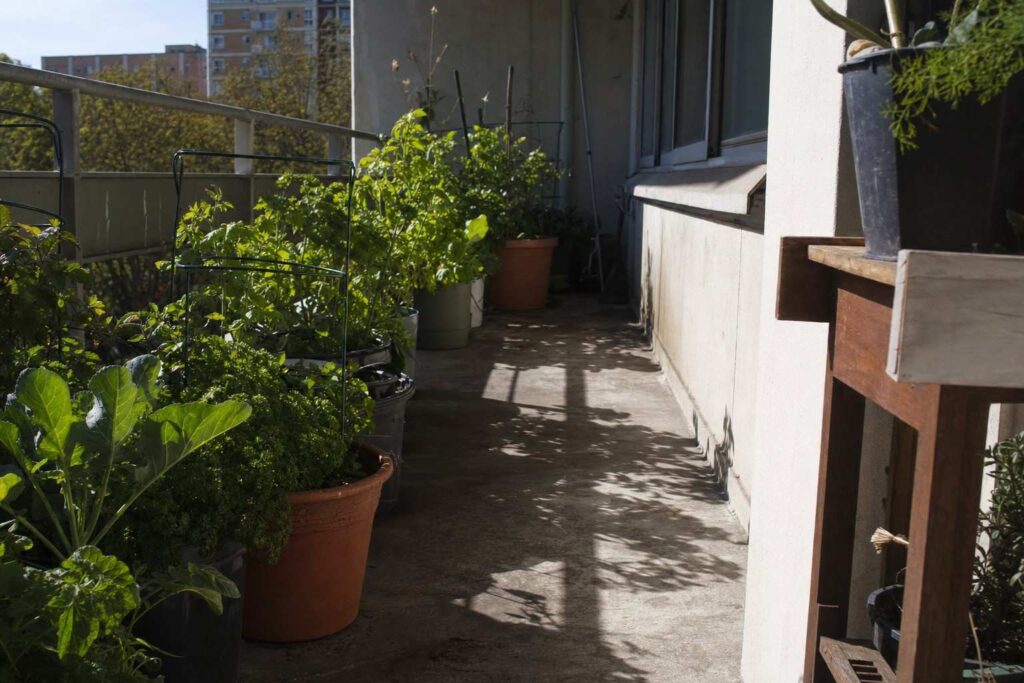
A north-facing balcony, a high railing, or a neighboring wall can quietly drop you a whole level. Work with that light level instead of trying to change it.
How to measure your balcony’s sun
You do not need a gadget. You need one clear day and a little attention.
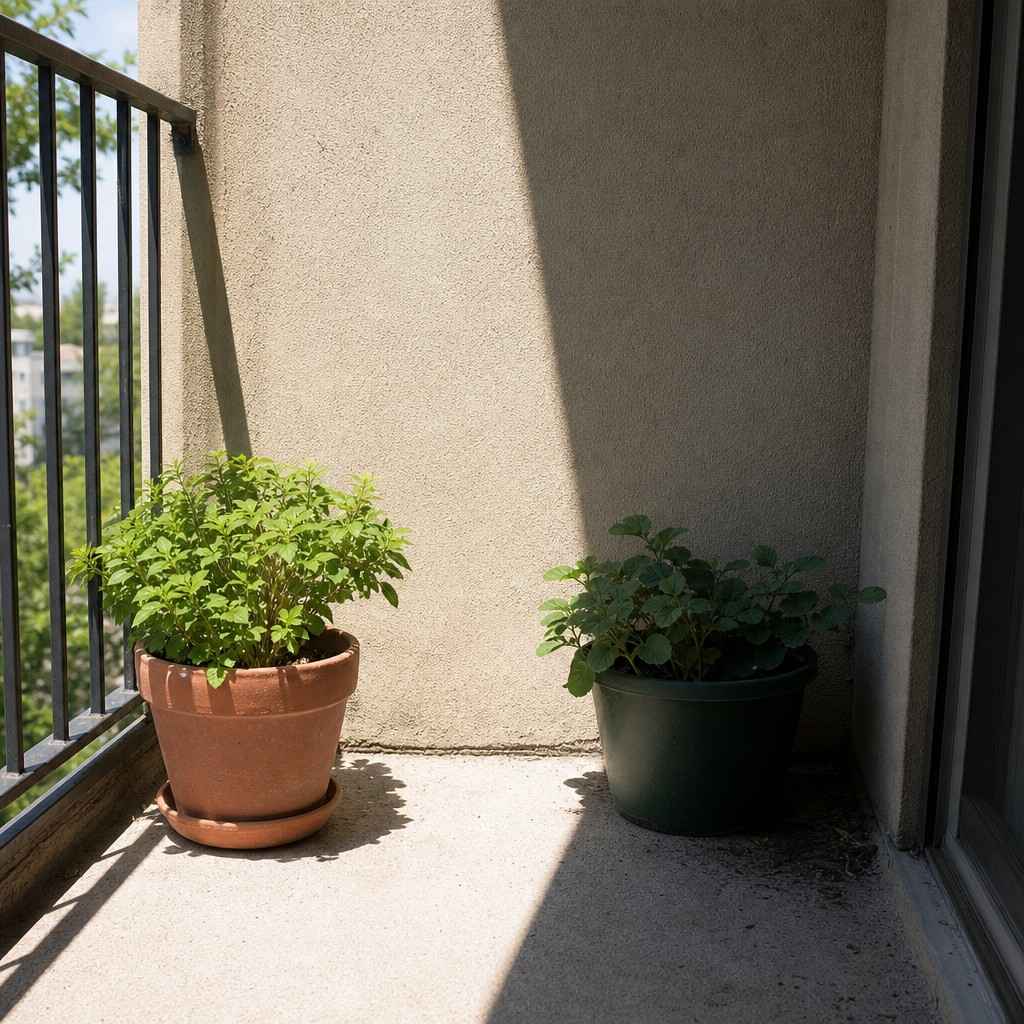
Check your balcony at three or four points across the day: early morning, late morning, midday, and late afternoon. Each time, note whether your growing spot is in direct sunlight or in shade.
Add up only the hours of direct sun. A balcony can feel bright all day and still receive only three hours of true direct sun once you watch for it. Bright shade does not count.
A few things that trip people up:
- The sun sits lower in spring and fall, so a spot with six summer hours may get far less at the edges of the season.
- A railing or glass panel can cast more shade than you expect.
- Reflected light off a pale wall helps a little, but it is not a substitute for direct sun.
If you want one tool, a small sun-meter that logs hours exists, but a notebook and one day of watching give you the same answer for free.
What to grow at each light level
Now the payoff. Once you know your number, the plant list almost writes itself.
Full sun, six or more hours: the fruiting crops that need the most energy.
- Tomatoes, peppers, and chilies
- Eggplant, beans, and squash
- Most herbs, including basil and rosemary
Strawberries belong here too: Iowa State asks for at least 6 hours of direct sun for strawberries grown in pots.
Part shade, four to six hours: leafy and root crops that tolerate less.
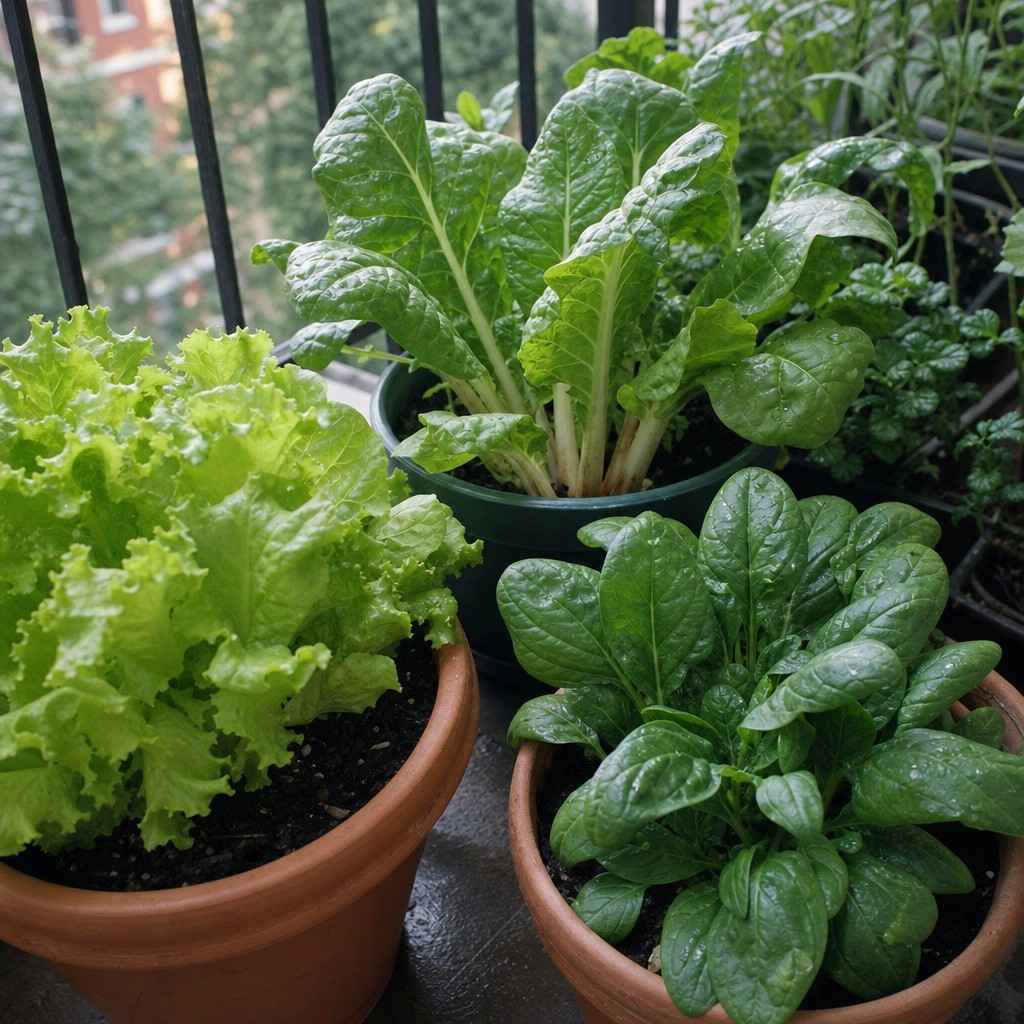
- Lettuce, spinach, chard, and kale
- Beets, radishes, and green onions
- Parsley, mint, and cilantro
Low light, three to four hours: modest but real harvests. University of Maine Extension notes that leafy crops such as lettuce, spinach, chard, and hearty greens can give satisfactory harvests in limited light, even three to five hours a day.
A shaded rail still grows salad. For an ornamental angle in dim corners, a list of shade-loving plants for north-facing spots covers the leaves and flowers that prefer it.
Sun grows fruit. Shade grows leaves. Neither one means your balcony is wasted.
When you do have full sun, make the most of it with a list of vegetables that crop well in containers. Then give them a big enough pot to match the energy they are collecting.
Working with less sun than you’d like
A dim balcony is a limit, not a dead end. Three moves stretch what you have.
Put your most sun-hungry plant on casters and roll it to follow the brightest patch through the day. A determinate tomato in a properly sized container on wheels can chase an extra hour or two.
A tiered or vertical layout helps too, since it gives every pot its own slice of the light instead of letting tall plants shade short ones. Move the light around and the math improves.
Containers dry out far faster than the ground, so in summer, check the soil every day, whether your balcony bakes or barely warms.
Stop fighting for tomatoes on a shady rail. Grow a rotation of cut-and-come-again salad instead. It is the highest-value crop for low light.
If your only bright spot is a windowsill, a clip-on grow light keeps basil and parsley going through dim months.
You can compare clip-on grow lights on Amazon to see the small models made for a sill.
Heads up: some links on this page are affiliate links. Buying through them supports the site with a small commission and does not raise your price.
One last thing the light level does not change. Containers dry out far faster than the ground, so in summer, check the soil every day, whether your balcony bakes or barely warms.
Measure first. Plant to the number. A balcony that grows the right things for its light always outperforms one fighting for the wrong ones.