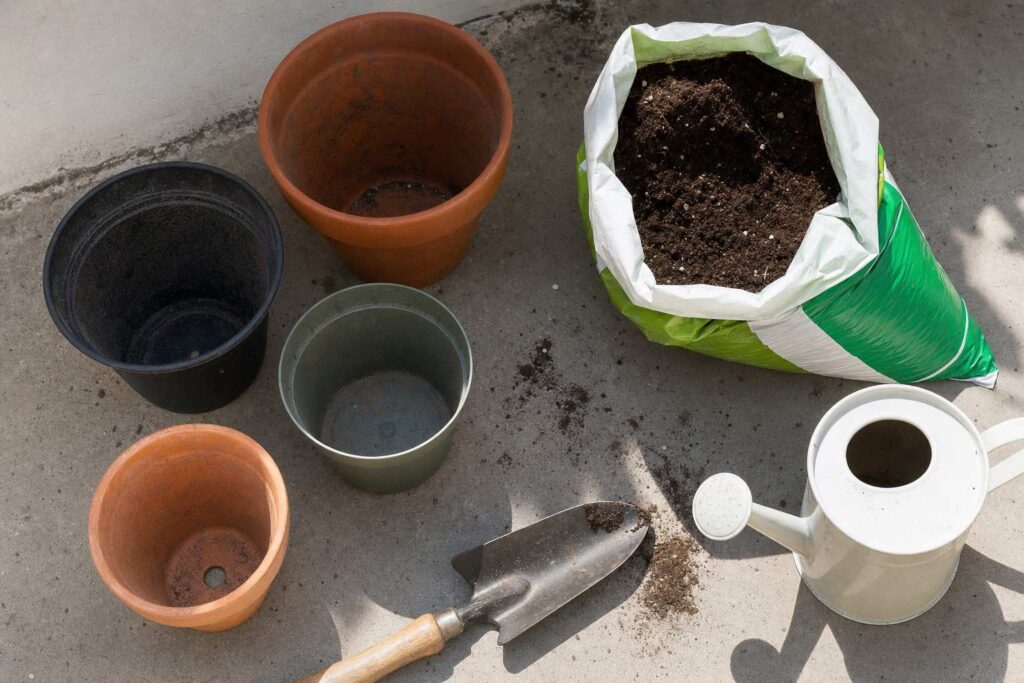
Most beginners guess at pot size. Most beginners guess wrong.
Container size is the #1 mistake in container gardening. It causes more plant deaths than soil choice or watering problems combined.
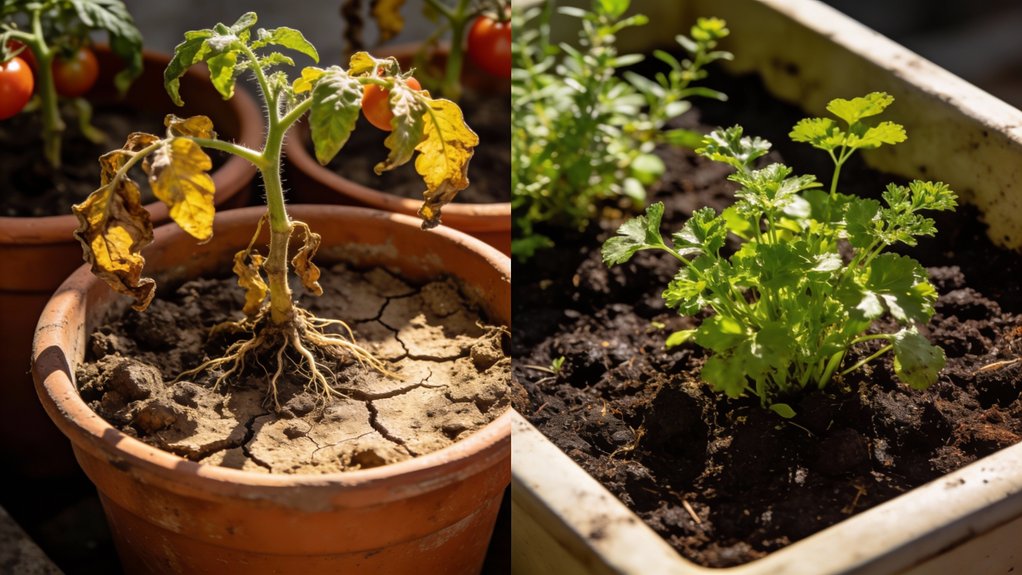
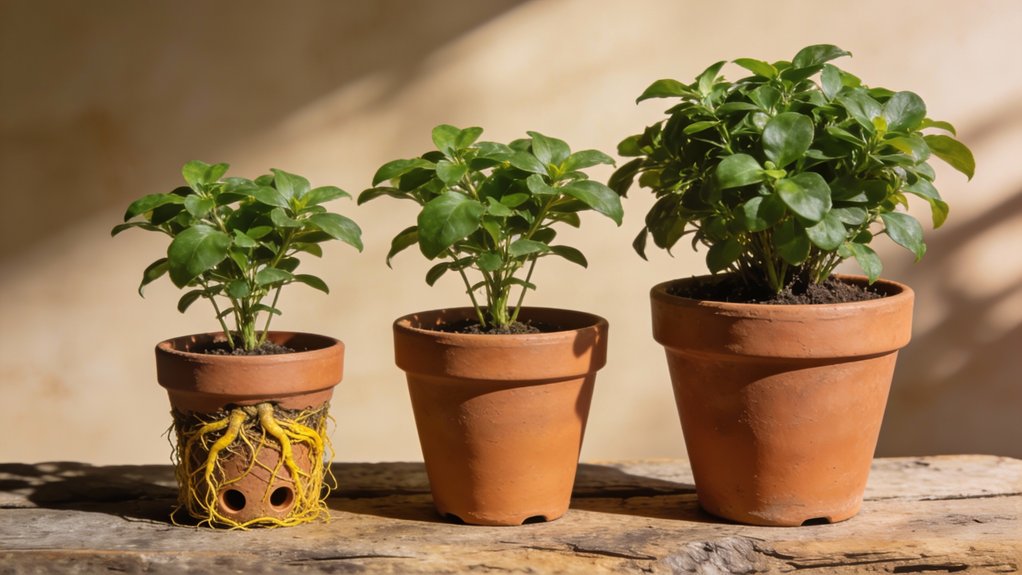
The difference between a thriving plant and a struggling one often comes down to just two inches of diameter. Too small, and roots strangle themselves. Too large, and soil stays waterlogged, rotting roots from the inside.
Of everything that kills a first container garden, an undersized pot is the one this site sees most. It is also completely preventable once you know what to look for. Our full breakdown of container gardening costs and common mistakes covers the rest.
Here is the simple check that tells you exactly which size your plant needs, no guessing required.
Assess Your Plant’s Root System Before Choosing a Container
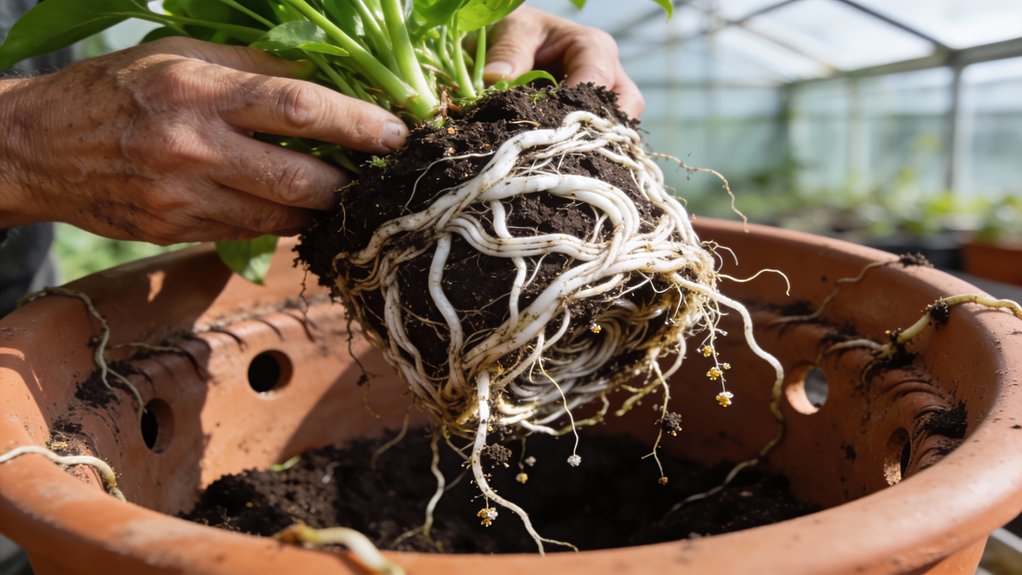
Before you pick out a new container, look at what is happening below the soil line.
Your plant’s root health determines the right pot size, not its height or leaves.
Check if roots are tightly packed or circling the bottom. That signals it is time to upsize. Smaller plants do well in 4 inch pots, 5 to 6 inches suits growing specimens, and 8 inches handles larger root systems.
Consider clear pots to monitor root development.
Proper container compatibility prevents overwatering and rot, since oversized pots hold excess moisture that insufficient roots cannot absorb. Make sure your chosen container has drainage holes to allow water to escape and prevent root rot issues.
The 1-2 Inch Rule: How Much Bigger Should You Go?
Once you have confirmed your plant needs a bigger home, the sizing math is straightforward.
For plants in containers 10 inches or smaller, move up just 1-2 inches in diameter. Larger pots, those exceeding 10 inches, require 2-3 inches more space.
This measured approach prevents overwatering problems that plague oversized containers, regardless of container materials you choose.
Incremental sizing is the rule because root zones need room to expand, not room to drown.
These potting techniques apply whether you are working with terracotta, plastic, or ceramic.
Check your plant’s roots periodically to determine when it is ready for the next size up. Proper sizing also ensures that moisture reaches the entire root zone when you water, supporting healthy growth without waterlogging the soil.
Best Container Sizes for Tomatoes, Peppers, Herbs, and Houseplants
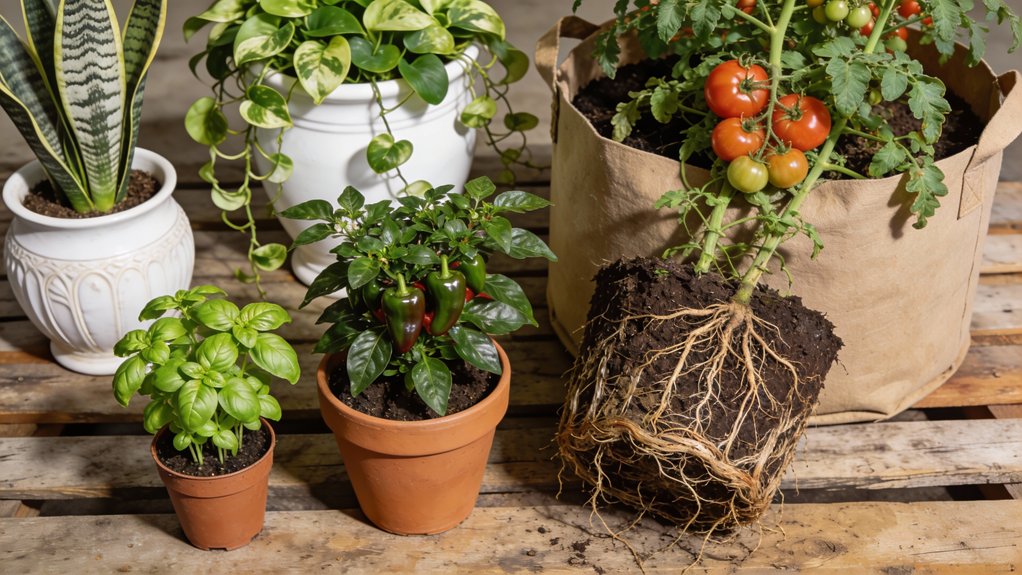
Different plants demand different container dimensions, and getting the size right makes the difference between a thriving garden and a struggling one.
Tomato varieties want 16×16 inch containers, which give the roots room and hold moisture more evenly. That is comfortably above the floor. Colorado State University Extension’s container vegetable guide, CMG GardenNotes #724, puts the minimum at 12 inches deep and two to five gallons per plant. Go by the bigger figure if you have the room, because a larger pot holds more water and forgives a missed day.
Pepper types perform best in 14×14 inch pots that keep roots cool while providing adequate feeding room.
Herb benefits maximize in compact 10×10 inch containers, perfect for basil, cilantro, and parsley. Leafy crops genuinely do need less: that same Extension guide lists leaf lettuce and chard at 8 inches deep and green onions at 6.
Houseplant species require 1-2 inches more diameter than their current pot if under 10 inches, or 2-3 inches larger for bigger specimens.
Always ensure proper drainage to prevent root rot across all container sizes.
Why Drainage Holes Matter More Than Pot Size?
While gardeners obsess over finding containers with perfect dimensions, drainage holes actually determine whether your plants survive or slowly drown.
Drainage importance outweighs pot size because excess water needs somewhere to go. Without holes, you will create a miniature swamp that suffocates roots within days.
Root health depends on oxygen access, which waterlogged soil cannot provide.
A small container with proper drainage beats a large one without holes every time.
The right drainage system prevents compacted soil, maintains consistent moisture levels, and stops root rot before it starts. You cannot water correctly if excess cannot escape.
Terracotta vs. Plastic: Which Material Affects Container Size?
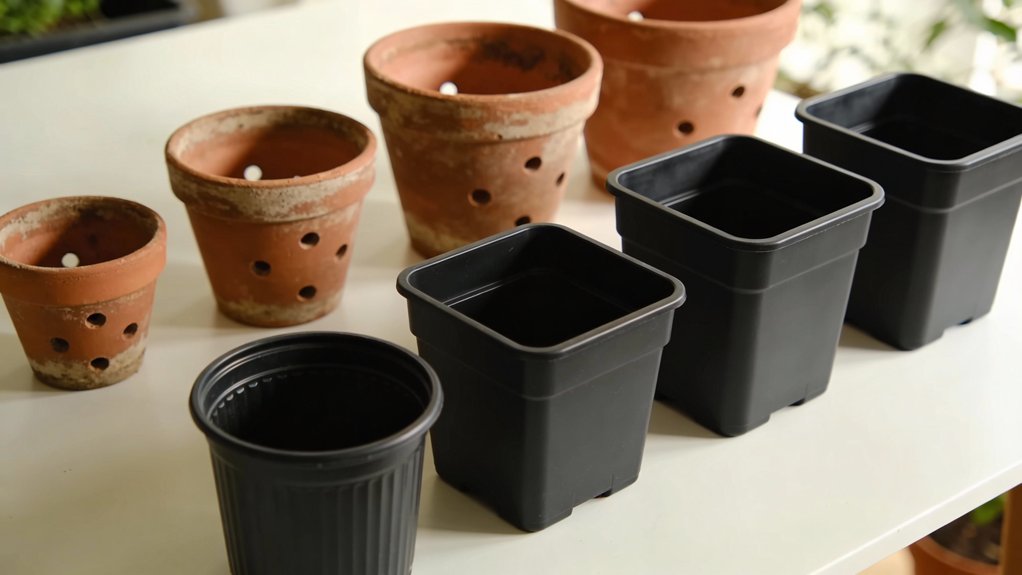
Your pot material choice determines how often you will water, how quickly plants grow, and when you will need to upsize containers.
Terracotta benefits include superior airflow and moisture evaporation through porous walls, promoting faster root development. You will need to repot more frequently, but your plants will thrive.
Choose terracotta pots 1-2 inches larger in diameter for plants under 10 inches.
Plastic drawbacks center on moisture retention: overwatering becomes easier, and root growth slows.
However, plastic offers flexible sizing options and weighs less.
Terracotta’s thickness means you will typically need slightly larger containers compared to plastic for the same plant.
How Well-Draining Potting Mix Lets You Use Smaller Containers
Because well-draining potting mix allows excess water to flow through quickly, you can use containers 2-3 inches smaller in diameter than standard recommendations suggest.
Your plants get oxygen-rich roots without waterlogging risks.
Quality container gardening techniques start with the right medium:
- Add perlite or vermiculite to improve drainage and prevent root rot in confined spaces.
- Mix in lava rocks or coconut coir to enhance aeration while maintaining moisture balance.
- Choose specialized container blends that support healthy root development in smaller pots.
You will water less frequently since well-draining mixes dry evenly, making compact containers surprisingly efficient.
Use See-Through Pots to Monitor Root Growth and Moisture
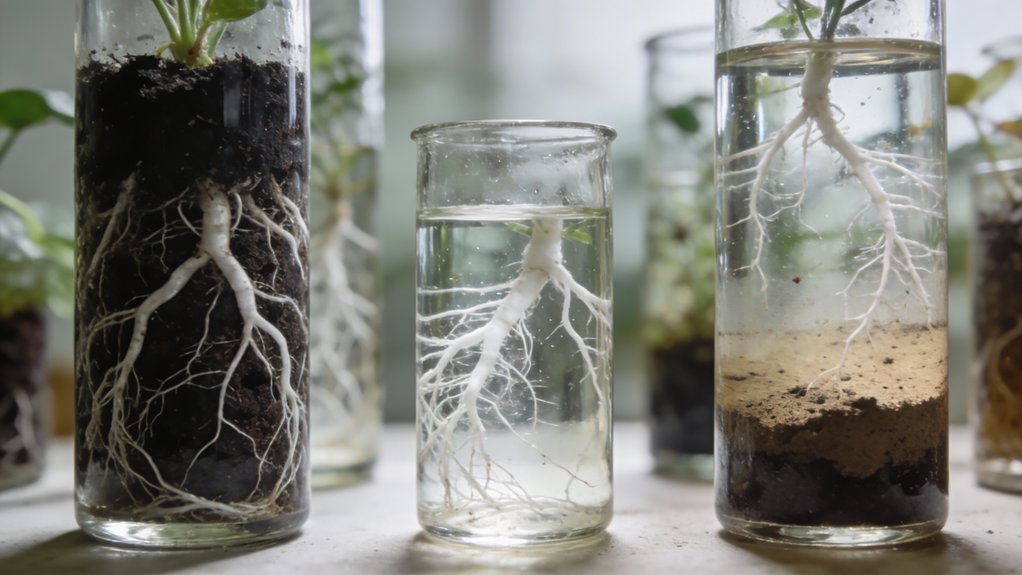
Transparent containers transform guesswork into certainty when you are managing container gardens.
You will see exactly when the potting medium dries out, which eliminates overwatering, the leading cause of houseplant death.
Root health becomes immediately visible through clear walls, so you will spot problems like rot or circling roots before they become serious.
This moisture monitoring capability helps you establish precise watering schedules based on what is actually happening below the soil surface.
You can watch roots fill the container and know the exact moment repotting becomes necessary.
The visibility gives you something most gardeners never have: certainty before crisis.
When Bigger Isn’t Better: Avoiding Root Rot in Oversized Containers
While most gardeners worry about cramming plants into small containers, oversized pots create equally serious problems that often prove harder to diagnose.
Excess soil in large containers holds moisture longer than roots can absorb it, regardless of container material. This moisture retention creates three distinct dangers:
- The top layer dries out while deeper soil stays waterlogged for days.
- Roots sitting in saturated soil develop rot before you notice symptoms.
- Small plants can’t establish root systems throughout oversized pots.
Choose containers just 1-2 inches larger than current pots for plants under 10 inches, or 2-3 inches larger for bigger specimens.
Should You Size Up or Add a Moss Pole Instead?
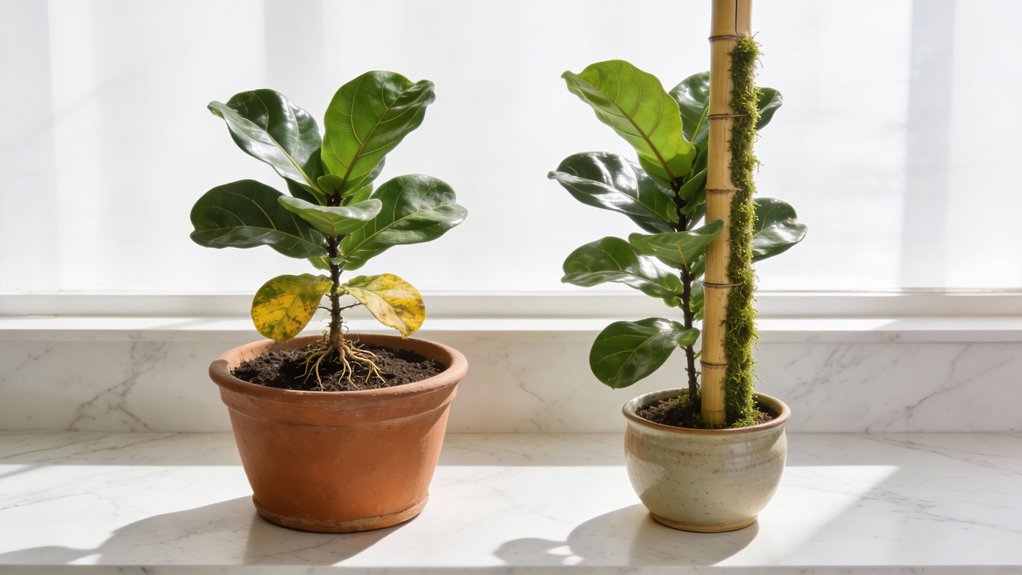
How do you know when your climbing pothos or monstera needs vertical support rather than a wider home?
If roots circle the pot but your plant is still young, a moss pole offers root bound solutions without immediate repotting.
Moss pole benefits include encouraging upward growth in smaller containers, which works well for natural climbers. When roots completely fill the container, sizing up becomes necessary.
Until then, a moss pole buys you time without forcing a repot before the plant is ready.
You will need to maintain regular fertilizing in smaller pots to prevent nutrient depletion. Think of the pole as a strategic delay, not a permanent replacement for eventual repotting.