Iowa State University’s Extension service, which publishes gardening guidance for the public, puts the range at once or twice a day for a small pot in hot, windy weather.
A large pot in cool weather needs water once or twice a week.
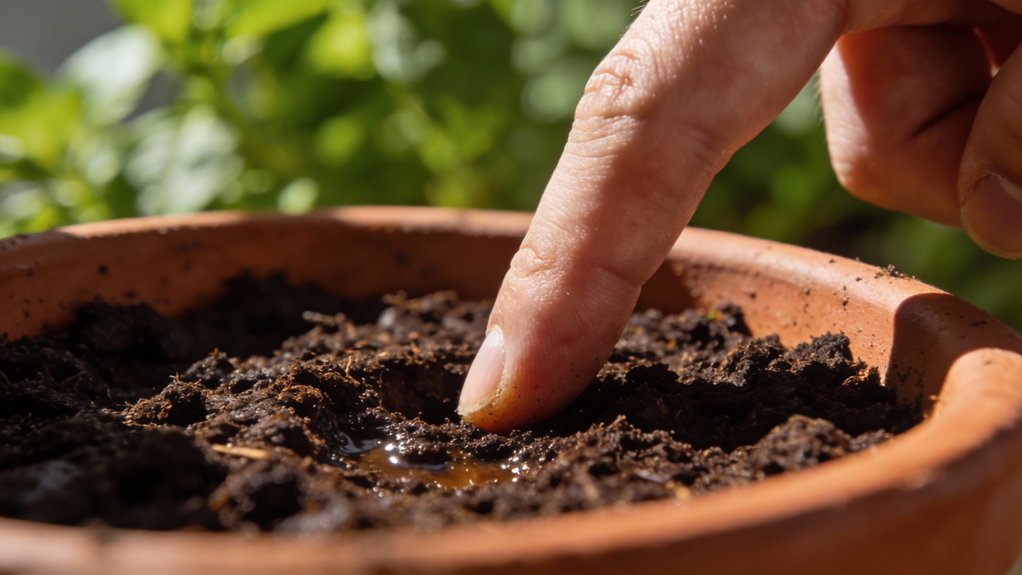
Water when the potting mix is dry 1 to 2 inches down. Press a finger into the soil to check, then water until excess runs out of the drainage holes.
Succulents and other drought-tolerant plants need less water than annuals and vegetables. New plants should stay evenly moist while their roots get established.
How to tell when container plants need water
Three signs tell you when it is time:
- Push a finger into the soil. If it is dry 1 to 2 inches down, water.
- Look at the surface. Dark soil is moist, and lighter soil is drying out.
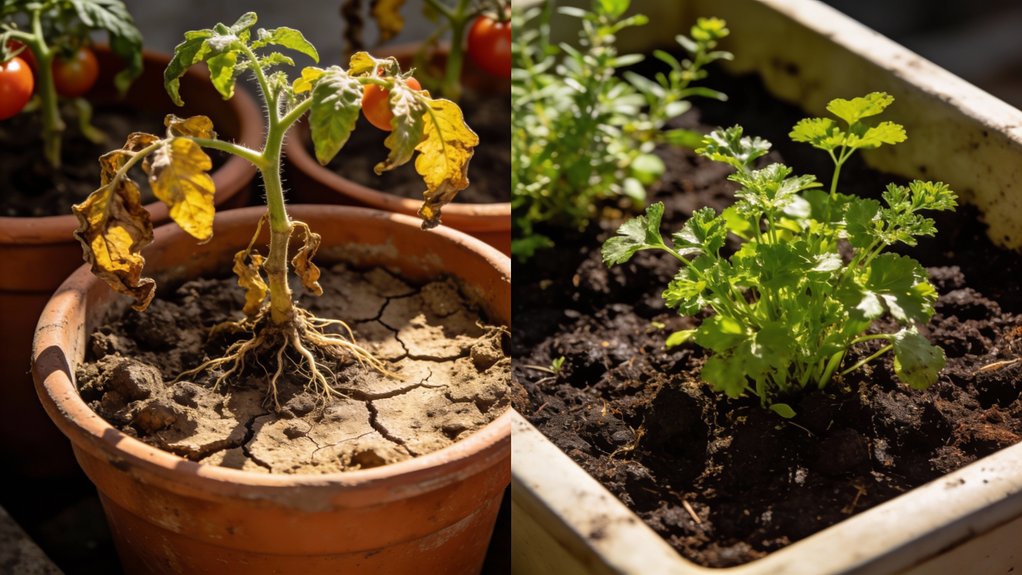
- Watch the plant. Limp stems and shriveled leaves signal distress.
Iowa State advises checking container plants daily, especially in summer. A daily finger check is the habit that keeps container plants alive.
Wilting does not always mean thirst. A pot that wilts in afternoon heat while the soil is still damp is often overheated, not dry.
How often should you water potted plants?
There is no fixed schedule. Frequency depends on pot size, pot material, the potting mix, the plant and the weather.
In hot, dry weather a small pot may need water daily or even twice a day. Going on a trip? Read how to water containers while you are away.
Newly planted containers need steady moisture while roots develop. Established plants tolerate longer gaps.
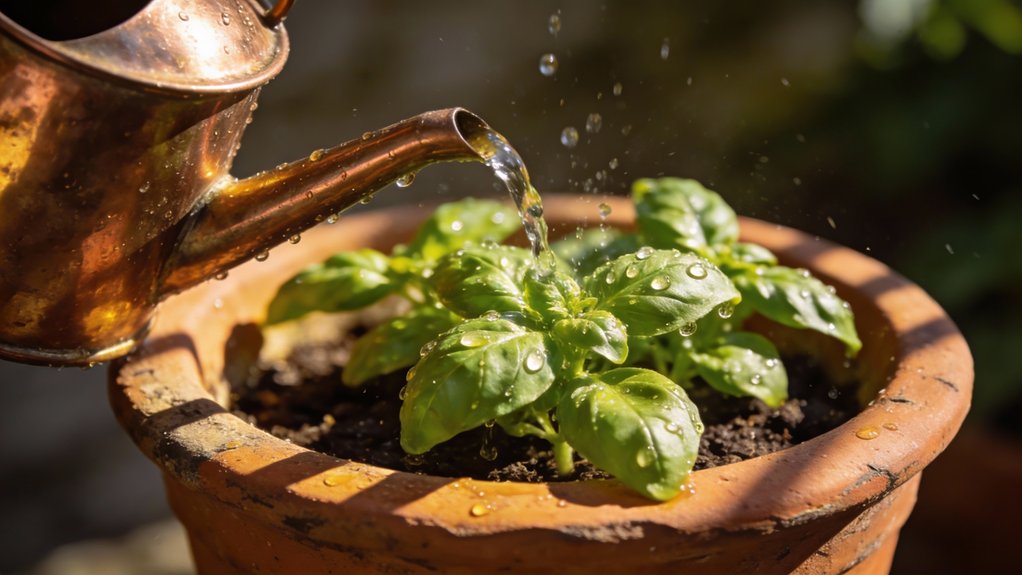
Water deeply and slowly, so moisture reaches the whole root ball.
What makes container plants dry out faster?
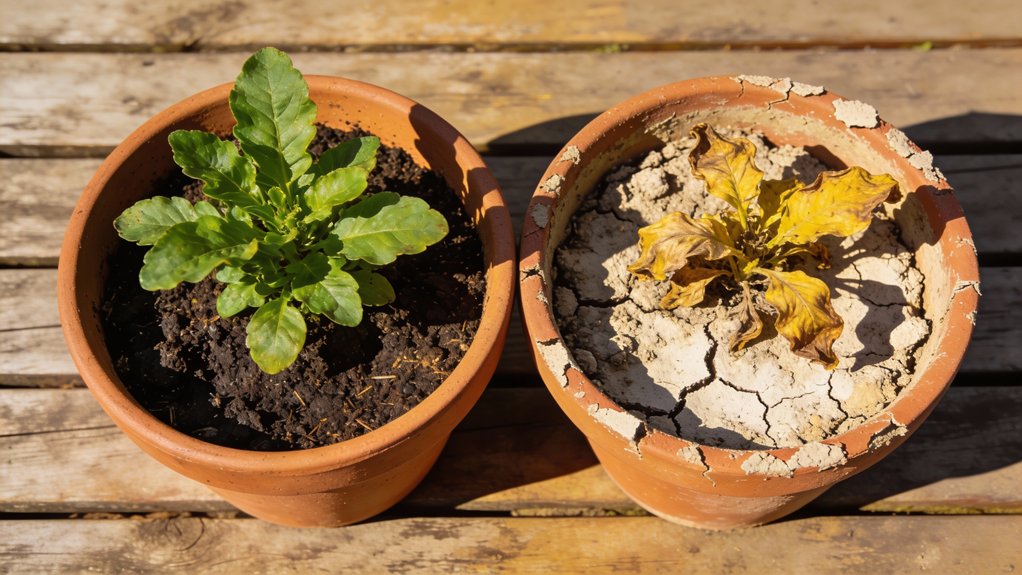
A pot holds a small volume of soil, so it has little water in reserve. Heat, sun and wind drain that reserve quickly.
Small pots dry out faster than large ones. Clay and other porous pots also lose water through their walls, so they dry faster than glazed ceramic or plastic.
Small pots in sun and wind dry out fastest, and big pots in shade dry out slowest.
How much water should you give each container?
Give enough that water runs out of the drainage holes at the bottom. That wets the whole root zone and encourages deep roots.
Then let the top inch or two dry before you water again. If you are unsure, the finger test settles it.
Stop when water flows from the holes, and not before.
When to water container plants
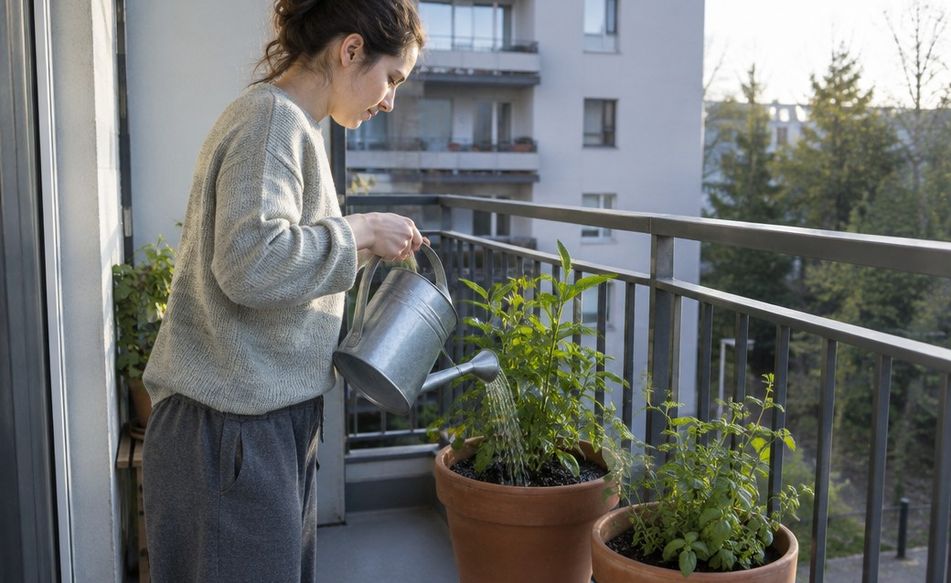
Morning is the best time. The plant starts the day with water in the pot, ready for the heat, and the leaves dry out well before night.
Evening watering works as a second choice. Midday watering loses more water to evaporation, so save it for emergencies.
During hot spells you may need a second watering in the day to prevent heat stress. Morning is the single easiest habit to build.
Why succulents and vegetables need different watering
Succulents store water in their leaves and stems, so they do best when the soil dries out between waterings.
Vegetables and most annuals do not store water. They need steady moisture, and a missed day in summer can hurt them.
- Succulents: let the soil dry out well between waterings.
- Vegetables: keep the soil evenly moist and check daily in warm weather.
Overwatering succulents causes root rot, while underwatering vegetables stunts growth and cuts yields.
Why proper drainage prevents root rot
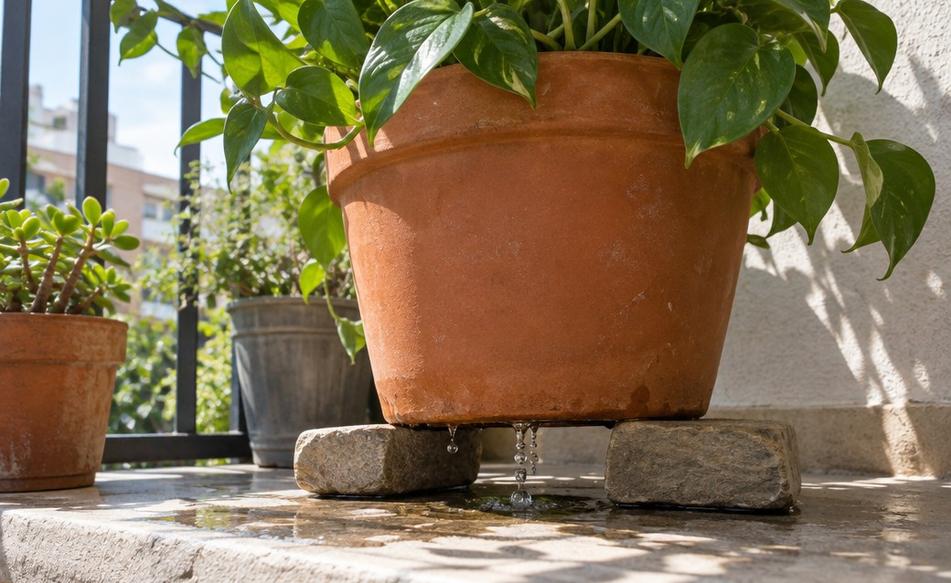
Drainage holes let extra water leave, and gravel in the bottom does not replace them.
Roots that already look brown and mushy are covered in the guide to root rot in potted plants.
How to fix overwatered or dried-out plants
An overwatered plant needs time. Let the top inch or two of soil dry before you water again, and check that the drainage holes are open.
A pot that has dried out completely is harder. The mix shrinks and pulls away from the sides, so water runs straight down the gap and out the bottom.
Set a bone-dry pot in a tub of water for 20 to 30 minutes to rewet the mix. Iowa State gives that time for the job.
After that, water as normal and check the pot daily until the plant recovers.
Moisture meters and self-watering systems
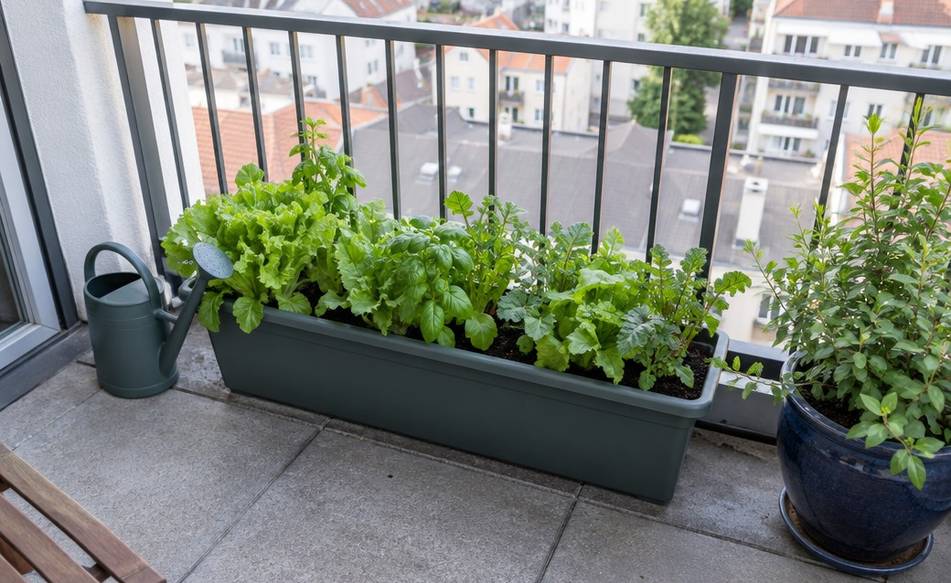
Your finger is the cheapest moisture meter, and a probe only helps in deep pots where you cannot feel the bottom.
Reservoir planters cut down the trips with the watering can, as the guide to self-watering planters explains.
Bottom line
Check pots daily in summer, water until it runs from the holes, and keep the schedule loose. Let the soil and the weather set the pace.