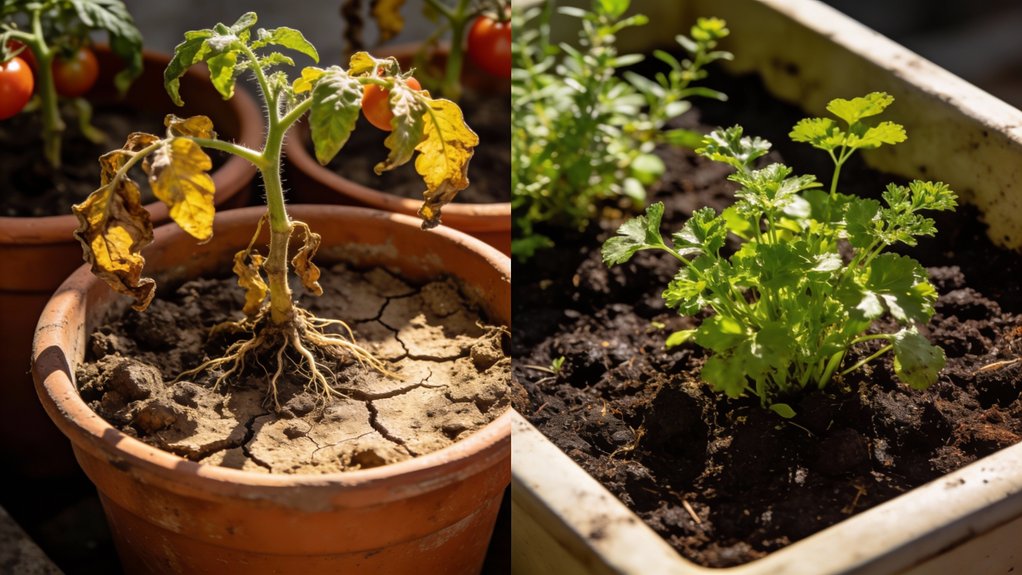
Why is my plant wilting when the soil is wet?
Root rot is one possible cause, says University of Maryland Extension, whose Home and Garden Information Center answers gardening questions.
Root rot can cause wilting even when the soil is wet.
The roots are too damaged to carry water to the leaves.
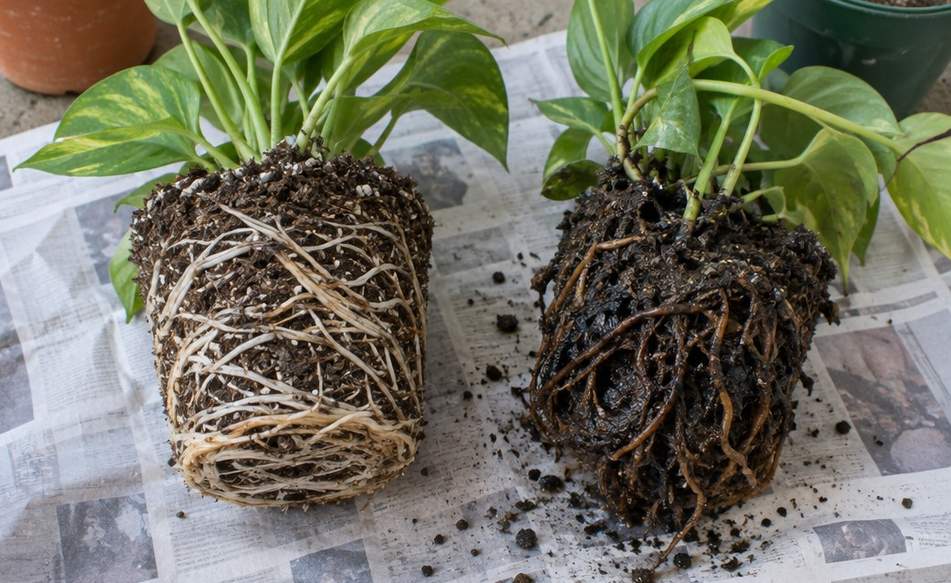
Healthy roots are light and firm, and rotten roots are dark and soft. A plant with healthy roots left can be cut back and replanted.
What you can see above the soil
Maryland lists these signs of root rot:
- Yellowing, browning and dieback of the leaves
- Poor growth
- Wilting even though the soil is wet
- Browning or blackening at the crown (the base of the plant, where the stems meet the roots)
Some root rots also turn the lower part of the stem black, brown or mushy.
The same wilt can come from too little water, so the leaves alone cannot tell you which. The roots are the place to look.
Wisconsin’s Division of Extension, the University of Wisconsin-Madison’s public outreach service, says not to let a plant stand in water.
Maryland says overwatering is usually the number one reason indoor plants die in winter.
Wisconsin adds that root rot organisms thrive in wet soil with poor drainage and air.
How to check the roots
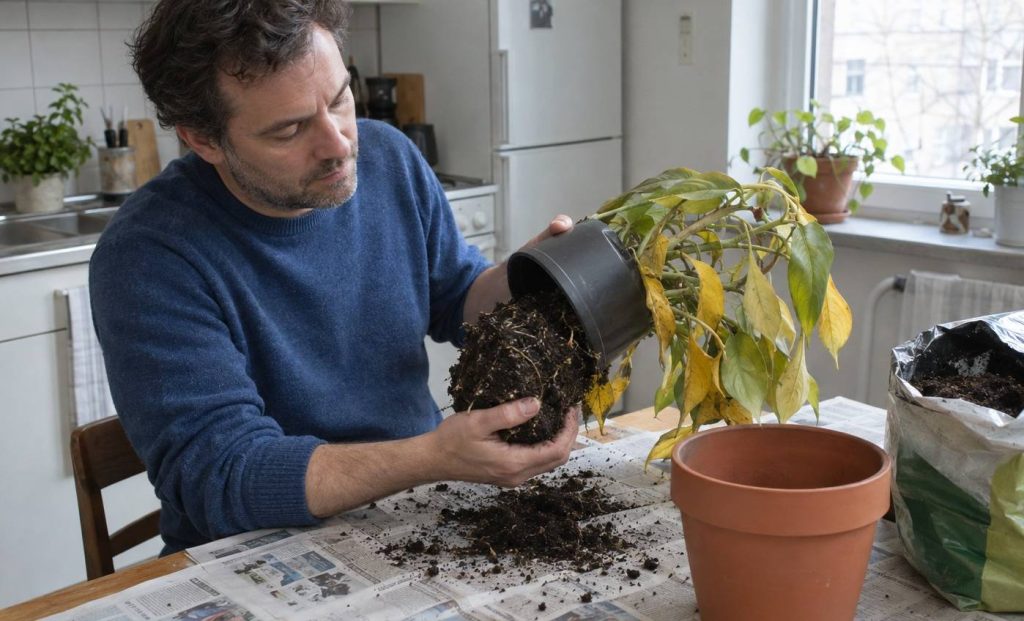
Slide the plant out of its pot. Illinois Extension, the University of Illinois’ public outreach arm, suggests this as a good way to sort out watering problems.
Healthy roots and rotten roots look different:
| What you check | Healthy roots | Rotten roots |
|---|---|---|
| Color | Light-colored, usually white | Dark brown to black |
| Feel | Firm | Soft or mushy |
In pythium root rot (one of the organisms behind root rot), Maryland says the outer part of a root pulls away from the core and leaves a thin thread.
Often most of the root system stays behind in the pot when the plant is pulled up.
Rusty orange to light brown roots point the other way. Illinois says that color means too little water, and dark brown to black means too much.
The rescue
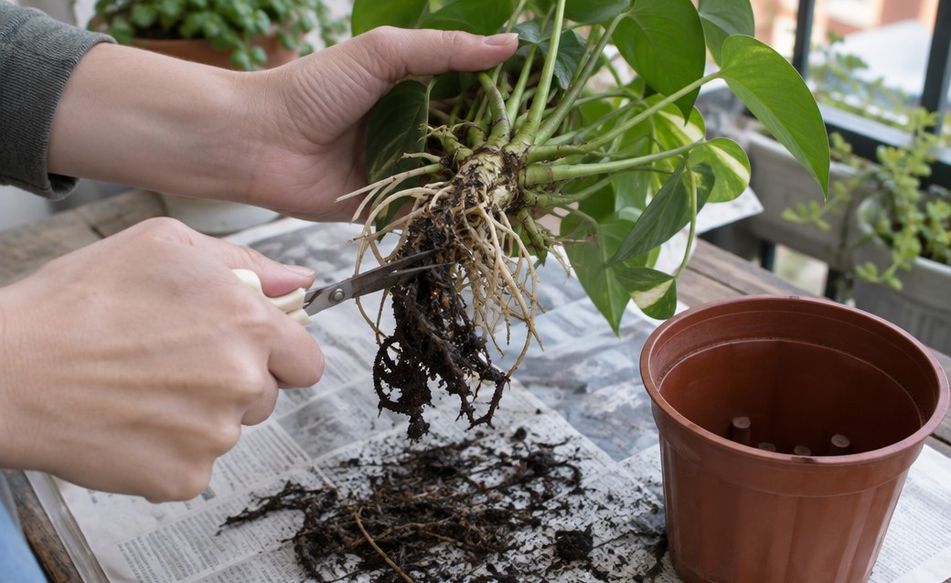
If the roots are dark and soft, Maryland says to remove the plant from its pot. Cut out the rotten parts and replant the healthy sections.
Do it in this order:
- Cut away every dark, soft root and leave the light, firm ones.
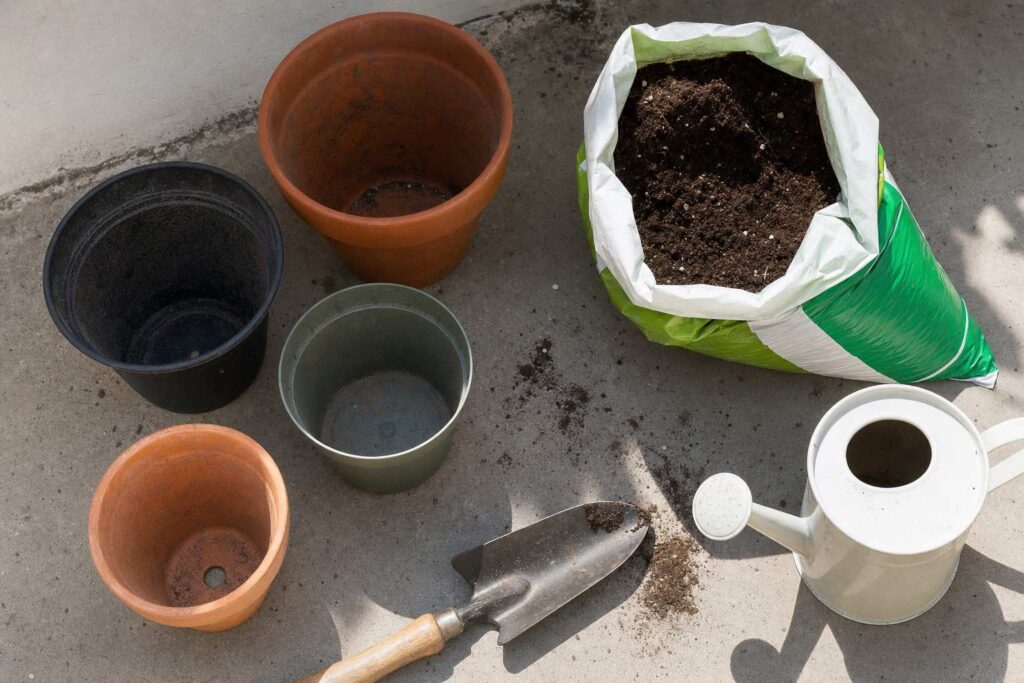
- Pick a clean pot with drainage holes. Maryland recommends clean or new pots for planting.
- Fill it with fresh, well-drained potting mix labeled for houseplants.
- Water only after the soil has dried out, and then restart slowly.
Pot size matters here. Do not move the plant into a bigger pot than it needs. A pot that is too large holds extra soil, and that soil keeps water around the roots.
Skip garden soil. Maryland says to avoid it, and Wisconsin warns that mixes containing soil often drain poorly and may carry root rot organisms.
For the watering restart, Illinois says to withhold water until the soil is quite dry and then begin a new schedule gradually.
In winter, Maryland describes the target as soil like a freshly wrung-out dish towel: not bone dry, but not too moist.
When it is too late
Maryland says to discard severely damaged plants.
If the plant is gone but the stems are healthy, Maryland offers a second chance. Take cuttings from healthy tissue and root them in sterile potting mix.
Do not put the old plant back beside healthy ones. Maryland says to remove and separate infected plants from healthy plants.
Three habits that stop it coming back
Maryland puts proper watering first among its ways to avoid root rot.
Three habits help:
- Unless the plant likes evenly moist soil, water only when the soil is dry. Wisconsin says to push a finger about one inch below the surface and water only if it feels dry. Soil moisture checks and watering schedules for containers are covered under when container plants need water.
- Use a pot that can drain, and empty the saucer. Wisconsin says to water until it seeps out of the holes, then let it drain for 10 to 20 minutes and remove the excess.
- Start clean. Use fresh potting mix and clean pots, and inspect newly bought plants before placing them with your others, as Maryland advises.
A layer of gravel at the bottom does not stand in for real holes. The reason is that gravel in the bottom of a pot does not improve drainage and can make waterlogging worse.
Wisconsin also says to keep a new plant apart from the rest for one to two weeks.
The two weeks that follow
Illinois Extension sets out the timeline for an overwatered plant in two-week steps. The plant dries out and the watering restarts slowly.
Fertilizer comes after two weeks, not before. Then Illinois says to apply a water-soluble fertilizer made for houseplants.
If there is still no improvement in the two weeks after that, Illinois Extension says to repot in fresh soil.