Move a root-bound plant into a pot 1 to 2 inches wider than the old one, and do it in spring.
A pot that is too big keeps the mix wet for too long, and the roots suffer.
Signs your plant needs a bigger pot
Illinois Extension, the University of Illinois’ extension service, lists several signs. Roots growing out of the drainage holes is, on its own, a sign it is time to repot. The others are easy to check:
- Roots appear on the soil surface.
- The soil mass is filled with roots.
- New leaves are smaller than normal.
- The plant wilts between normal waterings.
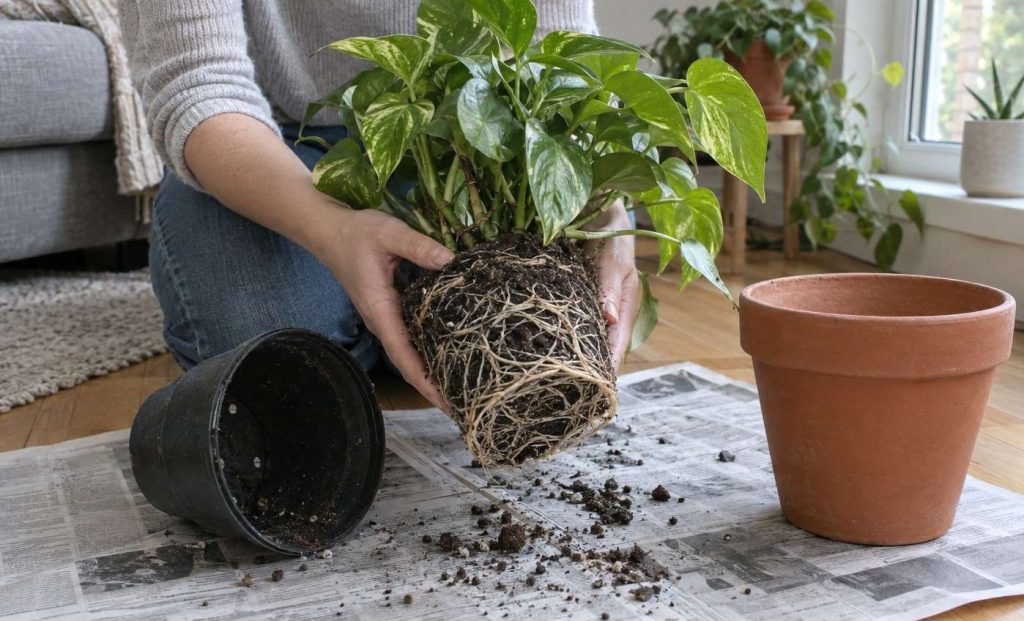
To be sure, slide the plant out of its pot and look. A mat of roots circling the outside of the root ball means it’s root-bound, and it’s time to move up.
Pick the season
Repotting works best when the plant is actively growing.
Illinois Extension says it’s typically done in spring or early summer.
Iowa State University Extension and Outreach publishes the Yard and Garden home gardening resource. It puts the season slightly earlier.
It says most gardeners have the best success in late winter or early spring.
Plan on early spring, which falls inside both windows.
How much bigger the new pot should be
Illinois Extension’s houseplant guide says to move up one pot size.
That means a container 1 to 2 inches larger in diameter. Iowa State says to move up a size, maybe two.
Illinois Extension adds a caution. Putting a small plant into a large pot leaves the soil too wet for too long.
Its blog says an excessively large soil volume can lead to root rot, because the plant can’t use the available water.
Go up one size, not three. For your own pot, stay with the 1 to 2 inch rule for pot size.
Repot in seven steps
- Water the plant about an hour before. Illinois Extension recommends this so the plant is hydrated.
- Choose a pot with a drainage hole. If it’s a reused pot, scrub it, dip it in a 10 percent bleach solution, then rinse it with clean water.
- Knock the plant out of its container and look at the roots.
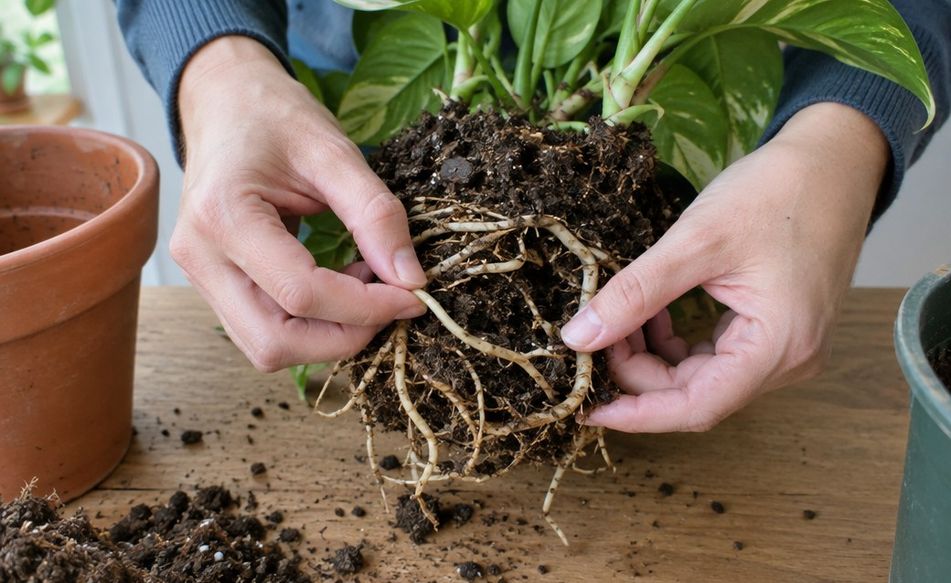
- Cut or unwind any circling roots, so there is no dense mat on the outside of the root ball.
- Fill with fresh potting mix, not soil from the yard. Illinois Extension says not to put gravel or grit in the bottom.
- Set the plant at the same depth it grew in the old pot. Iowa State says the top of the soil should sit at least 1/4 to 1/2 inch below the rim.
- Firm the mix around the roots and water right away.
Illinois Extension’s blog leaves a one-inch gap at the top for watering and plant growth. Anything from a quarter inch to an inch leaves room.
Aftercare and the droop
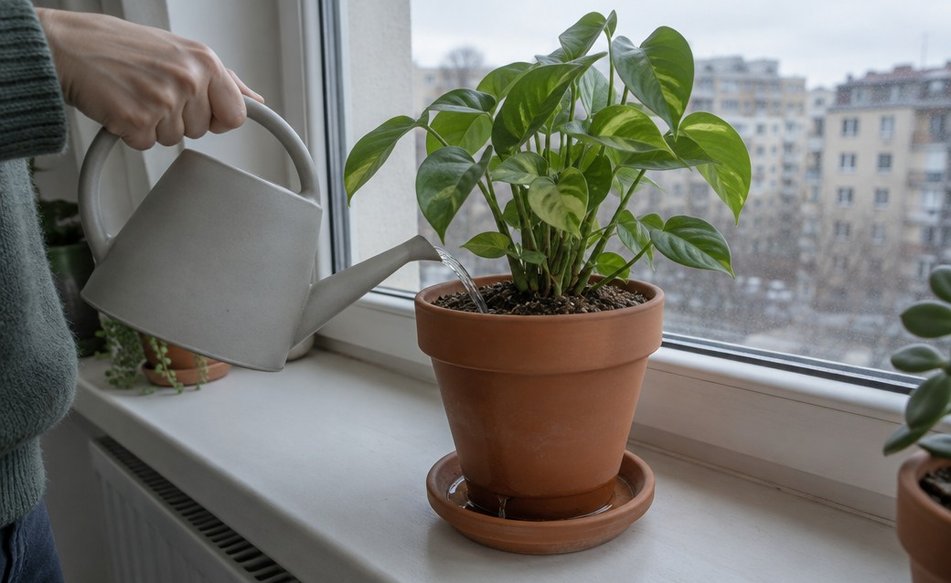
Repotting can be quite stressful for a plant, and it needs enough time, adequate water and the right light to re-establish.
Illinois Extension’s blog says both.
The sources don’t put a number of days on the droop, so judge by the plant, not the calendar.
If the plant keeps wilting in wet mix, check the roots for rot and follow the rescue steps.
Skip fertilizer for now. Iowa State says to wait at least 2 to 4 weeks before regular fertilizing starts again.
When you don’t need to repot
Illinois Extension says some plants need repotting each year, while others may not need it for many years.
Iowa State says most houseplants prefer a root ball in slightly cramped quarters, so frequent repotting is not always needed. Dividing a plant into several smaller ones is a separate job from repotting.
Once it has settled, watch for new leaves at normal size and no wilting between normal waterings.