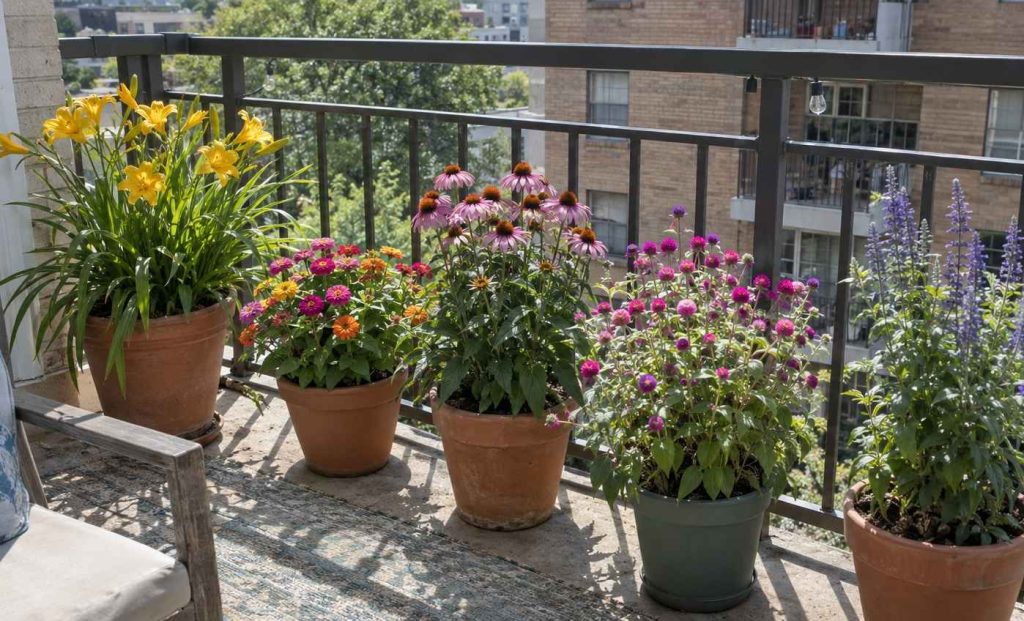
Steady color from early summer to frost comes from plants that keep flowering in heat and recover after each flush. These five do that in pots, and all five want a sunny spot.
- Stella de Oro daylily
- Zinnia
- Purple coneflower (Echinacea)
- Globe amaranth
- Salvia
Each one fits a pot at least 12 inches across, the site’s floor for flowering plants. Below is the sun, care and winter fact for each.
1. Stella de Oro Daylily Reblooms if You Deadhead
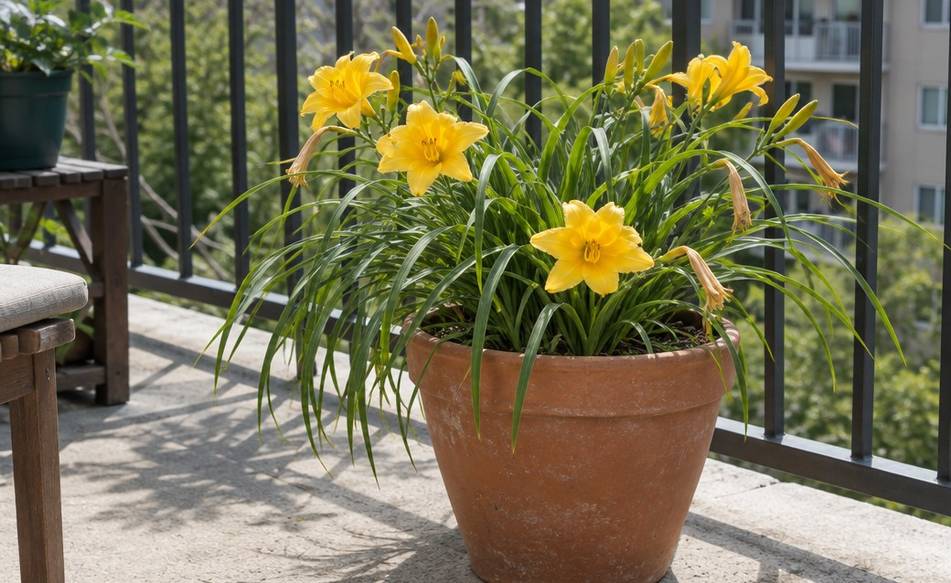
Stella de Oro is sold as a reblooming daylily.
It flowers in waves rather than nonstop, with quiet gaps between them.
Daylilies suit containers and patios. They grow best in full sun to partial shade, and too much shade means few flowers.
Plant one in a 12-inch pot with drainage holes. Remove each spent flower and its base every couple of days.
Daylilies are dangerous to cats. A University of Missouri veterinary toxicologist calls daylily species extremely toxic to cats, so skip this plant if a cat visits your balcony.
Pick off spent flowers and their seed pods often, and the plant keeps making new buds.
2. Zinnia Flowers From Summer to Fall in a Sunny Pot
Zinnia is an annual, so you plant it fresh each spring.
It is colorful and easy to grow, and containers and patio gardens are among its uses.
The Profusion series grows new flowers above the old ones, so no deadheading is needed. Dwarf kinds such as Dasher stay about 12 inches tall, which suits a pot.
Give it full sun and a 12-inch pot. Zinnia is non-toxic for cats and dogs.
Choose a dwarf or Profusion zinnia for a pot, and it blooms without much fuss.
3. Purple Coneflower Blooms From Early Summer to Mid-Fall

Purple coneflower (Echinacea) is a daisy-family perennial with pinkish-purple flowers. Its bloom runs from early summer through mid-fall.
It is drought tolerant once established, and grows in full sun to partial shade. Because it grows tall, pick a pot wider than the 12-inch floor if you have one.
The dark seed heads feed birds, so leave some standing instead of deadheading everything. The plant will reseed itself.
Water a new coneflower regularly in its first season, then let it dry out between waterings once it is established.
4. Globe Amaranth Is a Full-Sun Annual
Globe amaranth (Gomphrena globosa) makes papery, clover-like blooms in pink, purple and white.
It is a summer annual, so you plant it new each year.
It grows 0.5 to 2 feet tall. It thrives in full sun, and it blooms from June until the first frost.
- Use a 12-inch pot of fresh potting mix that drains well.
- Cut a few stems at the end of summer and dry them for arrangements, since the flowers hold their color.
Put globe amaranth in your sunniest spot, never in the shade.
5. Salvia Reblooms When You Cut Back Spent Flowers
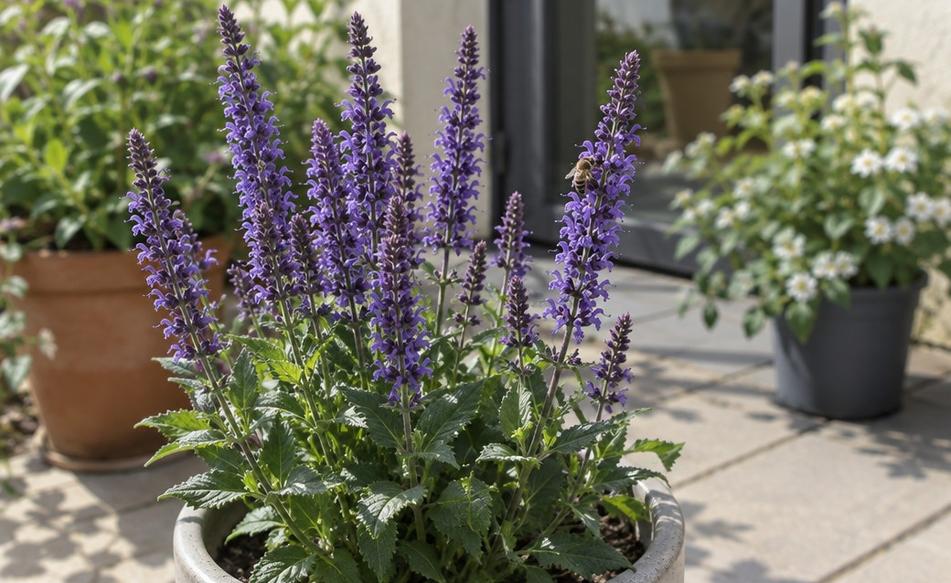
Woodland sage (Salvia nemorosa) sends up violet-blue flower spikes from June to September. Hummingbirds, bees and butterflies visit them.
Cut back the spent blooms and the plant can flower several times. It grows in full sun to partial shade and tolerates dry spells.
A 12-inch pot holds a clump. North Carolina State Extension lists it for USDA zones 4 to 8, and the USDA hardiness map is built from average winter minimum temperatures.
Cut spent flower spikes back and the plant sends up a fresh round.
Match Them to Your Sun and Pots
All five want direct sun for most of the day, so measure the light before you shop. How much sun your balcony actually gets shows how to check it.
Plant each in a roomy pot with drainage holes and potting mix. Choosing the right container size covers how big.
Zinnia and globe amaranth are annuals and end at frost. Daylily, coneflower and salvia are perennials, but a zone rating assumes roots in the ground.
Illinois Extension, the University of Illinois’s public gardening advice service, says to pick perennials rated two zones colder than yours.
It adds that large containers protect roots better, so group the pots in a sheltered corner. Surviving winter outside in a container explains why.
Check pots daily in summer, because sun-loving plants in containers dry out fast.