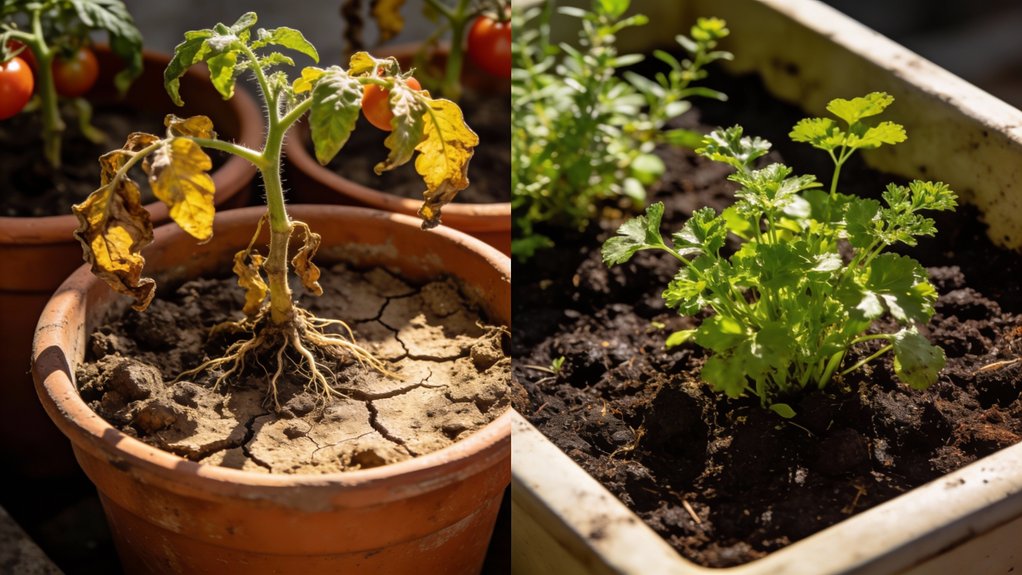
Your tomato was growing well three weeks ago. Now the leaves have gone pale, new growth has stalled, and nothing about your routine looks different.
This is not a disease. It is not a black thumb. In midsummer, it is almost always hunger.
Why watering also washes the food away
A garden bed sits on top of a huge volume of soil.
It is full of organic matter and a slow-turning web of microbes that keep releasing nutrients. A pot has none of that depth.
The University of Illinois runs a free public gardening service called Extension. It reports that frequently watering containers leaches nutrients out, and they need replacing regularly.
Every soak that keeps your plant alive also carries some of its food out through the drainage holes.
The more often you water, the faster a container runs out of nutrients.
That is the whole mechanism.
It has nothing to do with skill and everything to do with pot volume.
Fresh potting mix hides this for the first few weeks.
It carries a starter charge of nutrients from the bagging process, and that charge runs out fast.
That is one reason choosing the right mix matters as much as choosing the pot. Once that charge is gone, the plant depends entirely on what you add.
Garden beds do not lose nutrients the same way
In the ground, rain and irrigation soak past the root zone slowly, and a much larger volume of soil buffers the loss.
Roots also reach further, into soil a container simply does not have.
That is the short version of why the same plant, grown in the ground, rarely shows this pale, stalled look by midsummer.
It is not that garden soil is magic.
A garden bed has far more soil, and far more time, to buffer nutrient loss than a pot ever will.
A bigger pot holds more mix and more of a nutrient buffer, but even a big pot still needs feeding eventually.
Two feeding methods that actually work
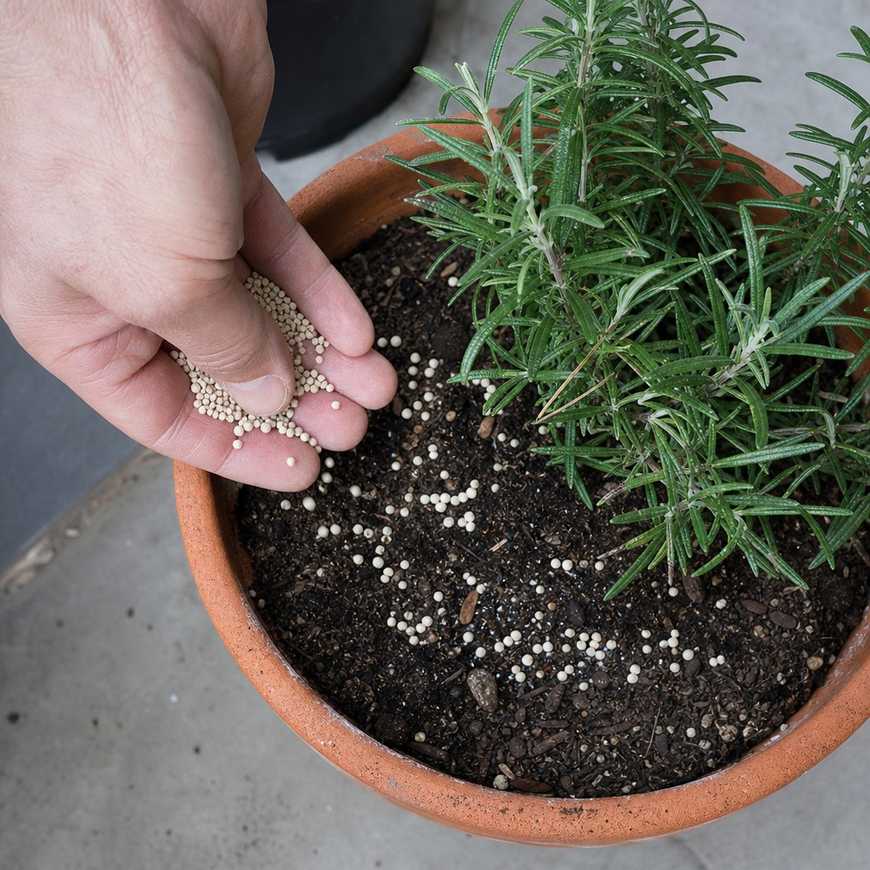
You do not need a complicated schedule. Illinois Extension, the public outreach service of the University of Illinois, outlines two approaches, and either one is enough for a beginner.
- Slow-release fertilizer. Mix it into the potting media or scatter it on the surface at the label rate.
- Liquid fertilizer. Mix it with water and reapply roughly every two weeks. This gives most containers adequate nutrition through the growing season.
- A hybrid option. Feed at every watering with a half-strength solution, and occasionally water with plain water to leach the pot clean.
Slow-release products made for annuals typically feed the plant for three to four months, depending on heat and how often you water.
Pick one method and stick with it rather than mixing all three.
Consistency matters more than which option you choose.
One timing habit prevents most feeding mistakes.
Apply fertilizer when the potting mix is already moist, never bone dry, since feeding dry roots can burn them instead of helping.
Consistency matters more than which option you choose.
Matching the fertilizer to the plant
Not every container wants the same feed. Foliage plants, the ones grown for their leaves, prefer higher-nitrogen fertilizer.
Flowering plants and vegetable crops want the opposite balance: lower nitrogen, higher phosphorus.
Nitrogen pushes leafy growth at the expense of blooms and fruit, so a tomato fed like a houseplant grows lots of green and little fruit.
Check the three numbers on the label before you buy. The middle number, phosphorus, matters most for anything you want to flower or fruit.
Reading the signs before they get worse
Overwatering and underfeeding cause a lot of the same pale, stalled look.
That is one reason it lands on the list of common container mistakes beginners run into first.
Before you reach for fertilizer, check the soil the way you would for watering frequency: if it is soggy, the problem is water, not food.
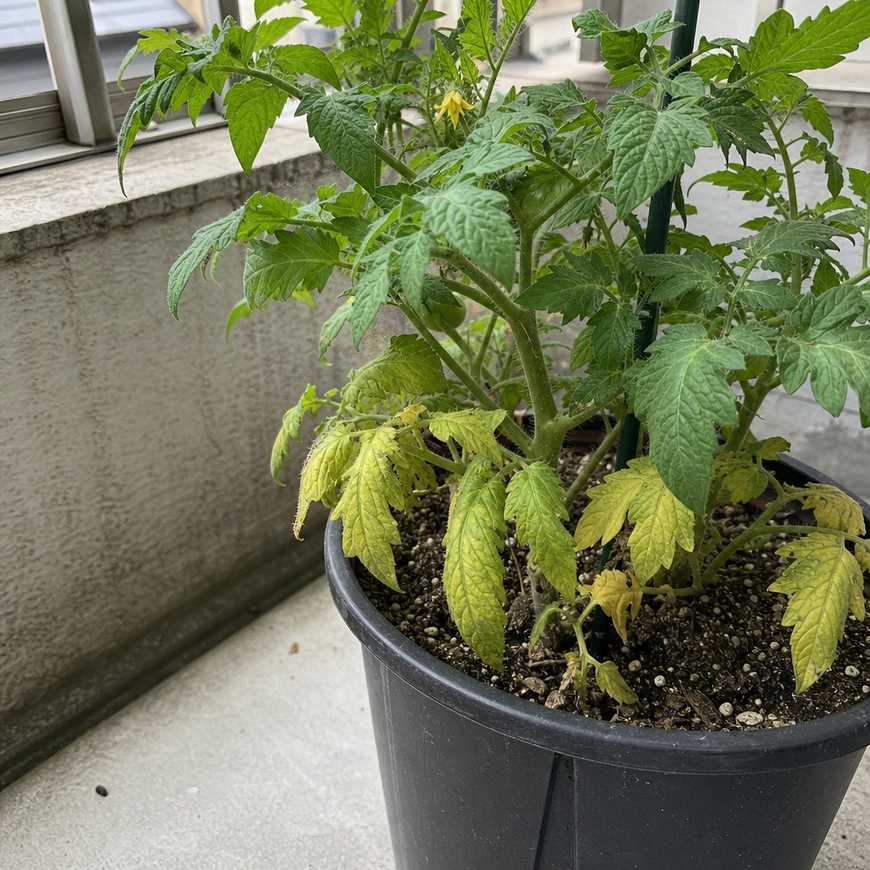
A plant that is watered on schedule and still looks pale and stalled is usually hungry, not sick.
Older leaves yellowing first, weak new growth, and a general lack of vigor are the classic hunger signs.
Most container failures are too small pots, wrong soil, or overwatering, rarely a real black thumb.
Hunger from leaching just belongs on that same short list.
If you want to compare products before you buy, you can compare liquid fertilizers for container plants on Amazon.
Heads up: some links on this page are affiliate links. Buying through them supports the site with a small commission and does not raise your price.
Pick one suited to what you are growing.
Building the habit
Pin a feeding day to your calendar the same way you already track watering.
Every two weeks for liquid feed, or once at planting plus a check-in a few months later for slow-release, is enough for most balcony setups.
Containers dry out far faster than the ground; in summer, check the soil every day.
Treat feeding as the other half of that same daily attention, not a separate chore you have to remember on its own.
A pot that gets watered and fed on a rhythm will keep growing well long after an unfed one has stalled out.