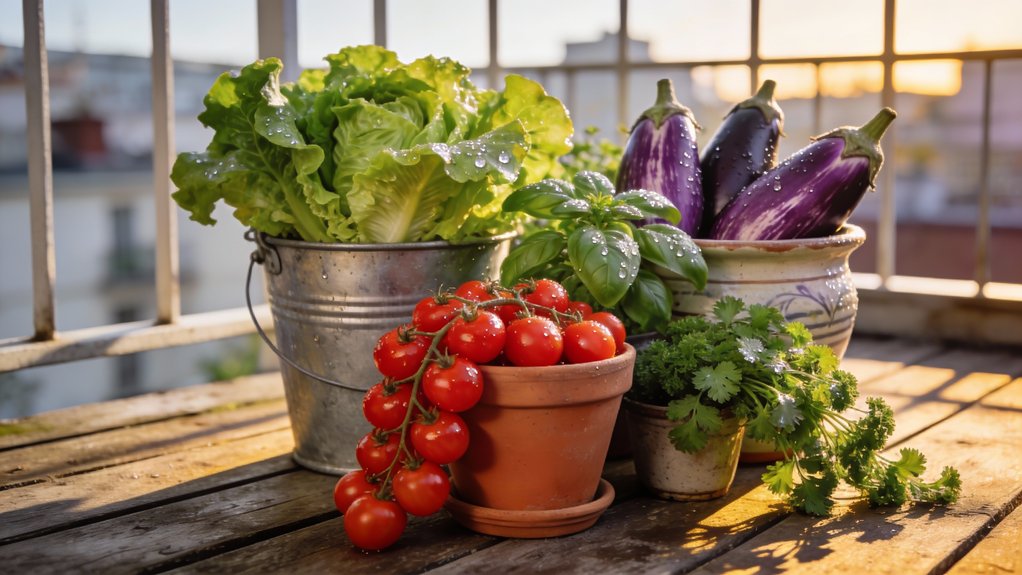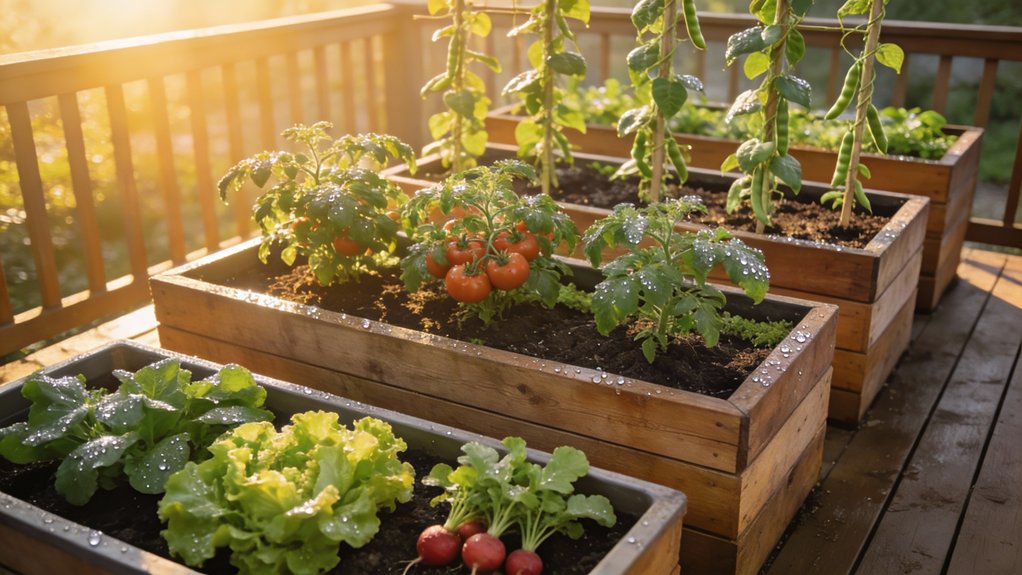
Container depth matters more than width for most vegetables: roots grow down before spreading out.
Lettuce works in a shallow pot, but tomatoes need a deep one. Colorado State University Extension, the state university’s public gardening advice office, lists leaf lettuce at 8 inches deep and tomatoes at 12.
The difference between success and wilted plants often comes down to matching the pot to the plant’s roots. Check the pots in your cupboard before you buy vegetables, and understand which crops forgive small pots and which will frustrate you.
This guide ranks container vegetables by how easy or hard they are to grow. Start at the top of the list and work down.
Why Vegetables Do Well in Container Gardens
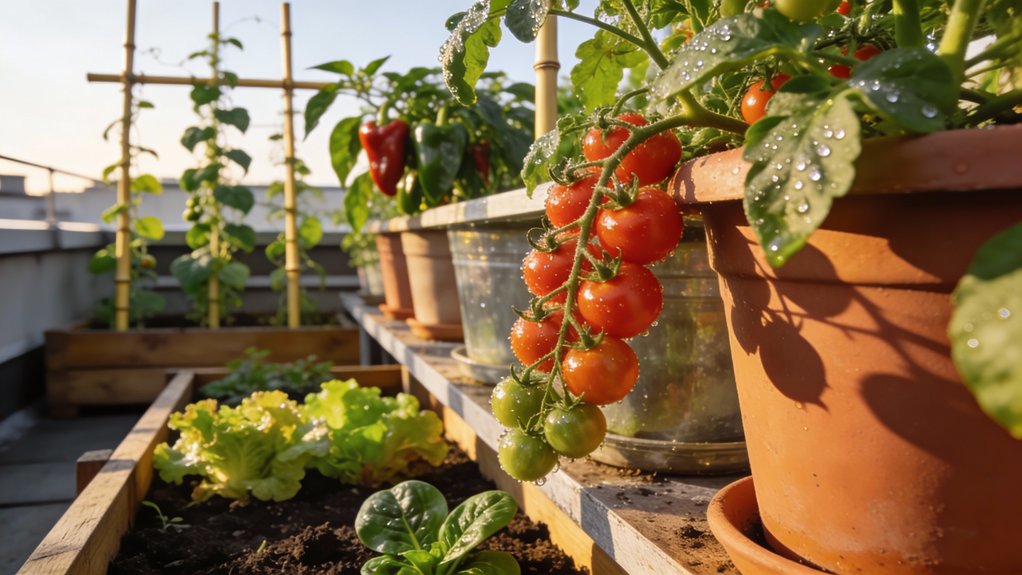
Containers give you control that is hard to match in the ground. You pick the soil, the spot and the drainage.
A bagged potting mix stays loose and drains well, so roots do not suffer from compaction.
A garden bed needs digging and amending, which pots skip entirely. The difference between garden soil and potting mix explains why a pot gets a bagged mix instead.
For urban gardening, put plants wherever the sunlight hits: patios, balconies, even fire escapes.
Busy gardeners can use sub-irrigated planters, which hold a water reservoir and cut the daily watering for busy gardeners.
Use shelves and hanging baskets to fit more plants into the same footprint. Pick the sunniest wall or railing first.
Easiest Container Vegetables for Total Beginners
Success starts with vegetables that forgive mistakes and grow fast enough to keep you motivated.
These beginner favorites deliver results without demanding perfection:
- Radishes: Ready in about 25 to 35 days, per University of Maryland Extension, so a mistake costs you little
- Leafy greens: Lettuce gives quick harvests from a pot about 8 inches deep, and kale wants 10 inches and 5 gallons
- Herbs: Basil and parsley need little more than regular watering
- Bush beans: Fast-growing varieties that need no support
- Spinach: Gives several harvests in cooler weather
These crops tolerate beginner errors and teach you the basics of watering and feeding. Because container plants need daily attention in summer, starting with forgiving vegetables builds confidence before you try fussier ones.
Intermediate Container Vegetables Worth the Effort
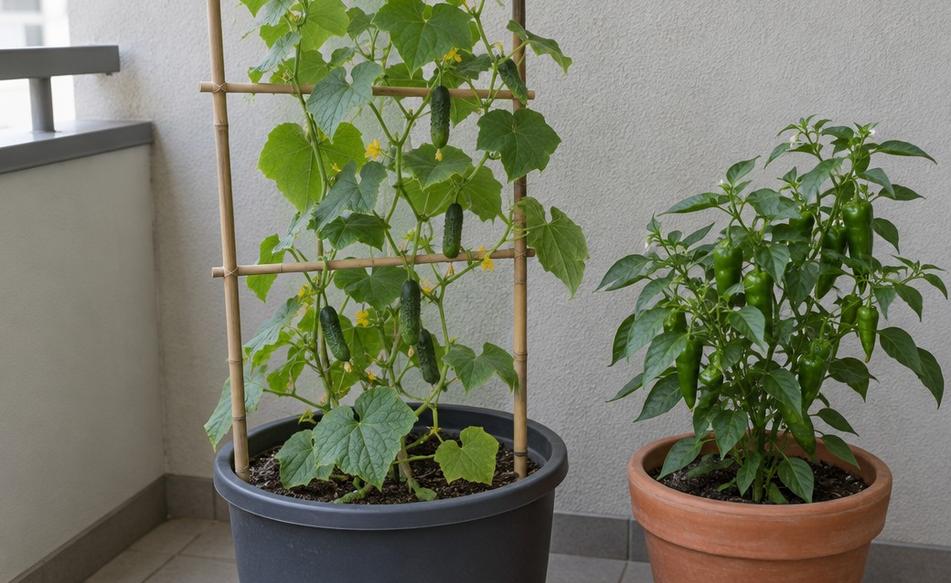
Once you have the basics, these vegetables give bigger harvests and more variety.
They test your skills with pests and steady watering, but nothing unmanageable.
Broccoli, cabbage and collard greens need regular checks for caterpillars and some protection from cold. Colorado State University Extension lists them at 10 inches deep and 5 gallons per plant.
Tomatoes give big harvests but need steady water and a disease-resistant variety. Inconsistent watering also causes blossom end rot, a black sunken patch on the fruit.
Eggplants can suffer from flea beetles and wilt, so choose compact varieties. Peppers handle pots well if you keep the watering steady.
Cucumbers need a trellis and early planting to dodge powdery mildew. Potatoes are workable too, in a medium to large container with room to hill up the soil.
These crops are not difficult, and they teach you real gardening skills. Add one at a time.
Advanced Container Vegetables for Experienced Gardeners
After a few seasons of peppers and cucumbers, you will know when a crop needs more than routine care.
These crops ask for closer monitoring and more space:
- Squash needs a wide spread and a big pot, and watching for bugs and powdery mildew.
- Cauliflower matures slowly and wants cool weather to form a good head.
- Brussels sprouts need large containers and a long season in cooler temperatures.
- Sweet potatoes need a big pot to hold their sprawling vines.
Pot Sizes for These Vegetables
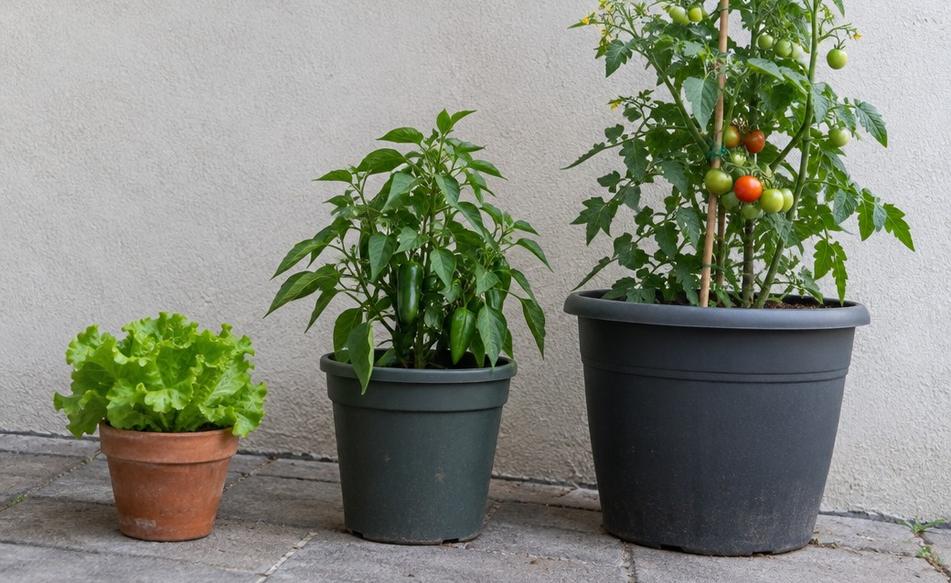
Pot sizes for each of these crops, from Colorado State University Extension’s container table, are in best container vegetables for small spaces. Bigger is always easier.
Watering Container Vegetables
Pots dry out fast, so most vegetables want a look every day in summer, and Iowa State University Extension, the university’s public gardening advice service, backs that. The full routine is in best container vegetables for small spaces.
Soil and Drainage
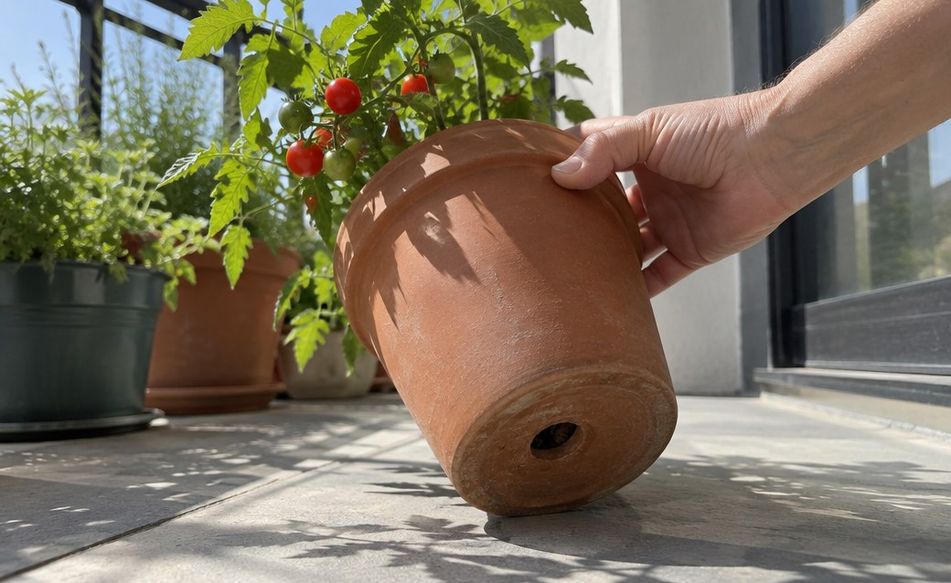
Bagged potting mix and drainage holes are the whole answer for every crop on this list. The reasons are set out in best container vegetables for small spaces.
Common Container Vegetable Mistakes and How to Avoid Them
Plenty of experienced gardeners slip up when they switch to pots. These are the usual ones:
- Overwatering from poor drainage: drill extra holes and check soil moisture before watering
- Garden dirt used instead of proper potting mix
- A pot smaller than the Extension minimum for tomatoes and peppers
- Plants packed too close together, which limits airflow and raises disease risk
- Pots placed where they get under six hours of direct sunlight
Each of these is easy to fix once you see it. For a fuller diagnosis, the container gardening mistakes guide goes through them in detail.
For picks chosen for tight spots, see the best container vegetables for small spaces.