Most balconies can only handle 50-100 pounds per square foot, which means your dream garden might exceed your building’s structural limits before you even plant your first tomato.
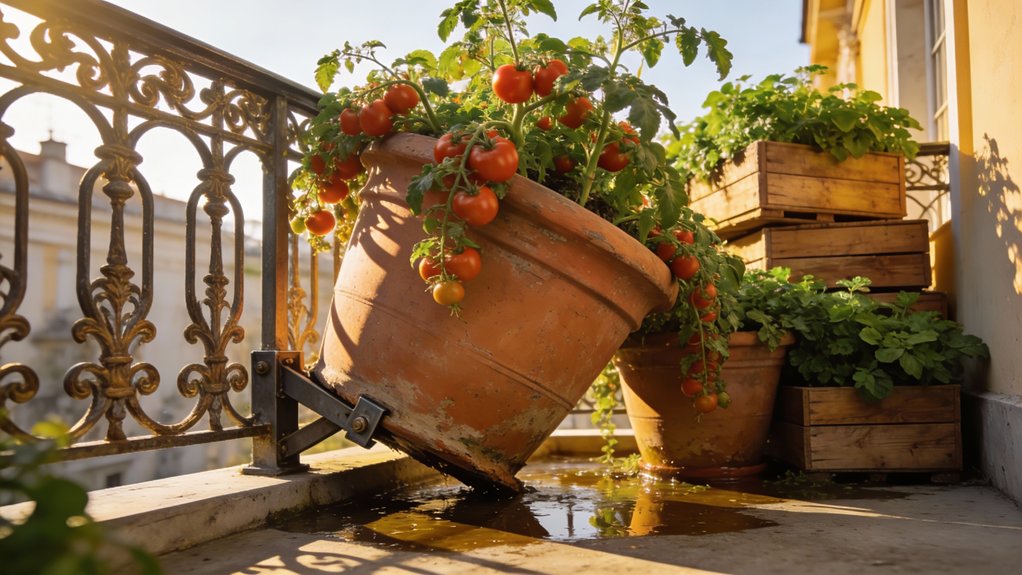
You’ll need to calculate container weight when wet: soil, water, and a large planter can easily hit 150 pounds, then multiply by the number of pots you’re planning.
Before you buy anything, there are seven critical factors that’ll determine whether your balcony garden thrives or becomes a costly mistake.
This is the quick, seven-point checklist. For a fuller walkthrough, see balcony gardening for beginners.
Confirm Weight Limits and Balcony Gardening Rules
Before you buy your first pot or plant a single seed, confirm that balcony gardening is actually allowed in your building.
Check with your landlord or condo board about regulations and plant restrictions. Some buildings prohibit certain vegetables that attract pests or birds.
Balconies have structural capacity restrictions. Pots filled with soil and plants add up quickly, especially ceramic or terra cotta containers.
Opt for lightweight plastic or fiberglass options instead. Consider using self-watering containers to reduce water waste while keeping weight down.
Monitor your garden’s total weight regularly to stay within safety guidelines and avoid structural problems.
Determine Your Sunlight Hours and Wind Exposure
Understanding your balcony’s light and wind conditions will determine which plants thrive and which ones struggle.
Check your balcony’s orientation first: south-facing spots get maximum sunlight while north-facing areas need shade-lovers.
Use a sunlight calculator to track daily direct sun hours. Six hours means full sun; less than four requires shade-tolerant varieties.
Wind patterns matter too, especially on higher floors. Strong gusts dry out soil and damage stems.
Consider these protective measures:
- Install lattice panels to create windbreaks
- Position heavier containers along exposed edges
- Group plants together for mutual wind protection
Monitor temperature fluctuations since reflective surfaces amplify heat considerably.
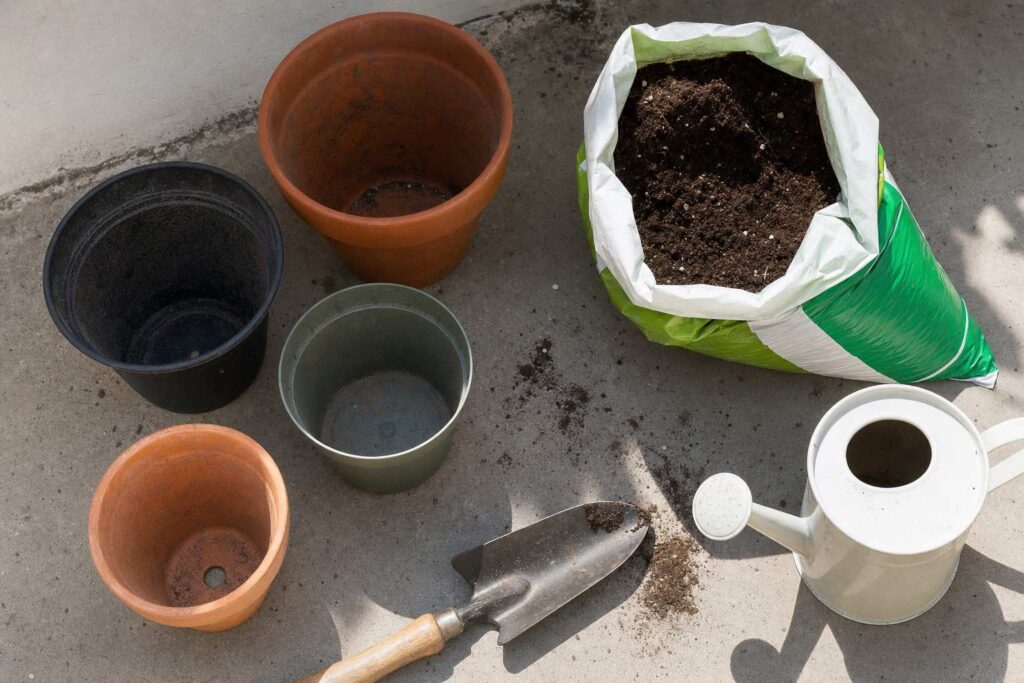
Potting mix provides superior aeration and drainage compared to garden soil. That makes it essential for healthy container plants in windy conditions where frequent watering may be necessary.
For choosing the right mix, the guide on potting mix choices is worth a read.
Select Containers and Potting Mix for Balcony Conditions
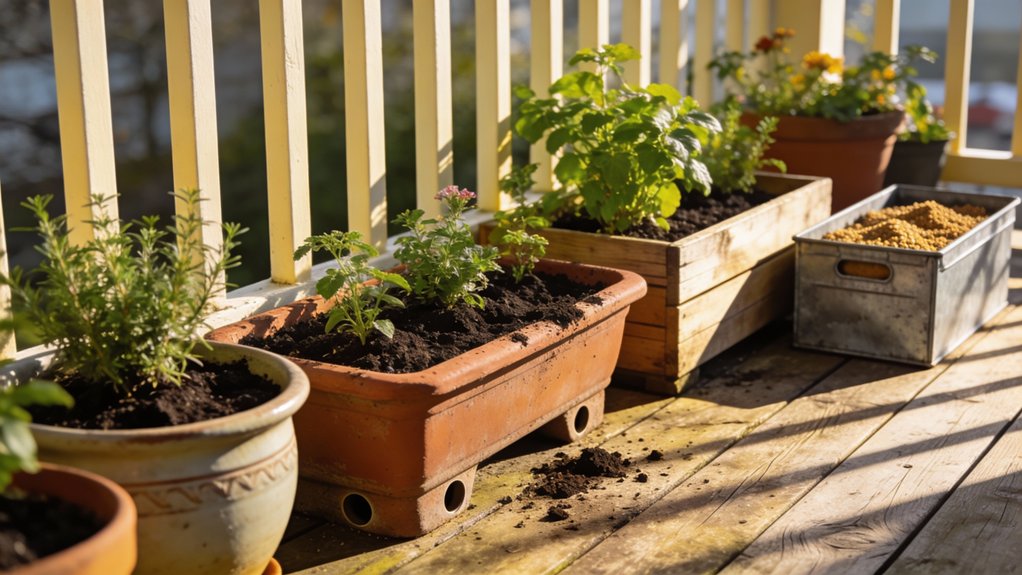
Three key decisions shape your container setup: weight capacity, drainage design, and soil composition.
Start with lightweight materials like resin or fiberglass. They won’t strain your balcony’s structure, and they’re far easier to rearrange than ceramic.
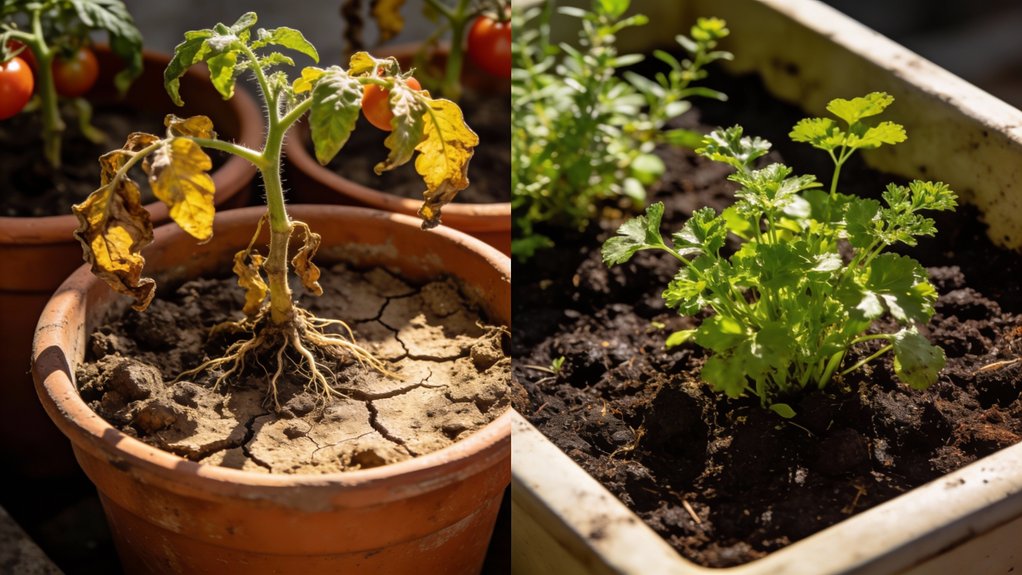
Always verify that pots include drainage holes at the bottom to prevent waterlogging and root rot.
Choose high-quality potting soil with organic compost mixed in for proper drainage and nutrient retention.
Match container sizes to your plants’ needs: tomatoes and peppers require larger pots, while herbs thrive in smaller ones.
Plan to refresh your potting mix regularly to maintain ideal drainage and guarantee your plants receive adequate nutrients throughout the growing season.
Best Vegetables, Herbs, and Flowers for Containers
Your plant selection determines whether your balcony garden produces abundant harvests or struggles to survive.
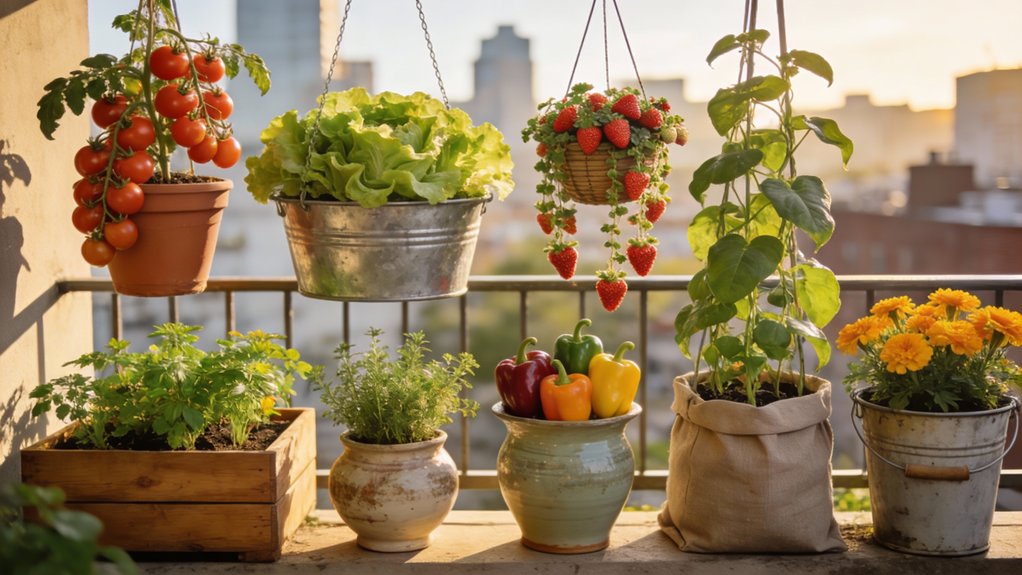
The best container vegetables include cherry tomatoes, peppers, and salad greens: they’ve got shallow roots that adapt perfectly to limited space.
Ideal container herbs like basil, mint, and rosemary need minimal care and deliver fresh flavors for your kitchen.
Vibrant container flowers such as petunias, marigolds, and begonias add color while attracting helpful pollinators.
Look for compact vegetable varieties bred specifically for containers:
- ‘Patio Princess’ tomatoes stay dwarf-sized yet produce abundantly
- ‘Baby’ zucchini fits small spaces without sacrificing yield
- Pansies handle varying light conditions with remarkable resilience
Compact, container-bred varieties outperform standard cultivars in small-space conditions every time.
Arrange Containers to Maximize Balcony Space
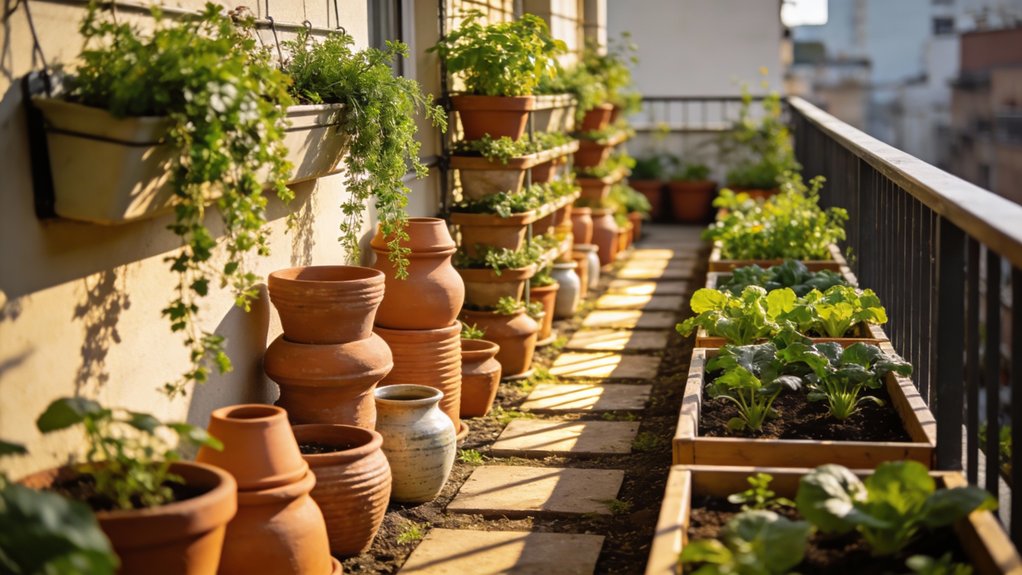
Smart container arrangement transforms a cramped balcony into a productive growing space that handles two to three times more plants than a basic floor-level setup.
Install shelving units or wall-mounted planters for vertical arrangement that frees valuable floor space.
Hang baskets from railings at different heights to add dimension. Position larger pots along edges to create natural borders, keeping smaller containers accessible in central areas.
Group plants with similar water and sunlight needs together for efficient care.
Combine cascading varieties with upright plants for effective plant layering that creates visual depth.
This strategic approach maximizes every square inch available.
Water Container Gardens Efficiently Without Flooding Neighbors
Proper watering keeps your balcony plants thriving while protecting the neighbors underneath from unexpected drips and puddles.
Start with drainage solutions like containers with holes and saucers below to catch runoff.
Self-watering pots or drip irrigation systems connected to outdoor faucets regulate water delivery automatically. Water early morning or late evening when evaporation rates drop, allowing plants to absorb moisture efficiently.
Essential watering techniques include:
- Check soil moisture with a meter before watering to prevent soggy roots
- Adjust frequency based on weather: daily during heat waves, less when cool
- Monitor saucers regularly to empty standing water
These simple practices prevent overflow while maintaining healthy plants.
Keep Balcony Container Plants Healthy Year-Round
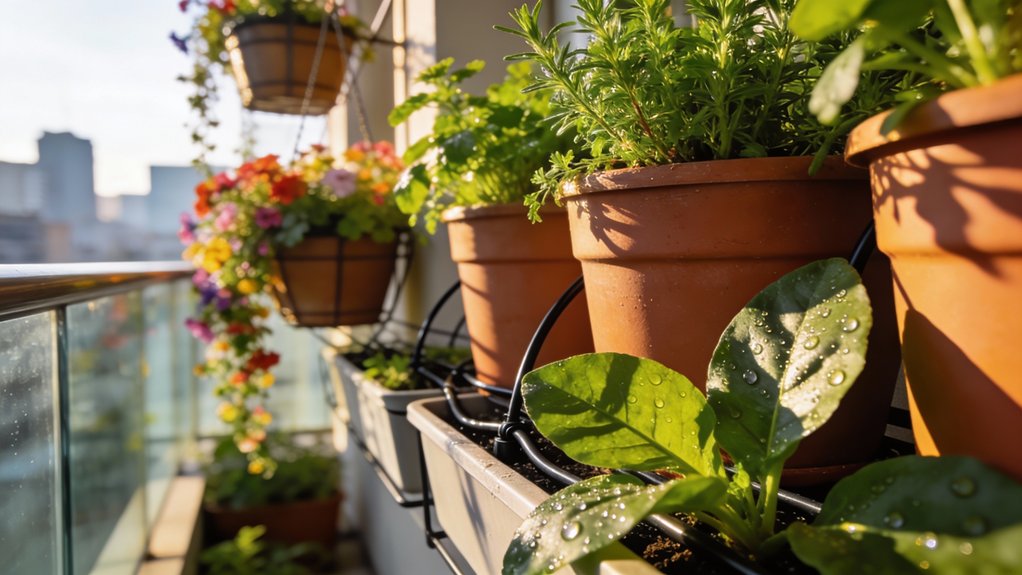
Watering correctly sets the foundation, but container plants need ongoing attention across all seasons to stay productive and vibrant.
Check soil moisture weekly by testing the top inch, water when it feels dry.
Use quality potting soil mixed with compost for proper drainage and nutrients.
Prune and deadhead regularly to promote fresh growth and prevent disease.
For pest control, inspect plants weekly for aphids and spider mites, treating infestations quickly.
Adjust your routine seasonally: reduce watering in cooler months and protect sensitive plants during winter.
These consistent practices keep your balcony garden thriving throughout the year.