New potatoes can be dug 6 to 8 weeks after planting, usually once the plants have flowered. That is the figure University of Maryland Extension, the university’s statewide education system, gives for home gardens.
A bucket or grow bag can carry the plants that far.
You start with seed potatoes, plant low, and keep covering the stem as it grows.
A container usually gives fewer potatoes than a garden bed, but one plant can still produce a good number of tubers.
Seed potatoes, not grocery potatoes
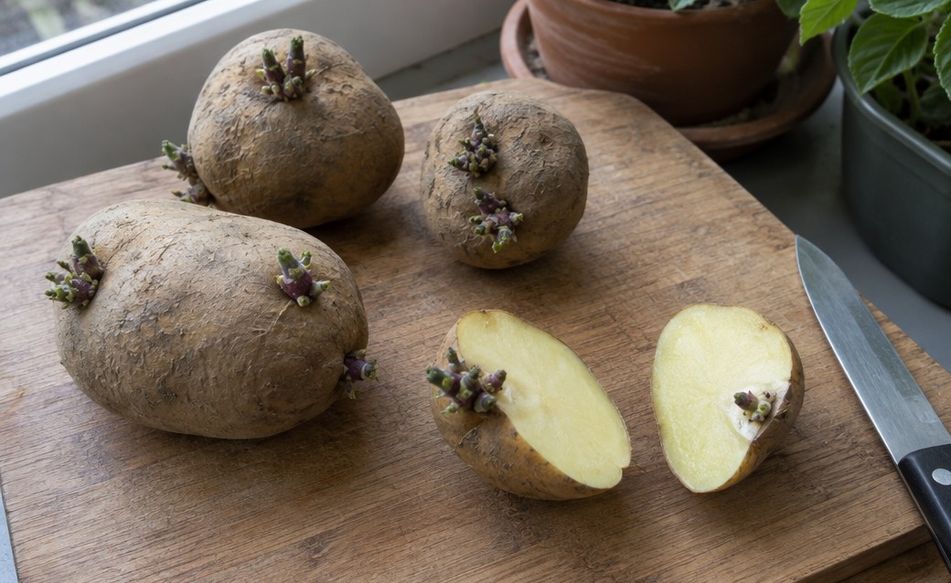
Grocery potatoes are the wrong starting point.
The University of New Hampshire (UNH) Extension says store potatoes are often treated with sprout inhibitors, so they usually will not grow.
Maryland adds a second reason.
It says supermarket potatoes can carry disease with no visible symptoms, and it advises you to buy certified seed stock.
Certified seed potatoes are sold for planting, so they are not treated against sprouting and are certified disease-free. Buy them in spring from a garden center or a catalog.
Cut a large seed potato into pieces of 1 to 2 inches, each with at least one eye (a small sprouting bud). Small ones can go in whole.
Let cut pieces dry for a day or two before planting, which reduces rot.
A bucket or bag that holds enough
Plan on five gallons of mix for each plant. At five gallons per plant, a 5-gallon bucket holds one plant and a 15-gallon bag up to three.
UNH’s ideal container holds 10 to 15 gallons and stands about 2 to 3 feet tall.
Any opaque container works, such as a barrel or storage tub, as long as it has drainage holes.
Oregon State University Extension asks for more. It says at least 18 inches wide and 3 feet deep, and a shallower pot gives fewer potatoes.
Use potting mix, not garden soil. Garden soil compacts easily and can carry disease.
Plant low, then keep covering the stem
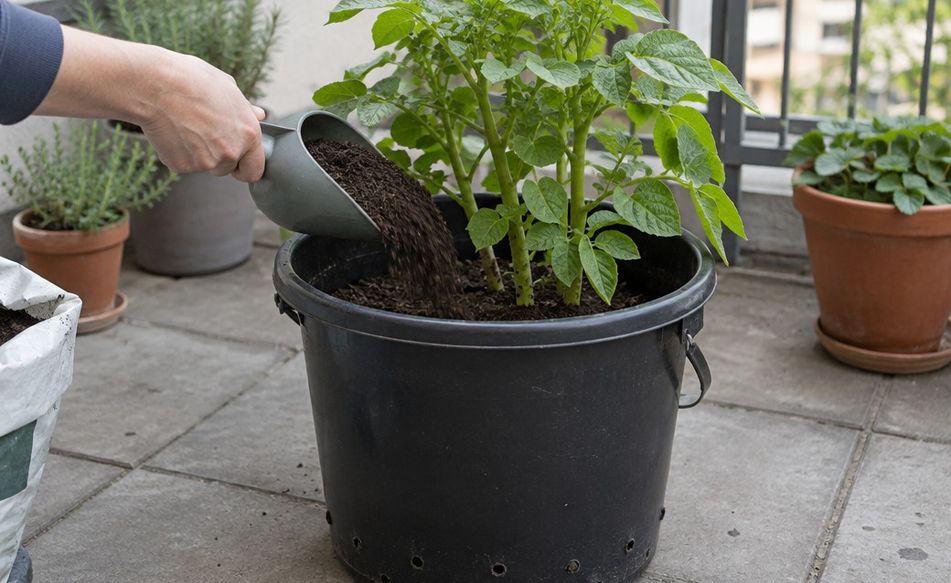
Start with 6 to 8 inches of potting mix in the bottom. Set the seed potatoes on it and cover them with another 6 inches.
Then wait for green growth.
As the plant rises, keep mounding mix around the main stem, leaving about 6 inches of foliage showing. New tubers form along the buried stem.
Oregon State puts the first top-up at about the time the plant is 6 inches tall. It names soil or straw.
This is why a tall container beats a wide, shallow one.
Water and light
Water when the top 1 to 2 inches of mix feel dry. Keep watering until some runs out of the bottom holes.
Containers taller than about 3 feet are harder to water evenly, and a soggy bottom can rot the tubers.
Give the container at least 6 to 8 hours of direct sun.
Feed every couple of weeks once shoots appear, using a fertilizer with more phosphorus than nitrogen.
Keep the mix moist, never soggy.
A planting-to-harvest calendar
The dates below shift with your climate.
| Step | When |
|---|---|
| Plant seed potatoes | Spring. Maryland gives March 15 to May 1 for its gardens |
| Add mix around the stem | Once the plant is about 6 inches tall, then keep mounding |
| First new potatoes | 6 to 8 weeks after planting, usually once the plants have flowered |
| Main harvest | When the tops yellow and die back, about 90 to 120 days |
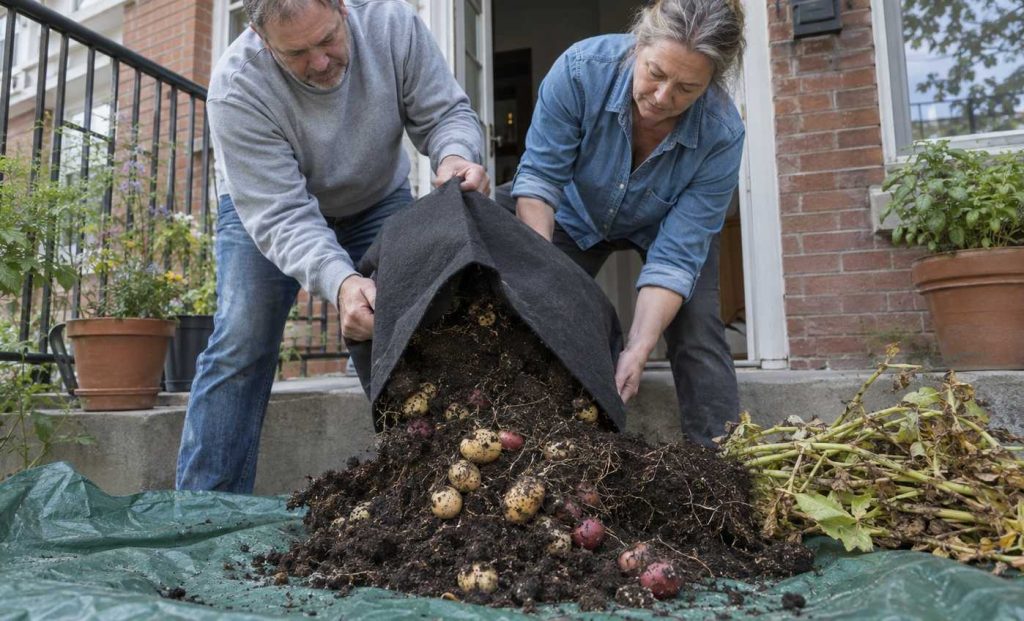
To harvest, spread a tarp and tip the container onto it.
Handle the tubers gently and keep them out of light, which turns them green.
New potatoes come first and the full crop follows. Dig a few early if you cannot wait, and leave the rest to finish.
Buckets, bags and seed potatoes to buy
You can start with a plain bucket and a drill.
A grow bag is the other route, and the SORANGEUN 15 gallon potato grow bags are one option.
SORANGEUN lists a 2-pack with two Velcro flaps in each bag for checking and harvesting. The handles are reinforced.
Heads up: some links on this page are affiliate links. Buying through them supports the site with a small commission and does not raise your price.
For the seed potatoes, a garden center or catalog is the usual route, and you can also look through seed potatoes on Amazon.
Choosing between fabric and plastic, or sizing bags for other crops? Read which grow bag size suits which crop before you buy more than one.
Beyond the potato bag
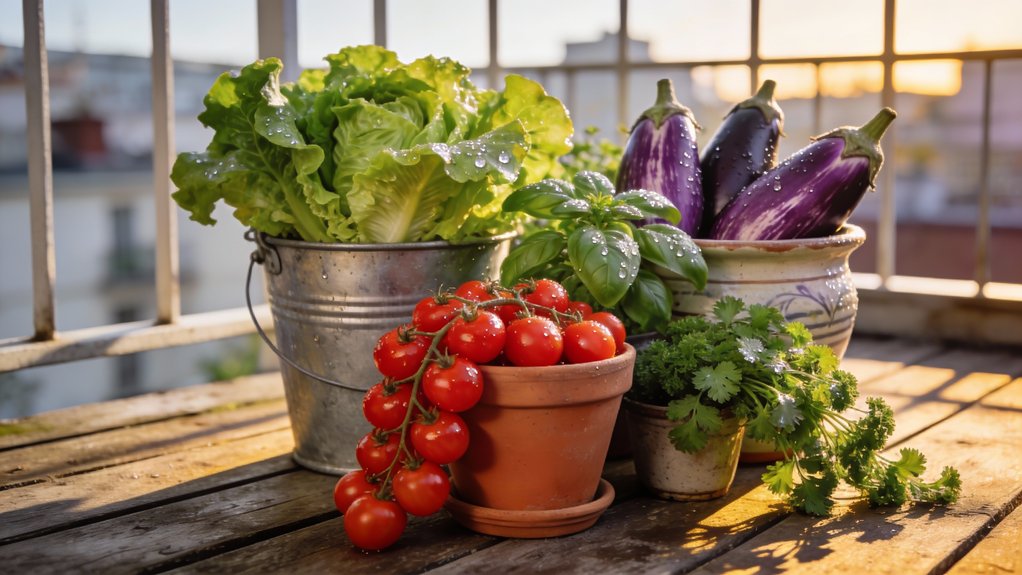
Potatoes are one crop among many that suit a balcony, and the best container vegetables for small spaces run from lettuce to peppers and tomatoes.
When the potato bag is empty, fall is also the time to plant garlic in a pot.