A clove pushed into a pot this October grows roots before the freeze and rests all winter. By June or July it is a full bulb of garlic.
Garlic does grow in a pot, and fall is the most reliable time to start it. It needs a stretch of cold to form a bulb, so fall is the dependable time to plant.
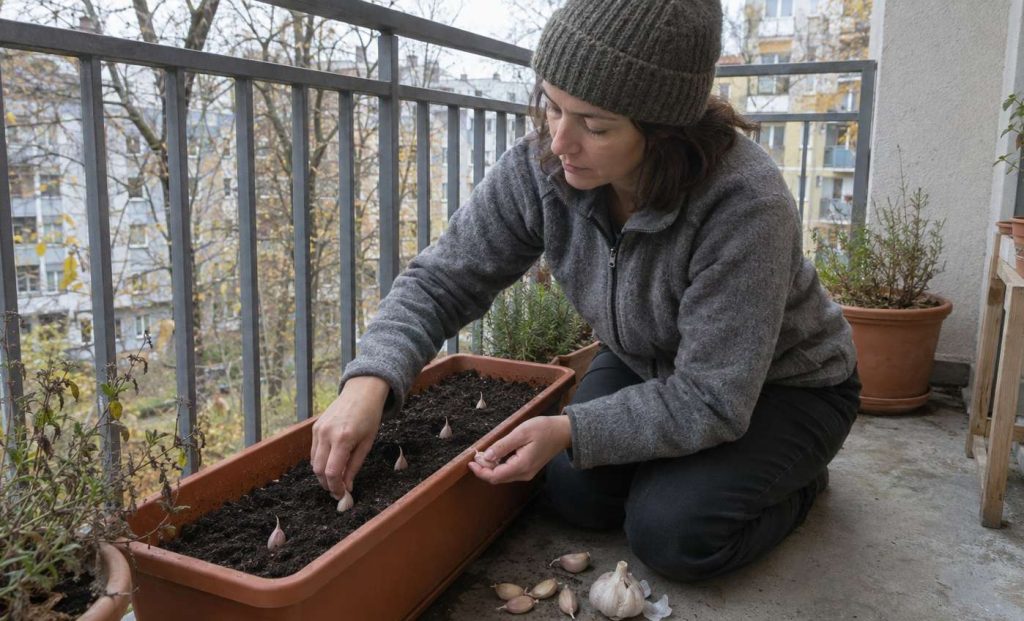
One deep pot or a trough is enough. Buy cloves at a garden center, plant them about 2 inches deep, and protect the pot from repeated freezing and thawing.
Plant in fall, and let your first frost set the week
Garlic is a long, slow crop.
Planted in October, it is harvested in June or July, about eight or nine months later.
Three Extension services give three windows, each for its own state. Rutgers Cooperative Extension is the outreach service of Rutgers, New Jersey’s state university. It says to plant in October, three to eight weeks before the first frost.
South Dakota State University’s extension service puts it one to three weeks after the first killing frost.
Oregon State University Extension, the university’s public gardening and farming advice service, gives a wide window. It says September through mid-November for the Willamette Valley.
The common thread is fall, after the summer heat and before the ground freezes. Read your area’s first frost date, then plant within a few weeks either side of it.
Hardneck or softneck, in one line each
- Hardneck: fewer, larger cloves that peel easily, and a flower stalk called a scape. It stores only two to four months, per Rutgers.
- Softneck: more cloves per bulb, no scape, and a shelf life of six to eight months. Rutgers calls it easier to grow.
Pick hardneck if your winters are cold. Ask Extension is a national question service run by Extension. One of its experts, answering a Minnesota gardener, names hardneck as the type most suited there.
In a mild-winter area, softneck is the forgiving choice.
Pot size, depth and spacing
Oregon State says garlic can be grown in a container that is at least 8 inches deep, with drainage holes in the bottom.
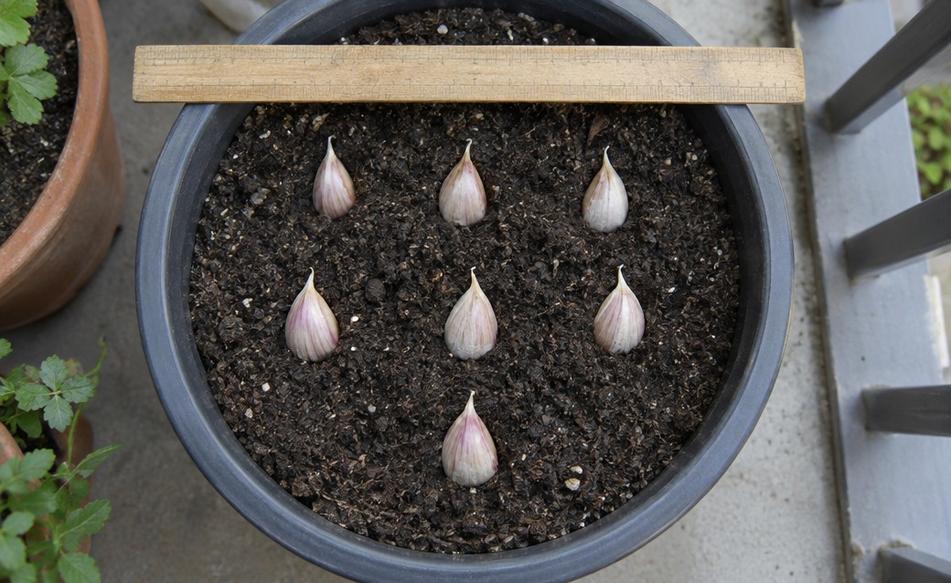
A wider pot fits more cloves, because Oregon State spaces them 4 inches apart. Count the cloves, then pick the right container size for that many.
Spacing and depth follow the same plain steps:
- Fill the pot with fresh potting mix, not garden soil.
- Set each clove pointed side up, 4 inches apart, per Oregon State.
- Cover them with about 2 inches of mix.
Sources differ on depth. Ohio State University Extension, the university’s gardening advice service with local offices, says 2 inches deep, and South Dakota State says about 3. Two inches is a safe middle.
At 4 inches apart, a pot 12 inches across holds about five cloves. A long trough holds one per 4 inches of length.
To see what is sold for this, you can compare deep planter troughs with drainage holes on Amazon.
Heads up: some links on this page are affiliate links. If you buy through one, the site earns a small commission, and your price stays the same.
Cloves from a garden center, not the produce aisle
Rutgers says not to plant supermarket garlic. It adds that such garlic may not grow in New Jersey’s climate and is treated to prevent sprouting.
Rutgers adds that supermarket garlic is more likely to be softneck.
Garden centers, farmers markets and seed catalogs sell garlic grown to be planted. Ask for named varieties, and plant the largest cloves from each head.
Break the head apart no more than a day or two before planting, as South Dakota State advises.
Winter care for the pot
A pot gets colder than open ground, because cold reaches it from every side.
South Dakota State says its shoots tolerate air temperatures down to 20 degrees Fahrenheit without damage. Below 10 degrees, it warns of possible dieback.
In a hard-freeze area, the pot adds a risk of its own.
The Ask Extension reply, which sent a Minnesota gardener to an open garden bed or an indoor pot instead, warns that soil in outside containers can swing between thawing and freezing. Garlic bulbs struggle to survive that.
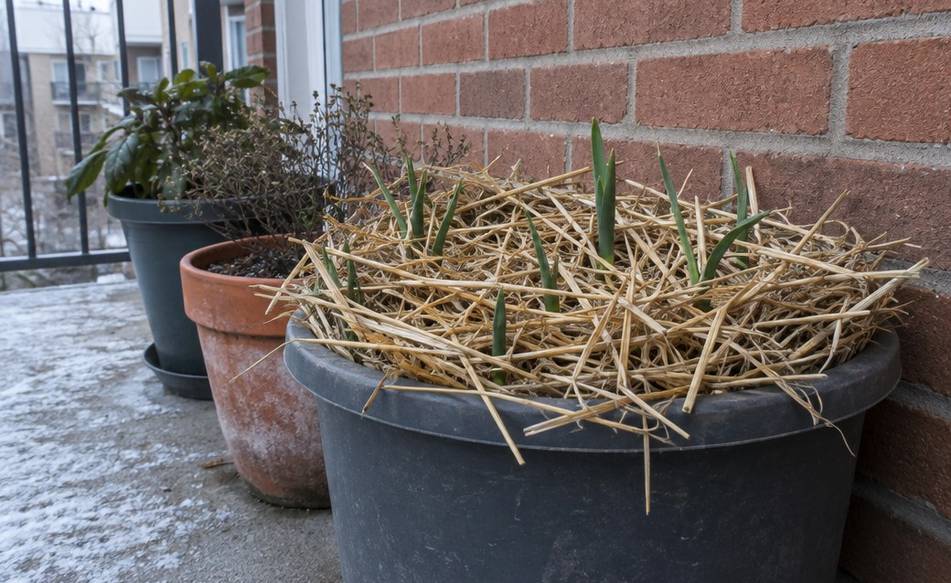
If your winters dip below 10 degrees, protect the pot as described in overwintering container plants outside. Otherwise, cover the top with a few inches of straw and keep the pot in a sheltered spot.
From planting to harvest, month by month
This calendar fits a cold-winter climate with a June or July harvest. Shift it earlier or later by your first frost date.
| When | What happens |
|---|---|
| Early fall | Buy cloves from a garden center. |
| October | Plant 2 inches deep, 4 inches apart. Add straw. |
| November to February | The pot sits dormant. Protect it from repeated freezing and thawing. |
| March and April | Growth resumes and the leaves lengthen. |
| May or early June | Cut the scapes off hardneck garlic. |
| June or July | Lift the bulbs when half the leaves have yellowed. |
Oregon State says to remove scapes in May or early June to increase bulb size.
Harvest when about half the leaves are yellow and drying out. That is Oregon State’s cue for June or July.
Storage is one line: per Rutgers, hardneck keeps two to four months and softneck six to eight.
This week, find a deep pot with drainage holes and set it where it gets full sun. Then order cloves from a garden center or seed catalog.