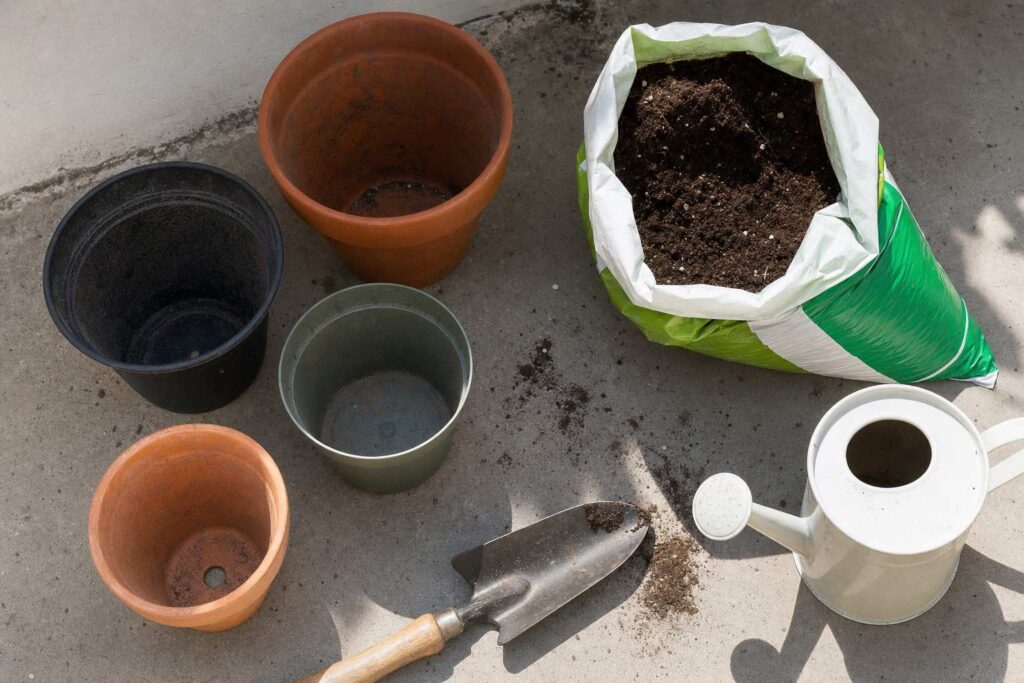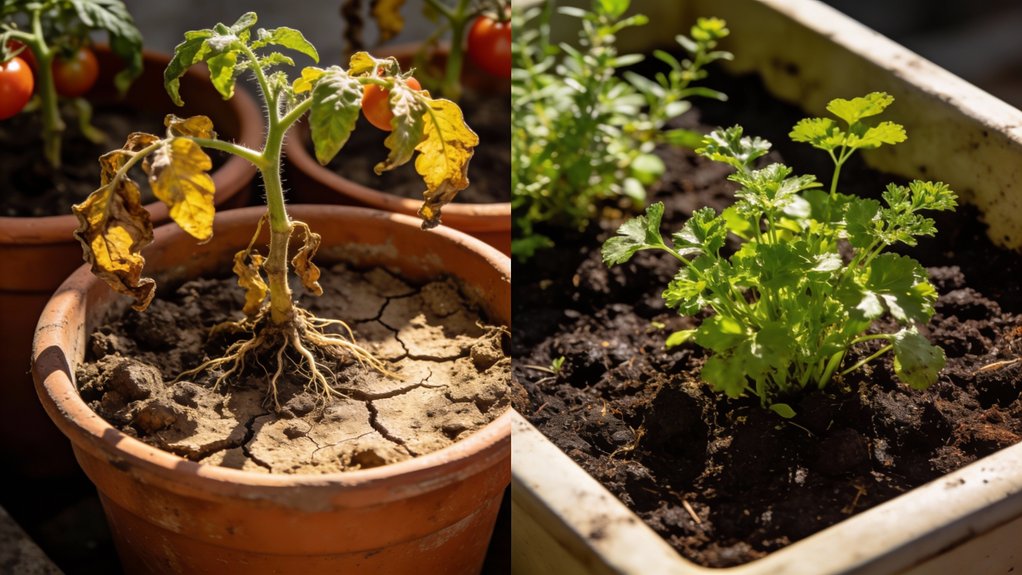
According to Iowa State University Extension, the state university’s free public gardening service, potting media is roughly 85% pores.
That is mostly air, not solid ingredients. A good soil in the ground runs closer to 50% pores and 50% solids.
That much open space is not a flaw. It is what lets roots breathe and water drain the moment mix goes into a pot.
A full season of watering and root growth works against that.
What actually breaks the air pockets down
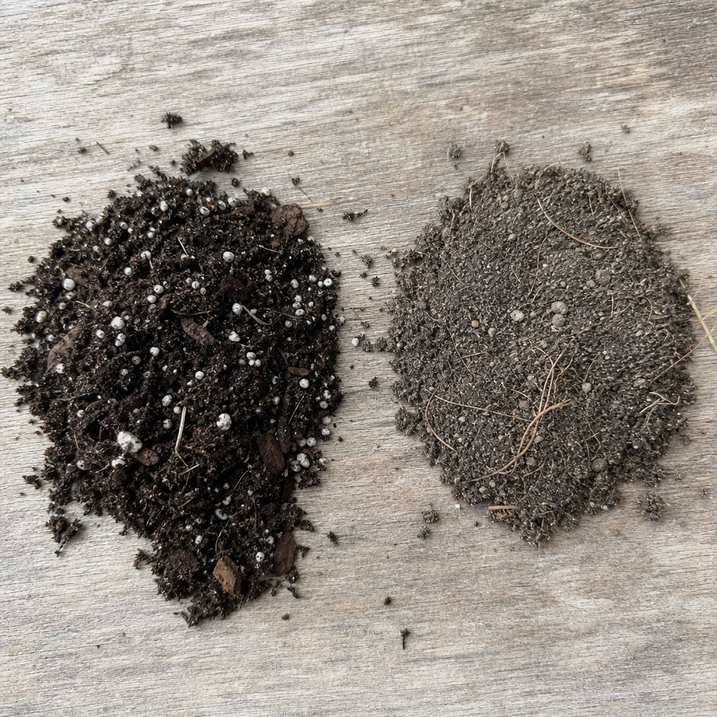
Iowa State University Extension splits a potting mix into two kinds of ingredients.
The organic pieces, things like peat moss and bark, are mostly carbon. The inorganic pieces are mineral or rock-like material, such as perlite.
The organic half is the one that disappears. Illinois Extension explains that the organic materials in a soilless mix gradually break down.
Once enough of that happens, the mix stops draining and holding air the way it used to.
Roots grow in the gaps between individual particles, and both air and water travel through those same gaps.
The organic parts of a mix vanish first, and the mineral parts are what is left holding the structure together.
University of Maryland Extension describes the same process from the plant’s side: soilless growing media and compost lose nutrients and break down physically over time.
Roots grow in the gaps between individual particles, and both air and water travel through those same gaps.
Water moves through those pore spaces and pushes the air out as it goes. If it cannot drain away fast enough, fresh air cannot get back in, and the roots suffocate.
A mix that cannot drain leaves water sitting around the roots, which starves them of oxygen instead of feeding them.
The organic half is the one that disappears. Illinois Extension explains that the organic materials in a soilless mix gradually break down.
Three checks you can run on the mix in front of you
You do not need a lab to judge used mix.
Three ordinary checks tell you most of what you need to know.
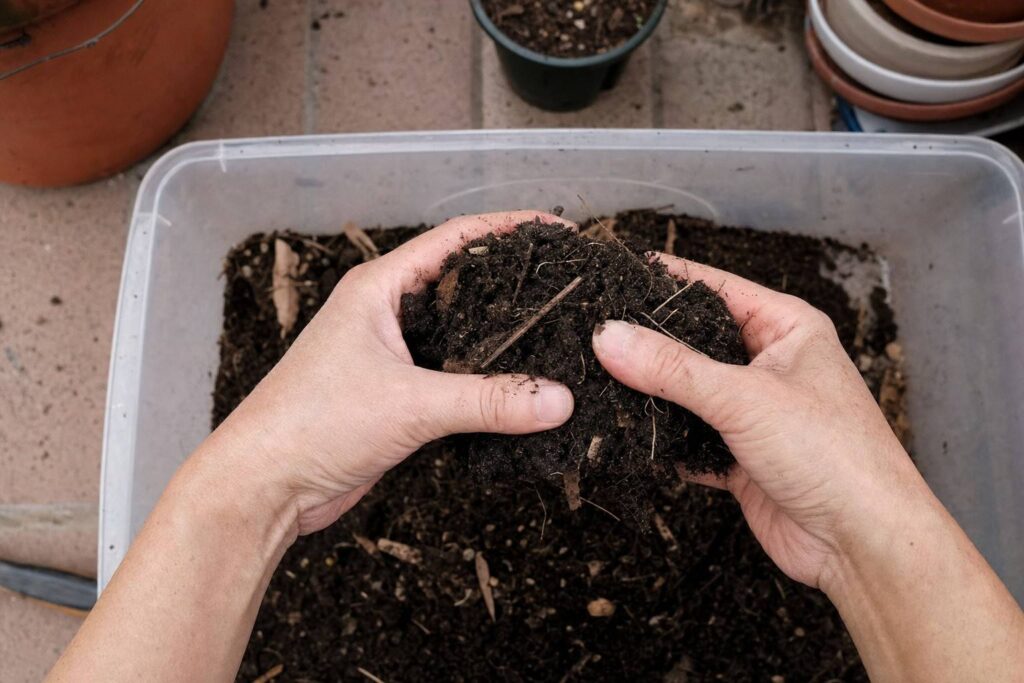
- The squeeze test. Grab a barely damp handful. If it holds together in a tight, dense ball and will not crumble apart, the air pockets are mostly gone.
- The drainage test. Pour a cup of water into the pot or tub and watch it. Mix with good structure soaks it in within a few seconds.
- The smell and debris check. A sour or rotten smell, slimy patches, or a solid mat of old roots point to waterlogging or disease, not ordinary wear.
Collapsed mix lets the water pool on top, or it runs straight through without wetting the middle.
Containers dry out far faster than the ground; in summer, check the soil every day.
Mix that has lost its structure makes that harder to read, since it can look dry on top while staying soggy underneath, or the opposite.
Any one of these checks failing is a reason to look closer, not automatically a reason to throw the mix out.
One sign that overrides every other check
Smell and disease are the exception to all of this.
University of Maryland Extension is direct about it: do not save the media if root diseases were a problem in that container the previous season.
A dense, compacted mix or slow drainage can usually be fixed by refreshing it. A mix that hosted a plant with root rot or another soil-borne disease cannot.
The pathogen survives in the old material and reinfects whatever grows in it next.
Compaction is a structure problem you can fix. Disease is a biology problem you cannot.
Keep it, refresh it, or start over
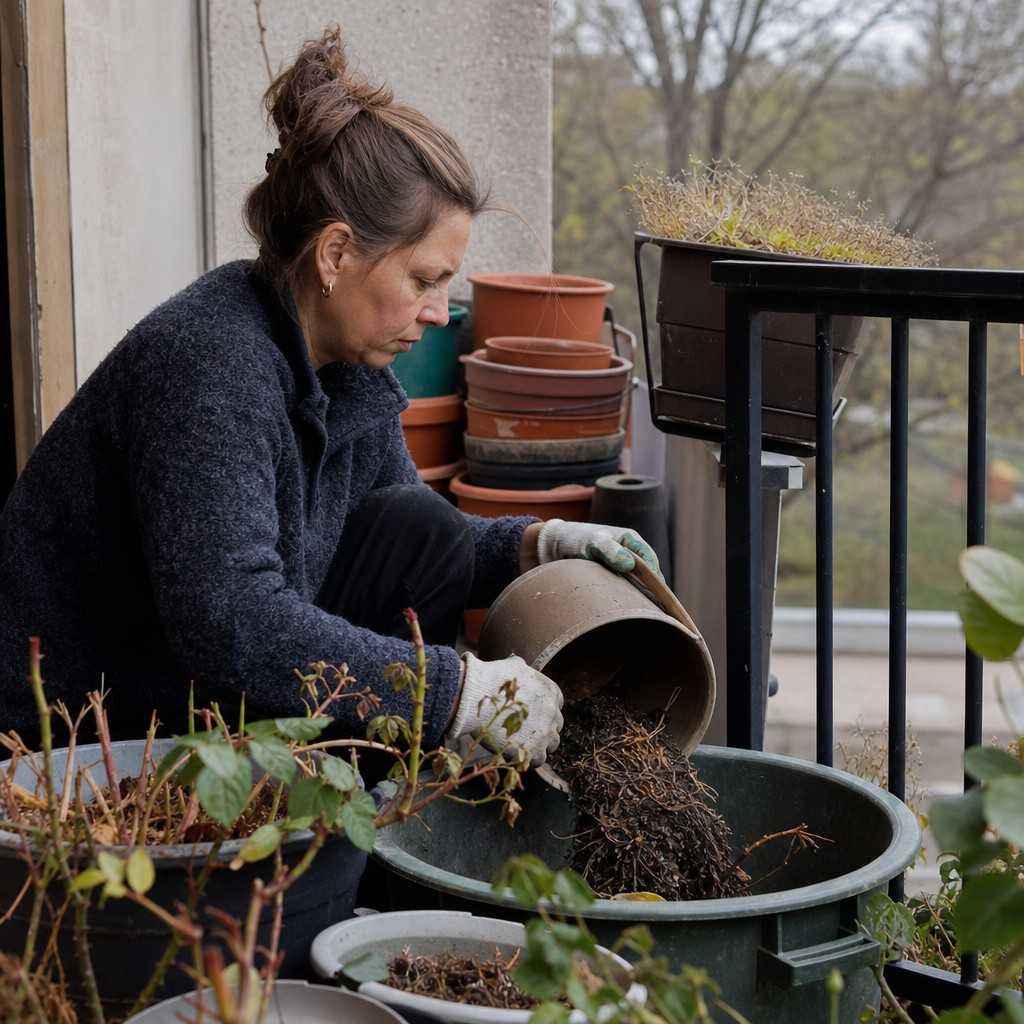
If the mix passed the squeeze and drainage checks, and nothing in that container was sick, it is still worth using.
Illinois Extension says healthy plants through the growing season are the green light. Remove the old plant material and reuse the media the next season.
University of Maryland Extension recommends mixing last year’s growing media in equal amounts, 50:50, with fresh growing media or compost.
You may need extra fresh mix just to fill the container back up to the rim.
A 50:50 blend restores structure and nutrients that a full season of watering already used up.
Dug-up garden soil turns dense in a container and chokes the roots.
Reused mix also needs feeding sooner than a fresh bag does, since much of its starter nutrient charge is already spent.
Fold that into your normal feeding routine rather than treating it as an extra step.
Use potting mix, never garden soil.
Dug-up garden soil turns dense in a container and chokes the roots.
Illinois Extension is just as blunt about the yard-dirt shortcut. Never use garden soil by itself, no matter how good it looks outdoors. It can carry weed seeds and insects along with it.
Topping a container up with soil dug from the yard is not the same fix.
That soil and bagged mix behave very differently once they’re packed into a pot.
When a bag or tub is too far gone to save, a fresh one is the simpler fix.
If you are not planting again right away, how you store the mix over winter matters too.
That is covered in the guide to choosing and storing potting mix.
When a bag or tub is too far gone to save, a fresh one is the simpler fix.
If you want to see what is out there before you buy, you can compare bagged potting mixes on Amazon.
Heads up: some links on this page are affiliate links. Buying through them supports the site with a small commission and does not raise your price.
The decision comes down to one check.
If the mix passes the squeeze and drainage tests, and nothing in it was diseased, refresh it 50:50 and keep using it.
If it fails either test, or anything in that pot was sick last season, buy a fresh bag and start the season clean.