A pot that is too small is the container-tomato mistake to avoid first. University of Maryland Extension, the university’s statewide public education service, says a standard tomato needs a 5-gallon pot.
A cherry tomato can start smaller, at 2 gallons. Either way, one plant goes in one pot.
Pick the pot before the plant
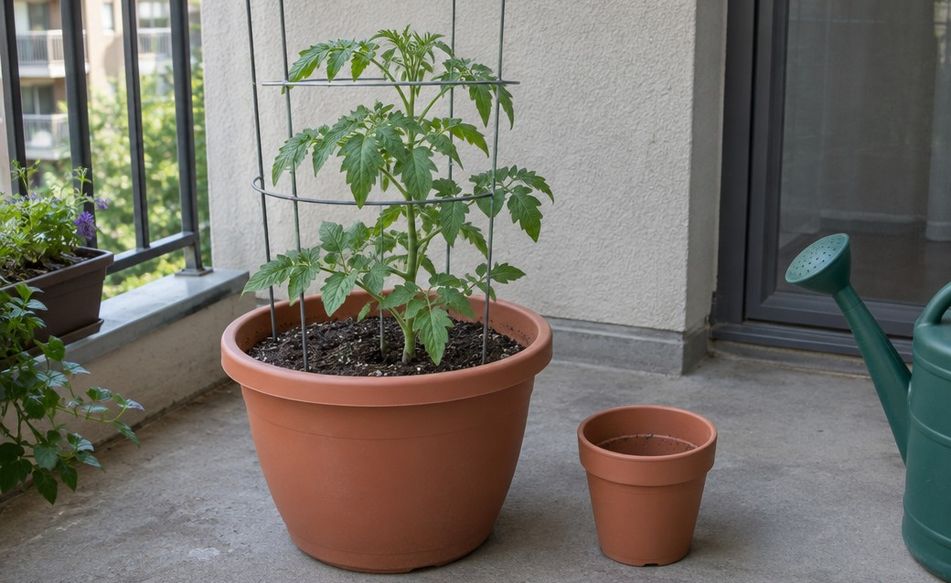
Maryland Extension’s figure is 5 gallons for a standard tomato and 2 gallons for a cherry type.
It also says indeterminate tomatoes grow larger and bear more fruit as the container gets bigger.
When in doubt, buy the 5-gallon pot. Illinois Extension, the University of Illinois’ service that translates research into evidence-based education, lists 3 gallons for its named standard varieties.
Maryland Extension says all containers need to let extra water drain out.
It also warns that dark colors create higher temperatures that could injure young, tender roots.
Which varieties suit a pot
Look for compact plants. Maryland Extension says to look for “bush” or “dwarf” on seed packets and in catalogs.
Illinois Extension adds that determinate tomatoes (plants that stop growing at a set height) are most often used for container gardening or small spaces.
It says they generally need no trellis or stake.
Indeterminate types (vines that keep growing) are often larger plants that need more space.
Illinois Extension’s container list pairs pot size with named varieties:
| Variety | Plant type | Pot size on Illinois’s list |
|---|---|---|
| Pixie | Cherry | 1 gallon |
| Patio | Patio | 1 gallon |
| Jetstar | Standard | 3 gallons |
| Celebrity | Standard | 3 gallons |
| Super Bush | Standard | 3 gallons |
The list gives one plant per pot for every row. Remember that Maryland’s number is higher for standard types, so a 5-gallon pot is a safe size for the last three.
Give it sun
Maryland Extension says warm-season crops need 6 to 8 hours of direct sun. Tomatoes are one of them.
Count the hours your balcony really gets before you buy. Measuring how much sun your balcony gets means learning the three light levels and checking each spot.
Check the pot every day in summer
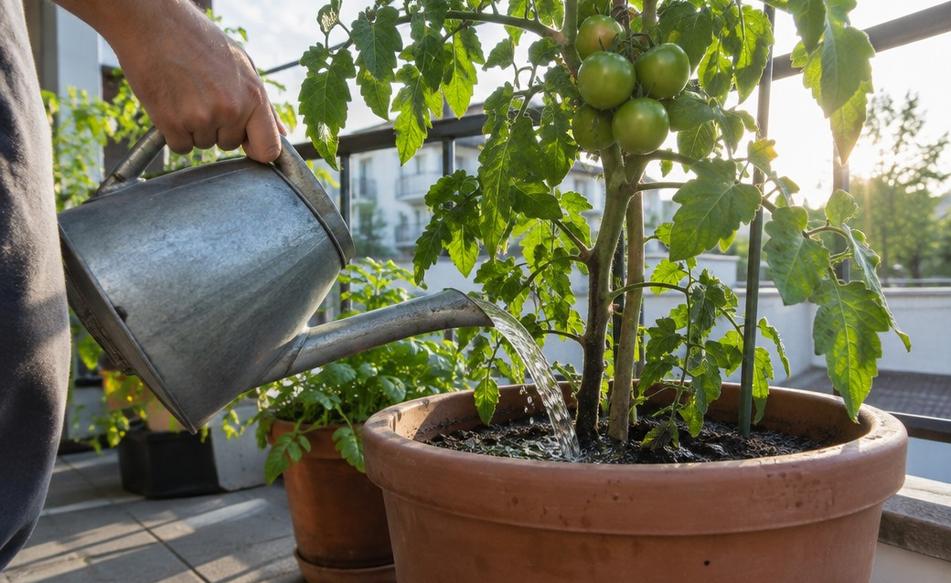
Maryland Extension’s rule: check containers daily to see if they need water, especially in summer, until you learn how fast each pot dries. Water the potting mix at the base of the plant, not on the leaves.
Why blossom end rot follows uneven watering
Blossom end rot is a common disorder of tomatoes, peppers and squash. Maryland Extension links it to a shortage of calcium in enlarging fruits.
It lists irregular moisture, shallow watering and drought stress among the contributing factors.
Regular, deep watering eases it if there is enough calcium in the mix. The page also says to remove affected fruit right away.
So the pattern to avoid is a dry pot on Monday and a flood on Tuesday. Water deeply and regularly, checking the pot first.
Support and feeding
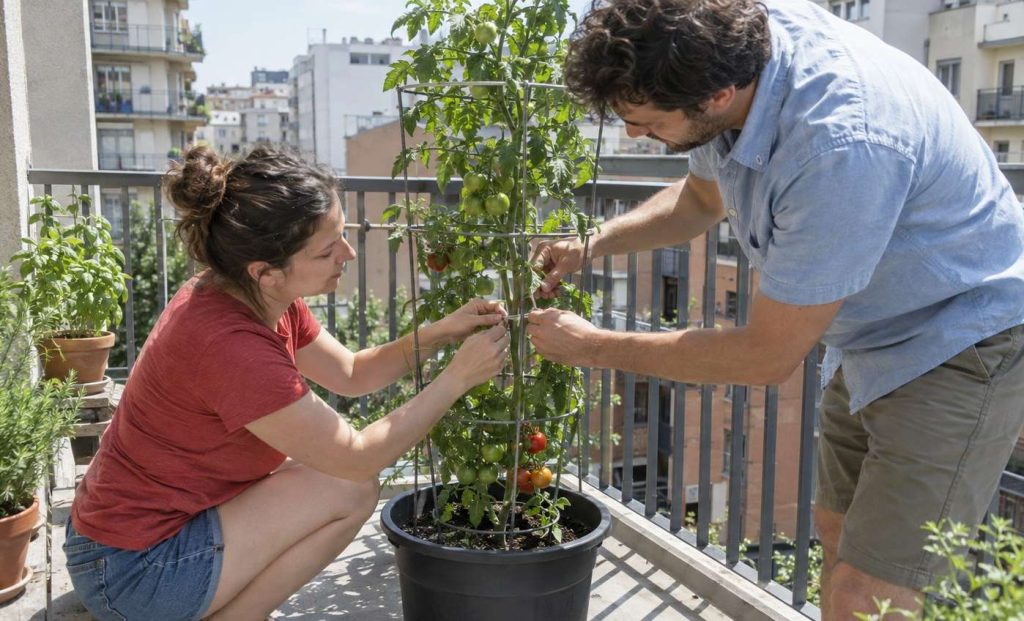
Illinois Extension says to push a stake two to four feet tall into the pot before adding potting mix.
Maryland Extension names the tomato cage as a commonly used support.
Pick one at planting time, because a stake goes in before the mix does.
Feed lightly, about every two weeks. Maryland Extension says tomatoes may need light feeding that often for a continuous harvest.
It suggests a fertilizer with a 3-1-2 ratio of nitrogen, phosphorus and potassium. Always follow the label.
Frequent watering washes food out of the mix, so plan regular feeding from the start. Choosing between slow-release and liquid fertilizer is easier once you know how to read deficiency signs.
What to plant it in
The 5-gallon minimum applies to a fabric grow bag as much as to a pot. If you would rather not buy a rigid pot, compare fabric grow bags of that volume before you order.
When to plant out
Maryland Extension says to transplant after all danger of frost is past and when the soil has warmed. Its page gives no single date, so the date is your own.
If you raise the seedlings yourself, the seed-starting schedule by frost date covers the calendar and hardening off.
Look up your area’s last-frost date this week and mark it. Set the potted plant out after that date, once frost danger is past and the mix has warmed.