A balcony has a floor the size of a doormat and walls the height of a room.
Most people garden the doormat and ignore the wall.
That is the whole idea behind growing up instead of out.
Vertical gardening turns a few square feet of floor into several feet of growing space. Shelves, stacked crates, and rail planters let one balcony hold three times the pots it could hold flat.
You just have to plan for the one problem stacking creates. This guide covers both: how to stack, and how to keep the top tier alive.
Why a small space grows more when it goes up
The math is simple. A two-tier shelf doubles your pots without taking a single extra inch of floor. A three-tier setup nearly triples it.
You can grow real food in a rental. A sunny balcony or a bright windowsill is enough to start, and going vertical stretches that small footprint further than any other trick.
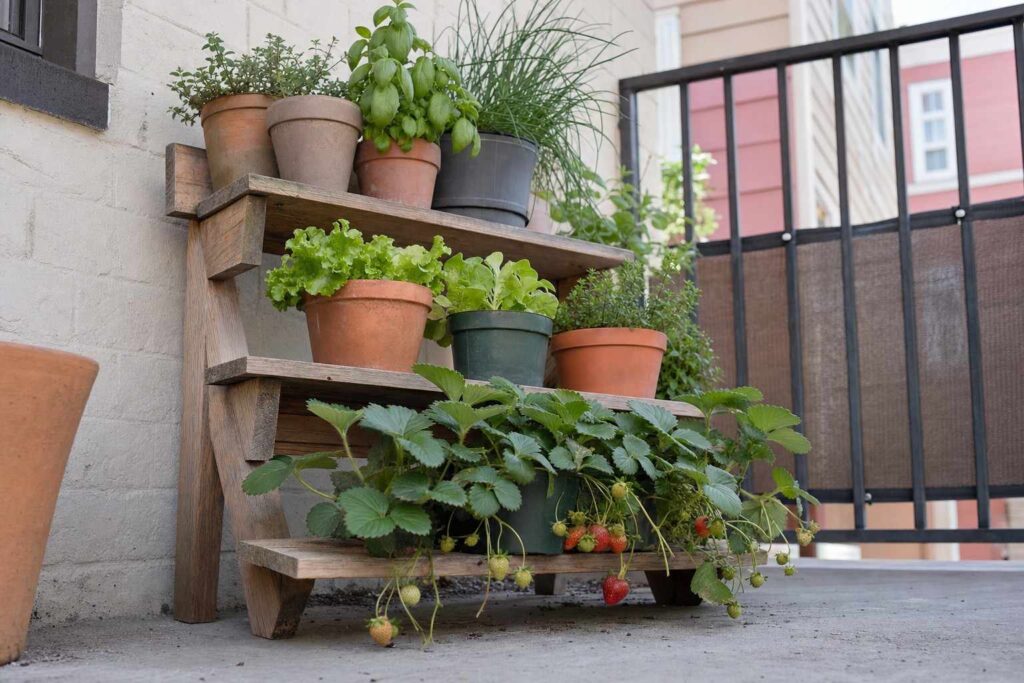
There is a second benefit people miss. Arranged on steps, each plant sits in front of the one behind it, not under it. A vertical layout gives every pot its own slice of light instead of taller plants shading shorter ones into a clump.
A few things vertical setups do well:
- Keep trailing crops like strawberries and cherry tomatoes off the floor and out of puddles.
- Put herbs at hand height so you actually use them.
- Free the floor for one or two large, heavy pots that need the stability.
Three ways to stack a small space
You do not need to build anything clever. Pick the level of effort that fits you.
1. A plant shelf or ladder stand. The easiest option. A simple tiered stand holds six to nine small pots in the footprint of one. If building is not your thing, you can compare tiered plant stands on Amazon to see what fits a narrow balcony.
2. Stacked crates or boxes. Wooden crates or pallet collars stacked two or three high make a deep, sturdy planter for a tall footprint. Put it on casters so a heavy, soil-filled box still rolls to follow the sun or move for cleaning.
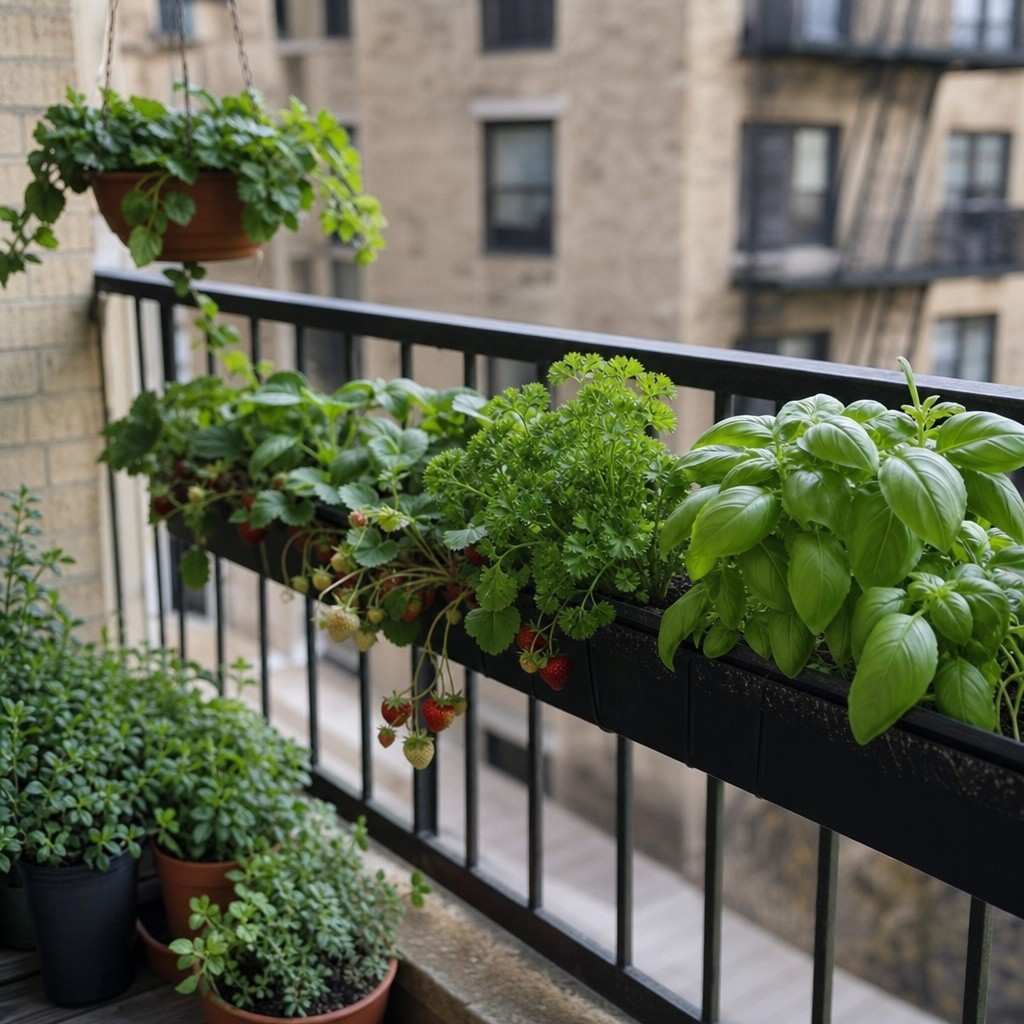
3. Rail planters and hanging pots. The vertical space over the railing is free real estate. Rail planters hook over a standard rail, and hanging pots use the airspace nothing else can.
Whatever you stack, two rules do not bend.
Every container still needs drainage holes, because a pot that cannot drain drowns the roots, and that is just as true on a shelf as on the ground.
And container size is the thing beginners get wrong most, so go bigger than you think, 12 inches minimum, even when a tidy little pot would look neater on the rack.
Going vertical changes where your pots sit. It does not change what a root needs underneath it.
The watering catch nobody warns you about
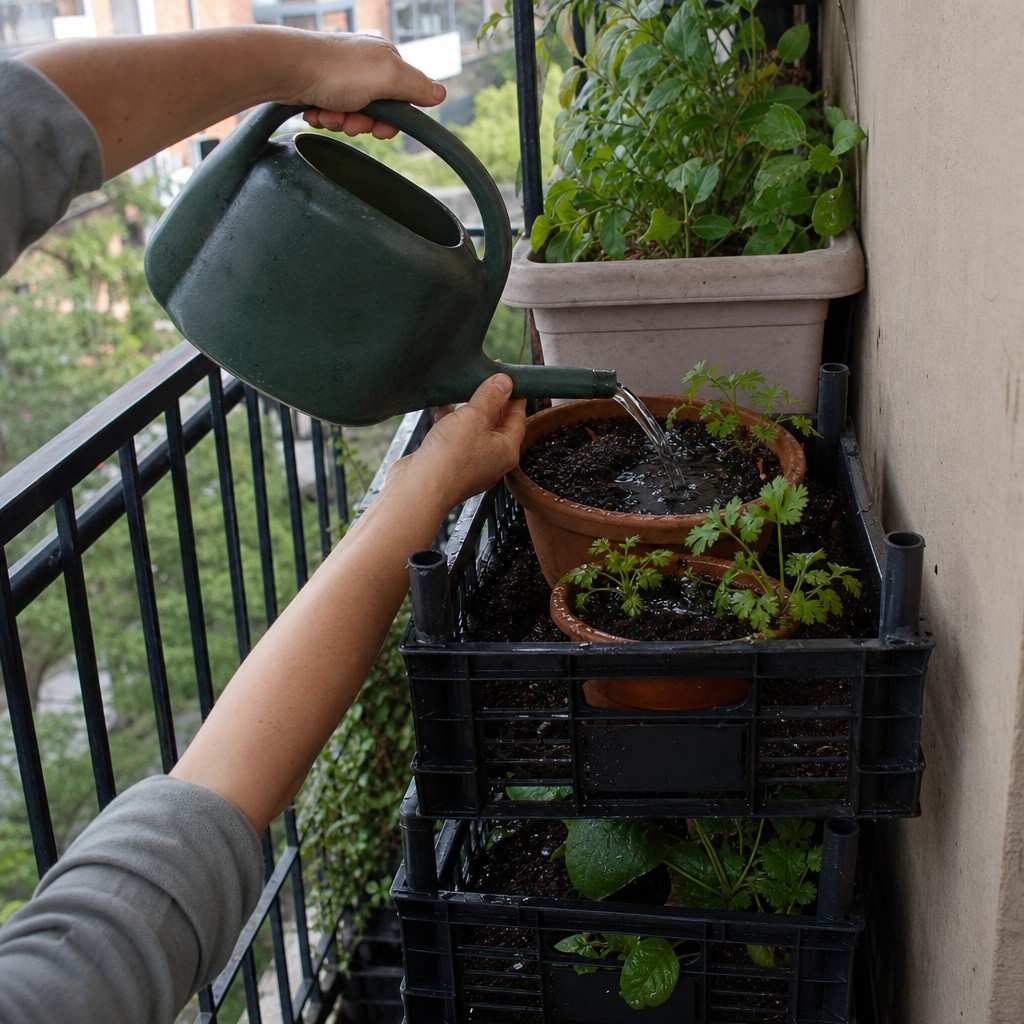
Here is the problem stacking creates, and the reason some vertical gardens look great in May and crispy by July.
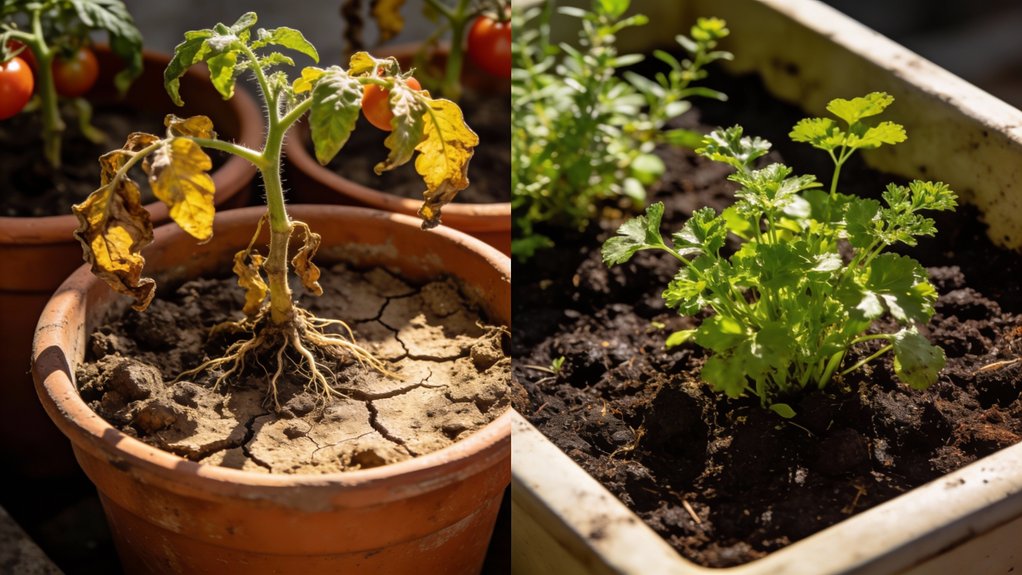
Heat rises, wind hits the upper pots harder, and water draining from a top pot runs away from it, not into it. The plant with the most sun is also the one most likely to go thirsty.
Top tiers dry out faster than bottom tiers. Containers dry out far faster than the ground, so in summer, check the soil every day, and check the top shelf first.
A simple routine keeps a vertical garden even:
- Water from the top down, so runoff from upper pots lands in the ones below.
- Give the top tier a second check on hot afternoons.
- Mix a handful of biochar or compost into the top pots to hold moisture a little longer.
If a top pot keeps drying out before you get to it, move a thirsty plant down a level and put a tough herb up high. For the full method on timing and frequency, the guide to how often to water container plants applies to every tier.
What grows well going up
Match the plant to the position. Trailing and compact crops love height; sprawling, heavy plants do not.
Good climbers and trailers for the upper levels:
- Strawberries spill over an edge and stay clean off the floor.
- Cherry tomatoes and bush beans crop heavily in a deep stacked box with a support.
- Herbs like basil, parsley, and mint thrive at hand height. A whole rack of them suits a windowsill or small-space herb setup.
Save the floor for the heavyweights. A large determinate tomato or a pepper in a correctly sized container wants stability and a big root run, so it stays down low.
Light, trailing crops go up. Heavy, hungry crops stay down. That single rule sorts most of a vertical garden for you.
If you are still in your first few weeks, a four-week balcony starter plan covers the fundamentals before you start stacking.
Start with one shelf or one stacked box this season. Once the watering rhythm clicks, add a tier.
A small balcony has more room than it looks, as long as you remember to feed the top shelf first.