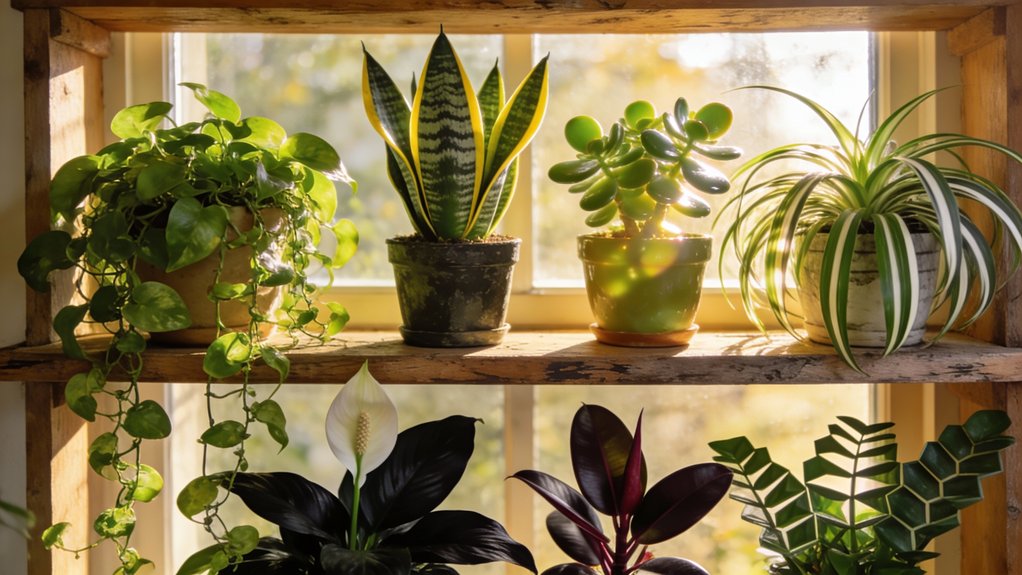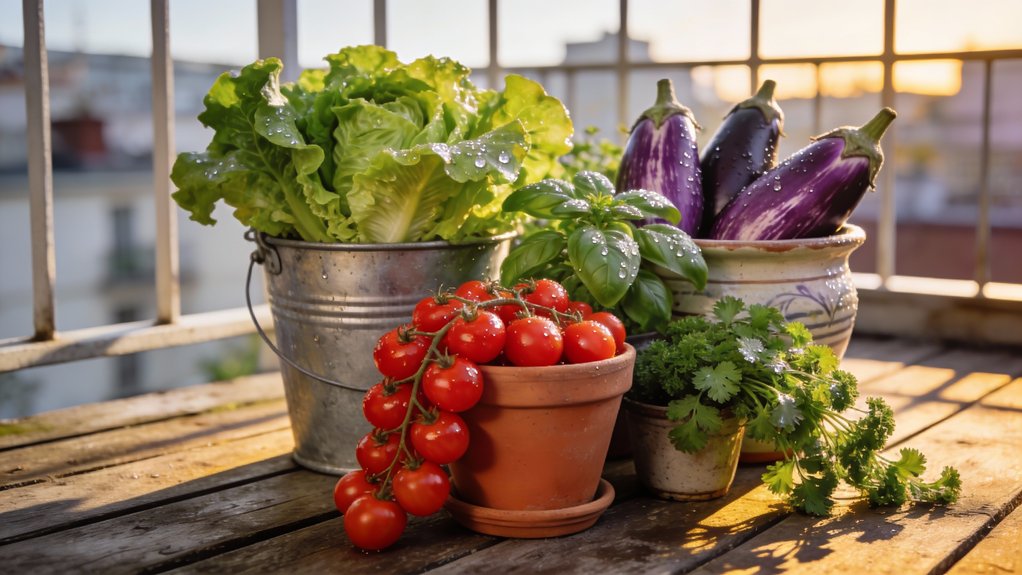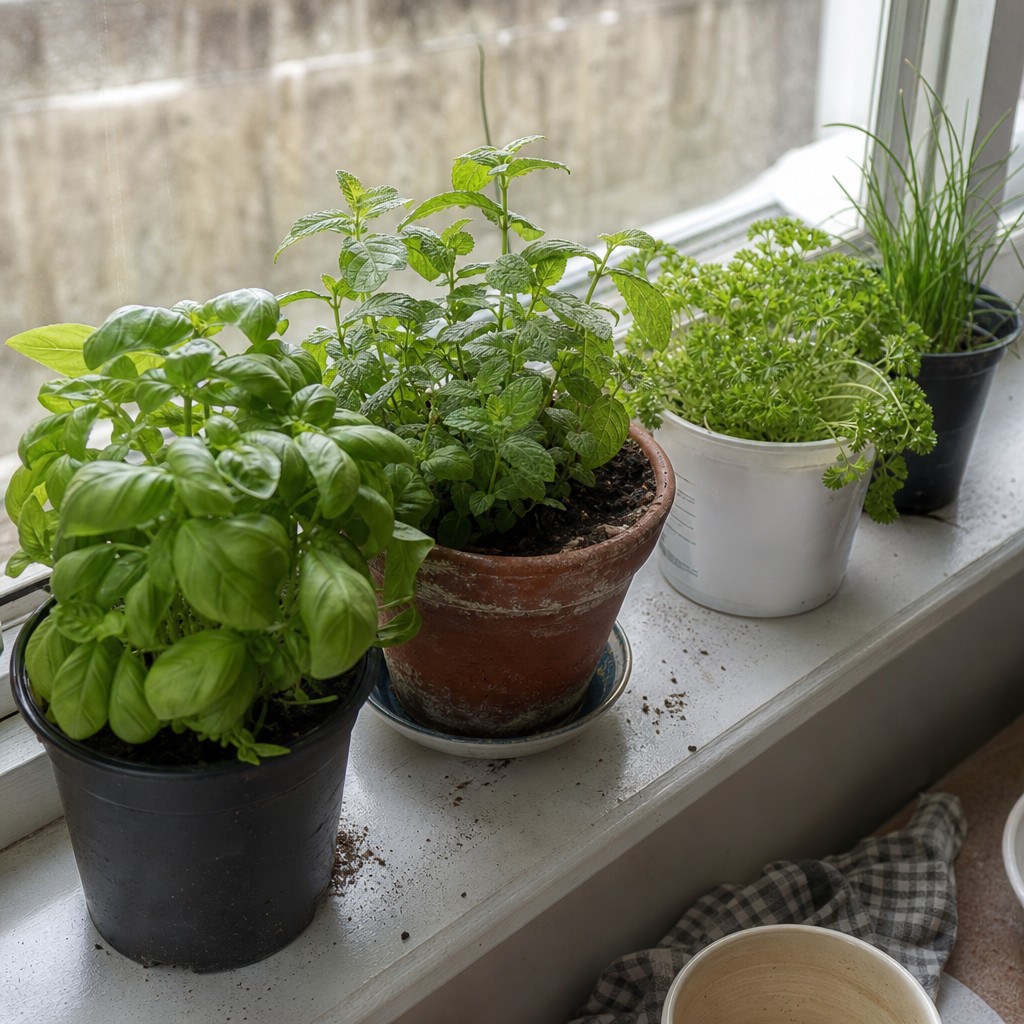
You could probably grow a forest on your windowsill if you picked the right herbs. Five specific varieties thrive indoors because they:
- Tolerate indoor temperatures and low humidity
- Handle inconsistent watering better than most plants
- Produce enough leaves for real cooking
Each herb needs different light and pot depth.
Know what works before you plant.
1. Essential Light and Water Needs for Windowsill Herbs
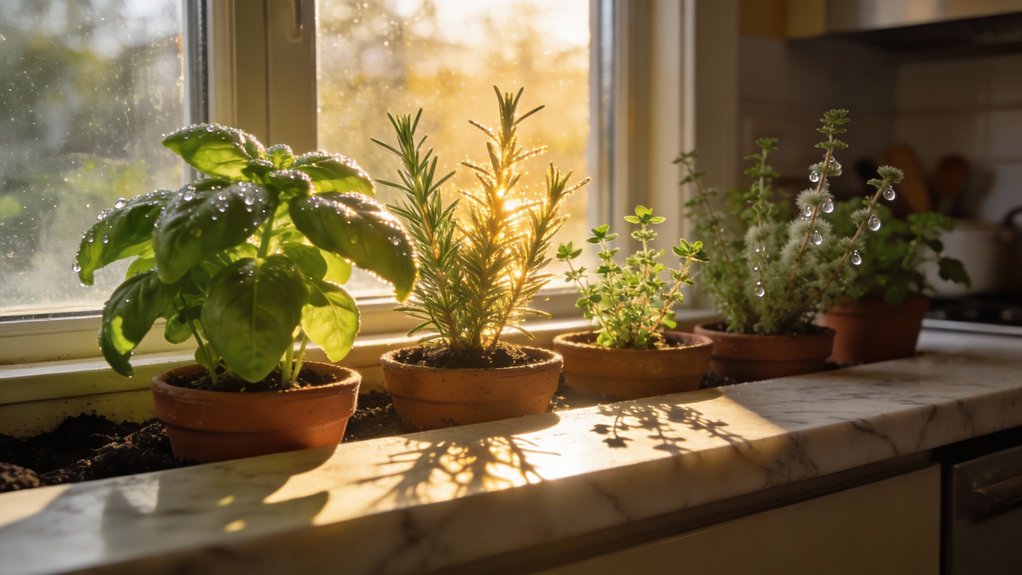
Before you plant anything on your windowsill, you need to understand what keeps herbs alive indoors.
Light requirements are simple: your herbs need 6-8 hours of direct sunlight daily. South or west-facing windows work best.
Without enough light, you get weak, stretched-out growth and plants that catch diseases easily.
Watering matters just as much. Let the soil dry slightly between waterings. You are aiming for consistently moist, never waterlogged.
Root rot happens when soil stays too wet.
Use well-drained potting mix that holds moisture while letting roots breathe.
Check your soil regularly before watering.
2. Basil: Warm-Loving Windowsill Herb for Bright Spots
Basil is the most rewarding herb you can grow indoors. It is also the fussiest about getting what it needs.
Proper basil care requires attention to four critical factors:
- Six hours of direct sunlight daily to keep the leaves coming
- Warm temperatures away from cold drafts that stress the plant
- Nutrient-rich, well-drained vegetable soil rather than standard herb mixes
- Regular pruning above leaf pairs to promote bushier growth and better flavor
You will harvest fresh leaves in 3-4 weeks, perfect for basil recipes.
Cut stems frequently to keep your plant producing all season long.
3. Mint: Shade-Tolerant Herb That Grows in Low Light
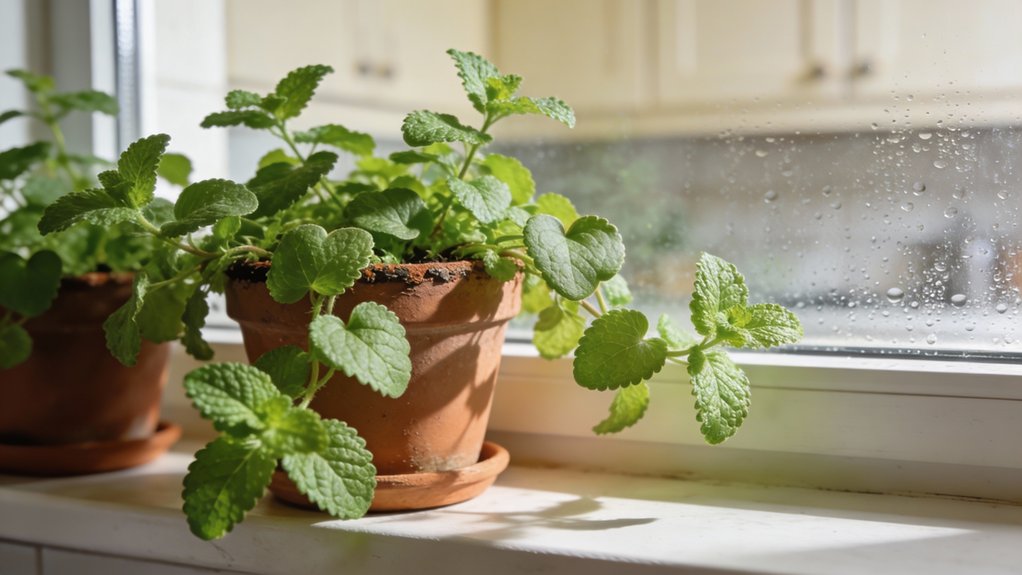
Unlike most herbs that demand bright light, mint actually prefers gentler conditions. It will thrive on windowsills that receive just 3-4 hours of indirect sunlight daily.
You will need a container at least 8 inches wide, since varieties like peppermint spread aggressively.
Water regularly to keep soil consistently moist and feed with liquid fertilizer every two weeks.
Harvest leaves frequently to promote bushier growth and prevent legginess.
Mint propagation from stem cuttings is remarkably simple: just place them in water until roots develop.
One cutting becomes a full plant in weeks.
Your fresh mint excels in teas, cocktails, salads, and desserts.
4. Chives: Cold-Hardy Windowsill Herb You Can Harvest Weekly
Few herbs match chives for pure convenience. They tolerate temperatures down to 20°F, grow happily in a 6-inch pot on any windowsill that gets 4-6 hours of light, and bounce back within days after each harvest.
Chive care requires minimal effort:
- Water when the top inch of soil feels dry
- Plant 2-4 bulbs per pot in nutrient-rich soil
- Cut stalks at the base for weekly harvests
- Enjoy purple blooms that add kitchen charm
Chives give you a continuous supply while their flowers brighten the windowsill.
Their mild onion flavor works in eggs, salads, and garnishes with no prep needed.
5. Parsley: Long-Lasting Windowsill Herb for Deep Pots
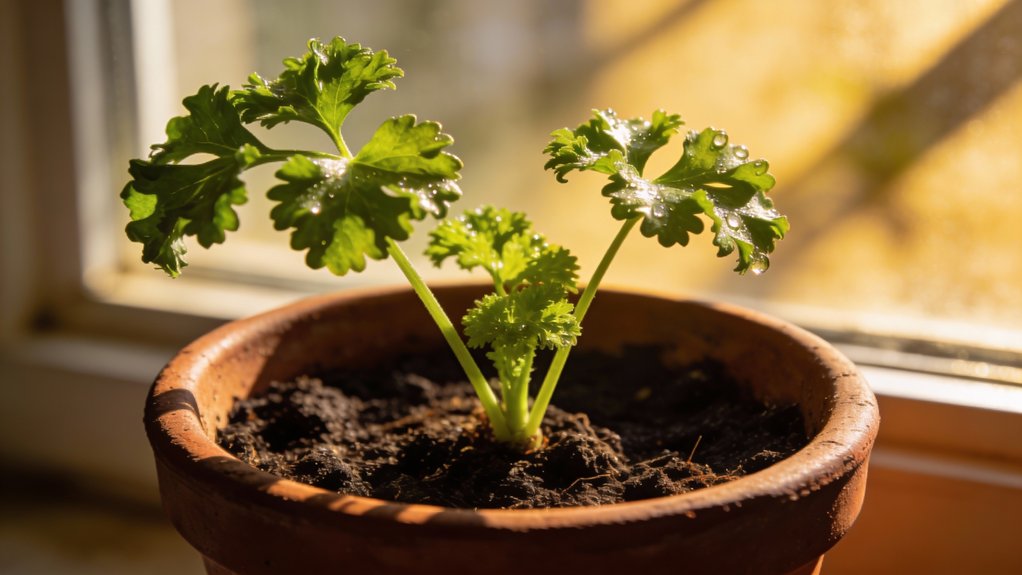
While chives dominate for ease of care, parsley stands out as the kitchen windowsill champion for long-term productivity.
You will harvest from the same plant for 18-24 months if you provide what it needs most: a pot that is at least 8-10 inches deep.
Growing tips are straightforward: give it 6+ hours of daily sunlight and fertile soil. Regular trimming prevents leggy stems and promotes bushier growth.
Parsley belongs in chimichurri, tabbouleh, and compound butters, not just as a garnish.
This herb delivers fresh flavor year-round without requiring outdoor space.
Conclusion
Your windowsill garden is a small ecosystem you have built from scratch. These five herbs are living proof that you can grow something meaningful in limited space.
Water them twice weekly, give them six hours of light, and they will keep producing for months.
A bare window becomes a productive corner that feeds your meals and your confidence.