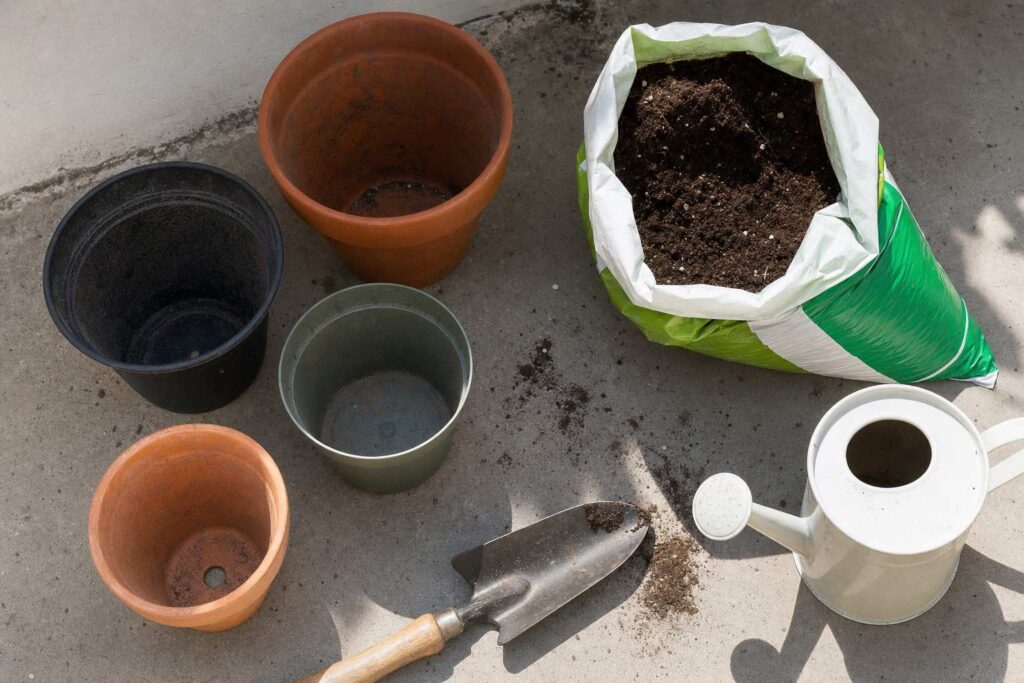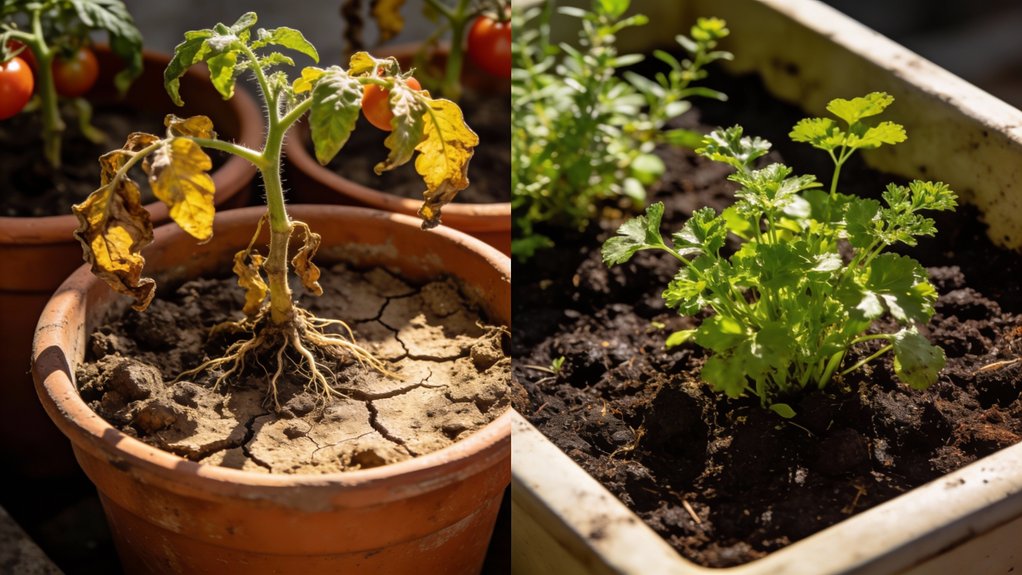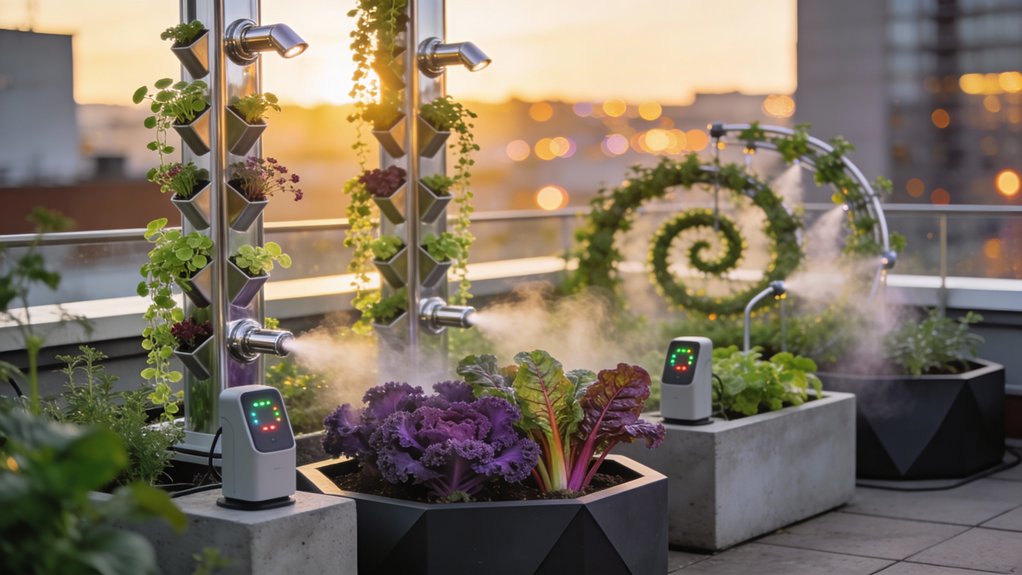
You’ve probably noticed more people growing food on their balconies and patios lately, and there’s good reason for it. Container gardening is exploding because it solves real problems: water shortages, limited space, and unpredictable weather.
Urban dwellers are choosing compact vegetables, drought-resistant herbs, and pollinator plants that thrive in pots.
New self-watering systems and smart technology make it easier than ever.
Here’s what’s actually working this year and why certain plants are outpacing traditional favorites.
Why Container Gardening Is Dominating
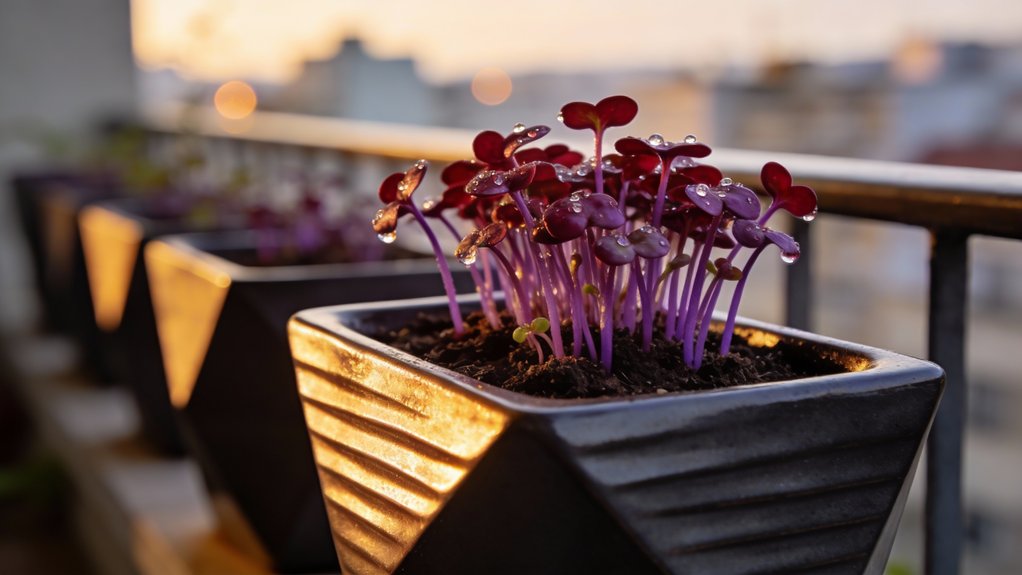
Container gardening has become the go-to solution for gardeners who want maximum impact with minimal hassle.
You’re seeing this trend everywhere because it perfectly suits modern lifestyles. Urban gardening enthusiasts love how containers transform balconies and patios into productive green spaces.
Container gardening turns even the smallest urban balcony into a thriving, productive oasis for city dwellers.
The movement toward sustainable gardening practices has accelerated adoption, since containers use less water and soil than traditional beds.
Sales of compact plant varieties have climbed steadily as people discover they can grow everything from microgreens to dwarf fruit trees in pots.
Younger demographics are leading the charge, with millennials and Gen Z driving the container gardening movement across urban and rural areas alike.
You’ll appreciate how containers let you create elegant outdoor rooms without extensive landscaping work or maintenance commitments.
Self-Watering Containers and Smart Growing Systems
Technology has finally solved container gardening’s biggest headache: remembering to water your plants.
Self-watering containers now handle moisture management automatically, cutting watering frequency by half while maintaining consistent soil conditions. These systems work through built-in reservoirs that release water as plants need it.
Smart technology takes things further with sensors monitoring soil moisture, light levels, and nutrients in real-time. Your phone receives care alerts and customized recommendations based on what you’re growing.
Morning watering alerts ensure you water during optimal watering times when foliage can dry before nightfall, preventing disease development.
Urban gardeners particularly appreciate these innovations since they maximize limited space while minimizing daily maintenance.
Beginners find the automated guidance especially helpful. Most common growing mistakes are overwatering and underwatering. Both are problems these systems eliminate.
Compact Edibles: Tomatoes, Chillies, and Tabletop Veg
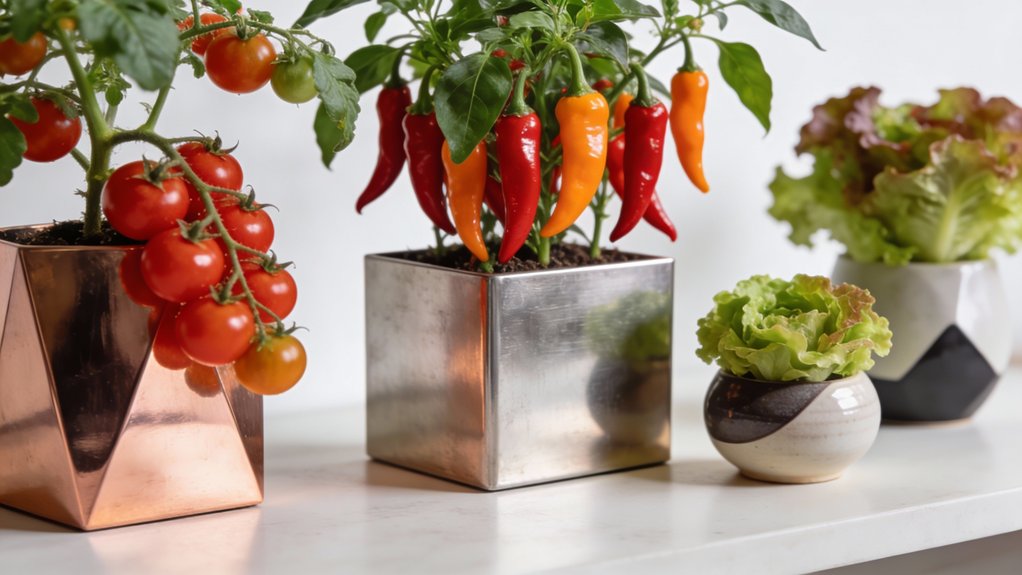
Smart watering systems work best when you’re growing the right plants for your space. Compact edibles have become the perfect match for container gardeners.
Leading the trend right now:
- Tabletop chillies
- Dwarf tomatoes
- Hanging basket cucumbers
Traditional varieties like “Shirley” and “Sungold” remain popular sellers, holding their own against newer introductions.
Classic varieties continue to dominate home gardens, with tomato favorites Shirley and Sungold experiencing remarkable double-digit sales increases last year.
Grafted tomatoes now help you achieve better yields in challenging conditions.
These compact vegetable varieties let you transform patios and balconies into productive gardens. Combine ornamental appeal with functional food production and you’ve effectively doubled the value of every pot.
Jungle Plants and Tropical Foliage for Containers
While compact edibles have dominated container trends, jungle plants and tropical foliage have taken center stage, helping drive strong demand for houseplants.
You’ll find Swiss cheese plants and dragon trees leading this movement, bringing jungle aesthetics straight to your patio.
These varieties thrive in bright, indirect light and need regular misting to maintain humidity. Water only when the top few centimeters of compost feel dry.
Their lush leaves deliver tropical textures that transform ordinary containers into vibrant outdoor spaces.
You’re fundamentally creating your own miniature rainforest with minimal effort and maximum visual impact.
Indoor-Outdoor Plants That Work Year-Round
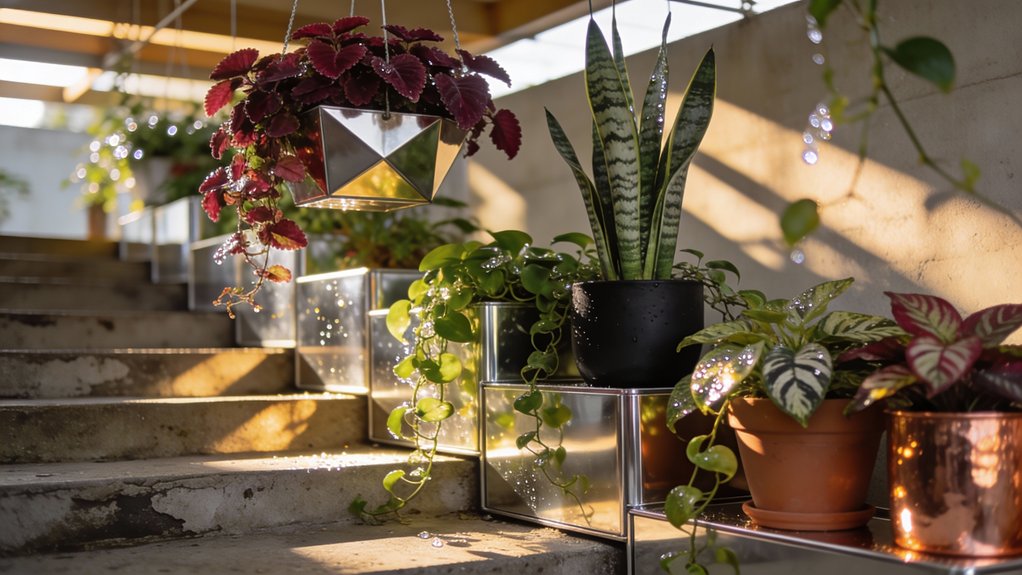
Beyond tropical showpieces, you’ll want plants that actually earn their keep by moving between your living room and garden without missing a beat.
Lantana varieties excel at this dual role, handling indoor winters and outdoor summers with equal vigor. Their colorful blooms appear year-round when conditions are right.
Spider plant integration has become surprisingly popular in garden beds, not just hanging baskets.
These resilient performers adapt to temperature swings from 45°F to 85°F without complaint.
Container gardeners now select these versatile options specifically for their weather tolerance and consistent visual appeal, eliminating the need for seasonal plant rotations entirely.
Pollinator-Friendly Container Gardens for Small Spaces
Pollinator-friendly containers solve two problems at once: they bring essential nectar sources to urban balconies while creating living color that changes throughout the season.
Mix native pollinator plants like primroses for early spring feeding with longer-blooming violas that flower for months.
Drought-tolerant Persica roses and single-flower dahlias reduce watering while attracting bees and butterflies consistently.
Container biodiversity matters. Combining three to five different bloom times guarantees pollinators find food from March through October.
These selections need minimal maintenance yet deliver maximum ecological impact, transforming even the smallest balcony into a functional pollinator refuge.
Climate-Resistant Varieties: Drought-Tolerant and Quick-Harvest Crops
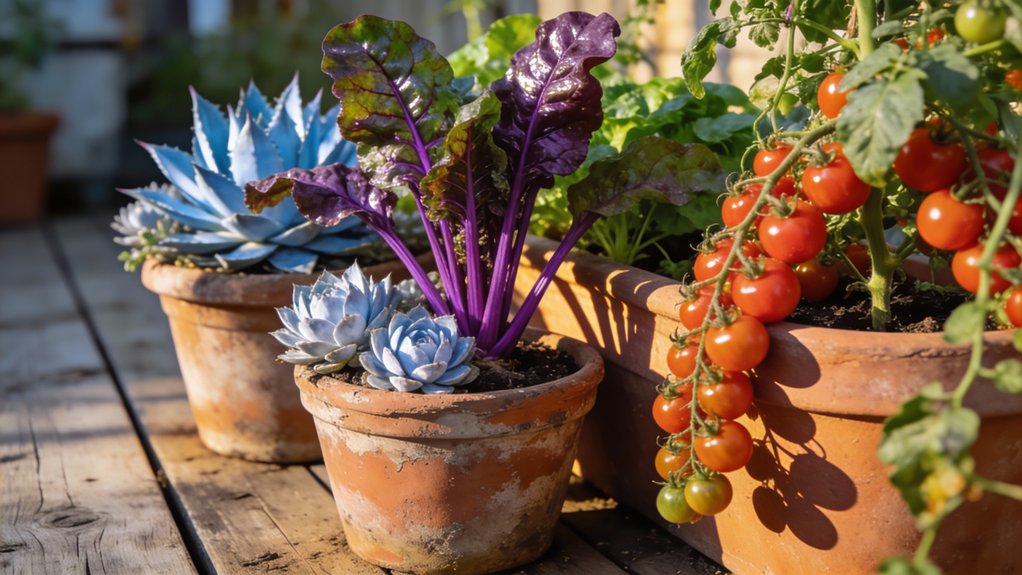
Climate uncertainty has pushed container gardeners toward varieties that can handle both drought stress and compressed growing windows.
For drought resistance, reach for cherry tomatoes, peppers, and Mediterranean herbs that thrive with less water.
Rapid growth crops matter too: look for varieties maturing in 50-60 days rather than 80-90. This shorter timeline lets you harvest before weather turns unpredictable.
Local seed sourcing gives you genetics proven in your climate. Saving seeds from your best performers builds resilience over time.
Check days-to-harvest on every packet, prioritizing quick-maturing options that align with low-input gardening practices.
Why Decorative Cabbage Is Breakout Container Trend
Decorative cabbage has jumped from garden center novelty to serious container contender, and nurseries report these ruffled beauties selling out faster than standard ornamentals.
From garden curiosity to container star: decorative cabbage is increasingly outselling traditional ornamentals at many nurseries.
You’ll find varieties like Oscar Pink and Peacock offering cabbage aesthetics that work in both formal and casual settings.
Their ornamental versatility means you can enjoy them as visual centerpieces, then harvest leaves for dinner.
Urban gardeners particularly appreciate their adaptability to limited spaces and varying conditions.
Coral Prince and Queen varieties deliver seasonal color that shifts beautifully from fall through early winter. At the price of a standard ornamental, you get an edible that earns its pot space twice over.