Most new container gardeners underestimate the time commitment, thinking they’ll spend two hours weekly when reality demands closer to three or four.
According to recent container gardening surveys, the average gardener spends around 70 hours per year, but that’s spread unevenly across seasons and tasks.
You’re looking at a front-loaded investment: that first weekend might eat up half a day between shopping, setup, and planting. But here’s what the seed packets and YouTube videos won’t tell you: the real time drain isn’t the big tasks. It’s the daily five-minute checks that somehow stretch into twenty, and the “quick watering” that reveals three new problems demanding your attention.
Before you start, here’s the realistic time breakdown so you can plan accordingly (see our full analysis of container gardening costs, time investment, and beginner expectations).
Initial Setup: How Long to Start a Container Garden?
How much time should you actually set aside for starting your container garden?
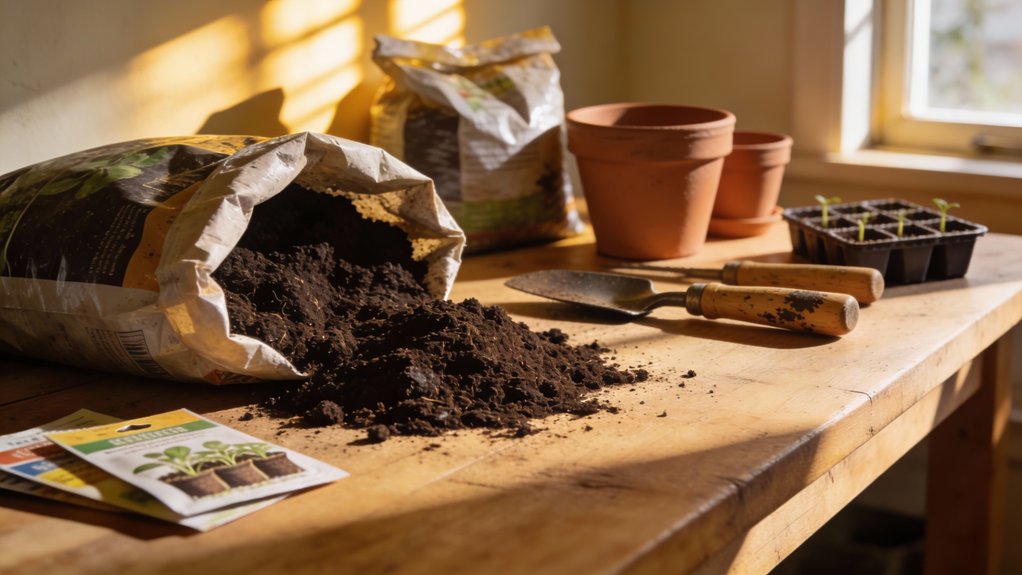
Plan on 1-2 hours for the basic setup, which covers plant selection and arranging your container materials.
Budget 1-2 hours for your initial container garden setup, including choosing plants and organizing materials.
You’ll need another 30-60 minutes to prepare and fill containers with soil mix.
After planting, seeds typically germinate within 3-14 days, so you won’t see immediate results.
The initial watering and positioning of your containers takes just 15-30 minutes.
Consider using sub-irrigated planters to significantly reduce the time spent on daily watering maintenance once your garden is established.
Here’s the good news: you can complete the entire initial setup in one day if you’ve gathered everything beforehand.
It’s straightforward work that doesn’t require special skills.
Choosing Container Sizes That Save You Time
When you pick the right container size from the start, you’ll cut down on replanting work and give your plants room to thrive without constant intervention.
Proper container capacity directly impacts plant growth: the right size promotes 30-40% faster development through better root space and nutrient absorption.
Use 20-gallon fabric pots for zucchini and indeterminate tomatoes, 10-gallon containers for determinate tomatoes and pepper pairs, or 4-gallon pots for single peppers.
Larger containers mean less frequent watering and fertilization, saving you hours throughout the growing season.
Since limited soil in containers requires careful management of water and nutrients, selecting the appropriate pot size is essential for reducing daily maintenance demands.
Match your container to your plant’s needs once, then let it grow.
Soil Prep and Planting: First-Day Time Investment
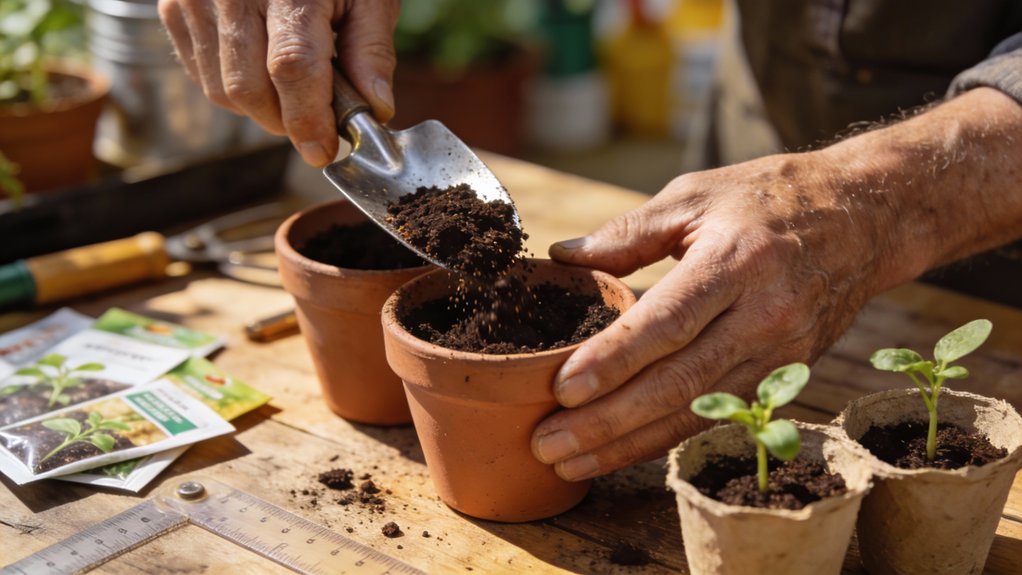
Your first-day time investment sets the foundation for the entire growing season, so expect to dedicate 1.5 to 2.5 hours for soil prep and planting.
You’ll spend 30-60 minutes mixing your potting blend, typically 50% peat moss and 50% garden earth, with any soil amendments you choose.
Filling containers takes another 30-60 minutes, while planting seeds or seedlings requires 15-30 minutes per container.
Factor in 10-15 minutes for thorough watering afterward.
This initial setup also lets you inspect plants for pest management issues before introducing them to your garden, saving headaches later.
Daily Watering: Minutes Needed by Season and Plant Size
Once you’ve completed your initial setup, the real rhythm of container gardening begins with regular watering, and the time commitment varies greatly based on plant size and season.
Small containers need attention 2-3 times weekly, taking 5-10 minutes per session: that’s roughly 35-70 minutes total.
Larger 20-gallon plants demand daily watering during summer heat, requiring 10-15 minutes for thorough soaking (70-105 minutes weekly).
Seasonal adjustments cut this workload considerably: cooler months might need just 10-20 minutes once weekly for all plants.
Check the top inch of soil regularly: dry means it’s time to water, adding a few extra minutes to your routine.
Weekly and Monthly Feeding: Fertilizer Time Costs
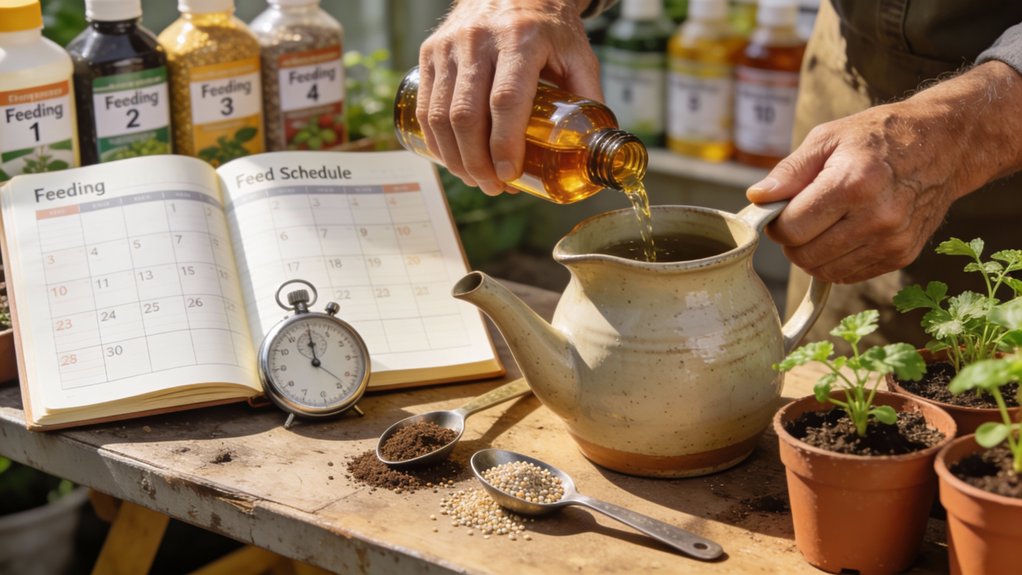
While watering happens nearly every day, feeding your container plants follows a more forgiving schedule that won’t consume much time.
With water-soluble fertilizers, you’ll spend about 5-10 minutes weekly mixing and applying nutrients.
Weekly water-soluble fertilizer applications take just 5-10 minutes of mixing and feeding—a quick investment for thriving container plants.
If you prefer organic granular options, you’ll invest 15 minutes at planting, then another 10 minutes every 4-6 weeks for reapplication.
During weeks 3-4, apply balanced fertilizer at quarter strength to establish strong roots.
Smart nutrient monitoring, checking leaf color and growth patterns, takes just minutes but prevents deficiencies.
Your monthly fertilizer frequency depends on plant type, but total feeding time rarely exceeds 30 minutes.
Staking and Pruning: Ongoing Plant Support Hours
As your container plants stretch upward and spread outward, they’ll need physical support to stay healthy and productive.
Staking techniques for tomatoes and cucumbers require 10-15 minutes weekly for initial setup and adjustments.
You’ll spend 20-30 minutes every 1-2 weeks on pruning methods, removing tomato suckers and improving airflow.
Add another 5-10 minutes weekly for trellising checks on vining crops.
Larger plants demand more frequent attention as they grow.
Combined, you’re looking at roughly 30-45 minutes per week for these maintenance tasks.
The exact time depends on your plant count and their current growth stage.
From Seed to Harvest: Realistic Growth Timelines
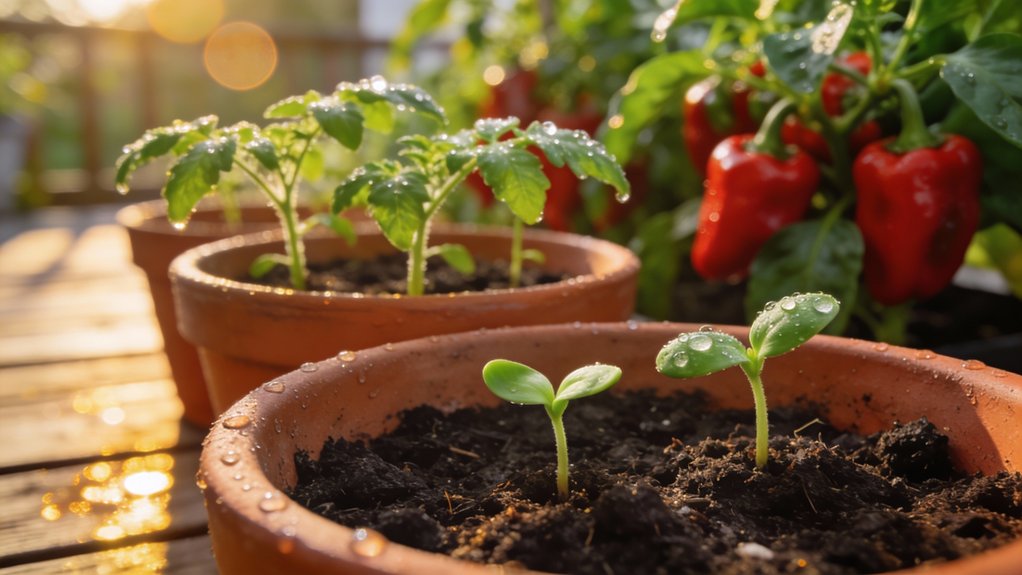
Understanding your plants’ growth timeline helps you plan harvests and manage your container garden more effectively.
Seed germination takes 3-14 days when you maintain soil moisture and temperatures between 65-75°F.
You’ll spot true leaves during weeks 3-4, marking the start of gentle fertilizing at quarter strength. Fast-growing leafy greens reach harvest size by weeks 5-8, while fruiting plants begin flowering then.
Container size matters greatly: properly sized pots boost growth rates by 30-40% compared to cramped containers.
Track these growth milestones closely to adjust care timing and catch problems like nutrient deficiencies or inadequate light early.
Picking and Preserving: How Long Does Harvest Take?
Once your container plants reach maturity, you’ll spend 15-30 minutes per harvest session depending on your garden’s size and crop types.
Leafy greens need gentle picking of outer leaves every few days, while tomatoes require careful stem cutting when fully colored.
Different harvest techniques affect your time investment considerably.
Preserving methods add another 30-60 minutes per batch:
- Washing and drying lettuce takes 10 minutes
- Blanching and freezing herbs requires 20-30 minutes
- Canning tomato sauce demands 45-60 minutes
- Dehydrating peppers needs 8-12 hours of drying time
Your preservation choice directly impacts your weekly time commitment beyond simple picking.
5 Time-Saving Hacks to Cut Container Gardening in Half
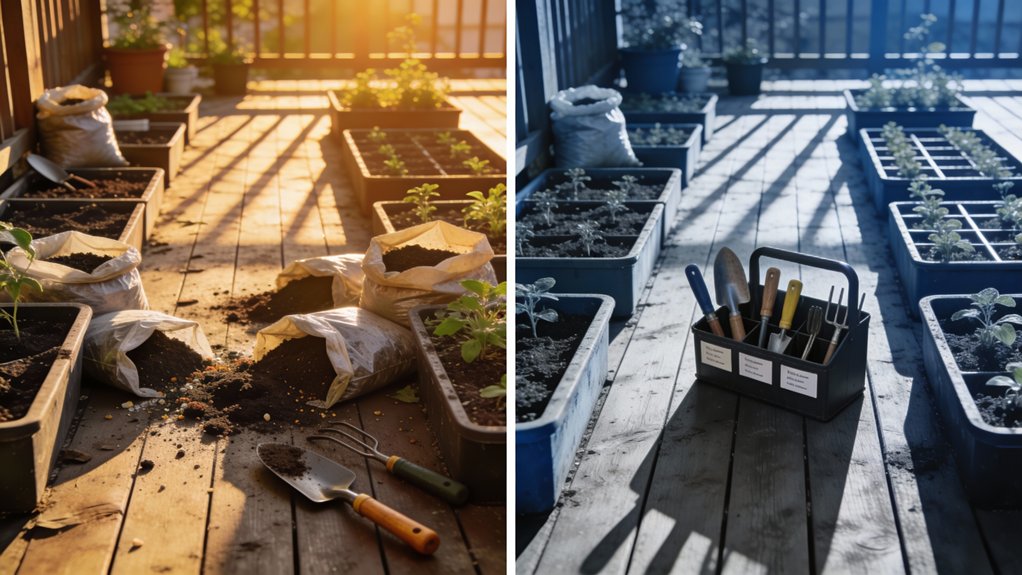
After you’ve mastered the harvest routine, you’ll want to reclaim hours from your weekly schedule without sacrificing your garden’s productivity.
Start with 20-gallon pots: they promote 30-40% faster growth through superior root development, shortening your overall growing timeline.
Your time management improves when you use homemade potting mix: 50% peat moss, 50% garden earth.
This blend eliminates shopping trips for expensive bagged soil.
Add organic granular fertilizers directly into your mix for gradual nutrient release, reducing frequent feeding sessions.
Install trellises to maximize vertical space with your existing gardening tools.
You’ll water less ground area while supporting larger yields in compact footprints.