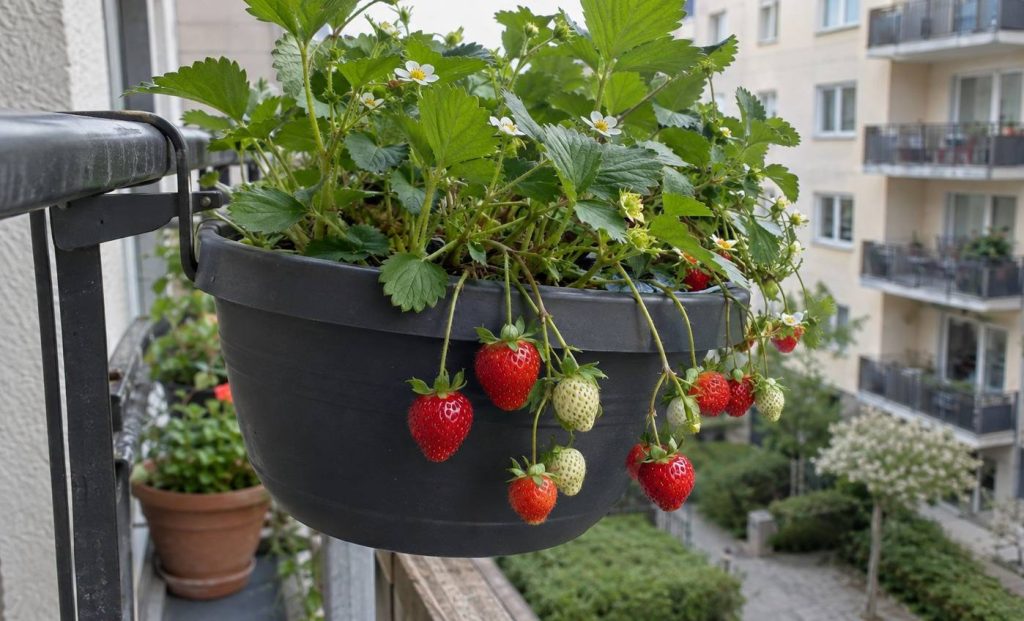
The kind of strawberry you buy decides what a pot gives you. One type fruits for most of the season. Another fruits once, early, and then it is done.
For a pot, buy day-neutral or everbearing plants. Give them a container at least 12 inches wide and a spot with 6 hours of direct sun.
Water when the surface dries, pinch off runners, and plan the winter before you plant.
Which type to buy
Iowa State University Extension and Outreach publishes Yard and Garden pages written by the university’s horticulture specialists.
It says day neutral and everbearing types are the best to use in containers.
June-bearing types can be grown in a pot, but it does not recommend them.
One reason is timing. June-bearing plants flower and fruit once, early in the season, so a pot gives you one short harvest.
Oregon State University Extension narrows the choice. It is run by the university’s Division of Extension and Engagement. It says day-neutral cultivars are best suited for container growing.
Day-neutral plants fruit from mid-spring to autumn frost and send out few runners, according to Oregon State. Iowa State groups them with everbearing types, so either label on the tag is a sound pick.
If a garden center only has one kind in stock, check the tag for the words “day-neutral” or “everbearing” before you pay.
How many plants fit in a pot
Iowa State says containers at least 12 inches across and 8 inches deep are best. A 12-inch pot holds 3 or 4 plants.
Oregon State puts the ceiling at four strawberry plants per 12-inch pot, and asks for a container 10 to 18 inches deep.
Four plants is the most a 12-inch pot should hold. Fewer is fine.
Pot, jar or hanging basket
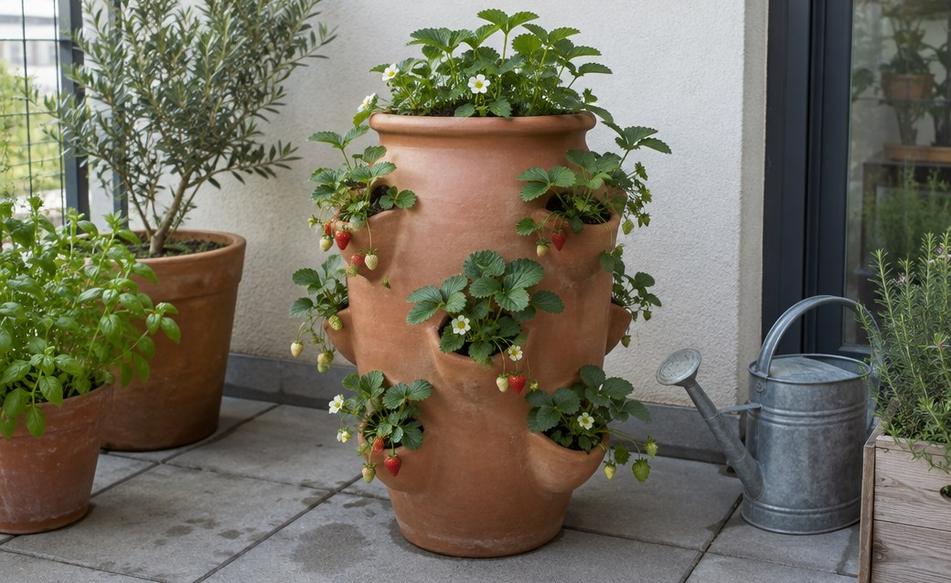
Each container type dries differently.
| Container | What it suits | What to watch |
|---|---|---|
| Pot or trough | Up to four plants per 12-inch pot | At least 8 inches deep |
| Strawberry jar | Extra planting space in side pockets | Moisture stays uneven, so water from the top and the sides |
| Hanging basket | Showing off flowers and fruit | Dries quickly, can get very hot, runners must go |
Iowa State calls strawberry jars a nice option and says watering from both the top and the sides helps.
Oregon State adds a limit. The “strawberry planters” sold in many nurseries are generally suitable for only one growing season, because each plant gets little space.
The larger the container, the more likely the plants last more than one season, says Oregon State.
Iowa State says hanging baskets are difficult to maintain through the season.
Oregon State says to remove any runners from a basket. Daughter plants hanging over the edge cannot root, and they would weaken the mother plant.
Sun, water and runners
Plants should receive at least 6 hours of direct sun a day, according to Iowa State. If you are not sure your balcony gets that, measuring the sun on your balcony takes one clear day.
For water, Iowa State says to check regularly and water when the soil surface is dry.
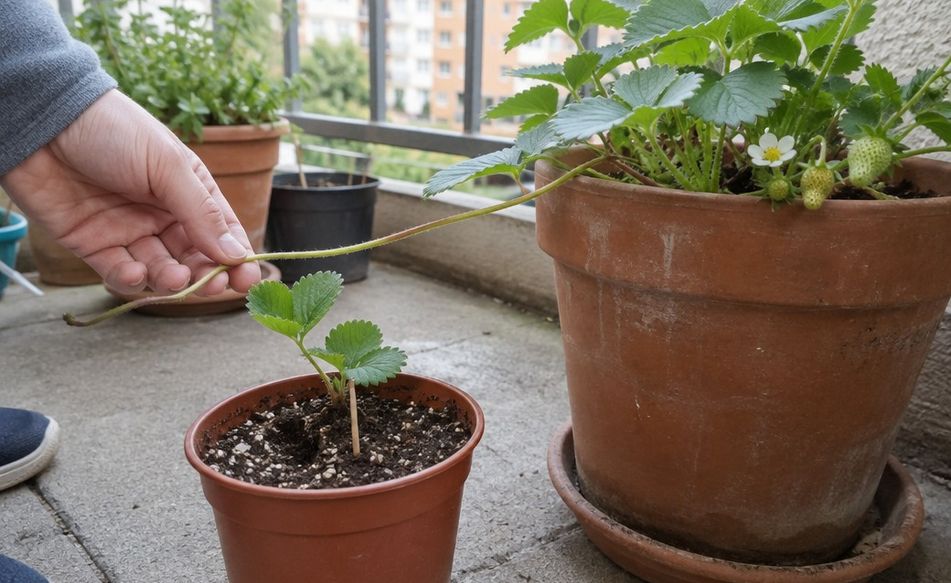
Iowa State says day neutral and everbearing types typically produce few runners, and extra ones should be removed as they form. Oregon State says to remove them from any potted plant.
Iowa State also advises a water-soluble, all-purpose fertilizer, applied 2 to 3 times through the growing season and used as the label directs.
Keeping plants over winter
Iowa State’s advice is plain: it is not recommended to overwinter strawberries grown in containers.
A potted plant is more exposed than one in the ground.
Iowa State’s overwintering page says it likely will be seriously damaged or destroyed if left outdoors in winter.
For your other pots, you can check whether potted plants survive winter outside and how to protect them.
You have two choices:
- Place the container in an attached, unheated garage in November.
- Discard the plants, empty the potting soil, store the container indoors, and replant in spring.
In a mild-winter region such as western Oregon, the answer changes. Oregon State says strawberries in containers can be left outside in western Oregon, and to bring them in if temperatures are forecast below 15°F.
The first weeks after planting
Set the pot where it gets 6 hours of direct sun. Each morning, and again on hot summer afternoons, touch the surface of the mix and water if it is dry. Pinch off every runner as soon as it appears.