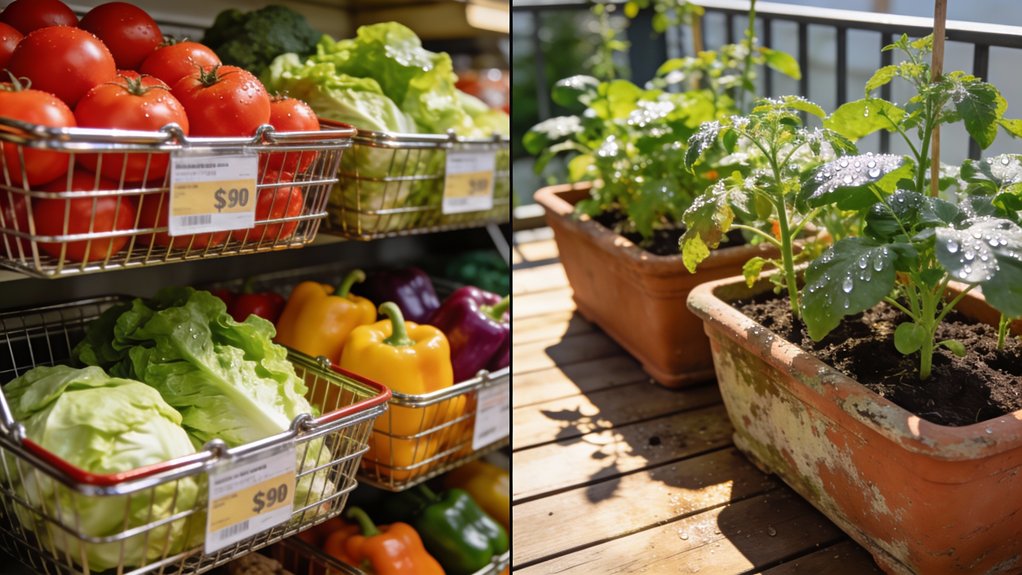
Container gardening will save you money on groceries—eventually. But the timeline matters more than most gardening blogs admit.
Industry surveys show that container gardens can produce $300-600 worth of fresh produce from a $150-300 initial investment. That’s a solid return, except it typically takes 2-3 seasons to hit those numbers.
Your first year? You’re learning what works in your specific conditions, dealing with beginner mistakes, and probably spending more than you harvest.
The real question isn’t if you’ll save money, but when you’ll break even and which crops get you there fastest. Herbs pay back in weeks. Tomatoes take months and considerable effort. Some vegetables never pencil out financially but you grow them anyway for quality reasons.
Here’s the realistic ROI breakdown by crop, plus the three factors that determine whether you’ll actually pocket savings. (For complete cost data and beginner expectations, see our container gardening statistics guide.)
The Quick-Payback Plants: Herbs and Greens
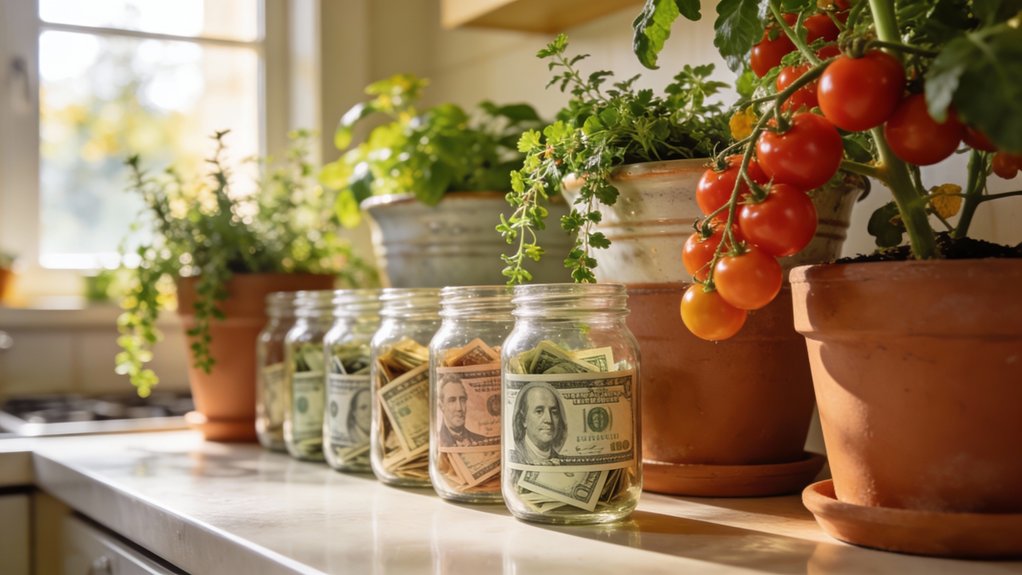
If you want to see savings immediately, start with herbs. A $3 basil plant produces $20-30 worth of fresh basil over a growing season. Store-bought basil costs $3-4 for a tiny package that wilts in three days. Your container plant keeps producing for months.
Herbs with the best ROI:
- Basil: $3 plant yields $25-30 worth of harvest
- Mint: $3 plant yields $20-25 (grows aggressively, needs containment)
- Cilantro: $2 seeds yield $15-20 per season
- Parsley: $2 seeds yield $15-20 per season
Salad greens follow close behind. A $2 packet of mixed lettuce seeds produces 6-8 weeks of continuous harvest worth $30-40 in store equivalents. Pre-washed salad mixes cost $4-6 per container and spoil within days. Your container greens stay fresh until you cut them.
Microgreens are even more dramatic. Those expensive $5-7 clamshells at fancy grocery stores? You can grow the same amount from $3 worth of seeds in 7-10 days. One tray produces what would cost $20-30 at retail.
The Medium-Term Investments: Vegetables
Tomatoes are the most popular container vegetable, but they’re not the fastest path to savings. A cherry tomato plant costs $4-6 as a seedling or $2-3 from seed. Over a season, it might produce 5-10 pounds of tomatoes worth $15-30 at grocery prices.
Sounds good, except you need a large container ($15-30), quality potting mix ($10-15), and consistent care for 60-90 days before first harvest. Your actual first-year profit is modest, maybe $10-20 after expenses.
Vegetables worth growing for savings:
- Cherry tomatoes: Break even in season two, year one is learning
- Peppers (hot): One plant yields $15-25 worth, low maintenance
- Radishes: 25 days to harvest, minimal investment, good learning crop
- Bush beans: Moderate yields, easy care, $10-15 savings per season
Skip these for financial reasons:
- Large tomato varieties (need huge containers, lots of care)
- Cucumbers (moderate yields, space-intensive)
- Squash (takes too much space for the return)
The exception: grow them anyway if you value flavor and freshness over pure economics. Homegrown tomatoes taste better than anything from a store. That’s worth something even if it doesn’t show up on a spreadsheet.
Year One Startup Costs: What You’ll Actually Spend
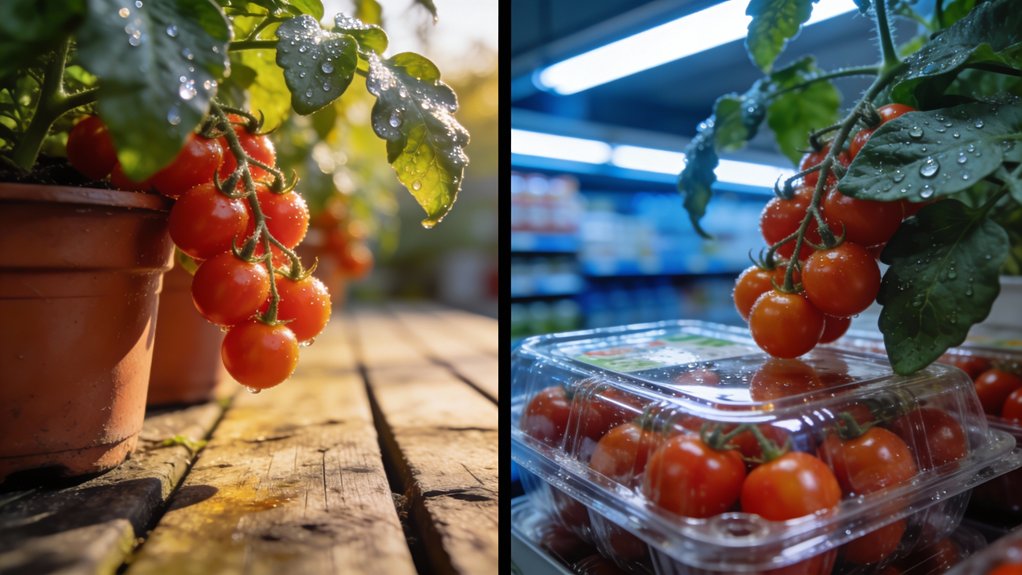
Most beginners spend $200-400 their first season. Here’s where it goes:
Containers: $50-100
- 3-5 pots (12-16 inch diameter): $10-20 each
- Or use free recycled containers (buckets, storage bins with drainage holes)
Potting mix: $40-80
- Quality mix costs $8-15 per cubic foot
- A 14-inch pot needs about 1.5 cubic feet
- Don’t use garden soil (it compacts and kills roots)
Plants and seeds: $30-60
- Herb seedlings: $3-5 each
- Seed packets: $2-4 each
- Tomato/pepper starts: $4-6 each
Basic tools: $30-50
- Trowel, watering can, gloves
- Or borrow/use what you have
First-year total: $150-290
Your harvest in year one typically returns $100-200 in grocery equivalents. You’re not making money yet. You’re paying for education and setup infrastructure you’ll reuse for years.
The Three-Season Reality: When Savings Actually Start
Season one (year one): You spend $150-290, harvest $100-200 worth of produce. Net result: -$50 to -$190. But you now own containers, tools, and knowledge.
Season two: You spend $50-80 (just soil refresh and new seeds/plants), harvest $300-400 worth of produce. Net result: +$220-350. This is where you break even on total investment.
Season three and beyond: You spend $50-80 annually, harvest $400-600 worth of produce. Net result: +$320-550 per year profit.
The surveys showing “$600 harvest from $70 investment” are misleading. That’s the steady-state number after you’ve learned what works and already own the containers. Beginners don’t hit those numbers immediately.
Three Factors That Determine Your Real Savings
1. Time value
If you spend 30 minutes daily tending containers during growing season (April-October = 200 days), that’s 100 hours annually. At even minimum wage, your time “costs” $700-1500 depending on where you live.
This doesn’t mean container gardening is financially stupid. It means you’re doing it for reasons beyond pure profit: better food quality, outdoor time, mental health benefits, learning skills, or enjoying a hobby. Those have value too, just not dollar value.
If you’re purely optimizing for savings per hour, you’re better off working extra hours and buying vegetables. If you’re optimizing for fresh food, outdoor activity, and satisfaction, container gardening wins.
2. Learning curve losses
Most beginners lose 30-50% of their first-year plants to mistakes: wrong container size, poor soil, inconsistent watering, bad plant choices. You’re paying for mistakes with dead plants.
This improves dramatically by season two. Your failure rate drops to 10-20% once you understand your specific conditions.
3. Climate and location
Long growing seasons (southern states) mean more harvests per year, better ROI. Short seasons (northern states) limit what you can grow and how much you harvest.
Urban heat islands dry out containers faster, requiring more water and attention (time cost). But urban locations also mean higher grocery prices, so savings are more significant.
The Honest Answer: Will You Save Money?
Short term (year one): Probably not. You’ll spend more than you harvest while learning and acquiring basic supplies.
Medium term (years 2-3): Yes. You’ll harvest $300-600 worth of produce annually while spending $50-80 on supplies. Net savings: $220-550 per year.
Long term (year 4+): Definitely. Your setup costs are paid off. You know what works. You’re harvesting efficiently. Annual savings of $300-500 are realistic.
The best financial strategy:
- Start with 3-5 herbs in small pots ($30-50 total investment)
- Add 2-3 easy vegetables once herbs succeed
- Scale up slowly as you learn
- Focus on high-value crops (herbs, greens, hot peppers)
- Skip low-value crops (large tomatoes, squash, melons)
Container gardening saves money eventually, but it’s not a get-rich scheme. Think of it as paying $150-300 for a skill that returns $300-500 annually once you’re competent. That’s a good long-term investment, just not an instant payoff.
The real question is whether you value fresh, high-quality produce and outdoor time enough to invest the learning period. If yes, the money savings are a bonus. If you’re purely chasing profit, there are faster ways to save $300 per year.