Many houseplant pest problems start small. What looks like dust on a leaf may be scale, and faint webbing can be the first sign of spider mites.
Often the problem goes unnoticed until leaves yellow or drop, or the plant turns sticky from sap-feeding insects.
Most indoor pests can be handled with water, hand removal and a few low-toxicity products. The sections below cover how to identify the likely culprits and what Extension services recommend for each.
Identify Common Houseplant Pests: Visual Signs and Symptoms
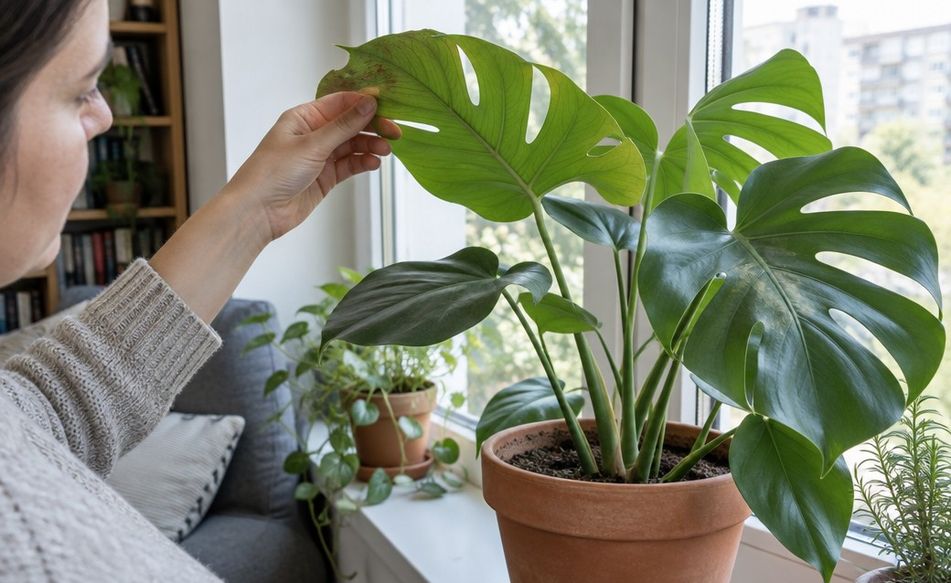
Start with a close look at stems, leaf joints and the undersides of leaves. Here is what each pest usually looks like:
- Scale insects appear as small brown bumps that look like part of the plant.
- Mealybugs show up as white, cottony clusters.
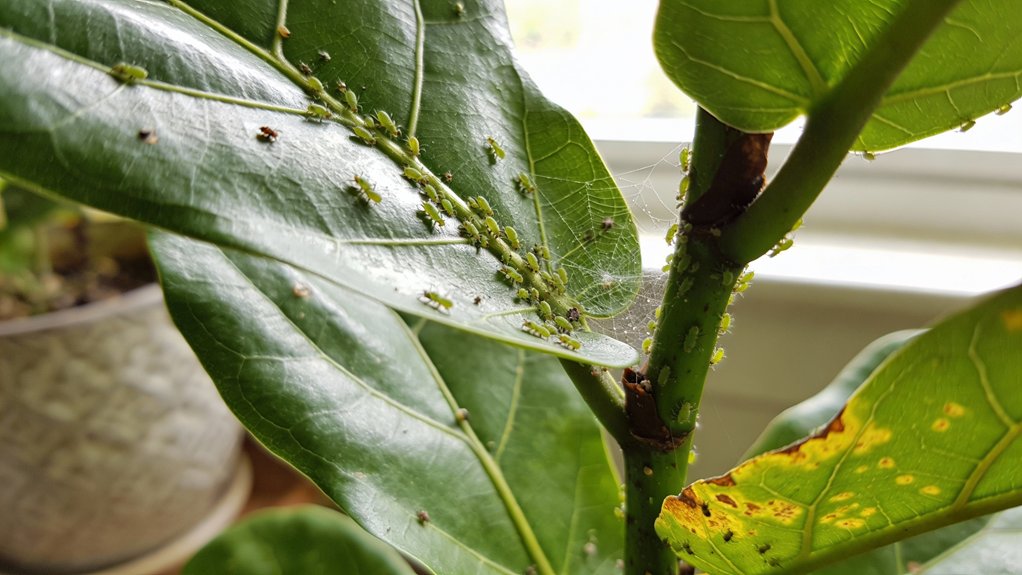
- Aphids cluster on new growth and leave sticky honeydew behind.
- Spider mites spin fine webbing in dry conditions and leave pale speckles.
- Thrips leave silvery streaks with tiny dark specks.
Check leaf undersides and stem joints first, because most of these pests hide there.
Thrips are usually less than 1/16 inch long. You will usually see the damage before the insect.
Remove Scale Insects by Hand and With Soap
Scale is the hardest of these to spot, because adults sit still and look like bumps on the stem.
Dead scale can stay stuck to the stem, so judge progress by whether new ones appear.
Colorado State says that where an infestation is not widespread, scale can be killed by rubbing or picking it off. Here is the plan:
- Scrape it off. Scrape visible scale off stems and leaves with a fingernail or a soft toothbrush.
- Treat the rest. For what remains, use an insecticidal soap or horticultural oil labeled for houseplants, and follow the product label.
- Repeat treatment. Repeat the soap as the label allows. Colorado State notes that repeat applications may be needed every four to seven days.
Eliminate Mealybugs With Alcohol and Isolation
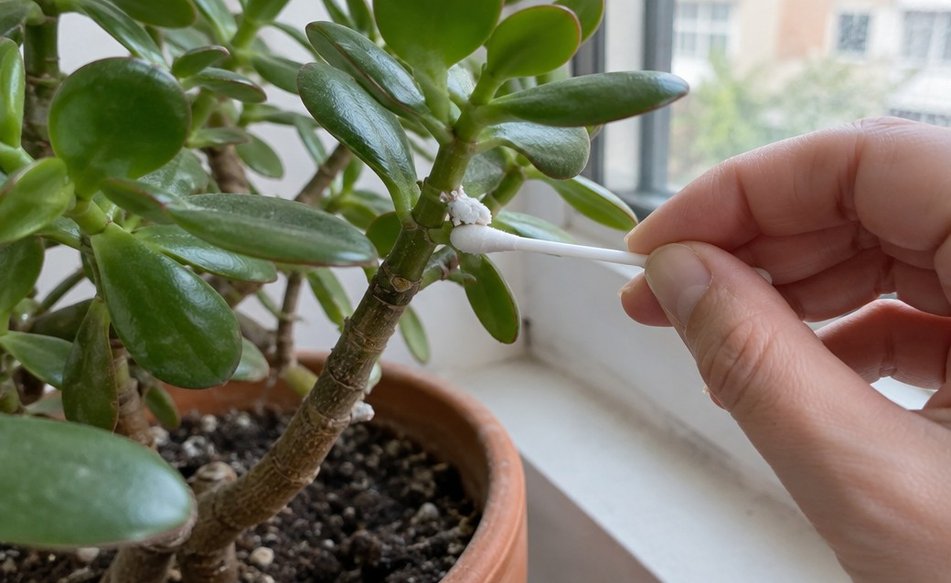
Mealybugs appear as white, cottony clusters on stems, leaf joints and leaf undersides. They multiply fast if you do not act quickly.
Dip a cotton swab in household alcohol and dab it on individual mealybugs for light infestations. University of California IPM says the solution should be 70% isopropyl alcohol or weaker.
Isolate a plant with mealybugs right away so the infestation does not spread to its neighbors.
Alcohol can burn leaves, so test it on a small part of the plant first and keep it off healthy foliage.
Maryland also warns that mealybugs are very difficult to control, and heavily infested plants should be discarded.
Control Aphids and Whiteflies With Water and Sticky Traps
Aphids and whiteflies rank among the most common houseplant pests. Aphids are tiny and soft-bodied, and whiteflies look like miniature white moths.
Both feed on sap and leave sticky honeydew. Colorado State says aphid populations can build quickly, with a generation in two to three weeks.
Rinse first, because aphids wash off easily and need no spray.
Here is the control plan:
- Rinse the leaves. Rinse the plant with a vigorous jet of water, leaf undersides included.
- Trap adults. Hang yellow sticky traps near the plant to catch adult whiteflies.
- Recheck often. Check again every few days for new growth that is crowded with aphids.
Treat Spider Mites by Rinsing and Avoiding Hot, Dry Spots
Spider mites are nearly invisible to the naked eye. You will notice the damage first: pale speckling and fine webs.
Colorado State says plants in very hot, dry sites are prone to mites, so move the plant away from heat vents and baking windowsills.
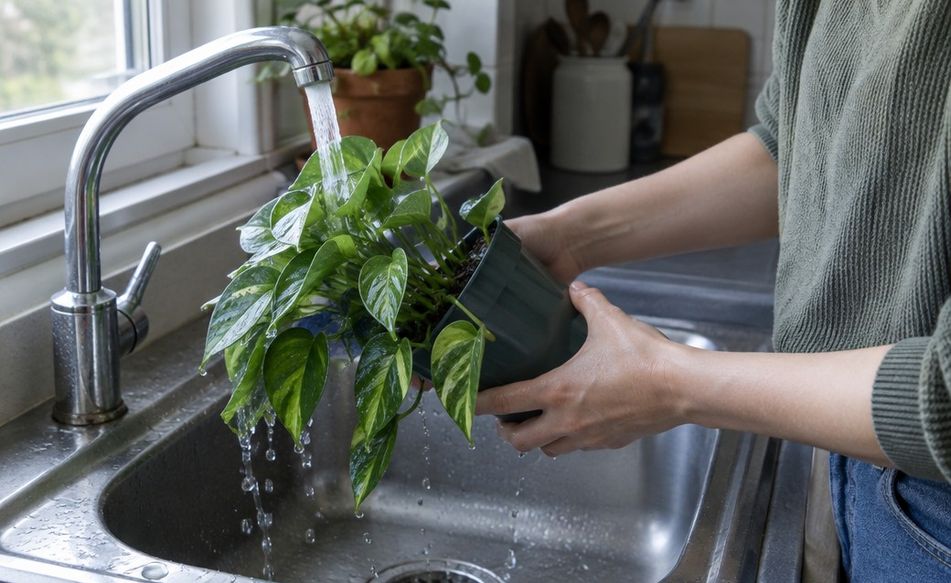
A vigorous rinse of the whole plant, leaf undersides included, is the first move against spider mites.
The same extension service says a jet of water is particularly effective against spider mites. Insecticidal soap can help too, and Colorado State suggests repeating it every four to seven days. Follow the label.
Stop Fungus Gnats by Letting the Soil Dry
Small black flies around your pots are fungus gnats, and Colorado State calls drier soil between waterings the most important step.
Traps, Bti drenches and the full plan are in the guide to fungus gnats.
Recognize and Treat Thrips Without Harsh Sprays
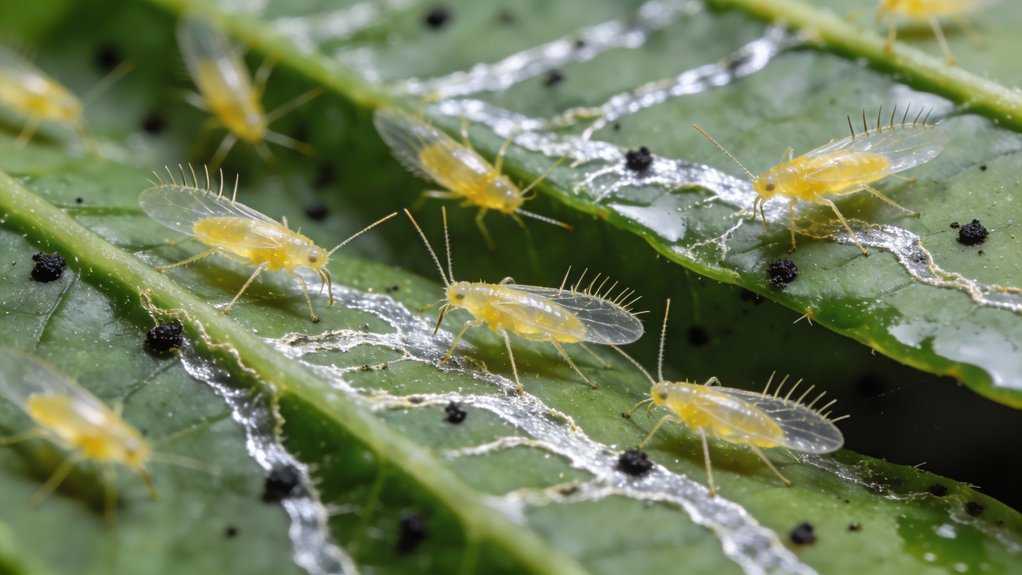
Thrips are tiny dark slivers, and the damage gives them away: silvery patches with tiny dark specks.
Colorado State says thrips lay eggs inside plant tissue, and the young stages develop in the soil where sprays do not reach. One treatment will not finish them.
Isolate a plant with thrips and keep treating it, because the soil holds the next generation.
Start by isolating the plant and rinsing it well. Then use an insecticidal soap or horticultural oil that is labeled for houseplants, repeated as the label allows.
Stronger chemical sprays exist, but this page leaves them out. If you ever use one, pick a product labeled for houseplants and follow the label exactly.
Prevent Houseplant Pests: Quarantine New Plants
Getting rid of pests takes time, and prevention is easier. Two steps make the biggest difference:
- Quarantine new plants for at least three weeks, as Colorado State recommends. Keep new arrivals away from the rest and inspect them every few days.
- Keep plants out of very hot, dry spots, which favor spider mites.
When you inspect a new plant, check leaf undersides, stems and the soil surface for insects, eggs, webbing or sticky residue. If you find a problem, treat it before the plant joins your others.
Pots without drainage holes stay wet, which favors fungus gnats, and the container size guide explains why holes matter.
Sticky traps near your plants help you spot flying pests early. A quick look during watering catches the rest. For outdoor plants that need little care, see low-maintenance plants for beginner gardeners.
Keep every new plant apart for at least three weeks and look it over before it joins the others.