Arugula microgreens are ready to cut in 6 to 8 days. That is the figure in the seed table from Utah State University Extension’s yard and garden program.
Most seeds in that table are ready between 6 and 16 days, and only cilantro takes 21 to 28. All of them grow in one shallow tray of mix on a kitchen counter, with no yard and no pots.
You need a tray, seed sold for microgreens, a mix and a bright spot. Skip tomato, pepper and eggplant seed.
Pick seeds that ask the least of you
Utah State says to choose seeds labeled for microgreens, such as radish, broccoli, sunflower or pea shoots. Its table also lists how long each seed stays covered in the dark after sowing, which the method below explains.
Some seeds need a soak first, and the table says which:
| Seed | Days to harvest | Extra steps |
|---|---|---|
| Arugula | 6 to 8 | None; covered 1 to 2 days |
| Radish | 8 to 12 | None; covered 1 to 2 days |
| Kale | 8 to 12 | None; covered 1 to 2 days |
| Broccoli | 8 to 12 | None; covered 2 to 4 days |
| Pea | 8 to 10 | Soak 6 hours; covered 3 days |
| Sunflower | 9 to 10 | Soak 12 hours; covered 3 days |
| Basil | 12 to 16 | None; covered 4 to 7 days |
| Cilantro | 21 to 28 | None; covered 7 to 14 days |
For a first tray, arugula, radish and kale ask the least: no soaking and only one to two days covered. Basil and cilantro need 4 to 14 days in the dark before they see light.
The tray-and-mix method, step by step
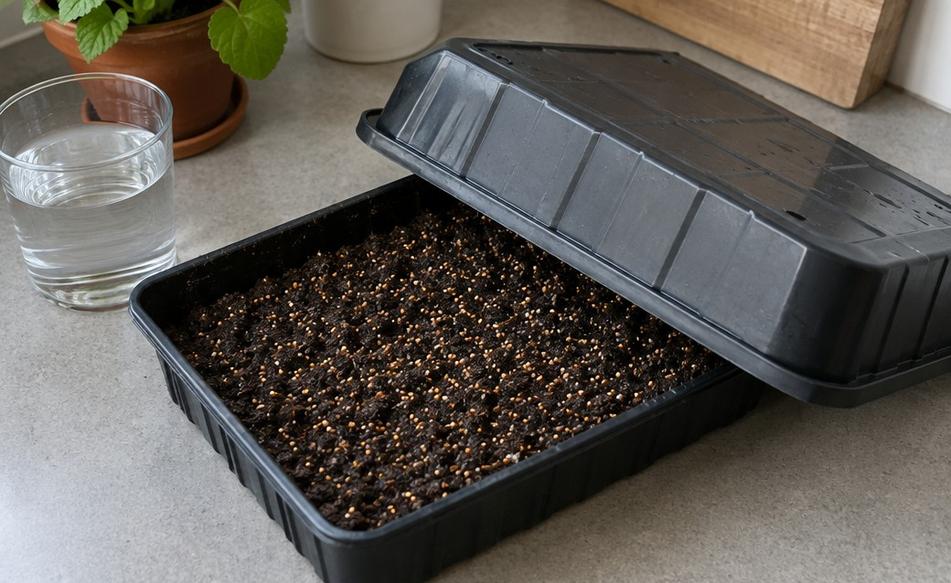
Illinois Extension, which turns University of Illinois research into advice for the public, says a plastic tray or pie tin with drainage will do. A takeout container works too, if you add holes in the bottom.
West Virginia University Extension, the state university’s outreach service, gives the order of work:
- Fill the tray with about ½ inch to 1 inch of seed-starting mix or potting soil. Water it until damp but not soaking through.
- Scatter the seed thickly. Illinois puts it about a ¼ inch apart, or less, then adds a thin layer of mix on top and presses down lightly.
- Set a second tray on top with something flat and heavy on it, 2 to 5 pounds, per Utah State. Leave it for half of the covered time in the table.
- For the second half, turn that top tray over so it shades the seeds without touching them.
The cover is there so the roots grow down into the mix instead of pushing the seed up. Utah State says to take it off once the roots are clearly in the mix.
Light and warmth on a counter
According to Illinois, microgreens need about six to eight hours of light per day.
A sunny, south-facing window is preferred, and LED grow lights also work.
Around 70°F is the best temperature, and 50°F is the lowest they tolerate, with slower growth.
Water from below
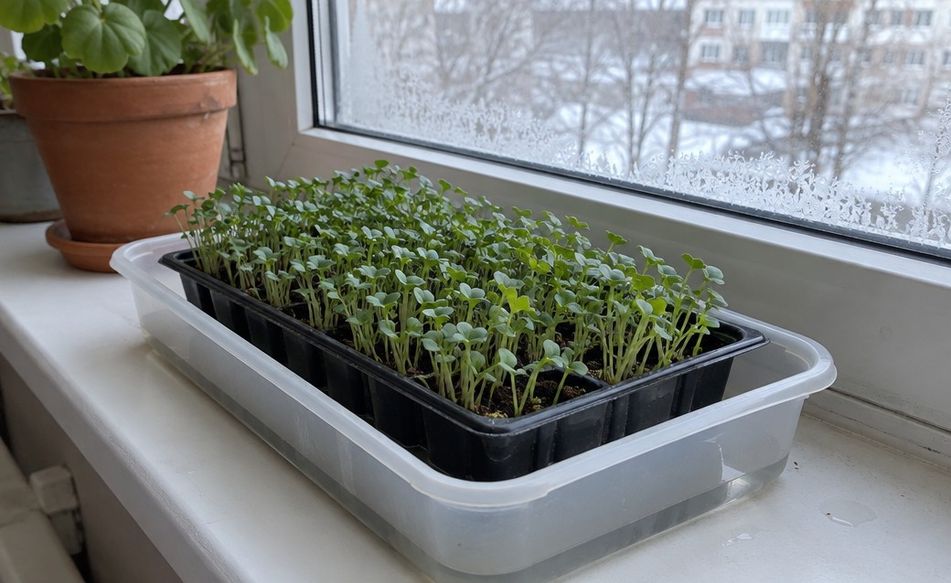
Once the seedlings are up, WVU Extension says to keep a second small tray under the seed tray.
Water when the mix feels dry or the greens droop, which it puts at about every other day.
Fill the lower tray with 1 inch of water and leave the seed tray in it for a few minutes.
Overhead watering can encourage disease, so bottom watering is the safer habit.
If you must water from the top, WVU says to mist gently.
Mold is a problem; root hairs are not
A Purdue Extension Master Gardener, writing for the Allen County office, says root hairs growing from the seed are normal. Mold is not.
Its page shows photos of the signs to watch for.
WVU lists the causes of mold on the soil: too much water, not enough air flow or humidity that is too high.
Utah State adds that the plants need constant airflow, and suggests a gentle fan.
If mold persists after you adjust water, air flow and humidity, WVU says to dispose of the tray. Do not reuse the mix, because Purdue says reused growing media can raise the risk of mold.
Harvest and storage
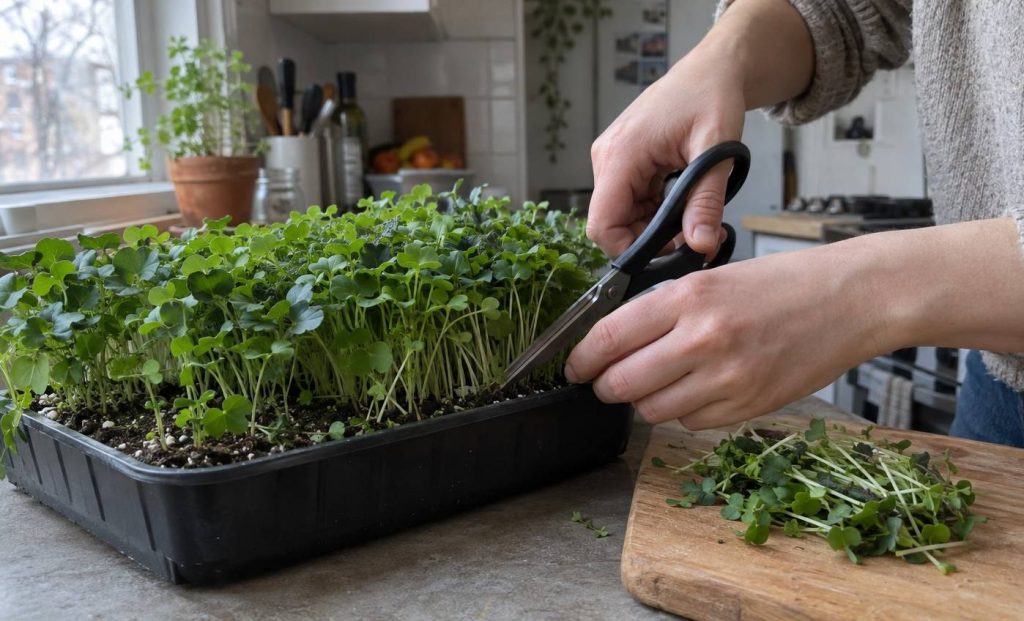
WVU says to harvest when the greens are about 1.5 to 2.5 inches tall.
Cut the stem at the soil line, or slightly above, with clean scissors.
The cut falls below the growing point, so the tray does not regrow.
Stored unwashed in the refrigerator, the greens last about a week, per Purdue. Wash them right before eating.
What you can skip
Never grow tomato, pepper or eggplant seed as microgreens. Illinois says the nightshade family has toxins in its stems and foliage.
Garden soil stays out of the kitchen too, unless it has been sterilized first, per Purdue.
Purdue also says fertilizer is not needed, because the seed holds the nutrients for its first leaves.
Before the next tray
If the window gives you less than six hours of light, Illinois names LED grow lights as the other source.
A grow light that fits a windowsill or shelf is one way to supply it.
Reused mix can raise the risk of mold, so each new tray gets fresh mix. Five herbs that suit a kitchen windowsill come with light, water and pot-depth tips.
Cut the first tray, tip out the used mix and wash the tray. Write the sowing date on a calendar and add the days to harvest from the table.
Then fill the tray with fresh mix and sow the next seed.