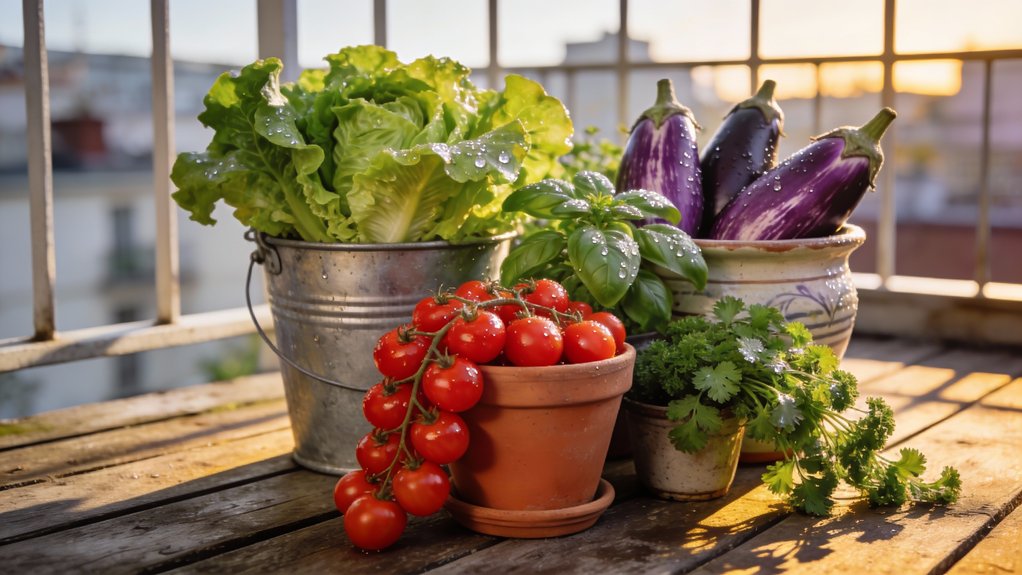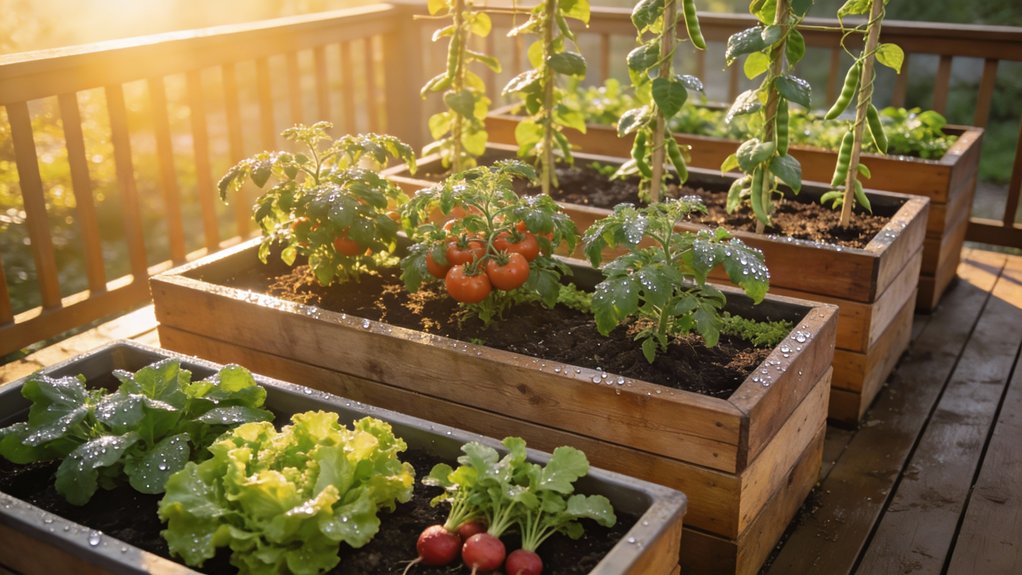
Container depth matters more than width for most vegetables: roots grow down before spreading out.
You’ll find that a 6-inch pot works fine for lettuce, but tomatoes need at least 12 inches to develop properly.
The difference between success and wilted plants often comes down to matching container size to root structure. Before you grab any pot from your garage, understand which vegetables actually thrive in confined spaces and which ones will frustrate you.
This guide ranks container vegetables by how easy or hard they are to grow. If you want picks chosen specifically for tight spots, see the best container vegetables for small spaces.
Why Vegetables Thrive in Container Gardens
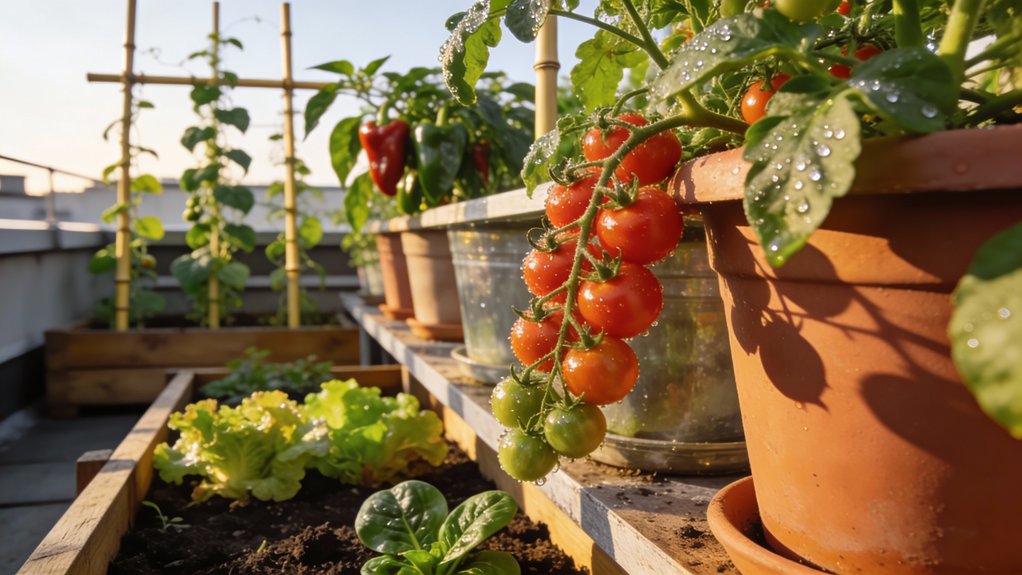
While traditional garden beds have their place, containers give you a level of control that’s hard to match in the ground.
You’ll get well-drained soil that warms up weeks earlier in spring. That means planting sooner and harvesting longer.
Container soil stays loose and aerated, preventing compaction that kills roots in packed ground beds.
The real advantage of containers is control: you choose the soil, the position, and the drainage, instead of inheriting whatever the ground gives you.
For urban gardening, position plants wherever sunlight hits: patios, balconies, even fire escapes.
You’re choosing premium potting mix instead of fighting clay or sand. Sub-irrigated planters cut the watering down sharply, which makes maintenance manageable for busy gardeners.
Stack containers vertically and you’ve tripled your growing space without expanding your footprint.
Easiest Container Vegetables for Total Beginners
Success in container gardening starts with vegetables that forgive mistakes and grow fast enough to keep you motivated.
These beginner favorites deliver results without demanding perfection:
- Radishes: Harvest in three weeks with minimal fuss
- Leafy greens: Kale and lettuce thrive in small containers and grow quickly
- Herbs: Basil and cilantro need just regular watering for fresh flavors
- Bush beans: Fast-growing varieties requiring no support structures
- Spinach: Produces multiple harvests in cooler weather
You’ll appreciate how these options tolerate beginner errors while teaching fundamental container gardening skills through hands-on experience. Since container gardening requires daily attention for plant care, starting with forgiving vegetables lets you build confidence before tackling more demanding crops.
Intermediate Container Vegetables Worth the Effort
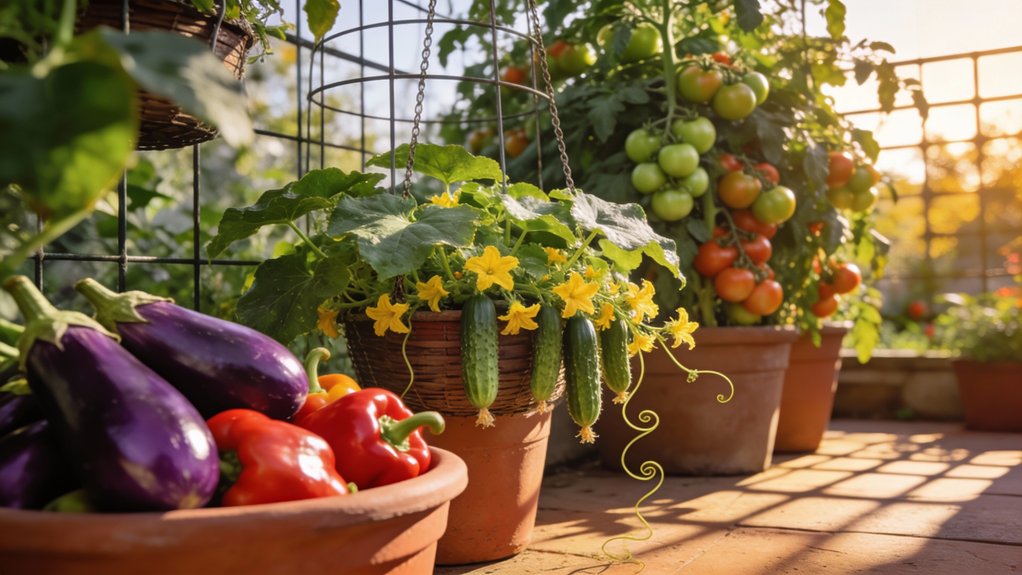
Once you’ve mastered the basics, intermediate vegetables offer bigger harvests and more variety.
They’ll test your skills with pest management and environmental control, but nothing unmanageable.
Brassica varieties like broccoli, cabbage, and collard greens demand regular monitoring for caterpillars and cold protection.
Tomatoes reward you abundantly but need disease-resistant varieties and proper rotation.
Peppers require consistent watering to prevent blossom end rot, while eggplants face flea beetles and wilt issues: choose compact varieties.
Cucumbers need trellises and early planting to dodge powdery mildew.
These crops aren’t difficult. They’ll teach you real gardening skills through hands-on problem-solving.
Advanced Container Vegetables for Experienced Gardeners
After you’ve grown peppers and cucumbers successfully for a few seasons, you’ll recognize when advanced vegetables demand more than routine maintenance.
These crops require dedicated monitoring and environmental control:
- Eggplants need constant moisture and vigilant eggplant care against flea beetles.
- Squash varieties require intensive squash management to combat bugs and powdery mildew.
- Cauliflower presents cauliflower challenges with its slow maturation and cool-climate requirements for proper head formation.
- Brussels sprouts need large containers and extended growing seasons in cooler temperatures.
- Sweet potatoes demand sweet potato cultivation expertise with 10-gallon containers minimum for sprawling vines.
Which Container Size for Which Vegetable?
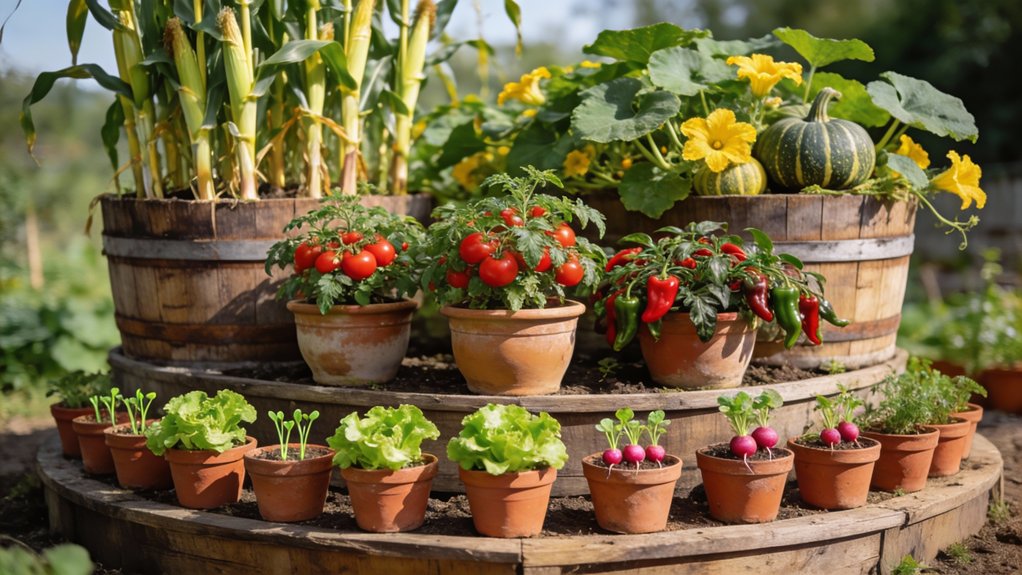
Whether you’re growing simple lettuces or tackling demanding Brussels sprouts, container sizes directly determine your harvest success.
Lettuce thrives in small 2-gallon pots with its shallow roots.
Carrots need deeper containers, 10-12 inches minimum, holding at least 3 gallons for proper root development.
Peppers and potatoes require medium 5-gallon containers for adequate growth.
Tomatoes demand the most space, needing 10-gallon containers at minimum.
These container sizes aren’t arbitrary; they match each vegetable’s root system and growth habits. Get the size wrong and you’re setting up the harvest to fail before the seed goes in.
Watering Container Vegetables: How Often and How Much?
Container vegetables face a daily thirst that garden plants never experience.
Limited soil volume means water evaporates faster, and your plants can’t spread roots searching for moisture.
Proper watering techniques make the difference between thriving plants and wilted disappointments.
Essential watering guidelines:
- Check the top 1-2 inches of soil daily: water when it’s dry
- Water deeply until excess drains from the bottom holes
- Expect to water every 1-3 days in warm weather
- Small pots need daily watering during hot, sunny conditions
- Self-watering containers hold moisture longer, so you water less often
Cooler weather means less frequent watering, so adjust accordingly.
Soil and Drainage Secrets for Container Success
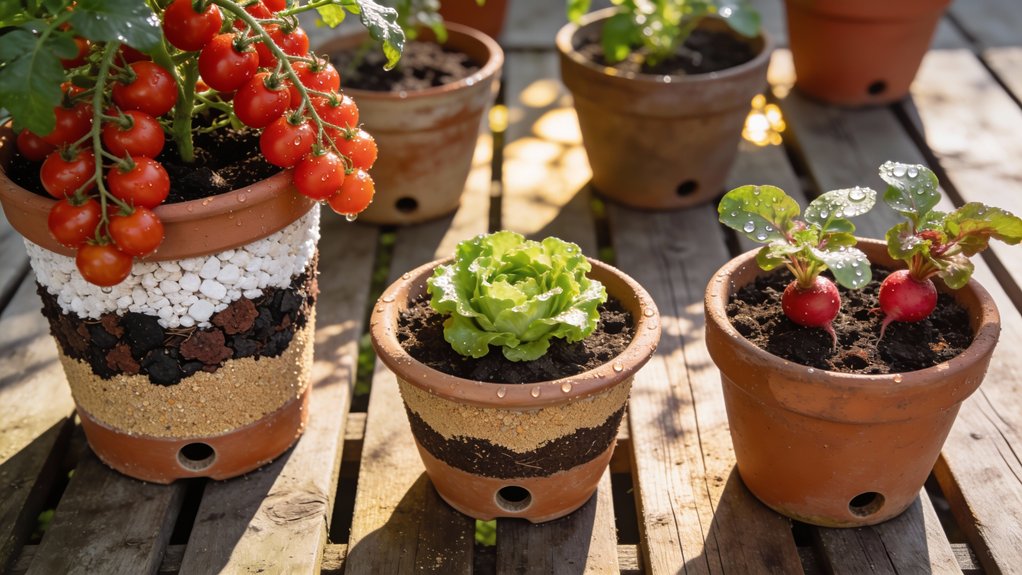
Water management starts with what you put in your containers, not just what you pour on top.
You’ll need high-quality potting soil designed for containers: it drains better than garden soil.
Make sure each pot has drainage holes, since standing water quickly rots roots.
Mix in perlite or vermiculite as soil amendments to improve drainage while retaining moisture. Sub-irrigated planters work well for consistent watering through built-in reservoirs.
These drainage techniques matter because containers dry out faster than garden beds, especially in warm weather.
Check moisture levels regularly to keep your vegetables thriving. Waterlogged roots are as deadly as drought in a confined container.
Common Container Vegetable Mistakes and How to Avoid Them
Even experienced gardeners slip up when they move from ground beds to container growing.
Understanding these pitfalls helps you avoid frustration and failed harvests.
Here’s what trips up most container gardeners:
- Overwatering issues from poor drainage: drill extra holes and check soil moisture before watering
- Soil quality problems when using garden dirt instead of proper potting mix
- Choosing containers under 5 gallons for tomatoes and peppers
- Cramming plants too close together, limiting airflow
- Positioning containers where they receive less than 6-8 hours of direct sunlight
These mistakes are easily correctable once you recognize them.