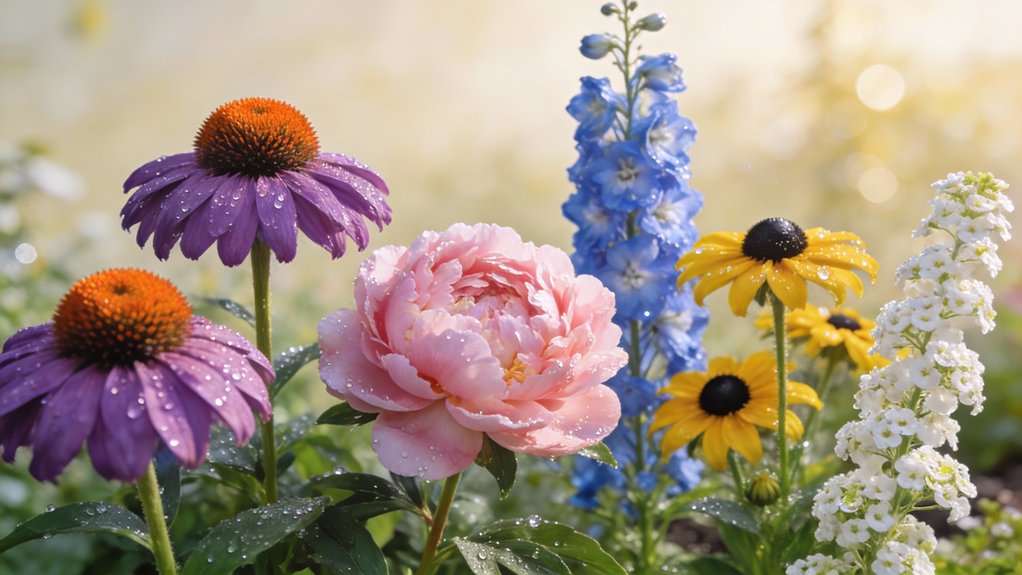
Perennial flowers regrow from the same roots each spring, so you don’t have to replant them every year. Many also spread over time, either by expanding clumps or by dropping seed.
This guide covers five reliable perennials that come back yearly and can self-seed in the right conditions.
That can help fill in garden beds naturally, but it also means you may want to thin or move seedlings to keep growth in check.
Plant them once and they keep showing up. Here’s what each plant is known for, plus basic care and where it grows best.
Black-Eyed Susans: Self-Seeding Yellow Blooms Until Frost
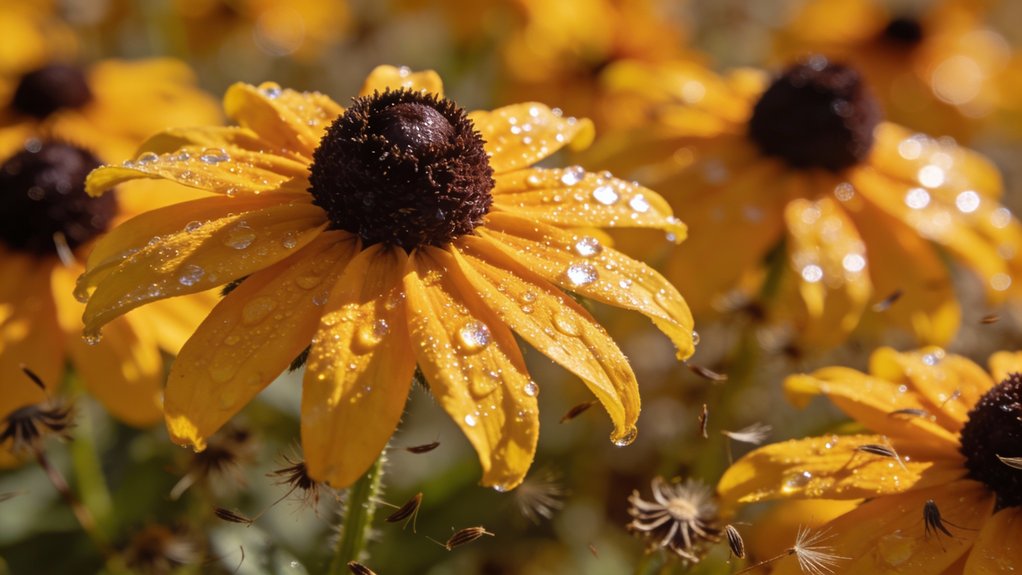
When you’re looking for a flower that delivers bright color from June through October with almost zero fuss, black-eyed Susans should top your list.
These hardy perennials feature vibrant yellow petals surrounding dark brown centers, and they’ll thrive in full sun or partial shade across zones 3-9.
The real advantage is their self-seeding habit:
- They’ll spread naturally to form dense clumps without your intervention.
- Growing tips are simple: plant them and step back.
- Their pollinator benefits are substantial, attracting bees and butterflies while deer and rabbits leave them alone.
Once established, these flowers become drought-resistant and require only occasional watering to maintain their impressive blooms.
Perfect for beginners who want reliable, low-maintenance beauty year after year.
Coneflowers: Easy-Care Perennials That Feed Pollinators
Coneflowers rank among the most reliable perennials you can plant, combining stunning visual appeal with exceptional hardiness across zones 3-9.
These daisy-like blooms come in various colors and deliver outstanding pollinator attraction, drawing bees and butterflies from summer through fall.
- Minimal care: just provide full sun and well-drained soil.
- Drought tolerance: impressive once established, requiring little supplemental watering.
- Self-seed: they self-seed readily, returning stronger each year and filling your garden naturally.
This extended blooming period guarantees pollinators find consistent nectar sources throughout the season, supporting local ecosystem health while demanding almost nothing from you.
For container gardening, select appropriately-sized pots to accommodate coneflower root systems and ensure consistent moisture levels during the growing season.
Salvia: Deer-Resistant Spikes That Reseed Freely
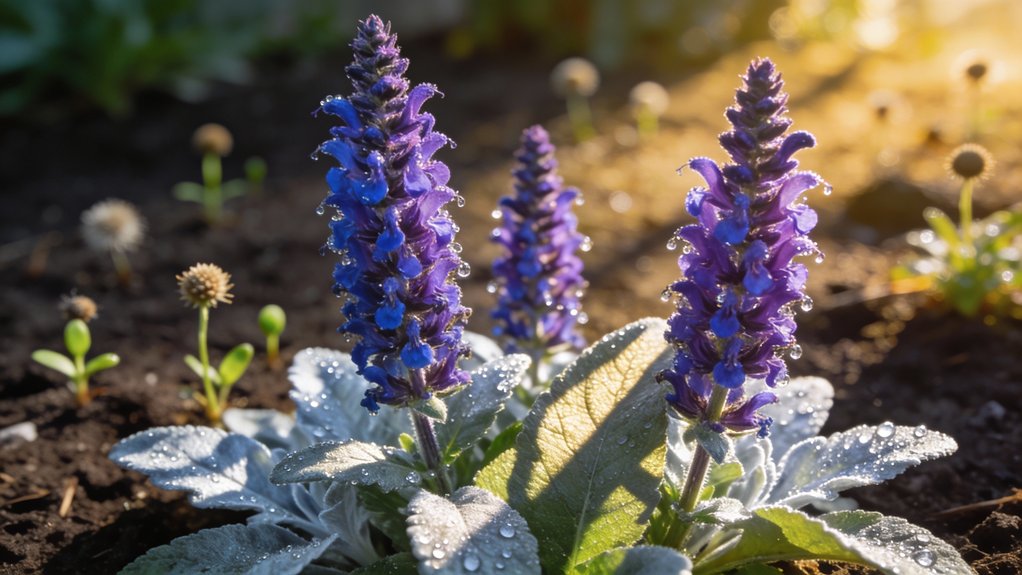
While deer devour most garden plants, they consistently avoid salvia’s aromatic foliage, making these vertical bloomers an ideal choice for wildlife-prone areas.
You’ll enjoy spike-like flowers in blue, purple, or red from mid-summer through fall in zones 4-9.
Basic salvia care requires full sun and little else.
These plants practically maintain themselves. The pollinator benefits are impressive, attracting bees and butterflies throughout the season.
Leave spent blooms standing instead of deadheading everything, and you’ll get natural reseeding.
New seedlings emerge each spring, creating drifts of color without any replanting effort on your part.
Alliums: Self-Seeding Purple Spheres Pests Avoid
Because alliums belong to the onion family, their pungent nature sends deer and rabbits searching for dinner elsewhere.
These Allium characteristics make them perfect for problem gardens: purple pom-pom flowers reaching 30 inches tall, blooming from summer through fall, and hardy in zones 3-9.
They’ll self-seed and form impressive clumps over time, giving you more plants to share with neighbors.
Allium maintenance couldn’t be simpler: just provide full sun and well-drained soil.
You’ll easily spot their distinctive foliage when seedlings emerge, so you won’t accidentally pull them like weeds.
They’re genuinely low-maintenance performers.
Shasta Daisies: Classic Self-Seeding Cottage Flowers
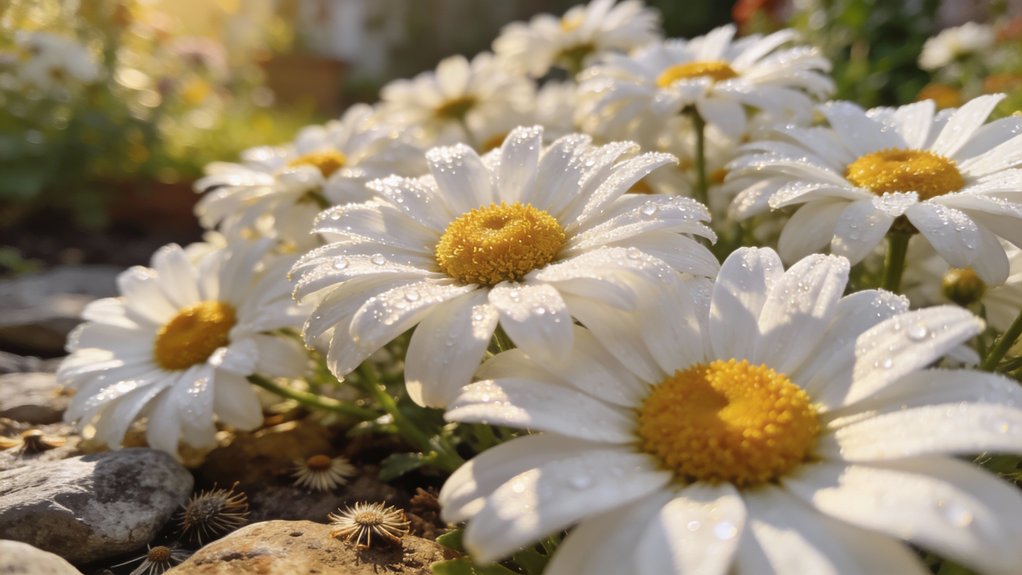
Shasta daisies deliver that quintessential cottage garden look with their bright white petals radiating around sunny yellow centers, reaching heights of 2-3 feet.
You’ll find Shasta daisy care pleasantly simple:
- Just plant them in full sun with well-drained soil and they’ll reward you with blooms from late spring to early summer.
- These perennials attract bees and butterflies while requiring minimal attention.
Shasta daisy propagation happens naturally through self-seeding if you leave some spent flowers on the stems instead of deadheading everything.
They’ll return reliably each year, gradually spreading throughout your garden beds without demanding constant intervention.