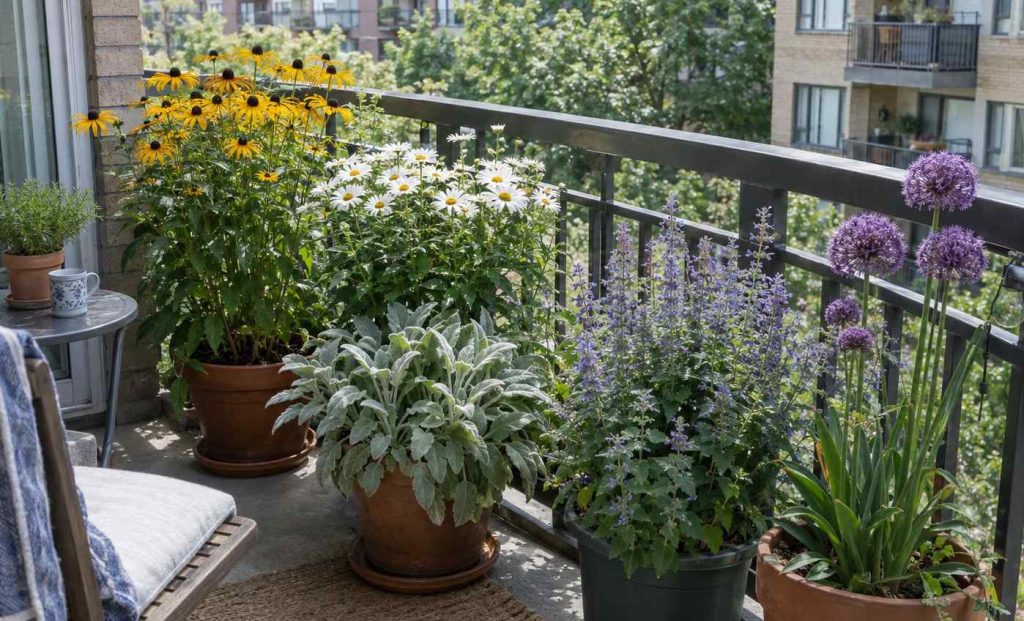
Perennial flowers regrow from the same roots each spring, so you do not replant them every year. In a pot, the roots are the weak point, because winter reaches them from every side.
This guide covers five perennials that come back yearly in a container. It also says which ones reseed, and what each needs to get through winter.
Seedlings need thinning or moving, so a plant that reseeds is not always a plus in a small space.
Every plant here fits a pot at least 12 inches across, the site’s floor.
Black-Eyed Susans: Short-Lived but They Reseed
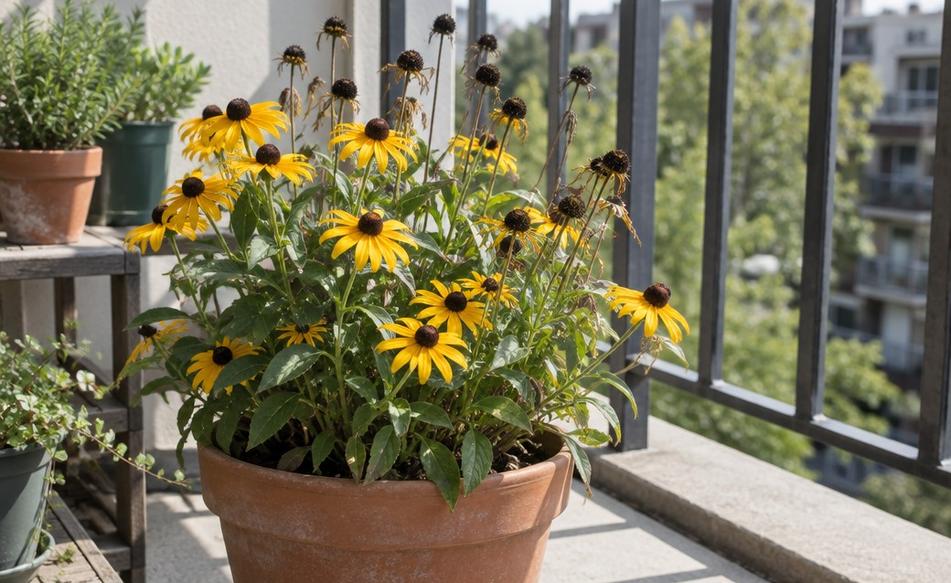
Black-eyed Susan is a biennial or short-lived perennial. It blooms the first year from seed, so it is often mistaken for an annual.
The flowers open in midsummer and, with deadheading, continue into mid-fall. They grow in full sun to partial shade.
The same page says the plant freely self-seeds and usually stays in the garden. That is how it keeps coming back, since individual plants do not last long.
- Pot: at least 12 inches across, with drainage holes.
- Care: leave a few seed heads standing at the end of the season, and deadhead the rest.
- Winter: the page rates it for USDA zones 3 to 8.
- Dry spells: once established it tolerates them; see [other easy-care, drought-tolerant flowers](https://pitsinpieces.com/low-maintenance-plants-for-beginner-gardeners/) for more.
Think of black-eyed Susan as a flower that renews itself from seed, not as one plant that lasts for decades.
Shasta Daisies: Classic Cottage Flowers That Dislike Winter Wet
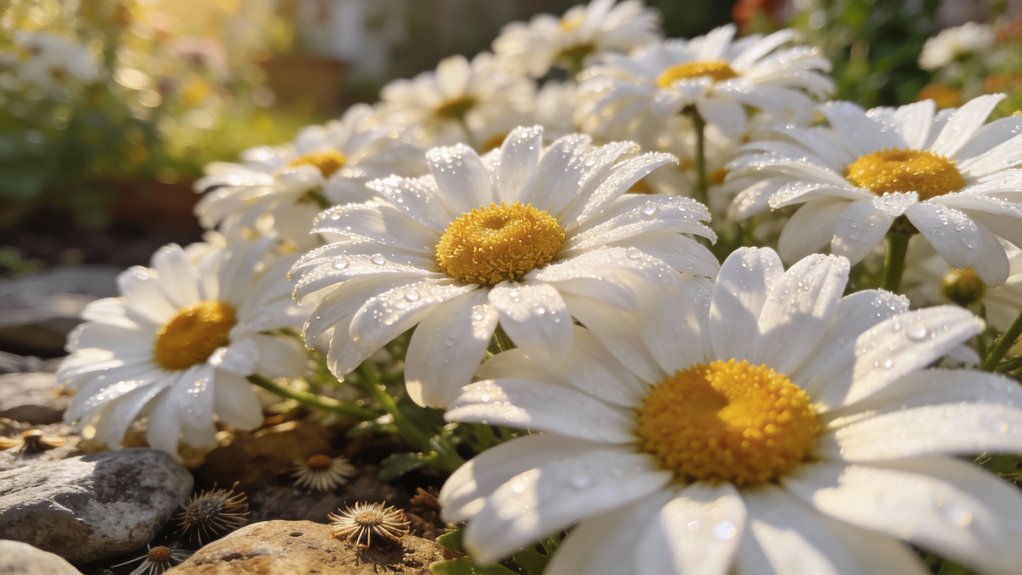
Shasta daisies have white petals around a bright yellow center. Give them well-drained, organic-rich soil in full sun to partial shade.
The plant is hardy in USDA zones 5 to 9 and does not tolerate winter wet or poor drainage. Once established, it is drought tolerant.
In a pot, that dislike of wet roots makes drainage holes and a free-draining potting mix essential. The same page flags the plant as poisonous if eaten by cats, dogs or people, so keep it away from pets.
Give Shasta daisies sharp drainage, because winter wet is what they do not tolerate.
Alliums: A Few Weeks of Purple Spheres in Early Summer
Alliums belong to the onion family. The showy flowers of giant ornamental onion appear in early summer and last 2 to 3 weeks.
That is a short show, not a summer-through-fall one. The leaves often die down soon after blooming.
You plant the bulbs in fall, 8 inches deep and 12 inches apart, according to the same page. A wide, deep pot holds only a few bulbs at that spacing.
Alliums are poisonous if eaten, so keep them away from pets and children.
Plant alliums for a burst of early-summer color, and pair them with later bloomers to cover the gap.
Lamb’s Ear: Silver Leaves That Hate Wet Foliage
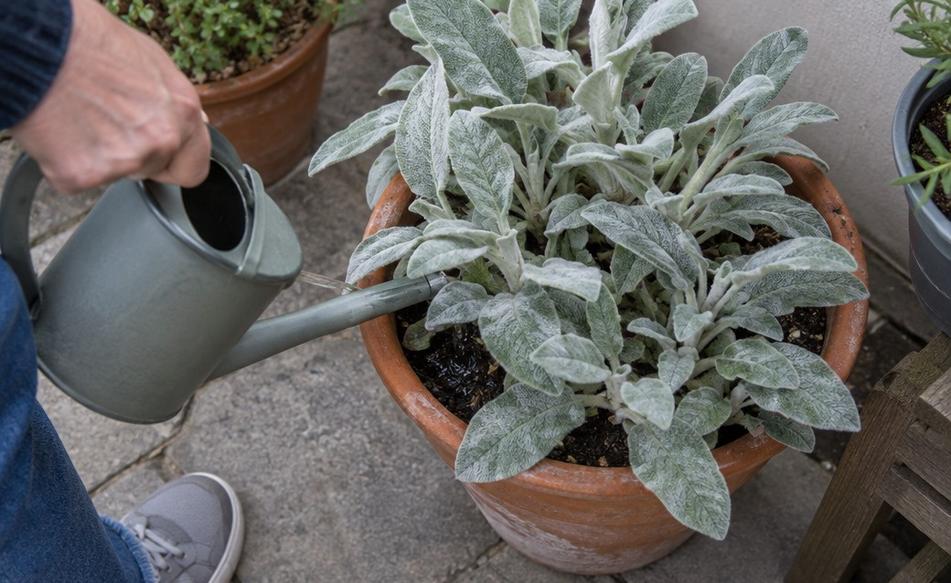
Lamb’s ear (Stachys byzantina) forms a low clump of soft, silver-green leaves. It grows in full sun to partial shade and may be grown in containers.
It wants very well-drained soil. The same page warns that overwatering lets wet leaves invite disease, so water the mix, not the foliage.
The clump may need dividing about every 2 to 4 years. Use a 12-inch pot, and lift the plant out to split it when it crowds the pot.
Water lamb’s ear at the base and keep the leaves dry.
Catmint: A Long Bloomer You Shear for a Second Round
Blue catmint (Nepeta x faassenii) has gray-green, aromatic leaves and lavender-blue flower spikes. North Carolina State Extension says it forms a clump 18 to 24 inches tall that blooms from spring into summer.
It wants full sun to partial shade and well-draining soil, and it is drought tolerant once established. The same page says it suits a container.
Shear it after flowering to encourage repeat bloom. It spreads as much as 36 inches wide, so give it the biggest pot you have, never under 12 inches across.
Shear catmint right after the first flush, and it repays you with a second one.
Getting These Perennials Through Winter in a Pot
A zone rating assumes roots in the ground. Whether a plant survives winter in a pot is a separate question, covered in how potted plants fare through winter outside.
Pick perennials rated two zones colder than your own. Large containers protect roots better than small ones.
Group the pots together in a protective corner. A big pot, a sheltered spot and two zones of spare hardiness are what carry these five through.
For pot size, drainage and mix, see container gardening for beginners.