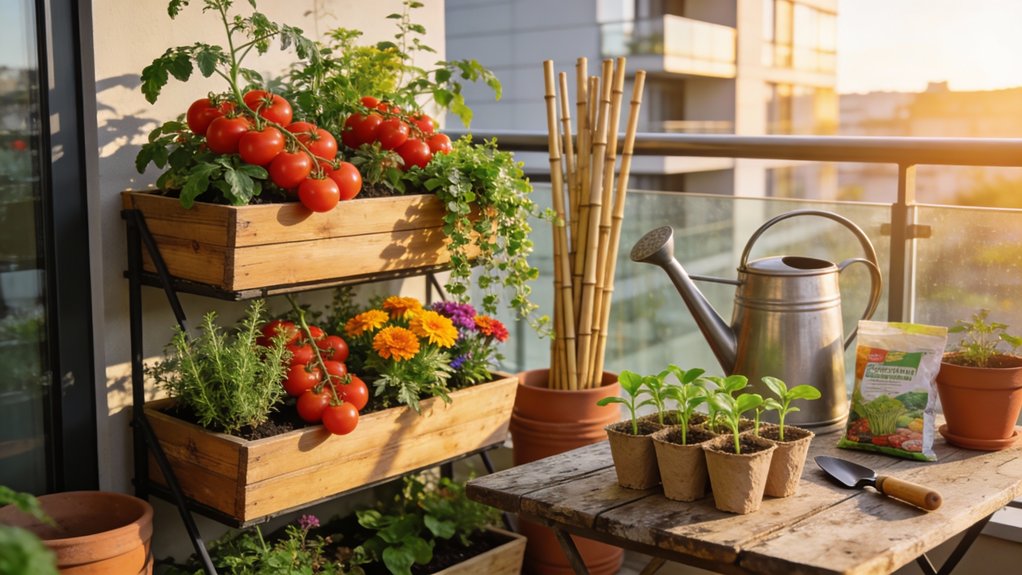
Successful balcony gardening comes down to a few practical choices:
- containers that fit your space and weight limits,
- a well-draining potting mix, and
- plants that match your sunlight.
Track how many hours of direct sun your balcony gets:
- Brighter spots, especially west-facing balconies, can support sun-loving crops such as tomatoes and peppers.
- Lower-light balconies are better for shade-tolerant plants like ferns.
Begin with two or three easy plants, such as basil or parsley. Water when the soil feels dry about two inches down, and fertilize every two to three weeks during active growth.
1. Choose Containers That Fit Your Balcony Weight Limits
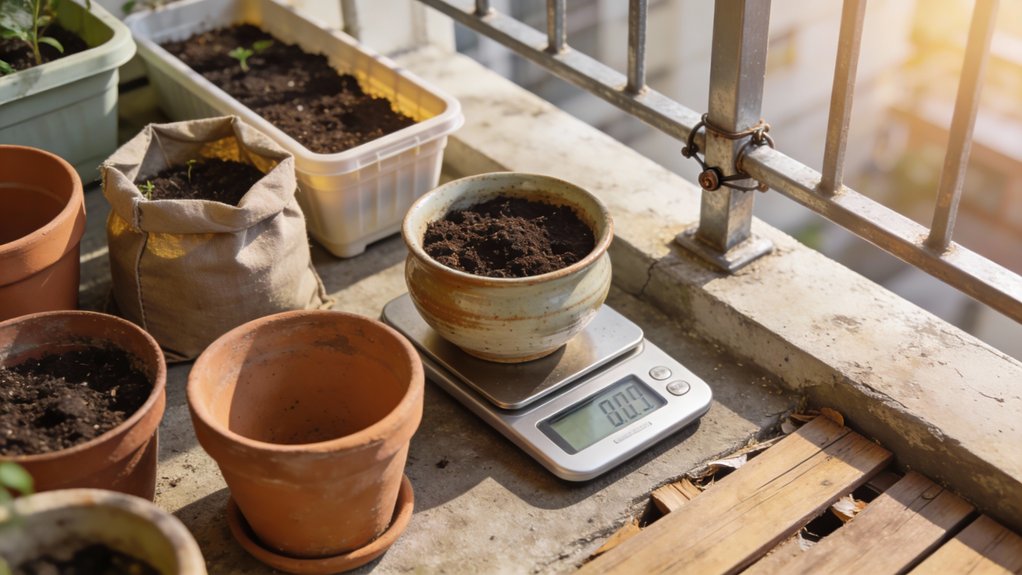
Before you fill your balcony with containers, you need to understand your space’s weight capacity. Weight considerations are essential for preventing structural damage or dangerous accidents.
Lightweight grow bags offer a spectacular solution, costing around $5 for a 30-gallon size while dramatically reducing overall weight.
At just $5 per 30-gallon bag, grow bags deliver maximum planting capacity while keeping your balcony safely lightweight.
When evaluating container materials, consider stackable pots and wall-mounted planters for vertical gardening. These options maximize your planting space without compromising safety.
Smaller containers provide easier mobility but require more frequent watering.
Always verify your balcony’s load-bearing capacity before purchasing containers. Consult a professional if you’re uncertain about weight limits, as soil-filled containers accumulate substantial weight quickly.
2. Use Potting Mix Instead of Garden Soil
When selecting growing medium for your containers, potting mix stands as the superior choice over garden soil.
The potting mix benefits include exceptional aeration and drainage, preventing root rot in confined spaces.
This specialized blend contains peat moss, vermiculite, and perlite that retain moisture while releasing excess water.
Garden soil becomes compacted in pots, suffocating plant roots.
Potting mix arrives sterilized, eliminating soil-borne diseases that threaten container gardening success.
You’ll find prepackaged varieties enriched with nutrients, providing consistent nourishment your balcony plants need.
This investment delivers spectacular results, making your container gardening journey remarkably rewarding and productive.
3. Figure Out How Much Sunlight Your Balcony Gets
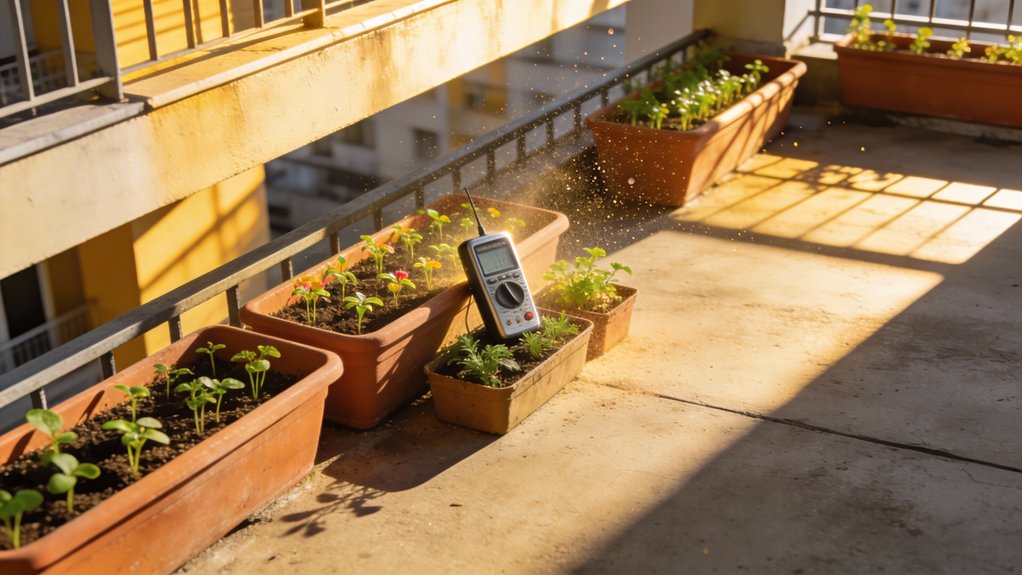
Understanding your balcony’s sunlight exposure determines which plants will flourish in your container garden.
Observe your space throughout the day to categorize it: full sun (more than 6 hours), partial sun (3-6 hours), or full shade (less than 2 hours).
Track your balcony’s daily sun exposure to determine if it receives full sun, partial sun, or full shade conditions.
West-facing balconies typically receive the most spectacular sunlight, perfect for vegetables and flowering varieties.
Use a sunlight meter or smartphone app for accurate sunlight measurement.
This data guarantees proper plant selection for your specific conditions.
Avoid placing shade-loving species in full sun environments, as they’ll experience stress.
Barriers like walls reduce light levels, so choose appropriate varieties accordingly.
4. Pick Easy Plants That Thrive in Your Light
4. Pick Easy Plants That Thrive in Your Light
5. Install Trellises for Tomatoes and Climbing Vegetables
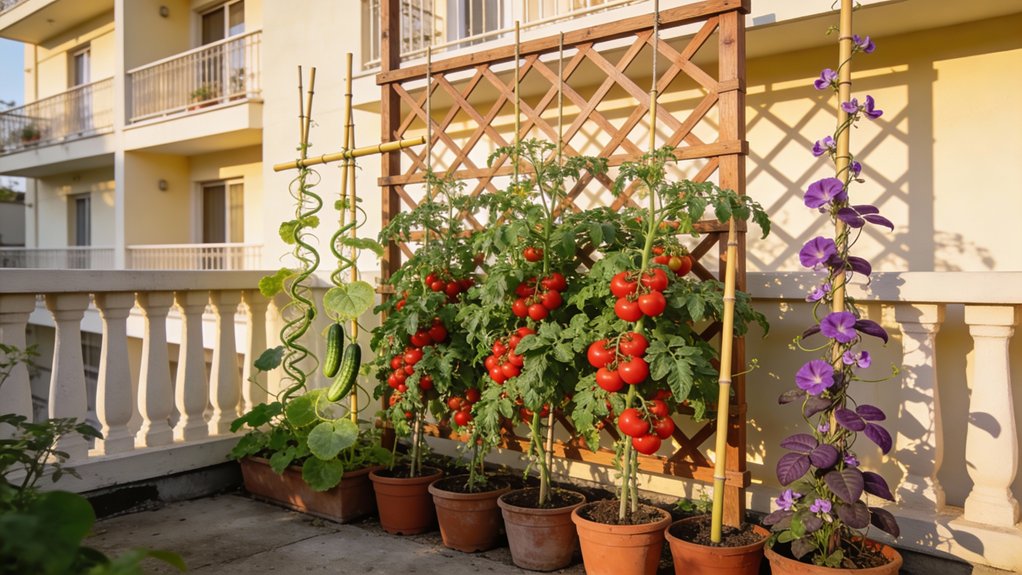
Vertical growing transforms cramped balcony spaces into productive vegetable gardens through strategic trellis installation.
Your trellis design should reach 5-6 feet tall to accommodate climbing vegetables at their maximum height.
You’ll find excellent plant support options in wood, metal, or repurposed materials like old ladders, making construction both cost-effective and customizable.
Well-constructed trellises improve air circulation around your plants, reducing disease risk while encouraging spectacular, healthier growth.
As your tomatoes and climbing vegetables develop, regularly secure them to prevent tangling or damage.
This consistent maintenance guarantees ideal yield and rewarding harvests from your vertical garden space.
6. Water Container Plants More Often Than Ground Gardens
Container plants demand considerably more attention to watering than their ground-planted counterparts because they’re working with drastically limited soil volume.
You’ll need to adjust your watering frequency based on weather conditions: daily irrigation becomes essential during hot summer months.
Check moisture levels by digging down two inches into the soil to determine actual hydration needs. When watering, continue until drainage appears from the bottom holes, ensuring roots receive adequate moisture throughout.
Establish a consistent schedule: once weekly during spring and fall, twice monthly in summer.
Consider irrigation systems or Oya™ Watering Pots for spectacular efficiency in maintaining proper hydration without overwatering risks.
7. Feed Your Plants Every 2-3 Weeks During Growth
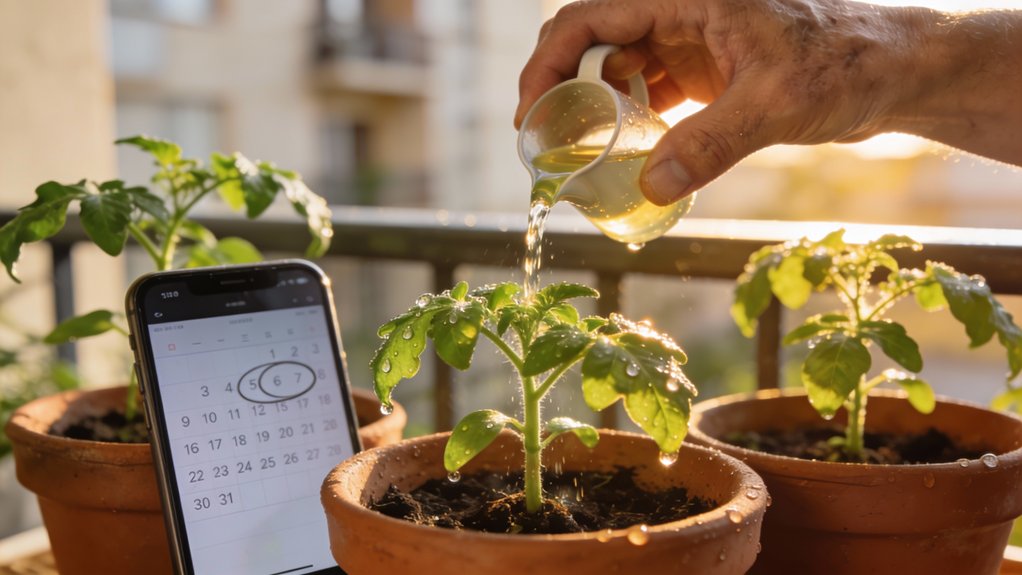
Successful balcony gardening hinges on maintaining a steady nutrient supply since containers can’t access the rich soil ecosystem found in traditional gardens.
Container plants depend entirely on you for nutrients—unlike ground gardens, they can’t tap into natural soil reserves for sustenance.
You’ll need to establish proper nutrient timing by feeding every 2-3 weeks during active growth phases.
Choose between fertilizer types based on your plants’ needs: liquid formulas deliver quick absorption, while granular options provide sustained release.
Apply nitrogen-rich fertilizers to encourage spectacular leafy development, then switch to phosphorus-heavy blends when flowering begins.
This consistent feeding schedule prevents deficiencies that cause stunted growth.
Always follow dilution instructions carefully to avoid damaging your plants through over-fertilization.
8. Apply Mulch to Keep Soil Moist Between Waterings
Beyond consistent feeding, water management determines whether your balcony garden thrives or struggles through hot summer days.
Applying mulch provides spectacular moisture retention benefits for container plants that dry out quickly. Spread organic mulches like shredded bark or straw in 2-3 inch layers across soil surfaces.
This thickness suppresses weeds while allowing proper air circulation to roots. The mulch benefits extend beyond water conservation: it regulates soil temperature, keeping roots cooler during heat waves and warmer through chilly evenings.
As organic materials decompose, they’ll enrich your soil with nutrients, creating rewarding growing conditions that support healthier, more vigorous plants throughout the season.
9. Put Wheels on Large Containers for Easy Moving
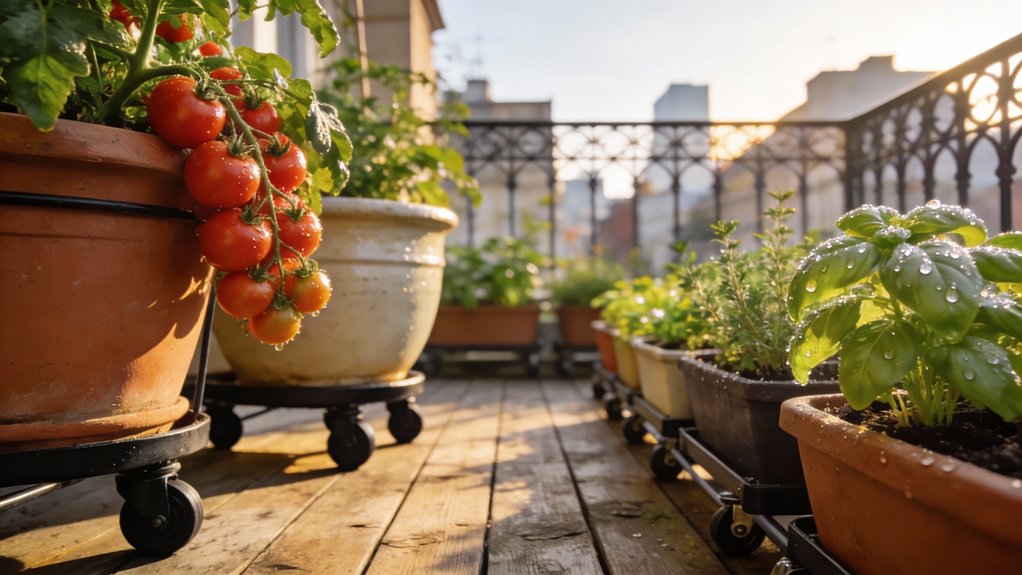
When large planters become difficult to move around your balcony, adding wheels transforms them into flexible garden elements you’ll actually reposition as needed.
Wheeled containers provide easy mobility, letting you chase ideal sunlight throughout the day or protect delicate plants from harsh weather conditions.
You’ll find many commercial pots include built-in wheels, or you can purchase affordable wheel kits for existing containers. This modification dramatically reduces physical strain during watering and maintenance tasks.
For oversized grow bags weighing 50-100 pounds when filled, wheels make relocating these substantial containers entirely feasible, giving you spectacular control over your balcony garden layout year-round.
10. Start With 2-3 Herbs Before Expanding Your Garden
Before diving into an elaborate container garden, you’ll master fundamental growing techniques by beginning with just 2-3 herbs. Smart herb selection includes basil, cilantro, or parsley, varieties requiring minimal maintenance while delivering spectacular fresh flavors for your cooking.
These beginner-friendly plants thrive in containers, making them perfect for compact balcony spaces.
Focus on container placement in areas receiving at least six hours of direct sunlight daily. Use high-quality potting soil combined with balanced fertilizer to provide essential nutrients.
Regular harvesting prevents leggy growth while encouraging continuous production. This manageable approach builds your confidence before expanding to more challenging plants, creating a rewarding foundation for future gardening success.