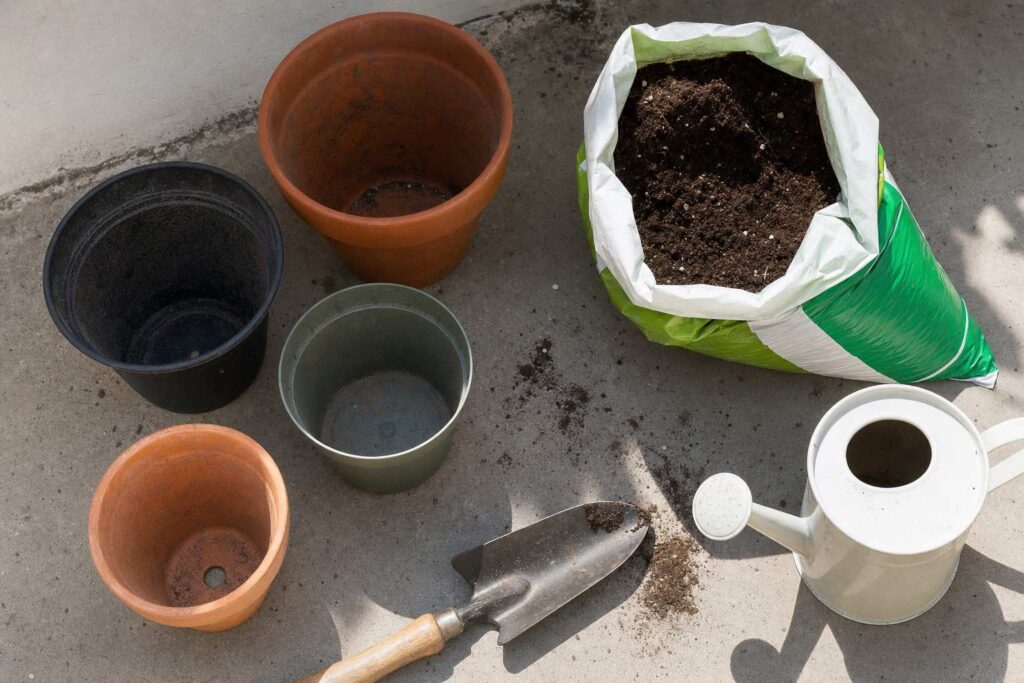
Garden soil and potting mix are not interchangeable. Garden soil is heavier and made for in-ground use, where it blends with native soil and supports natural soil life.
In containers, it often packs down, holds too much water, and limits airflow around roots.
Potting mix is designed for pots. It is lightweight and usually soilless, made with ingredients such as peat or coco coir plus perlite or vermiculite to improve drainage and aeration.
For best results:
- Use potting mix for containers and houseplants.
- Use garden soil to build and improve outdoor beds.
1. What Garden Soil and Potting Mix Are (and How They Differ)
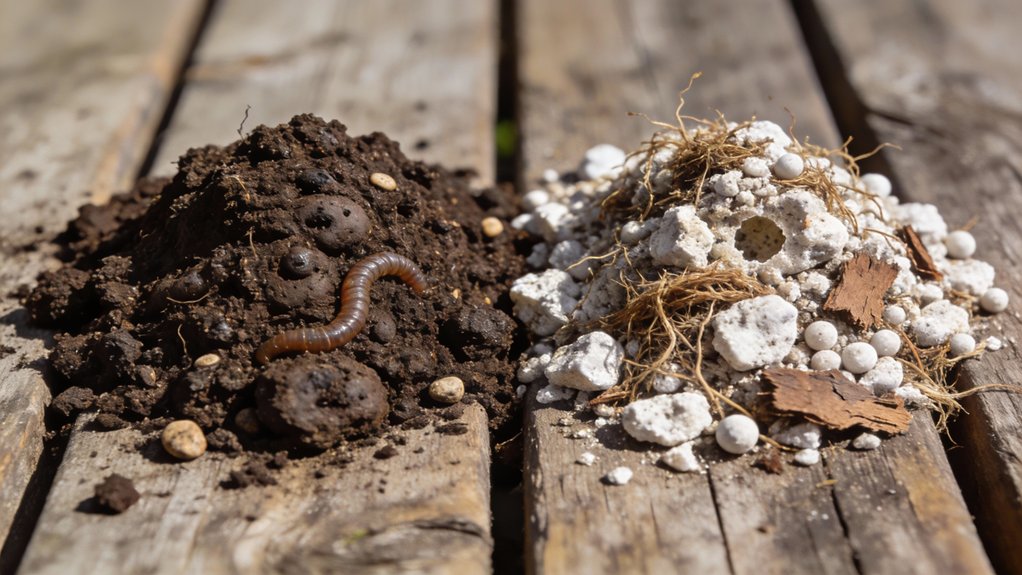
When you are choosing between garden soil and potting mix, the difference comes down to structure.
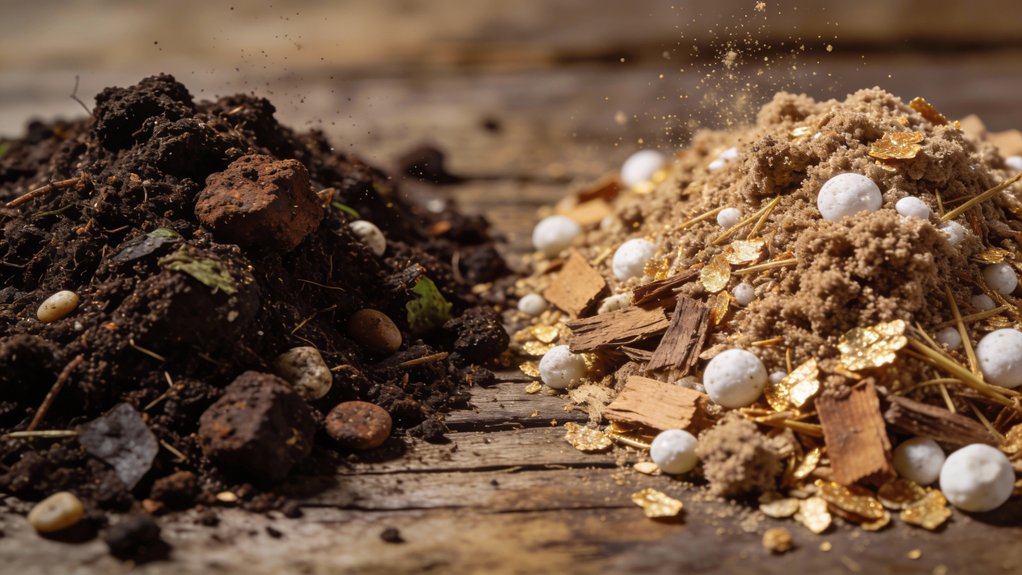
- Garden soil is a heavy, dense mix containing natural topsoil, organic matter, and nutrients designed for in-ground planting. Its soil composition includes beneficial microbes that support plant health.
- Potting mix, often soilless, features lightweight materials like peat moss, perlite, and vermiculite. This specialized blend prevents compaction in containers while ensuring proper drainage and aeration.
For container gardening, you need potting mix’s superior structure. Garden soil works best for improving native beds and retaining moisture outdoors.
2. When to Use Garden Soil vs. Potting Mix
Choosing the right growing medium can make or break your results.
Your container gardening tips start here:
- Always use potting mix for potted plants, herbs, and indoor greenery.
- Its lightweight composition guarantees proper drainage and prevents waterlogging in confined spaces.
- Garden soil belongs in outdoor beds where you are planting trees, shrubs, and perennial flowers.
Potting mix provides self-contained nutrition for containers. Garden soil, by contrast, requires amendments when mixed into native ground.
Match your medium to your planting location and you will create ideal growing conditions throughout every season.
3. Why Garden Soil Is Dense and Nutrient-Rich
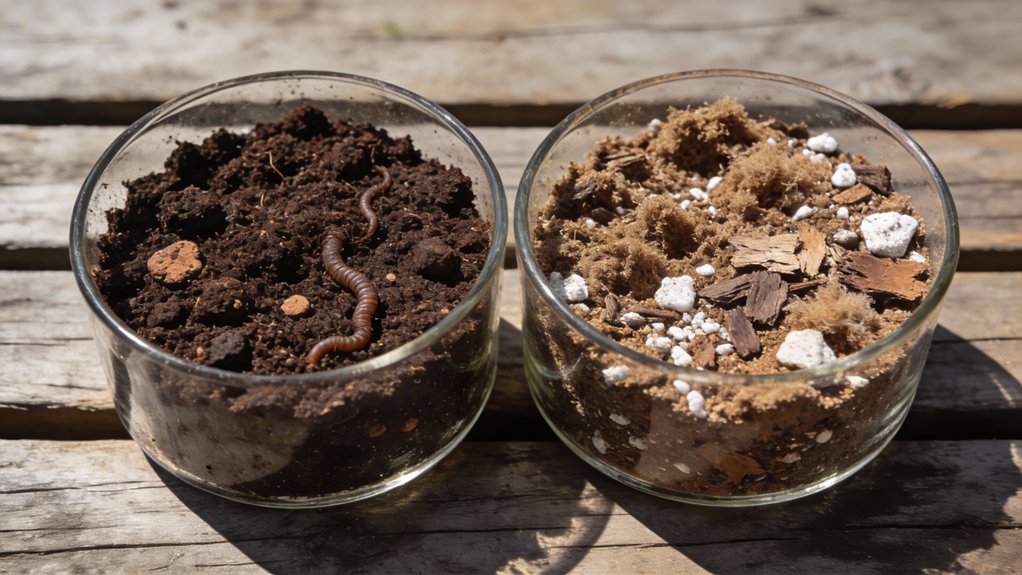
Garden soil earns its reputation through a distinctive composition that sets it apart from lighter growing mediums.
It contains actual soil particles mixed with organic matter like compost and manure, creating strong nutrient retention for your plants. This composition includes beneficial microbes that enhance nutrient availability throughout the growing season.
The dense, clumping texture results from these combined materials working together. You will notice it holds moisture effectively while maintaining structure around plant roots.
When you mix it with native soil in garden beds, you are improving drainage and aeration, which creates good conditions for in-ground planting.
4. Why Potting Mix Drains Better in Containers
Unlike traditional garden soil, potting mix features a specialized composition that makes it ideal for container growing.
It contains perlite, vermiculite, and peat moss, creating strong drainage efficiency that prevents waterlogging. This lightweight structure ensures water flows freely through the medium without compaction.
The loose texture allows air to circulate around roots, promoting exceptional root health in confined spaces.
You are also getting a sterile growing medium free from soil-borne diseases and harmful microbes. Many mixes include slow-release fertilizers that nourish your plants while maintaining optimal drainage properties essential for container gardening success.
5. Garden Soil’s Living Microbes vs. Sterile Potting Mix
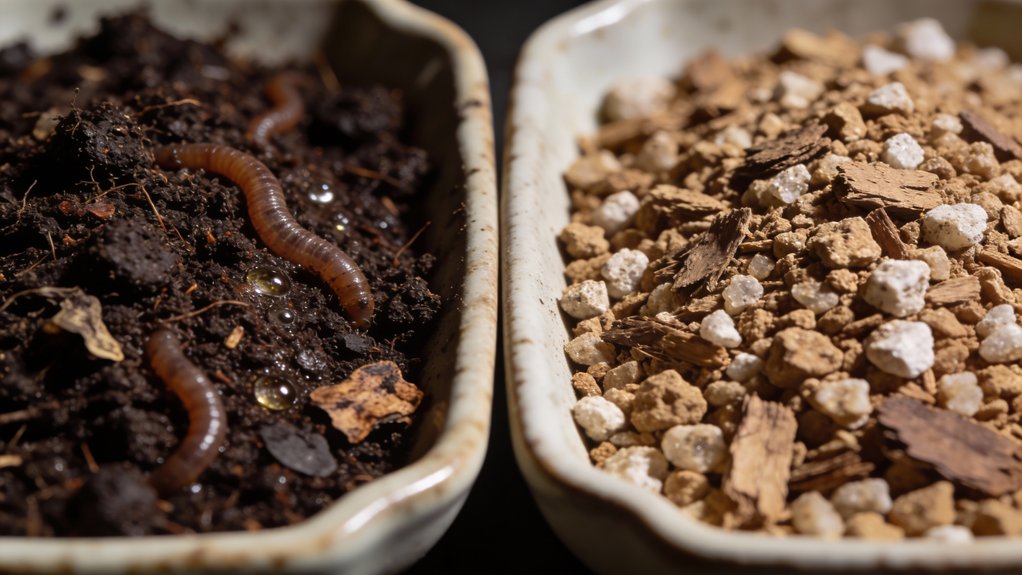
While drainage properties matter greatly, the invisible world within your growing medium determines long-term plant health.
Garden soil contains billions of bacteria and fungi that break down organic matter, cycle nutrients, and strengthen root systems. These organisms create robust soil health through improved structure and water retention.
Billions of soil bacteria and fungi naturally break down organic matter, cycle nutrients, and build stronger root systems for thriving plants.
Potting mix, however, undergoes sterilization to eliminate pathogens and weed seeds, removing beneficial microbes alongside harmful ones.
Some manufacturers add earthworm castings for nutrients, but they cannot replicate garden soil’s diverse microbial ecosystem. Sterile potting mix needs fertilizer supplements because it lacks the living, self-sustaining biological network that soil carries naturally.
6. Can You Mix Garden Soil and Potting Mix?
Generally, mixing the two is not recommended for container gardening.
Garden soil’s density causes compaction, which destroys the drainage properties potting mix provides.
If you must mix them, add only small amounts of garden soil to maintain lightweight characteristics. This approach prevents moisture retention that leads to root rot.
Garden soil introduces beneficial microbes, but it can also carry pathogens harmful to your plants. For container success, use potting mix exclusively or amend it with organic materials like compost rather than incorporating heavy garden soil.
7. Making Your Own Potting Mix at Home
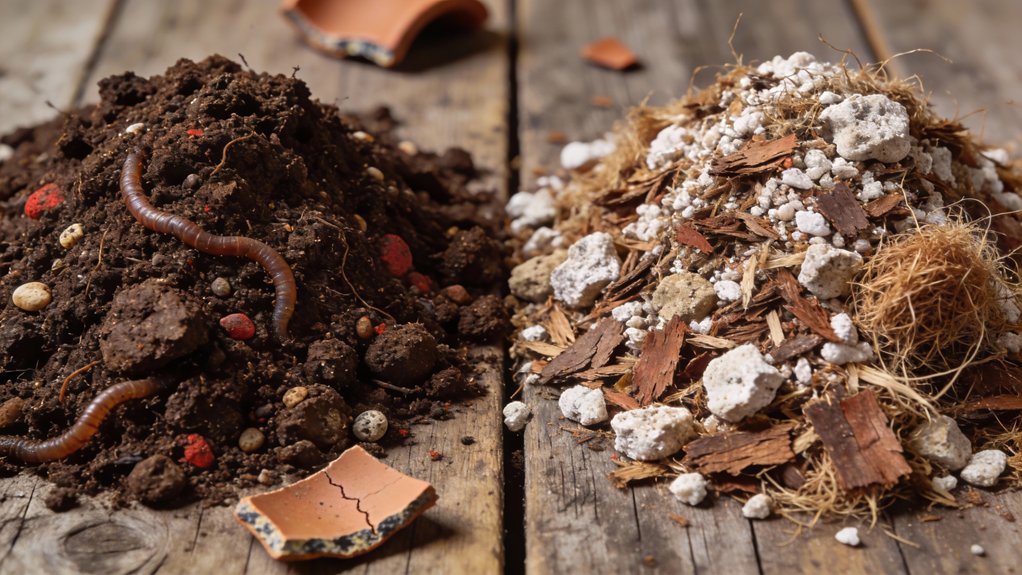
Creating your own potting mix at home delivers substantial cost savings while giving you complete control over ingredient quality.
Basic DIY recipes combine one part sterilized garden soil, one part coarse sphagnum peat moss, and one part perlite or vermiculite for proper drainage.
Always sterilize garden soil first to eliminate diseases and pests.
Ingredient customization becomes valuable when you adjust proportions for specific plant requirements. Mix in organic compost or earthworm castings to boost nutrient availability naturally.
You will achieve professional-grade results by matching texture and drainage characteristics to your plants’ needs while saving money consistently.
8. Organic Garden Soil and Potting Mix: Worth the Cost?
Organic garden soil and potting mix command premium prices that often make budget-conscious gardeners pause.
However, organic options deliver substantial long-term value through superior nutrient content and enhanced plant health.
- You will reduce your dependence on synthetic fertilizers and harmful pesticides, creating a healthier garden ecosystem.
- The natural composition supports beneficial microorganisms that improve soil structure over time.
While conventional products seem cheaper initially, organic alternatives promote stronger growth and improved yields throughout multiple growing seasons.
Your investment in quality organic materials pays dividends through stronger plants, better drainage, and ideal moisture retention in both containers and garden beds.
9. What Happens If You Use the Wrong Soil Type?
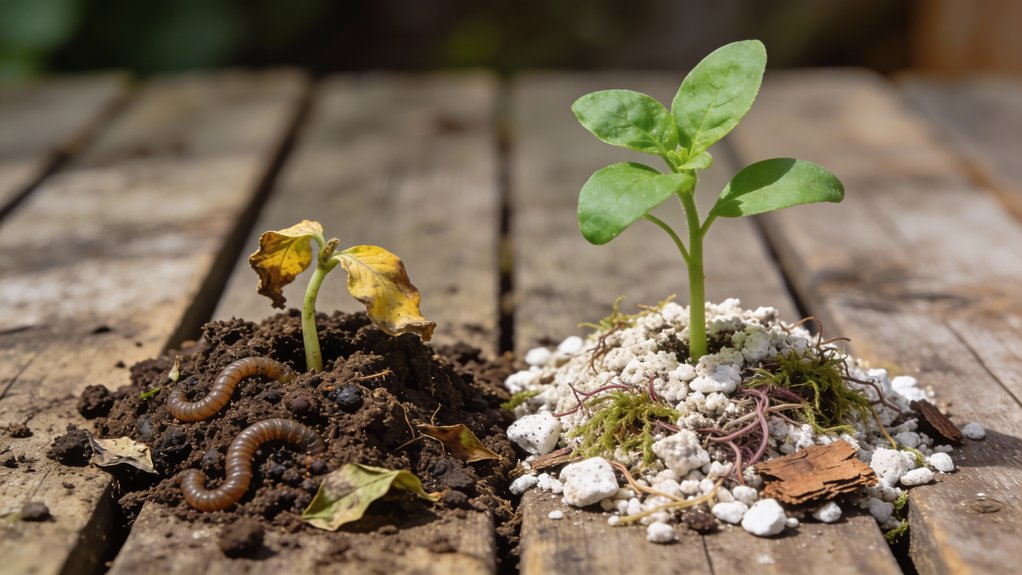
When you use garden soil in containers, your plants face immediate consequences that threaten their survival and growth potential.
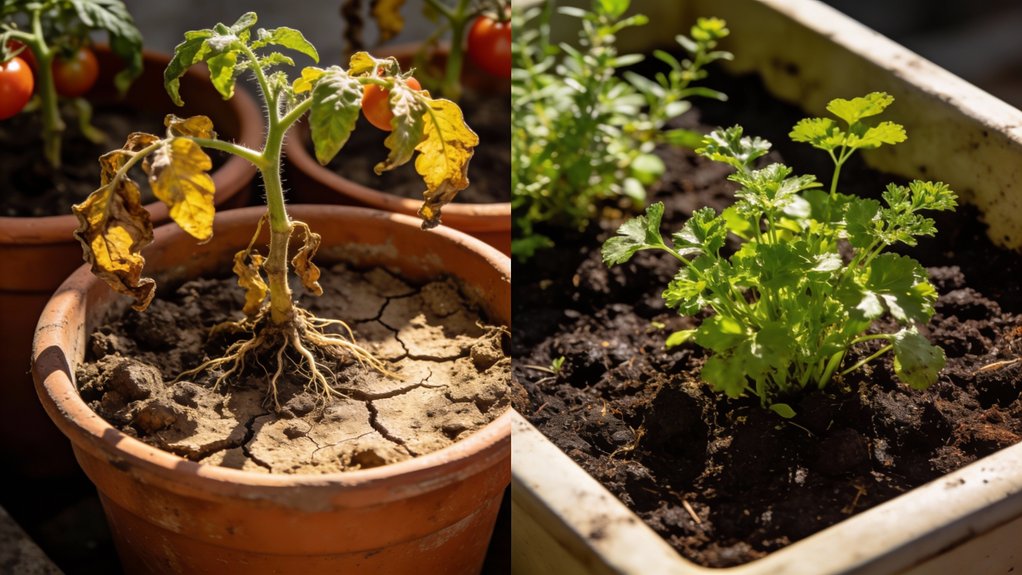
Garden soil’s heavy texture creates drainage issues that suffocate roots and compromise soil health. You will notice stunted growth as compacted dirt restricts oxygen flow to root systems.
Watch for these warning signs:
- Waterlogged containers with soggy, oxygen-deprived roots turning brown and mushy
- Dense, clumped soil pulling away from container edges as it dries
- Yellowing leaves indicating nutrient deficiencies from improper soil composition
- Unwanted weeds sprouting from contaminated garden soil
- Wilting plants despite adequate watering schedules
Potting mix prevents these problems entirely with its specialized formulation.
Bottom Line
You have now covered the essential differences between garden soil and potting mix. Here is a compelling fact: container plants in proper potting mix grow 30% faster than those in garden soil.
Match your medium to your growing location. Garden beds need nutrient-dense garden soil. Containers need well-draining potting mix, full stop.
Your plants will reward you when you select the appropriate medium for each situation.