Most container plants need watering every day in hot, dry weather. Some may need water twice a day if pots are small, in full sun, or drying out fast.
The right schedule depends on the plant type, pot size, and how quickly the mix drains.
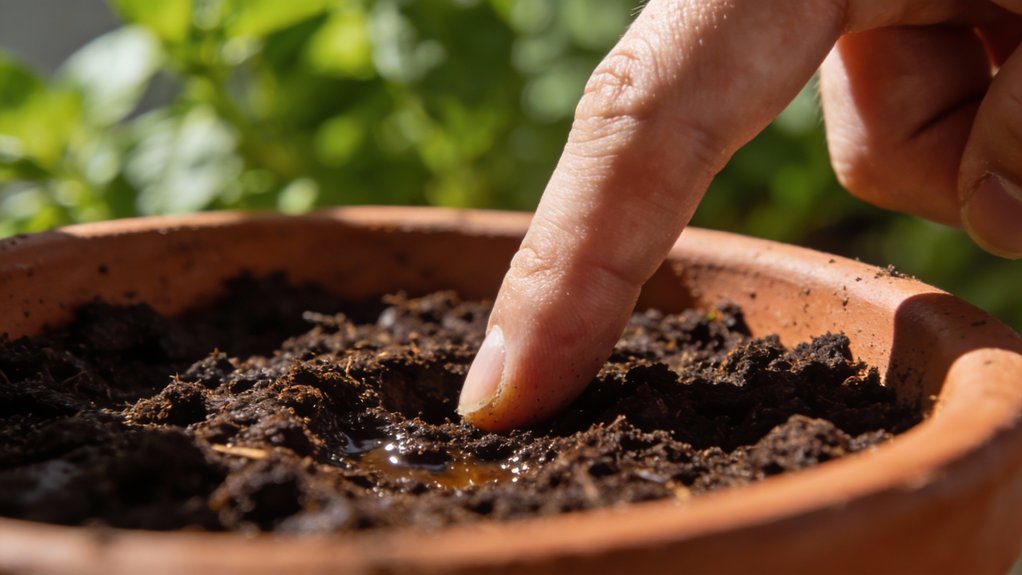
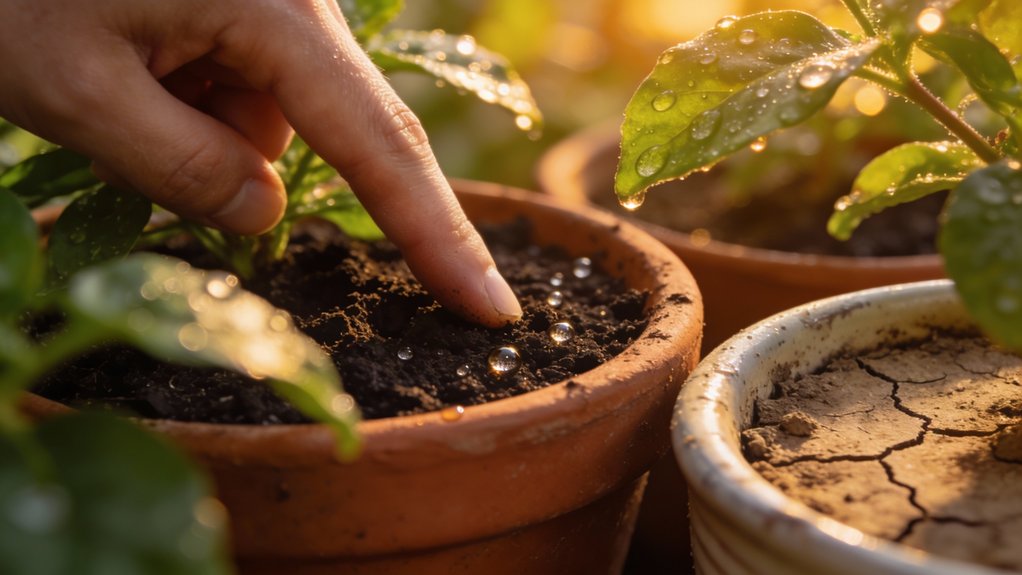
To check, press your finger into the soil a couple of inches. If it feels dry at that depth, water deeply until excess runs out of the drainage holes.
Succulents and other drought-tolerant plants usually need less frequent watering than annuals and vegetables. Newly planted containers should be kept evenly moist while roots get established.
Next, you’ll learn how to choose the best time to water and how to spot and fix overwatering.
1. How to Tell When Container Plants Need Water
Knowing when to water your container plants is one of the most useful skills you’ll build as a gardener.
- Check the soil texture by pressing your finger into the surface: dry soil signals it’s time to water.
- Observe the soil’s color; dark indicates moisture, while lighter shades mean watering is necessary.
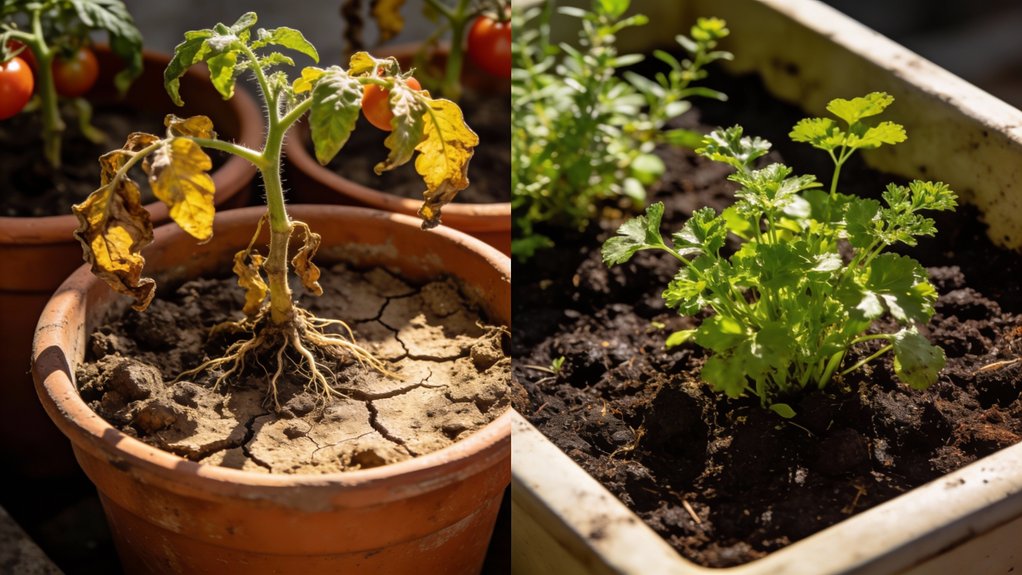
- Watch for plant signs like shriveled leaves, limp stems, and discolored foliage that indicate distress.
In warm, dry conditions, check daily since potted plants may need watering once or twice daily.
Newly planted specimens require more frequent watering. Well-established plants tolerate longer dry periods.
2. How Often Should You Water Potted Plants?
How often should you water your potted plants? The answer depends on several factors.
Container plants typically need watering daily or twice daily during hot, dry conditions due to limited soil space.
Plant species greatly affect frequency. Succulents require less water than annuals or vegetables.
Newly installed plants need consistent moisture for root development, while established specimens tolerate longer dry periods.
Check the top few inches of soil; water when it feels dry to prevent wilting.
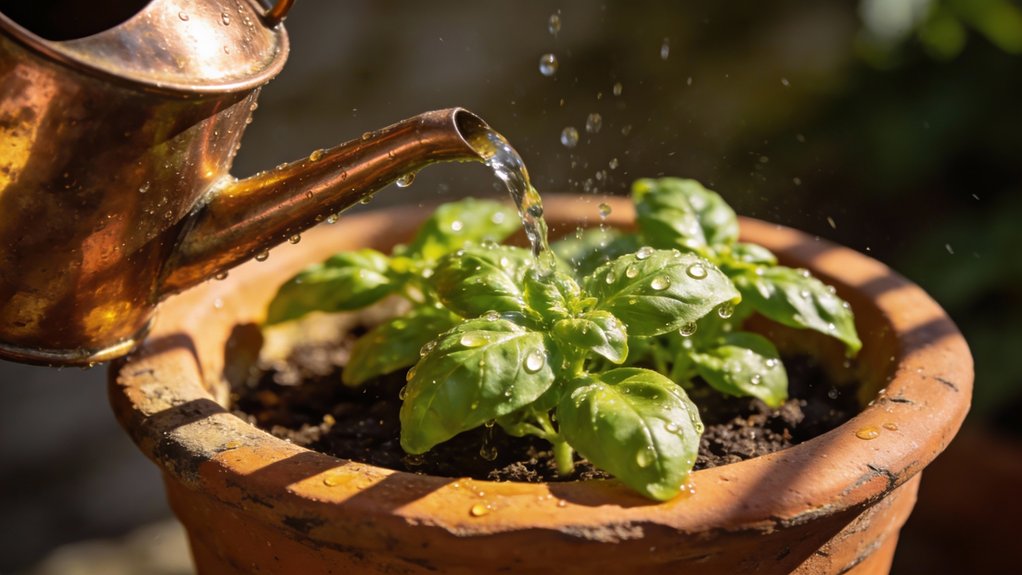
Apply water deeply and slowly, ensuring moisture reaches all soil areas and encourages strong root growth.
3. What Makes Container Plants Dry Out Faster?
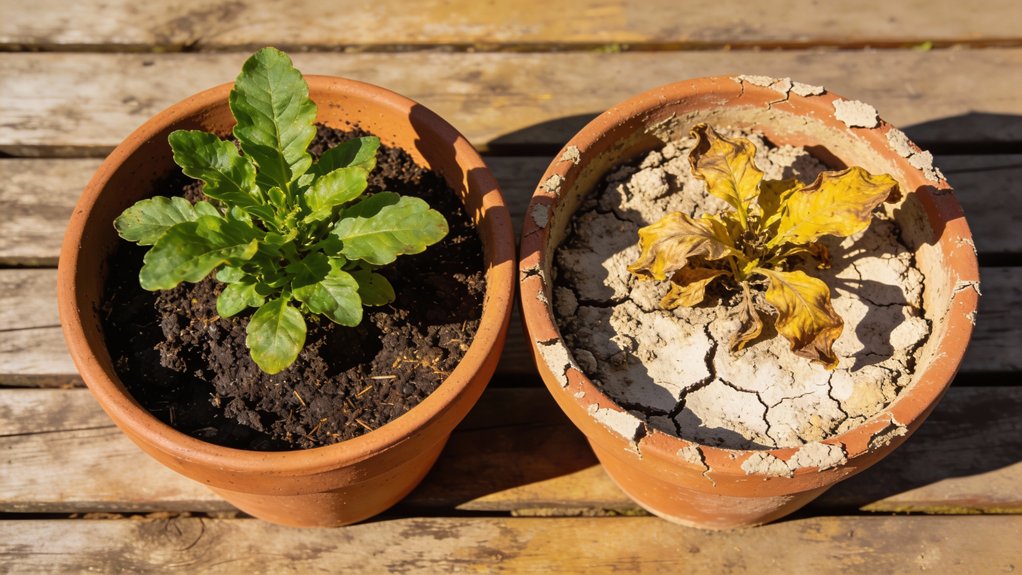
Container plants dry out much faster than their in-ground counterparts. Limited soil volume restricts moisture retention considerably.
Evaporation occurs from all container surfaces, not just the top. High temperatures and windy conditions accelerate this moisture loss dramatically.
Smaller pots require more frequent watering because they hold less soil. Clay pots dry out faster than glazed ceramic ones because the container material directly affects evaporation rates.
Monitor your specific container’s needs based on size, material, and environmental conditions to build an accurate watering schedule.
4. How Much Water Should You Give Each Container?
Water quantity depends primarily on plant species and pot size.
Larger containers typically need ¾ to a gallon for thorough saturation. You’ll know you’ve provided enough when water drains from the holes at the bottom.
This guarantees the entire root zone receives moisture and promotes deep root growth.
Allow the top few inches of soil to dry between waterings to prevent overwatering. Moisture gauges take the guesswork out of it when you’re uncertain.
5. When to Water Container Plants for Best Results?
Timing your watering sessions correctly makes the difference between thriving plants and struggling ones.
Water during early morning hours, ideally between 6-8 AM. This lets foliage dry before nightfall, preventing disease development.
Late evening sessions work as a secondary option, though morning remains superior.
During hot summer days, you might need twice-daily watering to prevent heat stress. Avoid midday watering when evaporation rates peak and water droplets can magnify sunlight, potentially scorching delicate leaves.
Consistent timing is the simplest thing you can do for plant health.
6. Why Succulents and Vegetables Need Different Watering
Watering strategies vary, because succulents and vegetables have fundamentally different biological structures and moisture requirements.
- Succulents: Store water in their leaves and stems through specialized plant adaptations for arid environments. They’ll thrive when you let soil dry completely between waterings, often waiting weeks.
- Vegetables: Require consistent moisture every few days during warm weather. Check the top few inches of soil regularly.
Over-watering succulents causes root rot damage, while under-watering vegetables stunts growth and reduces yields. Understanding these distinct watering needs guarantees good results for both plant types in your container garden.
7. Why Proper Drainage Prevents Root Rot and Overwatering
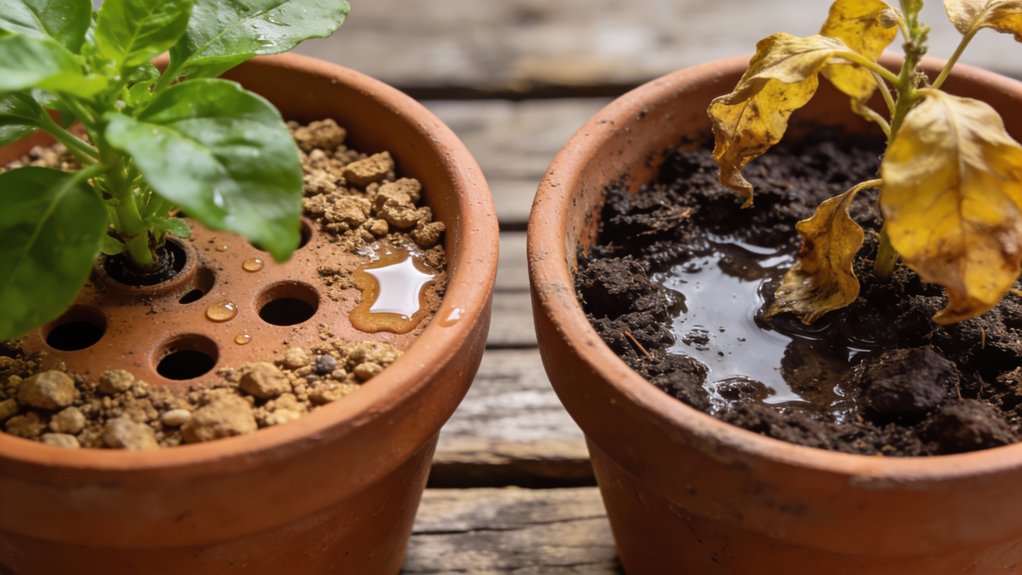
When water collects at the bottom of containers without escape routes, your plant’s roots literally drown in oxygen-depleted soil.
Proper drainage holes allow excess moisture to escape while maintaining ideal soil conditions for root health.
Without adequate drainage, you’re creating a breeding ground for fungal diseases and root decay.
Your plants need consistent access to oxygen at the root zone, which standing water eliminates completely.
Never let pots sit in water-filled saucers for extended periods and always ensure containers have multiple drainage holes.
8. How to Fix Overwatered or Severely Dried Out Plants?
Recognizing the warning signs of watering problems puts you on the path to rescuing your struggling container plants before permanent damage occurs.
Early detection of watering issues is critical for saving your container plants from irreversible harm.
For overwatered specimens, allow the top few inches of soil to dry completely before resuming irrigation, and verify proper drainage holes exist.
Severely dried plants require immediate intervention: submerge the entire container in water for 15-30 minutes, then water repeatedly at intervals for deep root zone penetration.
Check for water-repellent soil by observing surface beading. Break up compacted areas gently to improve absorption.
Monitor moisture levels regularly, adjusting frequency based on weather conditions for plant recovery.
9. Best Moisture Meters and Self-Watering Systems for Containers
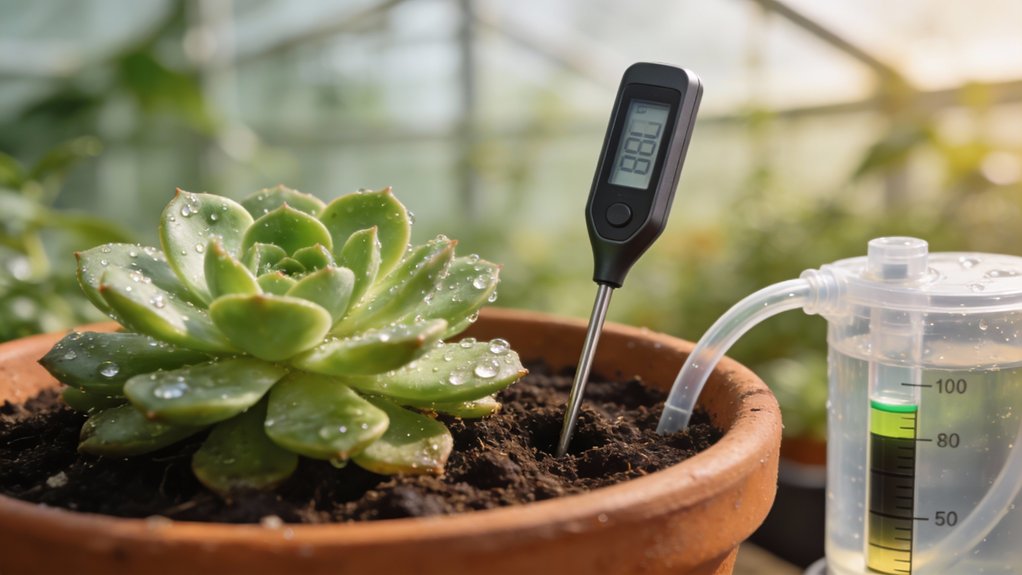
Technology transforms container gardening from guesswork into precision watering management. Quality moisture meters include clear digital displays, probe depth flexibility (measuring 2-6 inches), and instant readings.
These tools prevent both drought stress and root rot by providing accurate data before you water.
Reservoir systems deliver consistent moisture directly to roots, which means far fewer trips with the watering can during peak summer heat.
Choose systems matching your container size; gallon capacities vary from one quart for small pots to two gallons for larger planters.
The Bottom Line
Think of yourself as the conductor of a living orchestra, each plant’s water needs create its own rhythm. You’ve learned to read moisture levels, recognize environmental factors, and adjust your watering schedule accordingly.
Check your plants regularly, trust your observations, and don’t hesitate to use moisture meters when you’re uncertain.
Your dedication will yield spectacular, healthy growth that’s incredibly rewarding to witness throughout the growing season.