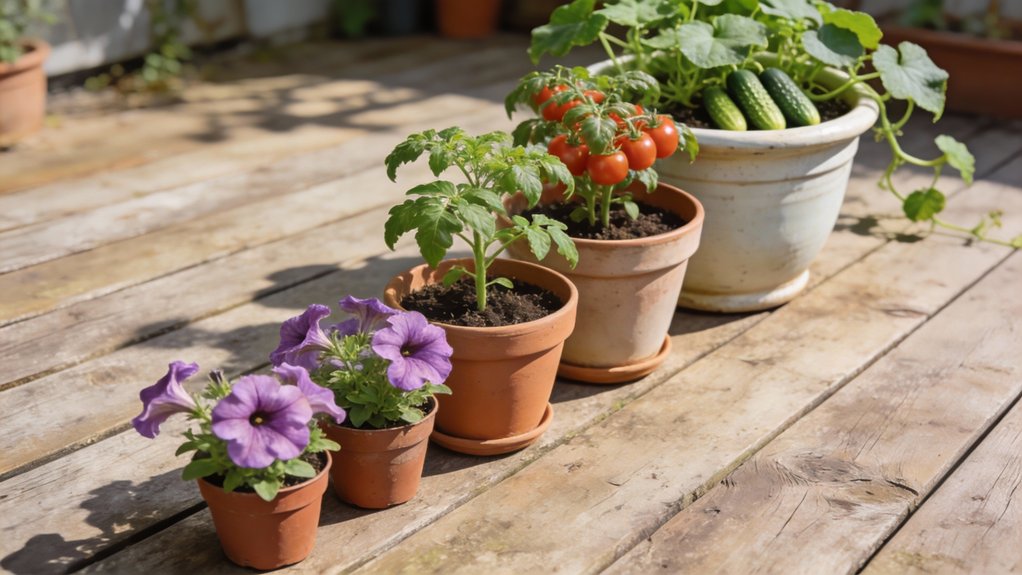
Choosing the right container size is essential for healthy growth, as vegetables and flowers need specific soil volumes to develop strong roots and produce well.
Container size plays a larger role in plant health than most gardeners realize. Using a pot that’s too small is one of the most common, and most avoidable, mistakes.
Different vegetables and flowers need different amounts of soil, and even a small increase in pot size can mean the difference between steady growth and a struggling plant.
Choosing the right container from the start reduces stress on the plant, limits the need for repotting, and leads to better long-term results.
This guide shows the container sizes that work best for common vegetables and flowers.
1. Container Sizes for Vegetables: Minimum Gallons and Depth
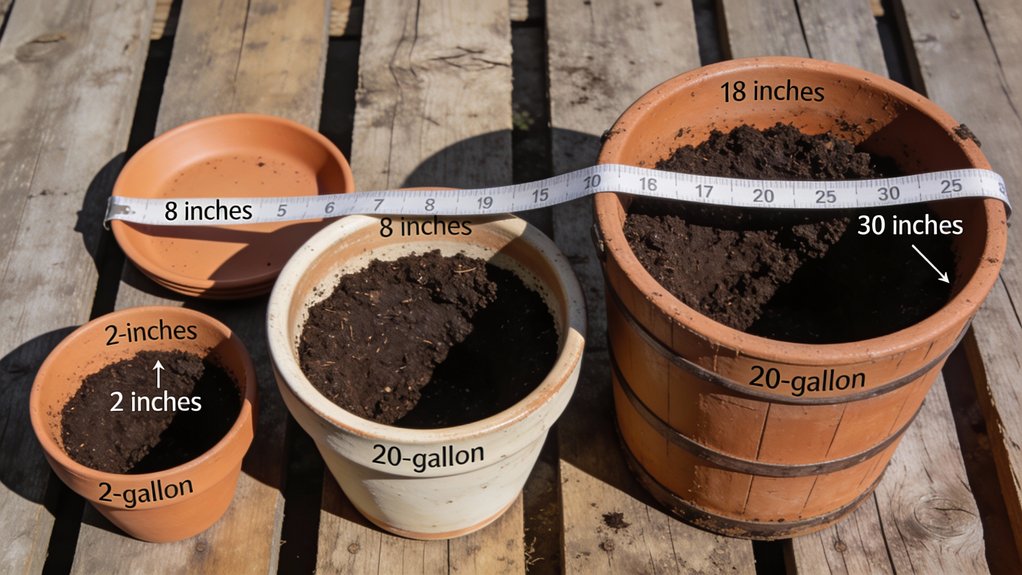
Most vegetables need more root space than new gardeners expect, and choosing the right container size makes the difference between a struggling plant and a productive one.
Meeting minimum container requirements doesn’t guarantee success: you’ll want to aim higher for ideal growth conditions.
- Determinate tomatoes need 5 gallons minimum but thrive in 10-15 gallons.
- Cucumbers follow similar guidelines, especially when trained on trellises.
- Broccoli produces larger heads in roomier containers.
- Corn demands at least 20 gallons and block planting for pollination.
Even compact radishes perform better in 2-gallon containers rather than the 1-gallon minimum, delivering improved yields with adequate root development.
2. Container Sizes for Flowers: Annuals, Perennials, and Bulbs
Flowers bring different container requirements than vegetables, though the fundamentals of root space and depth still apply.
- For flower potting, annuals like petunias and marigolds need containers at least 12 inches in diameter.
- Sunflowers require 16 inches or more.
- Perennials such as lavender and coneflowers demand 12 to 18 inches in root depth for proper development.
- You can plant bulbs like tulips and daffodils in smaller 8 to 10-inch pots, grouping multiple bulbs together.
- Mixed arrangements work best in 16 to 20-gallon containers.
Always make certain your pots have drainage holes to prevent root rot.
3. How Many Plants Fit in One Container: Spacing Guidelines
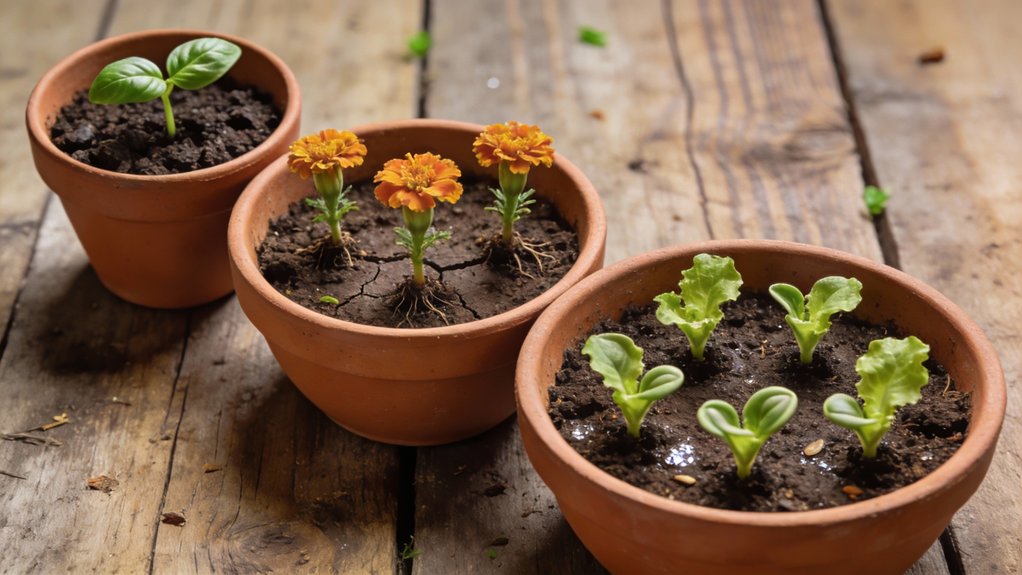
Determining how many plants fit in a single container depends on their mature size, root requirements, and growth habits. Proper plant spacing prevents container overcrowding while ensuring adequate air circulation.
- Space small plants like spinach or lettuce 3 to 4 inches apart in a 14-inch pot.
- Larger vegetables need more room: tomatoes and peppers require 12 to 18 inches between plants.
- A 20-gallon container accommodates 1 to 2 corn plants comfortably.
- Bush beans thrive with 2 to 5 gallons per plant and 6 to 12 inches of spacing.
4. Finding Your Container’s Gallon Size From Its Measurements
Why guess your container’s capacity when you can calculate it with simple measurements? Start by measuring dimensions: grab the diameter and depth in inches.
For round pots, use the cylinder formula: V = π × (r²) × h. The radius (r) is half your diameter, and h is the depth. Divide your result by 231, that’s how many cubic inches fill one gallon.
A 12-inch diameter pot that’s 12 inches deep holds roughly 1,130 cubic inches, or about 4.9 gallons. This calculating volume method beats guessing every time, helping you match containers to specific vegetables like cucumbers or bush beans.
5. Container Features That Matter Beyond Size: Drainage and Material
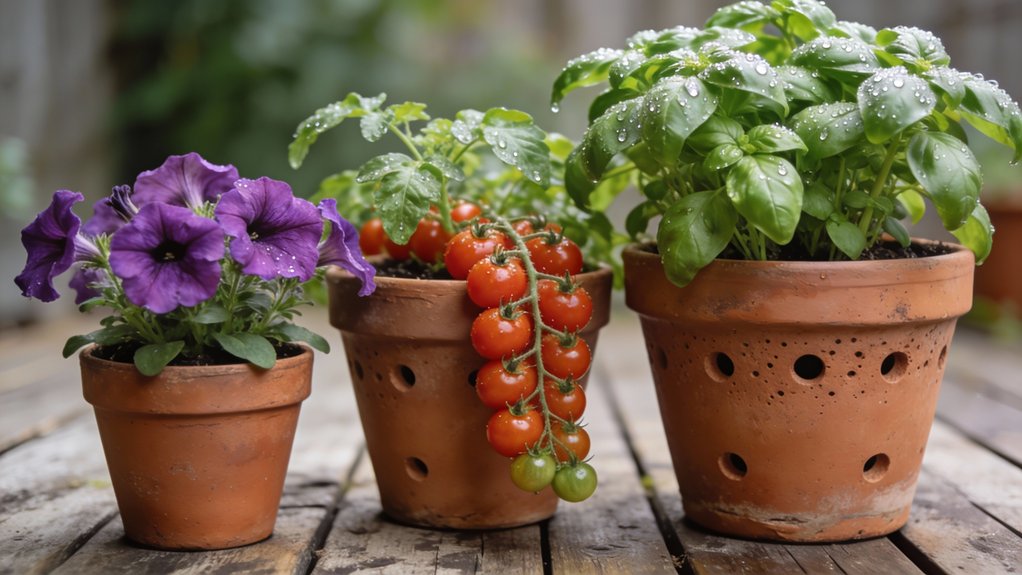
While size determines what you can grow, drainage importance becomes clear when you realize it determines whether your plants will survive at all.
Root rot from waterlogged soil kills more container plants than any other problem.
Here’s what matters most:
- Verify drainage holes exist: Most commercial pots have them, but always check before planting.
- Skip rocks at the bottom: They don’t improve drainage and actually raise the water table.
- Consider container materials: Dark colors absorb more heat and can damage young roots.
- Self-watering containers are exceptions: These specialized pots don’t need drainage holes.
Check your containers now.
6. What You Can Grow in Common Container Sizes (5, 10, 15 Gallons)
Most gardeners own containers in three standard sizes: 5, 10, and 15 gallons.
These container selection tips help guarantee ideal plant growth.
- 5-gallon pots: you’ll grow cucumbers, peas, and bush beans successfully.
- 10-gallon size: accommodates determinate tomatoes, broccoli, and even pumpkins; these plants need more soil volume for nutrients.
- 15-gallon containers: work best for corn and artichokes, which require extensive root space.
You can also plant multiple herbs or greens densely in larger pots without crowding.
Choosing the right size prevents root-bound plants and guarantees adequate water and nutrient access for healthy development.
7. Container Sizing Mistakes That Stunt Plant Growth
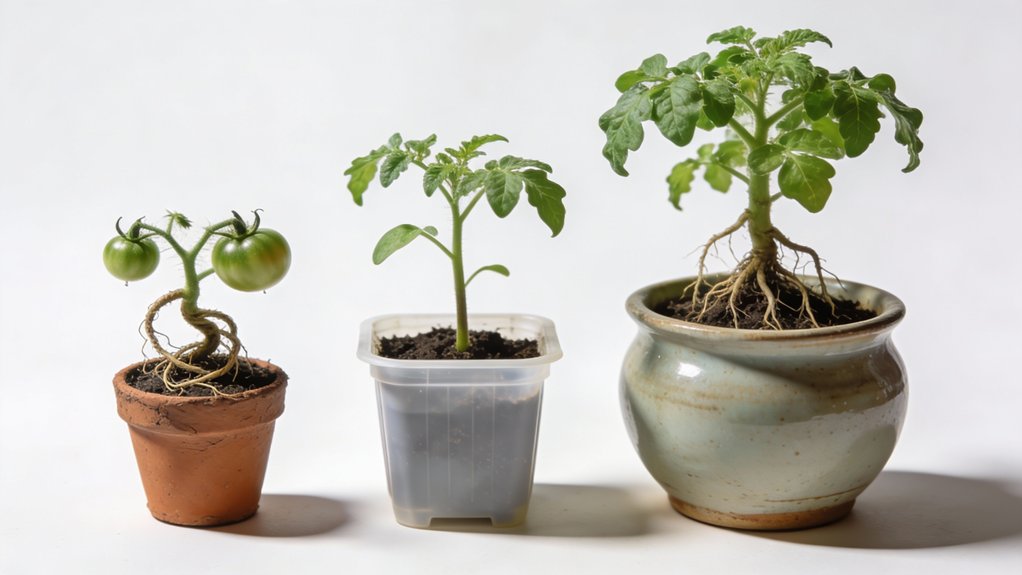
When you squeeze tomato plants into 3-gallon pots, you’re setting them up for failure from the start.
Root bound issues develop quickly in undersized containers, strangling your plants’ ability to absorb water and nutrients.
Here’s how poor sizing choices sabotage your garden:
- Shallow containers under 12 inches create inadequate depth for proper root systems.
- Overcrowded pots restrict airflow and invite disease.
- Small volumes dry out rapidly in warm weather, demanding constant watering.
- Insufficient space limits yields dramatically: cucumbers and tomatoes need minimum 5-gallon containers.
These mistakes transform promising seedlings into struggling survivors that never reach their potential.
8. Why Starting With the Right Size Prevents Transplant Problems
Because roots establish themselves based on available space, transplanting from one undersized container to another creates a cycle of stunted development that’s nearly impossible to reverse.
When you start with the proper container size, you eliminate transplant shock altogether. Your plants won’t waste weeks recovering from the stress of being moved. Instead, they’ll channel their energy directly into root growth and foliage development.
This approach is especially critical for vegetables that need 8-10 gallons minimum. Starting right means your plants hit the ground running, establishing strong root systems within 2-3 weeks rather than struggling through multiple adjustments.
Conclusion
You’ve seen the evidence: container size directly affects your harvest and bloom quality. A tomato plant cramped in 3 gallons won’t produce like one in 5 gallons.
The math is simple, more root space equals healthier growth. Don’t guess your container’s capacity; measure it properly.
Start with adequate size from day one, and you’ll skip the transplant headaches while watching your vegetables and flowers reach their full potential.