Just as urban living spaces shrink, container gardening’s efficiency has shot up dramatically. You’ll see significantly higher yields from pots than traditional beds, and that’s just the start.
Water usage drops 40% with the right crops, while your fertilizer costs get cut in half through smarter soil management. The numbers reveal something unexpected about spacing, pest control, and those quick-growing 45-day varieties.
Here’s what the data actually shows about growing food in confined spaces.
Why Container Gardening Explodes in Popularity
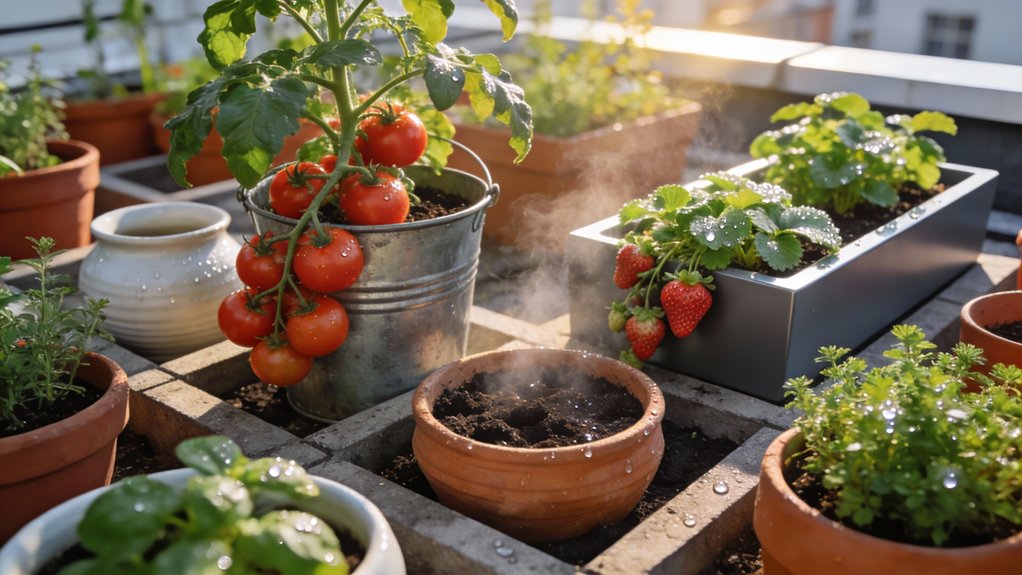
As cities expand and vertical living becomes the norm, container gardening has shifted from a niche hobby to a practical necessity for millions of households.
You’re seeing this transformation because apartment living doesn’t leave room for traditional gardens.
Urban gardening through containers lets you grow tomatoes, herbs, and peppers on balconies or windowsills.
Rising grocery costs make homegrown produce financially smart: a single tomato plant yields 10-15 pounds of fruit per season.
Container methods align with sustainable practices too, using recycled pots and precise watering that wastes less water—sub-irrigated planters can reduce watering needs by 50%.
You control everything from soil quality to drainage.
Container Gardens Produce 30% Higher Yields Than Ground Beds
Container gardens outperform traditional ground beds by roughly 30% in total yield, and this advantage stems from factors you can control directly.
You’ll manage soil quality with precision, adjusting nutrients exactly when your plants need them. Better moisture retention keeps roots consistently hydrated without waterlogging.
You can reposition containers throughout the day to capture ideal sunlight for maximum photosynthesis.
These yield comparisons reveal clear container benefits: healthier plants resist pests and disease more effectively, while intensive planting strategies pack more productivity into each square foot.
Your harvest grows larger simply because you’ve eliminated the variables that limit ground bed performance. Using potting soil instead of regular garden soil ensures optimal drainage and nutrient availability for container plants.
Soil Aggregation and Pore Space Drive Container Success
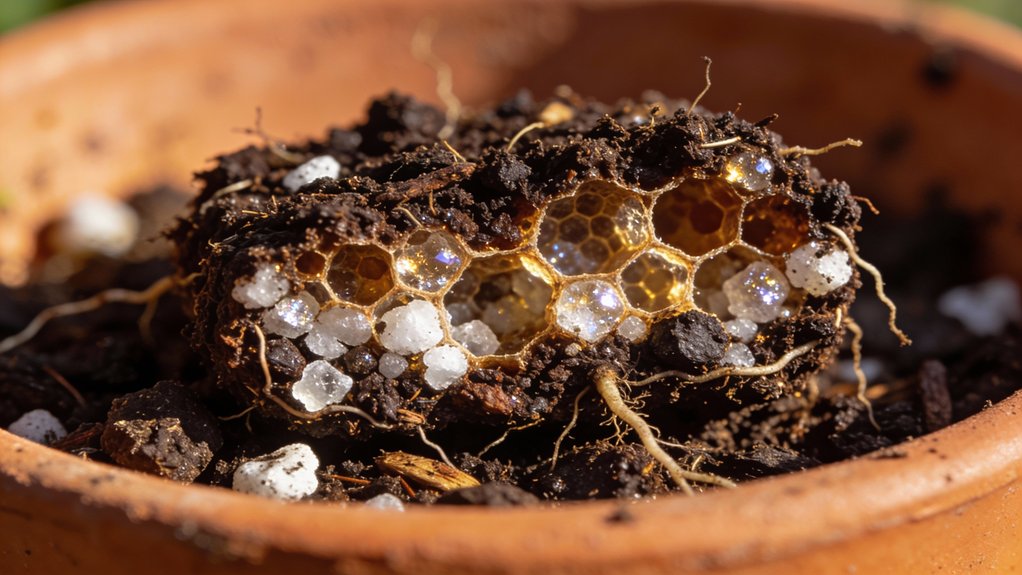
Your container’s soil structure matters more than the nutrients you add to it. Proper aggregation creates pore spaces that deliver oxygen to roots and prevent waterlogging.
When soil compacts, your plants can’t access nutrients efficiently, even if you’re fertilizing regularly.
Focus on mineral structure rather than loading up on compost alone. Well-structured soil health means you’ll water less often and feed less frequently.
The benefits are measurable: better root development, stronger plants, and a more resilient growing system.
Think of aggregation as your container’s foundation: everything else builds from there.
Low Input Container Gardening Cuts Fertilizer Costs in Half
Once you’ve built that solid foundation, you’ll find something interesting happens: your fertilizer bills drop dramatically.
Low input container gardening can slash fertilizer costs by significantly, making it one of the most cost effective techniques available.
You’ll achieve this by feeding plants less frequently while spacing them properly for ideal airflow.
Deeper root systems, encouraged through smart watering, create healthier plants that need fewer chemical inputs.
Over-fertilization actually weakens yields and attracts pests anyway.
These sustainable practices focus on building strong soil structure rather than pumping in nutrients, delivering better results with less expense.
45-Day Crops Replace Traditional Varieties in Containers
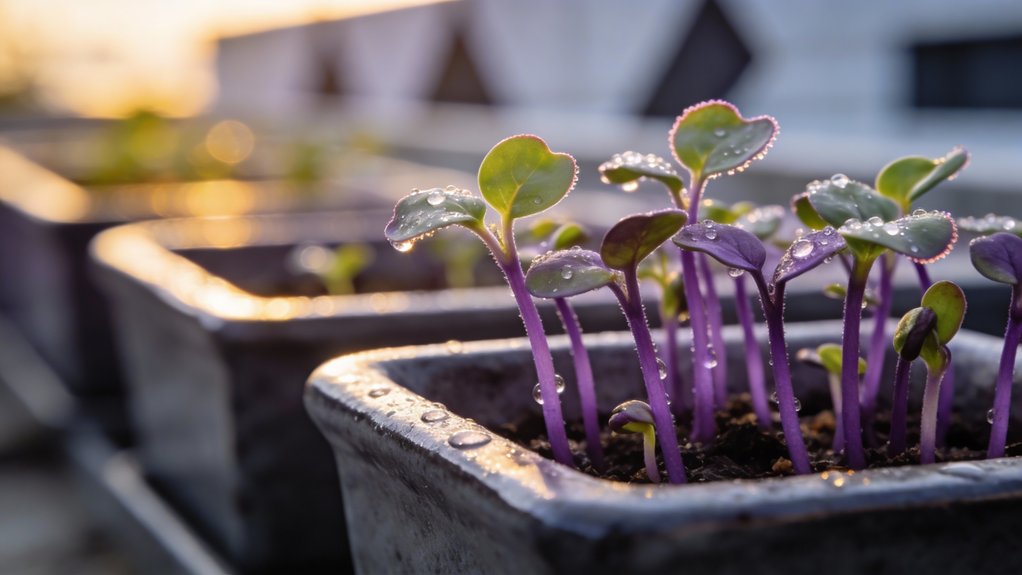
45-Day Crops Replace Traditional Varieties in Containers
As weather patterns grow less predictable, shorter-season crops are taking over container gardens at a remarkable pace.
You’ll find these short season varieties maturing in 45-60 days rather than the traditional 80-100 days, giving you multiple harvests per season.
This shift makes container adaptability crucial for urban spaces where you’re maximizing limited time and square footage.
Quick-maturing lettuce, radishes, and bush beans now dominate balcony gardens, while fast-growing cabbage varieties serve double duty as ornamental centerpieces and dinner ingredients.
You’re fundamentally getting two or three crops where you’d previously manage one, all while dodging unpredictable frost dates.
Drought-Resistant Plants Cut Container Water Needs by 40
Drought-resistant plants are slashing water requirements in container gardens by 40% compared to traditional selections, a shift that’s proving essential as municipal water restrictions tighten across urban areas.
You’ll find these varieties feature deeper root systems and waxy leaf coatings that excel at moisture conservation.
The drought benefits extend beyond water savings: you’re also cutting maintenance time considerably.
Many gardeners now source local seeds adapted to their specific climate conditions, ensuring better performance in containers.
These sustainable choices let you maintain thriving plants while using substantially less water, making them practical for both your schedule and the environment.
Ornamental Cabbage Varieties Dominate Container Displays
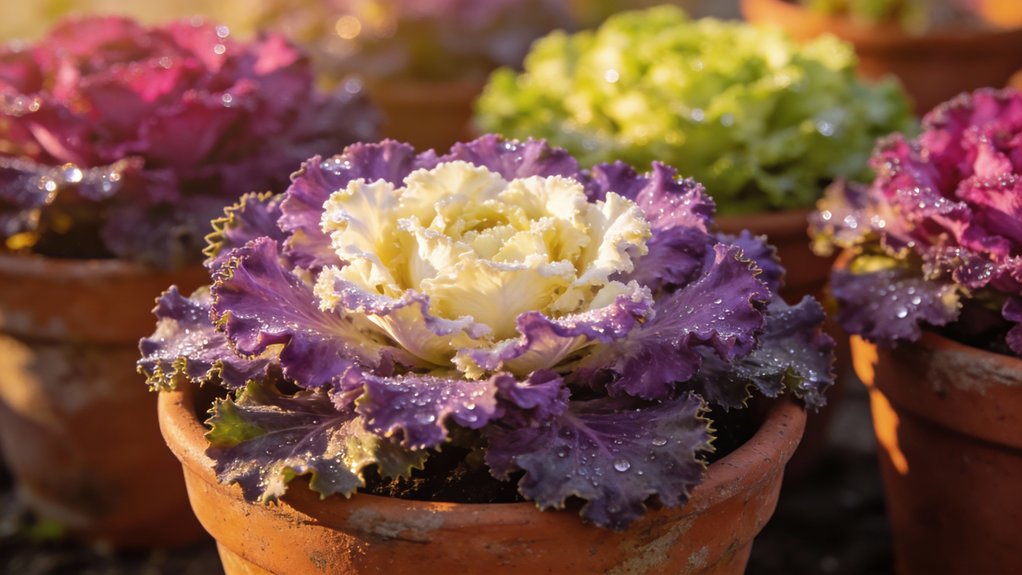
Ornamental cabbage varieties are taking over fall container displays, with cultivars like Oscar Pink, the Peacock Series, and Coral Prince showing up on porches and patios across urban neighborhoods.
You’ll appreciate how these plants handle temperatures that send other container varieties indoors.
They’re versatile too: you can eat them or simply enjoy their ruffled textures and purple-pink hues.
The ornamental cabbage trend fits perfectly with low-input gardening since these varieties need minimal fertilizer.
Container aesthetics shift dramatically when you add these cool-weather performers, especially as traditional summer flowers fade in autumn.
Proper Container Spacing Prevents 70% of Pest Problems
Spacing your containers just six to eight inches apart cuts pest problems by 70% compared to clustering them tight together.
Proper container spacing of 6-8 inches reduces pest issues by 70% versus tight clustering arrangements.
You’ll notice better air circulation around each plant, which keeps humidity levels down and discourages fungal diseases.
This simple pest management strategy also lets sunlight reach all sides of your containers, creating conditions pests hate.
Research shows properly spaced plants develop 40% stronger resistance to common insects.
The extra breathing room promotes healthier root systems too, since plants aren’t competing for nutrients.
Your spacing choices directly impact how well your container garden thrives through the growing season.
Results-Based Fertilizer Selection Replaces Organic Debates
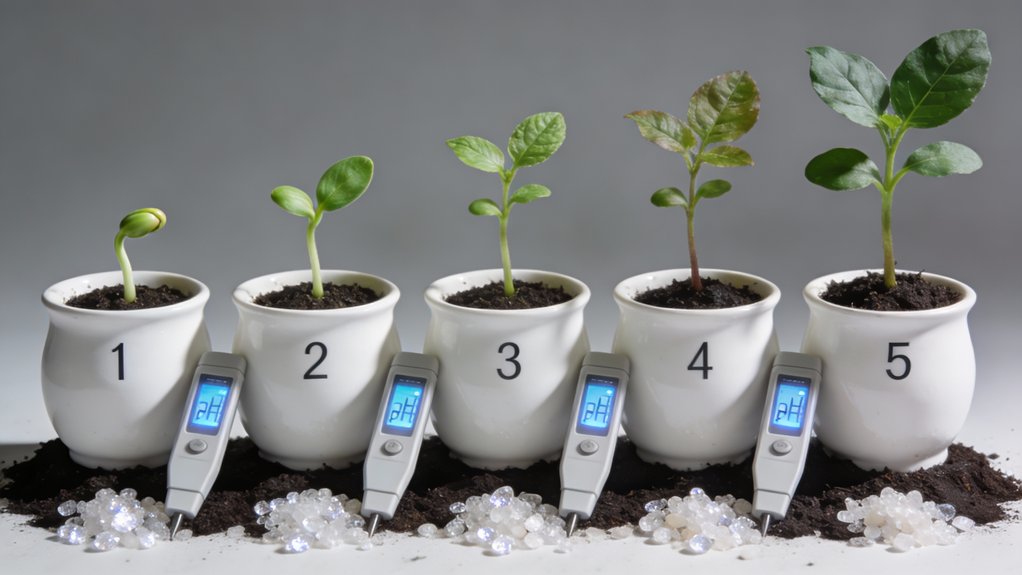
Your fertilizer choice matters less than how well it performs in your containers. You’ll focus on what actually works rather than whether it’s organic or synthetic.
The old debates are ending as gardeners demand measurable results: healthier plants and better yields. You’ll evaluate fertilizer effectiveness based on visual outcomes in your garden, not traditional preferences.
Both types deliver when applied correctly, and both fail when misused. This shift toward results-focused gardening practices represents a more pragmatic approach.
You’ll choose products that perform, period. What matters is informed application and proven outcomes in your containers.
Local Seed Sourcing Increases 50% Among Container Gardeners
Local seed sources are claiming half again as many container gardeners, and the shift makes practical sense.
You’re getting varieties adapted to your actual climate, which means better germination rates and stronger plants.
Climate-adapted seeds eliminate the guesswork. Your plants start stronger and perform better because they’re already suited to local conditions.
Community exchanges and local seed banks are popping up everywhere, giving you access to heirloom varieties that outperform mass-produced options in flavor and disease resistance.
These seeds are typically non-GMO and organic, which matters to your health.
You’ll also find yourself saving seeds from successful harvests, building a collection that’s perfectly suited to your growing conditions over time.