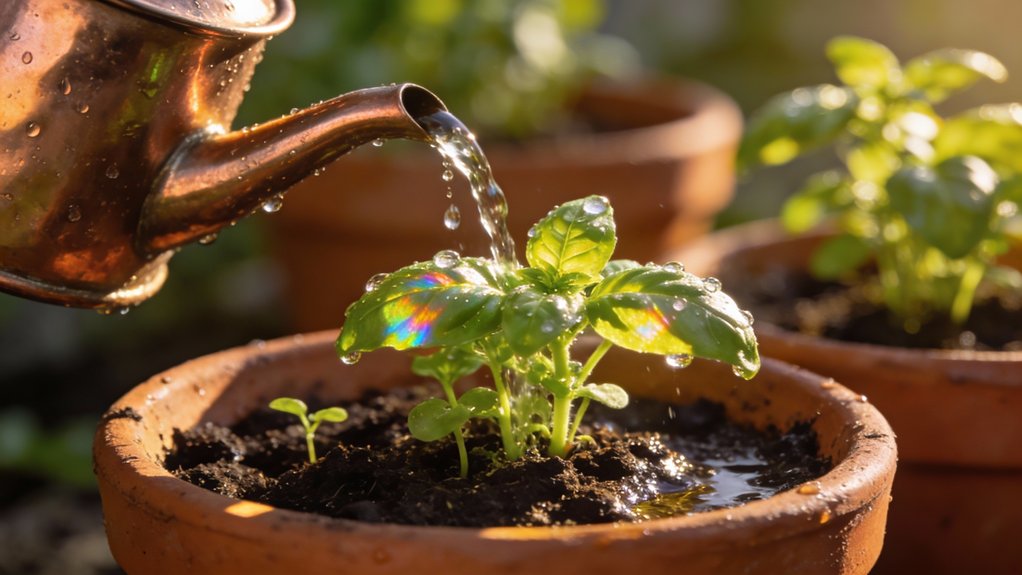
Container plants don’t follow a fixed watering schedule. How often you water depends on the plant, container size, soil, and light conditions.
Watering is one of the most common challenges in container gardening. There isn’t a single rule that works for every plant or pot.
A sun-loving tomato and a shade-tolerant fern need very different amounts of water, and their needs change as temperatures rise.
Understanding a few basics, like plant type, soil, container size, and exposure, makes it much easier to water correctly and keep plants healthy.
1. How Much Water Do Container Plants Actually Need?
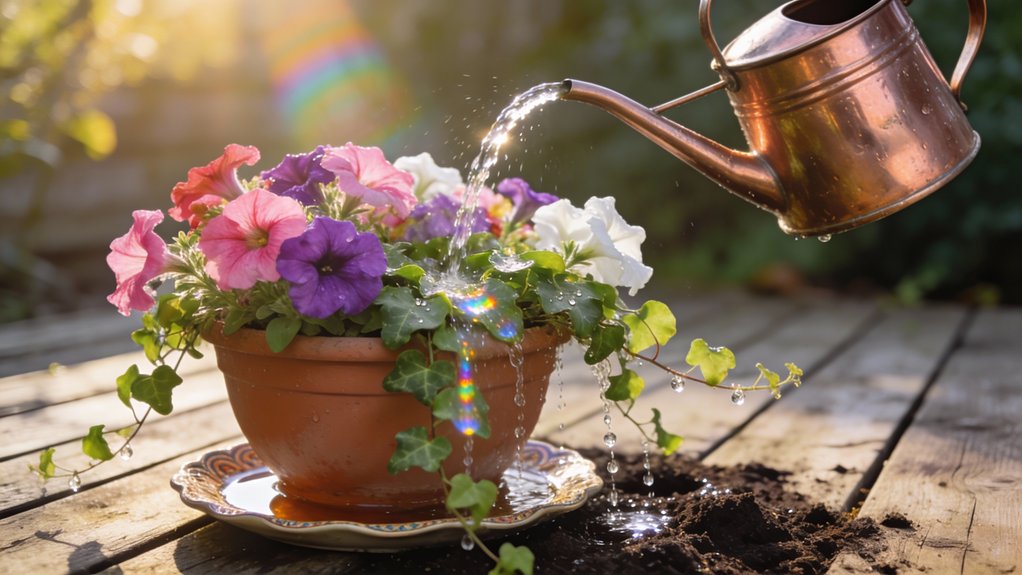
There’s no one-size-fits-all answer for watering. Your plants need deep watering until moisture drains from the bottom, ensuring proper plant drainage throughout the pot.
- Larger containers typically require ¾ to a full gallon depending on plant size.
- Don’t water again until the top few inches of soil dry out.
- Good water retention matters, but constantly wet soil causes root rot.
Succulents need far less water than annuals or vegetables.
One thorough soaking beats frequent shallow waterings because surface moisture never reaches deeper roots where it’s needed most.
2. What’s the Right Way to Water Containers?
The secret to proper container watering isn’t complicated: you’ll need a watering can or hose with a gentle spray nozzle, enough patience to water slowly, and the discipline to stop only when water flows freely from the drainage holes.
Water containers slowly and deliberately until drainage holes run freely—patience and thoroughness create healthy, resilient root systems.
These watering techniques guarantee root health by saturating the entire root zone rather than just the surface.
Check the top inch of soil before watering; if it’s dry, proceed with a thorough soak. Skip quick, shallow sessions that create weak roots.
During hot conditions, moisture-retaining gels or specialized potting soils help maintain consistent hydration levels between waterings.
3. How Often Should You Water Potted Plants?
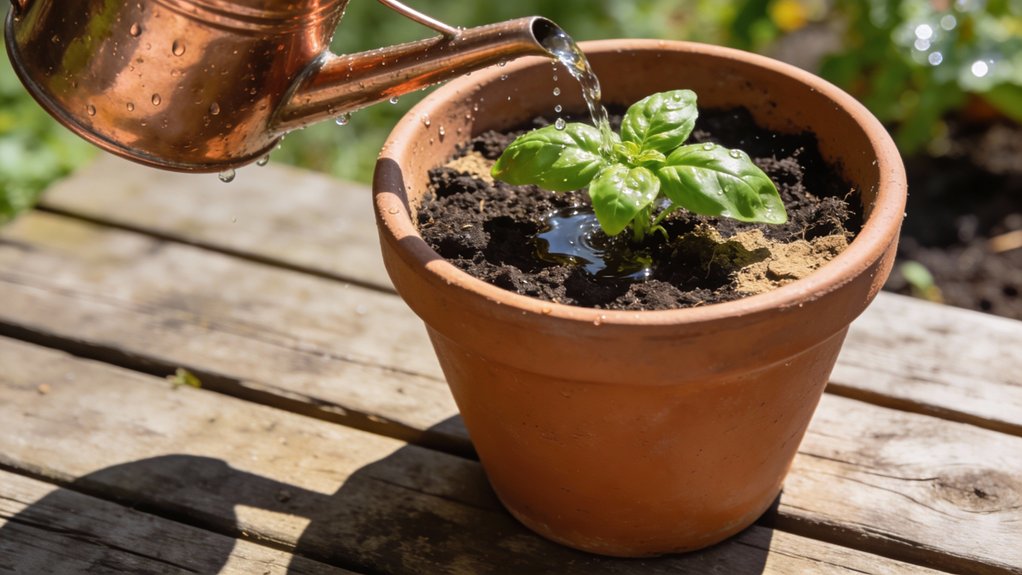
Knowing the proper watering technique matters little if you can’t determine the right schedule for your containers.
Check your soil daily by feeling the top inch: if it’s dry, water thoroughly. Several factors affect frequency:
- Container plant species: Succulents need water weekly, while annuals and vegetables often require daily watering.
- Weather conditions: Hot, dry days demand twice-daily watering for many plants.
- Plant maturity: Newly installed plants need more frequent watering than established ones.
- Seasonal watering adjustments: Summer heat increases water needs dramatically compared to cooler months.
Monitor moisture levels consistently rather than following a rigid schedule.
4. How Can You Tell When Containers Need Watering?
Instead of relying on guesswork, you can read your containers’ signals to determine exactly when they need water. Check the soil’s surface: if the top inch feels dry to your touch, it’s watering time.
Skip the guesswork and listen to your containers. When the top inch of soil feels dry, it’s time to water.
Soil texture and color serve as reliable moisture indicators: lighter soil means it’s dried out, while darker soil retains moisture.
Your plants will also communicate their needs through visual distress signs like shriveled leaves, limp stems, or discolored foliage.
During warm, dry weather, check daily since containers dry out faster than garden beds.
Water until it drains from the bottom holes, ensuring thorough root zone coverage.
5. Mulch, Pot Choice, and Other Tricks to Lock in Moisture
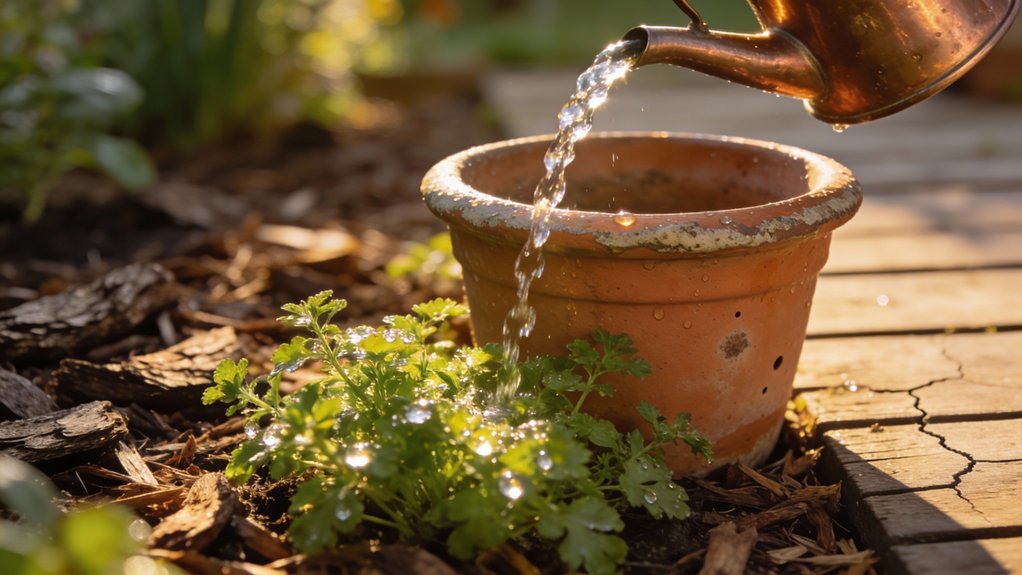
Once you’ve mastered reading your containers’ water needs, you can take steps to reduce how often they’ll ask for a drink.
Smart choices in pot materials and mulch benefits can dramatically cut your watering schedule.
Here’s what works:
- Add a two-inch mulch layer using bark chips or decorative rocks to block evaporation.
- Choose glazed ceramic pots instead of porous terra cotta that dries quickly.
- Mix water-retaining polymers into your potting soil for built-in moisture reserves.
- Position containers in partial shade during peak afternoon heat.
Self-watering pots with built-in reservoirs offer another reliable moisture-management solution.
Conclusion
Watering container gardens doesn’t have to feel like guesswork.Check your soil daily, water when the top inch feels dry, and soak thoroughly until water drains out.
Remember that weather, pot size, and plant type all change your watering schedule.
Use mulch to keep moisture in, choose pots with drainage holes, and you’ll soon develop a rhythm. Your plants will tell you what they need, you just have to pay attention.