A bare or low-impact yard doesn’t mean you need high-maintenance plants.
Several varieties grow and bloom reliably with minimal care.
Seven plants tolerate missed waterings, uneven soil, and still bloom for months without fertilizer or deadheading.
The key isn’t effort. It’s choosing plants that match your yard’s light and soil conditions.
1. Gaillardia: Easy-Care Blooms That Thrive in Full Sun
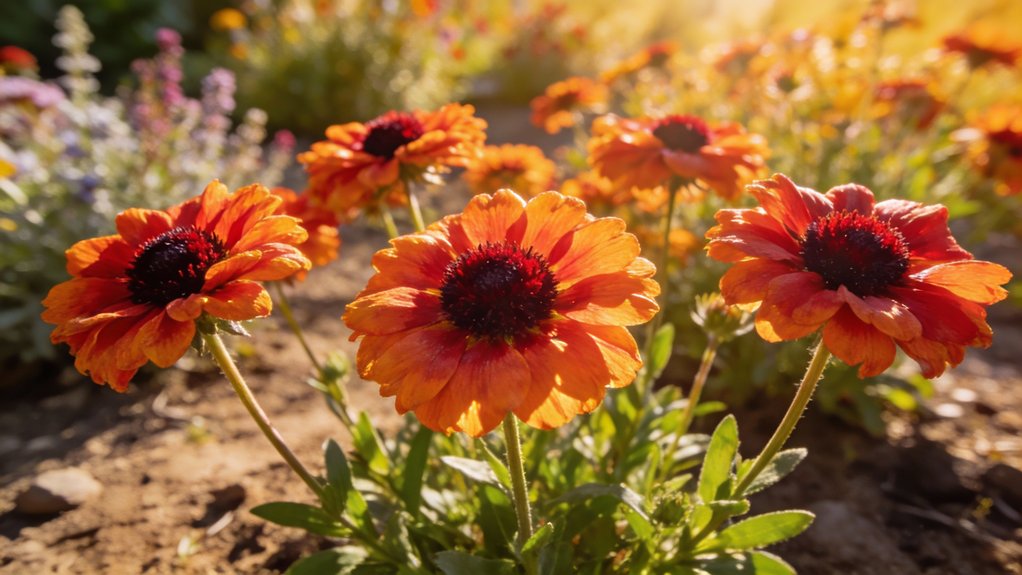
If you’re searching for a plant that practically takes care of itself, gaillardia deserves a spot at the top of your list.
These vibrant blanket flowers produce daisy-like blooms in red, yellow, and orange from early summer through fall.
Gaillardia’s cheerful daisy-like flowers bloom continuously in warm shades of red, yellow, and orange throughout the growing season.
You’ll need to water them regularly at first, but their drought tolerance kicks in once they’re established.
They grow 12 to 24 inches tall and wide, thriving in full sun and various soil types, including sandy or rocky ground.
The pollinator attraction brings bees and butterflies to your garden, and they’ll often self-seed for years of continued color.
2. Sedum: Low-Maintenance Ground Cover for Dry Soil
While gaillardia brings vertical color to sunny spots, sedum works differently as a horizontal problem-solver for those challenging dry patches in your yard.
Sedum mexicanum spreads 10-14 inches wide while staying just 3-10 inches tall, creating a living mulch that chokes out weeds.
The benefits of sedum include drought tolerance and year-round chartreuse foliage that requires virtually no maintenance. It thrives in Zones 3-9 with well-draining soil and full sun to part sun.
Sedum propagation techniques are remarkably simple: stem cuttings root easily, making expansion affordable.
You’ll appreciate its versatility in rock gardens, slopes, or hanging baskets.
3. Agastache: Hummingbird Magnets With Minty-Scented Flowers
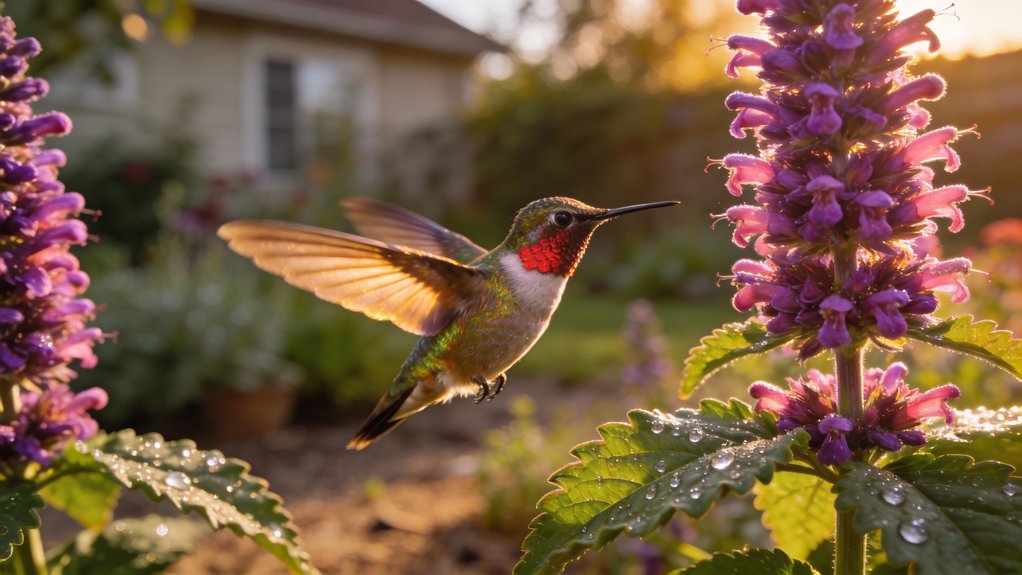
When hummingbirds visit your garden, they’re searching for nectar-rich flowers, and agastache delivers exactly that with tubular blooms packed onto 6-12 inch flower spikes.
You’ll get continuous color from mid-summer through fall in purple, pink, orange, or white shades. This drought-tolerant perennial grows 1-4 feet tall depending on variety, thriving in full sun to partial shade.
Beyond pollinator attraction, the minty-scented foliage offers culinary uses: steep leaves for tea or add them to recipes.
Plant agastache in borders, containers, or dedicated pollinator gardens. It requires minimal water once established, making it perfect for low-maintenance landscapes.
4. Black-Eyed Susans: Cheerful Yellow Blooms All Summer
Black-Eyed Susans (Rudbeckia hirta) bring bold golden-yellow petals with distinctive dark chocolate-brown centers to your garden from July straight through October.
These hardy perennials reach three feet tall and adapt to various conditions, including partial shade and different soil types.
Black-Eyed Susans grow up to three feet and thrive in diverse garden settings, from partial shade to varying soil conditions.
You’ll appreciate their drought resistance once they’re established, requiring only occasional watering.
Deadhead spent blooms to extend flowering throughout the season.
They’re deer-resistant and self-seed readily, reducing your maintenance workload.
Their vibrant blooms excel at pollinator attraction, drawing bees and butterflies to enhance your garden’s ecosystem.
You can’t go wrong with these reliable, cheerful performers.
5. Heuchera: Beginner-Friendly Foliage for Shady Spots
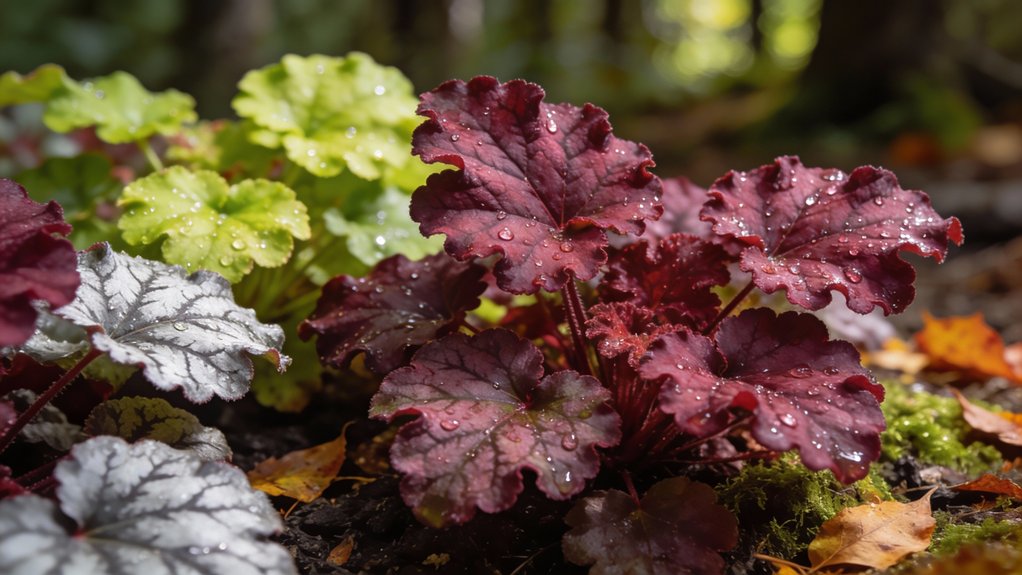
Heuchera (coral bells) solves your shady garden problems with colorful foliage that outshines most shade plants.
You’ll appreciate the minimal Heuchera care required once it’s established in your garden.
This compact perennial grows 12 to 18 inches tall and spreads about 18 inches wide, fitting perfectly in borders or containers.
The foliage colors range from deep purple to bright red and silvery tones, providing visual interest all season long.
Here’s why you’ll love it:
- Drought-tolerant after establishment, needing minimal watering
- Thrives in shade where other plants struggle
- Maintains attractive leaves even between blooming periods
It’s genuinely beginner-friendly and forgiving.
6. Russian Sage: Fragrant Perennials That Survive on Neglect
Russian Sage solves the problem of filling sunny, dry spots where most plants would wither and die.
The ‘Denim ‘n Lace’ variety grows 28-32 inches tall and spreads 34-38 inches wide, creating substantial coverage with minimal plant care.
You’ll appreciate its drought resistance: once established, it needs almost no watering. Strong stems support airy, fragrant flowers that attract hummingbirds throughout summer.
This perennial thrives in various soil types and actually performs better with neglect than constant attention.
It’s disease-resistant and requires no deadheading, making it perfect when you’re learning basic garden maintenance without complicated tasks.
7. Echinacea: Tough Coneflowers That Bloom for Months
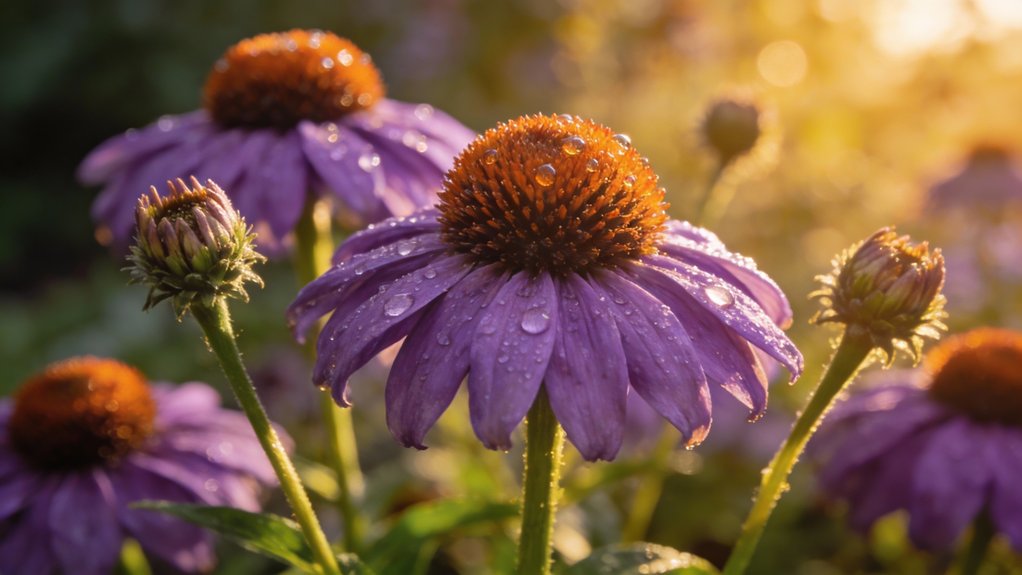
Echinacea turns problem areas into colorful displays that last from July through October without demanding your constant attention.
Transform neglected garden spots into vibrant, low-maintenance color from midsummer through fall with resilient Echinacea.
These tough perennials handle poor soil and drought conditions once their roots establish after the first season.
You’ll find Echinacea varieties in purple, pink, and white, growing 2 to 4 feet tall depending on which cultivar you choose.
Their pollinator attraction benefits your entire garden:
- Bees and butterflies visit constantly during bloom time
- Goldfinches feast on seedheads throughout winter
- Native wildlife depends on these plants for sustenance
Deadhead spent flowers occasionally to extend blooming, but that’s your only real maintenance task.
Conclusion
You don’t need a green thumb to create a stunning garden. These seven plants prove that low-maintenance doesn’t mean boring.
They’ll survive missed waterings, forgive neglected pruning, and come back stronger each year. Start with two or three varieties that match your sun exposure and soil conditions.
Plant them in spring or fall, water regularly for the first month, then step back and watch them thrive with minimal effort.