You’ve killed container plants. So has everyone else starting out. The difference between beginners who quit and those who succeed isn’t talent or a “green thumb.” It’s avoiding five specific mistakes that data shows kill most container gardens.
Wrong container size, poor soil choice, and inconsistent watering cause the majority of beginner failures. All three are completely preventable once you know the warning signs.
Here’s what the research reveals about why container plants die and the simple adjustments that fix each problem (see our full container gardening statistics and beginner expectations guide)
Container Size: What Most Beginners Get Wrong About Root Space
When new gardeners pick their first containers, roughly 60% grab pots that look plenty big but turn out to be cramped quarters for growing roots.
You’ll want container dimensions of at least 12 inches wide and deep for most plants.
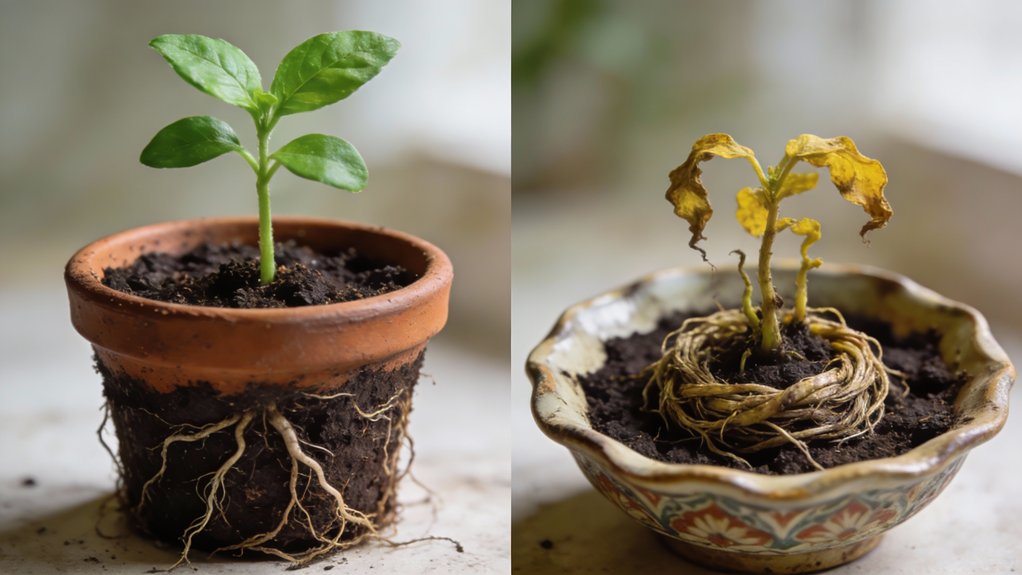
Smaller pots create rootbound conditions that stunt growth and stress your plants. They also dry out fast, forcing you to water constantly.
Undersized containers trap roots, weaken plants, and demand relentless watering. It’s a frustrating cycle that sabotages your gardening success from day one.
Heavy feeders like tomatoes and squash need even more root space to access adequate nutrients.
Choose containers that match your plant’s mature size: it prevents overcrowding and keeps moisture levels stable while roots develop properly.
For example, determinate tomatoes thrive in 10-15 gallon containers rather than the 5-gallon minimum, giving them the space needed for robust growth and better yields.
Why Cheap Container Soil Kills Plants Within Weeks
That bargain bag of potting soil seems like a smart buy until your container plants start wilting in week three.
Cheap mixes create serious problems:
- Nutrient deficiencies develop rapidly because low-quality soil lacks essential minerals and organic matter that plants need.
- Root suffocation occurs when excessive peat moss retains too much water without proper drainage components.
- Missing microbial life weakens plants’ natural defenses against pests and diseases.
- Limited soil volume depletes quickly, requiring constant amendments.
Garden soil’s density can also cause compaction in containers, destroying the drainage properties necessary for healthy container gardening.
The fix is simple: mix ⅓ compost, ⅓ topsoil, and ⅓ coarse sand or coco coir. A quality blend pays back its cost in plants that actually survive.
The Drainage Hole Mistake That Causes Root Rot in Days
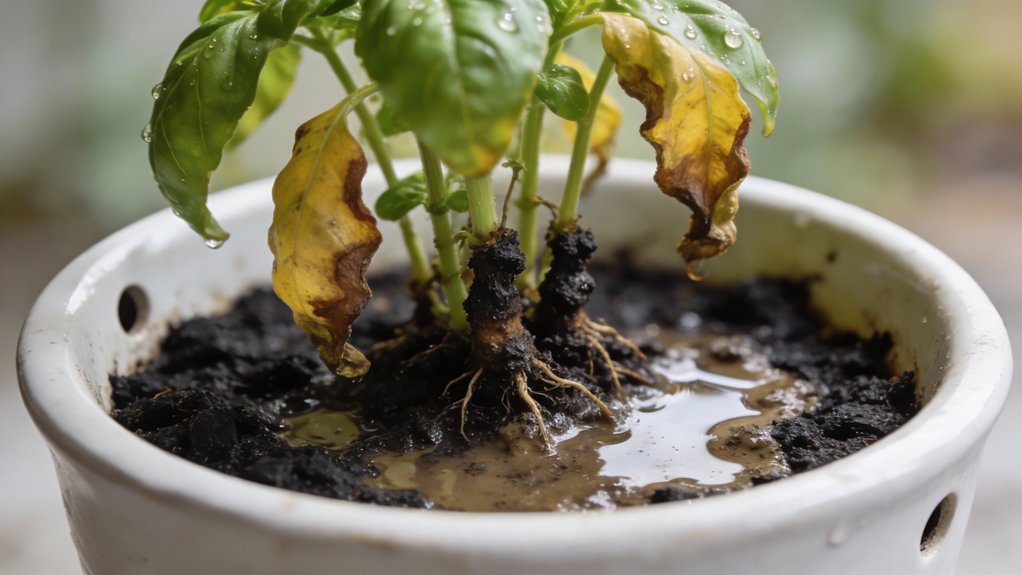
Even premium potting mix can’t save your plants if water has nowhere to go.
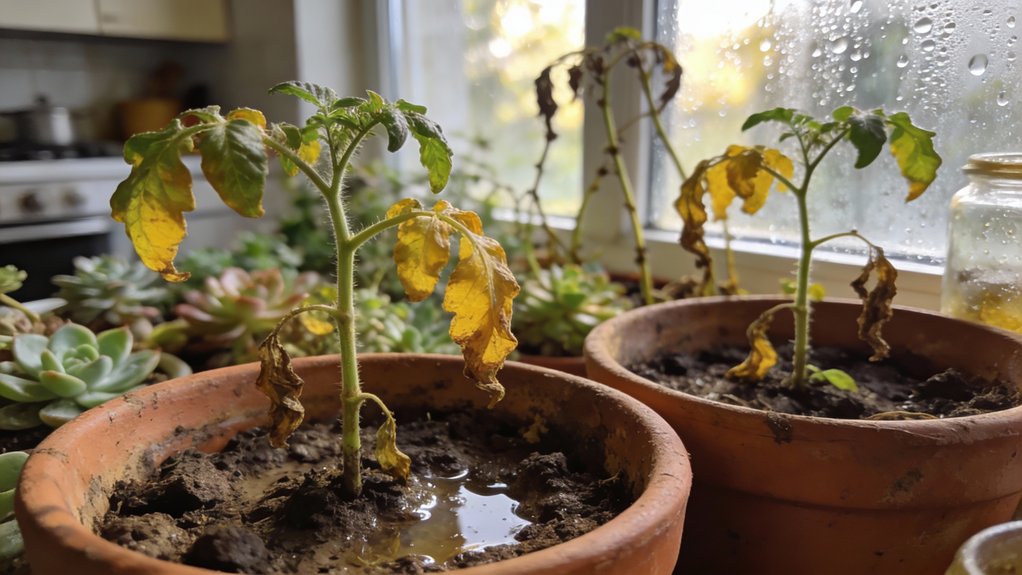
Containers without drainage holes trap water, creating stagnant conditions that suffocate roots within days.
This excess moisture forms perched water tables that starve roots of oxygen, blocking nutrient uptake and stunting growth.
Well-drained containers grow noticeably healthier plants than pots that cannot drain.
Experienced gardeners consistently name poor drainage as one of the top killers of container plants.
The fix takes two minutes: drill holes in the bottom, or choose properly designed containers from the start.
Container Sun Exposure: Why So Many Plants Get Scorched
Why do container plants scorch so easily when their in-ground cousins thrive in identical conditions?
The answer lies in their vulnerability to sunlight intensity and limited resources.
Container plants need only half to two-thirds the sun of ground plants.
Container plants require significantly less sun exposure than their in-ground counterparts due to their restricted root systems and accelerated water loss.
Their restricted soil dries faster, creating a dangerous combination when exposed to harsh afternoon rays.
Here’s what increases scorching risk:
- Afternoon shade absence exposes plants to peak heat
- Limited soil volume accelerates moisture loss
- Seasonal changes alter light requirements unexpectedly
- Static positioning prevents protective adjustments
Monitor weather patterns and relocate containers to guarantee proper plant hydration and protection.
How Heavy Feeders Fail in Small Container Gardens
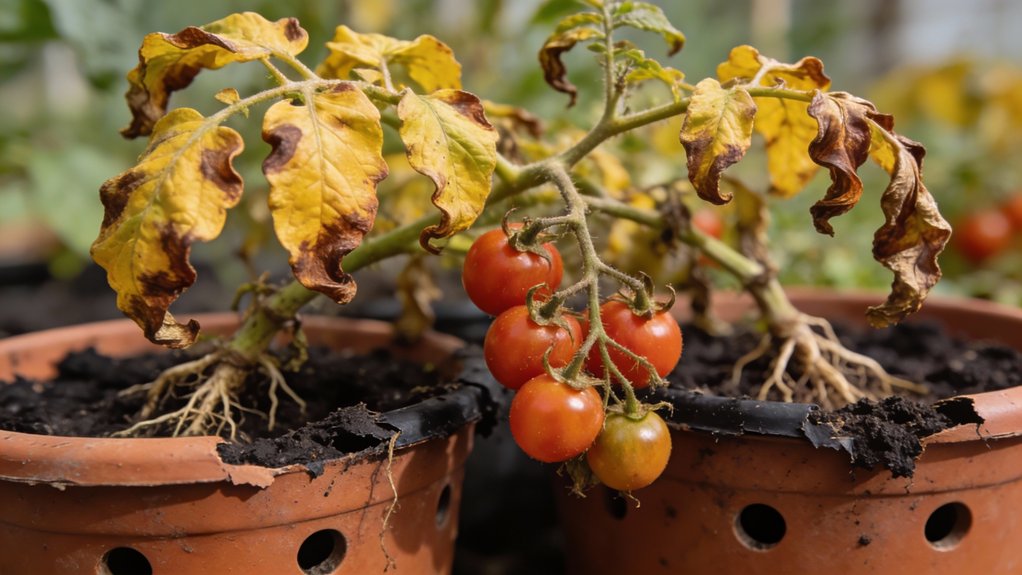
When you cram a tomato plant into a 5-gallon bucket, you’re setting up a slow-motion failure that’ll play out over 8-12 weeks.
Heavy feeders like tomatoes and squash need at least 20 gallons to access adequate nutrients and space.
Plants crammed into containers under 12 inches wide often show plant stress and nutrient deficiencies within weeks.
The soil depletes rapidly, roots become bound, and yields drop.
Small pots can’t retain moisture effectively, forcing you to water constantly while your plant still struggles.
Experts recommend proper pot size from day one. There’s no workaround for insufficient container volume with heavy feeders.
Container Watering Schedules That Prevent Most Plant Loss
Most container gardeners water when they remember, and inconsistent watering is one of the biggest reasons plants die before the season ends.
You need a proper watering frequency that adapts to weather conditions and seasonal changes. Here’s what actually works:
- Check soil moisture daily with a meter to prevent drought or root rot.
- Install self watering systems like clay ollas for consistent moisture supply.
- Group containers together to create moisture-retaining microclimates.
- Adjust your schedule based on temperature and rainfall patterns.
This systematic approach eliminates guesswork and keeps your plants thriving throughout the growing season.
Why Container Materials and Colors Affect Root Temperature
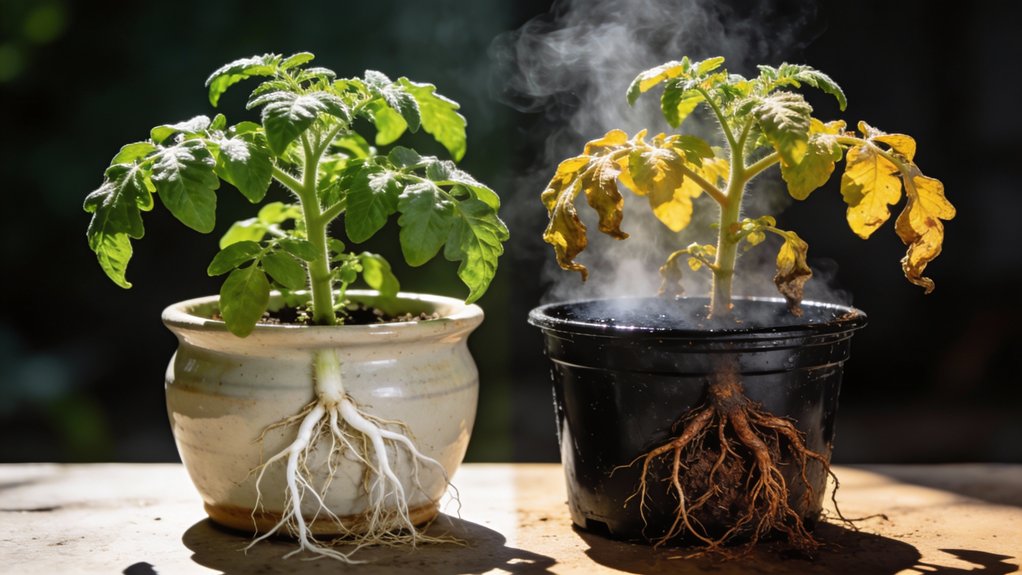
Your container’s color and material directly control how hot your plant’s roots get.
Most gardeners don’t realize they’re literally cooking their plants alive.
Dark pots absorb heat and can spike root temperatures 10-20°F higher than light-colored ones.
Metal containers in direct sun heat up fast, damaging roots and reducing moisture retention.
The color impact matters: light ceramic and plastic reflect sunlight, keeping roots cooler.
Terra cotta’s porous nature draws moisture from soil, causing faster drying.
Smart material selection protects your plants from heat stress and maintains healthier root systems throughout summer.
Ignoring Mature Size: The Overcrowding Mistake Every Gardener Should Avoid
How often do you check a plant’s mature size before dropping it into a container? Most gardeners don’t, and that mistake costs them dearly.
Poor plant spacing and growth planning lead to overcrowding, which tanks your harvest potential.
Consider these numbers:
- A single tomato plant needs at least 5 gallons to thrive properly.
- Zucchini plants reaching 3 feet wide require 20-gallon containers minimum.
- Properly sized containers produce noticeably more fruit than undersized pots.
- Multiple species crammed into one pot compete for water and nutrients, and all of them suffer for it.
Gardeners who plan for a plant’s mature size get far better harvests than those who wing it.
Grouping Containers for Better Pest Resistance and Microclimates
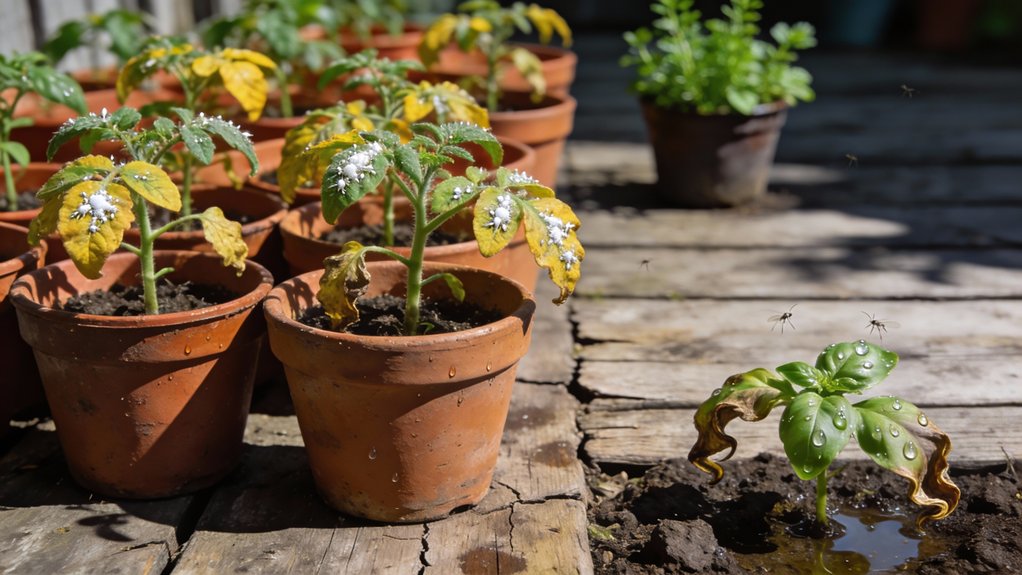
When you cluster your containers instead of scattering them across your patio, you’re building a defense system that individual pots can’t match.
Together, your containers become stronger than the sum of their parts. A unified fortress against environmental stress and garden threats.
The microclimate benefits start immediately: grouped plants share humidity, reducing water stress during hot spells and lowering transpiration rates.
This natural moisture retention keeps your plants healthier without extra watering.
You’ll also notice improved pest resistance as tight groupings create physical barriers that deter common invaders while encouraging beneficial insects to patrol your garden.
Grouping containers boosts pollination and simplifies monitoring, letting you spot problems before they spread through your whole collection.