Many houseplant pest problems start small. What looks like dust on a leaf may be scale, and faint webbing can be the first sign of spider mites.
Often, the issue isn’t noticed until leaves yellow or drop, or the plant develops a sticky film from sap-feeding insects.
The good news is that most common indoor pests can be managed with simple, low-toxicity steps. The sections below cover how to identify the most likely culprits and remove them using natural methods.
Identify Common Houseplant Pests: Visual Signs and Symptoms
Success in managing houseplant pests starts with knowing what you’re looking at. Pest identification begins with close inspection of stems and leaves.
Scale insects appear as small brown ovals (3-4 mm long) that look like part of the plant.
Mealybugs show up as white cottony clusters and move between plants.
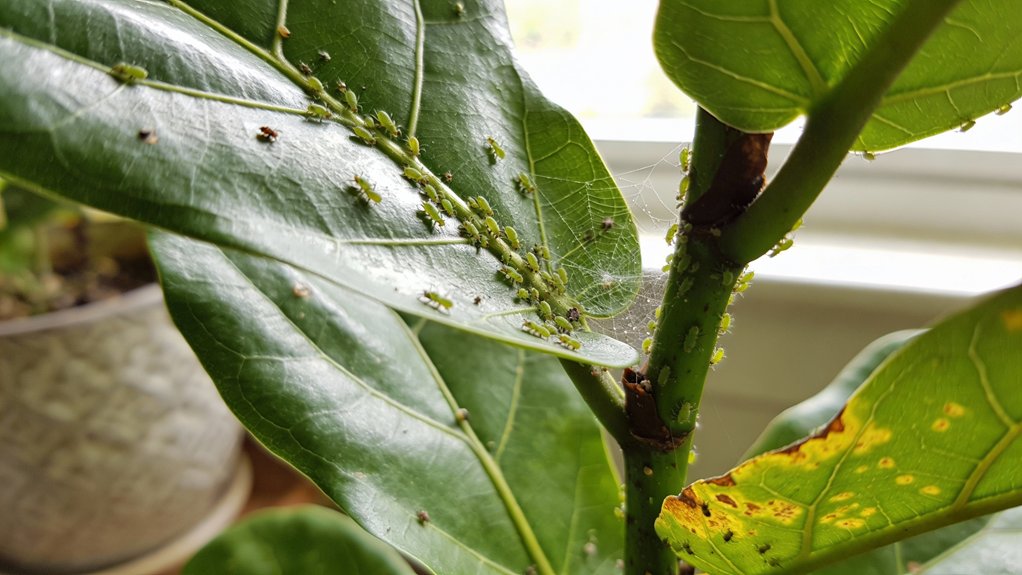
Aphids cluster on new growth, leaving sticky honeydew behind.
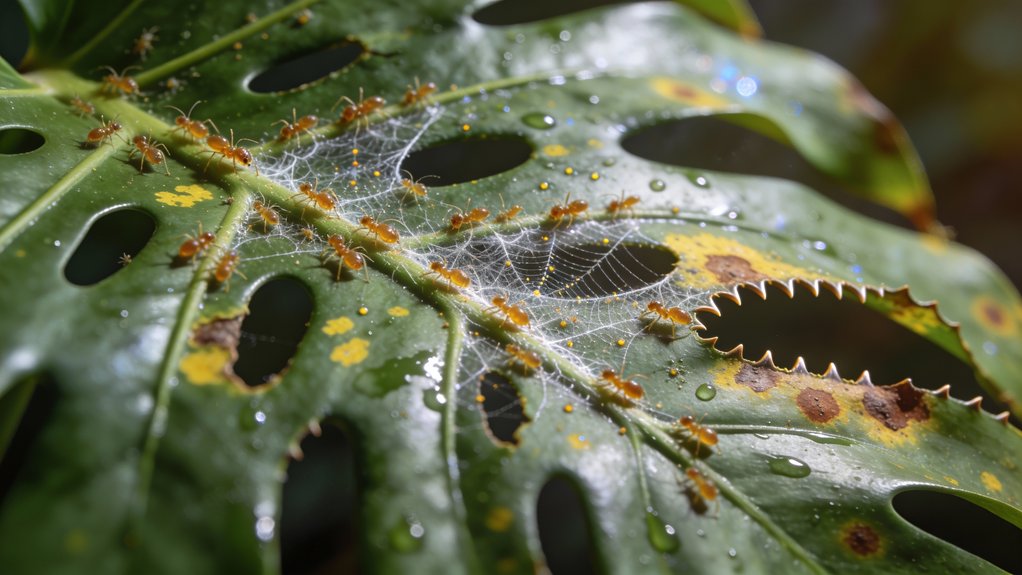
Spider mites create fine webbing in dry conditions, plus reddish leaf spots.
Thrips leave silvery streaks and black frass dots.
Visual symptom recognition helps you identify which pest you’re dealing with: yellowing leaves, stunted growth, and stippled damage each point to a different culprit.
Regular inspection of your plants, similar to how pollinator-attracting plants require monitoring for beneficial insects, can help catch pest problems early before they spread.
Remove Scale Insects With Insecticidal Soap and Manual Scraping
Once you’ve identified scale insects on your houseplant, you’ll need a two-part approach: insecticidal soap applications and physical removal.
This combined method addresses both active pests and their protective coatings.
Here’s your action plan:
- Manually scrape visible scales using your fingernail or a soft toothbrush, particularly on stems and leaves.
- Apply rosemary-based insecticidal soap directly to affected areas, then rinse thoroughly after treatment.
- Cover soil with plastic during treatment to prevent fallen scales from climbing back up.
Monitor regularly: scales reproduce year-round indoors.
For houseplants in containers, ensure drainage holes are present at the bottom to maintain overall plant health while managing pest infestations.
Consistency is what makes these techniques stick.
Eliminate Mealybugs Using Alcohol Sprays and Natural Predators
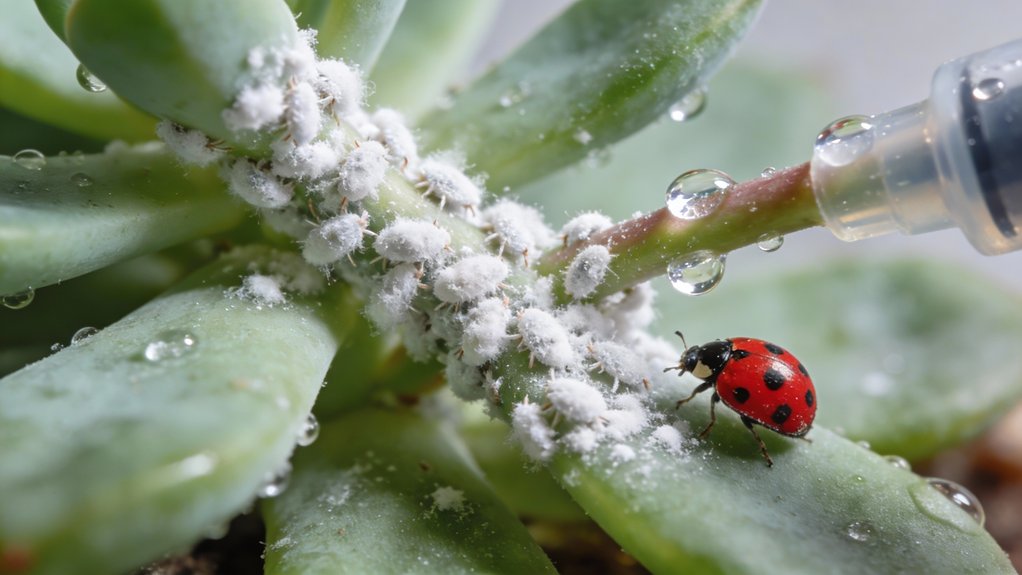
Mealybugs appear as white, cottony clusters on stems, leaf joints, and undersides. They’ll multiply fast if you don’t act quickly.
A single female lays around 600 eggs, so mealybug identification matters early.
Dip a cotton swab in 70% isopropyl alcohol and apply it directly to visible pests for instant contact kill.
Check your plants weekly, especially in warm, humid spots where these bugs thrive.
For hard-to-reach infestations, release natural predators like mealybug destroyers or green lacewings. They’ll hunt down hidden pests while you maintain good plant hygiene.
Healthy plants resist attacks better than stressed ones.
Control Aphids and Whiteflies With Water Rinses and Sticky Traps
Aphids and whiteflies rank among the most common houseplant pests you’ll encounter, and they’re surprisingly easy to spot once you know what to look for.
Aphids appear as tiny soft-bodied insects that cause yellowing leaves, while whiteflies look like miniature white moths.
Both extract sap from your plants and weaken them systematically over time.
Here’s your control strategy:
- Perform weekly water rinsing to physically remove pests from leaves and stems
- Position yellow sticky traps near affected plants to capture flying whiteflies
- Monitor plants consistently for early signs of reinfestation
This integrated approach keeps populations manageable without chemical intervention.
Treat Spider Mites by Increasing Humidity and Introducing Predators
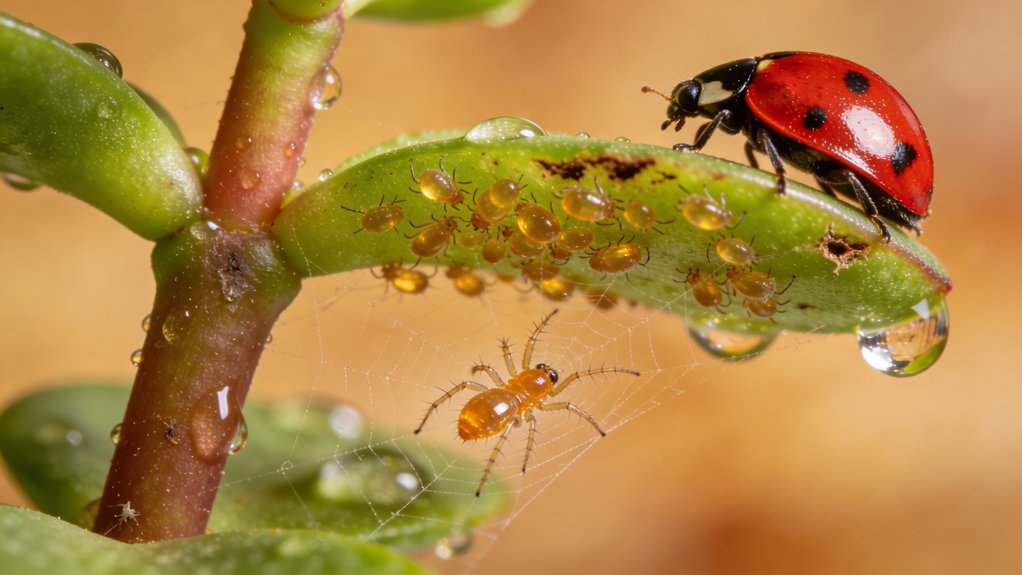
Spider mites present a different challenge than most houseplant pests: they’re nearly invisible to the naked eye. You’ll notice their damage before you see them.
These tiny pests thrive in dry conditions, so humidity control becomes your primary defense.
Mist your plants daily or run a humidifier nearby to create an environment they can’t tolerate.
For biological control, introduce beneficial insects like ladybugs or predatory mites (Phytoseiulus persimilis) that feed on spider mites.
Improve airflow between plants to discourage webbing.
Monitor leaves weekly for stippling or fine webs. Catching an infestation early prevents serious damage.
Stop Fungus Gnats by Drying Soil and Using Hydrogen Peroxide
Those annoying black flies hovering around your potted plants aren’t just a nuisance. They’re fungus gnats, and they’re breeding in your soil.
Here’s how to eliminate them:
- Let soil dry out: Allow the top inch to dry completely between waterings to disrupt their breeding cycle.
- Apply hydrogen peroxide: Mix 1 part hydrogen peroxide with 3 parts water and pour it into the soil to kill larvae.
- Set yellow sticky traps: Place these near plants to capture adult gnats.
Managing soil moisture is your most powerful weapon.
All three steps together end the cycle.
Recognize and Treat Thrips With Systemic Bug Killers
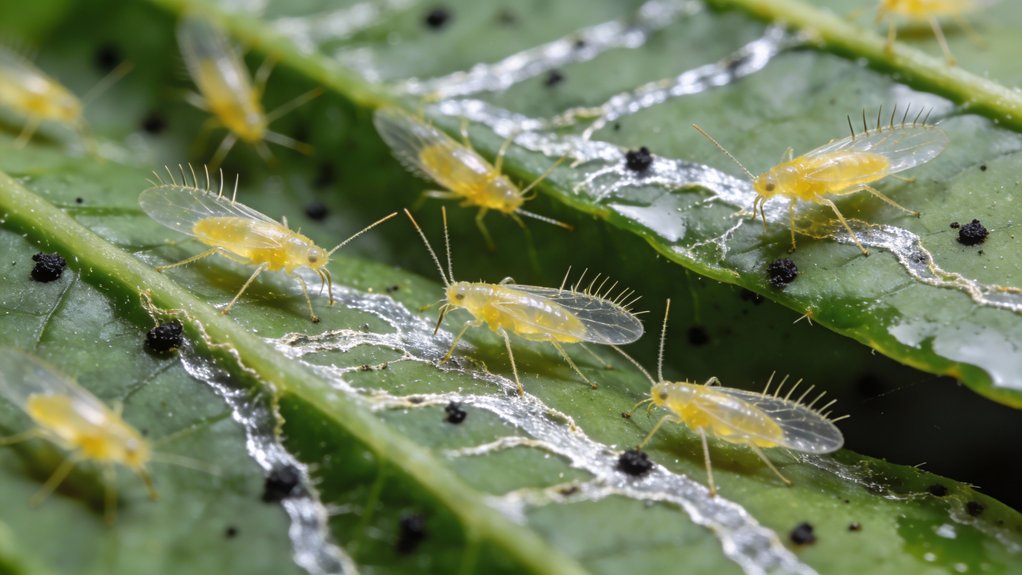
Thrips look like tiny dark slivers on your leaves, barely visible at 1-2mm long, but they’ll leave unmistakable silver streaks and sticky residue across your plant’s foliage.
Quick thrips identification matters because these pests reproduce asexually and multiply fast.
Start treatment by washing your plant thoroughly to remove adults and eggs, then isolate it immediately.
Systemic treatments like Provento work best: they penetrate plant cells and kill thrips when they feed on sap.
Inspect your plants regularly since early detection prevents major damage.
Combining physical removal with systemic bug killers gives you the most effective control and stops future infestations.
Prevent Houseplant Pests: Quarantine New Plants and Manage Humidity
Getting rid of houseplant pests takes time. Prevention is easier, especially if you have several plants close together.
Two steps make the biggest difference:
- Quarantine new plants for at least one week. Keep new arrivals away from the rest of your plants and inspect them every few days. Check leaf undersides, stems, and the soil surface for insects, eggs, webbing, or sticky residue. If you spot a problem, treat it before the plant joins your collection.
- Keep indoor humidity above 40% when possible. Many pests, especially spider mites, spread faster in dry air. A small humidifier, grouping plants, or using a pebble tray can help keep humidity more stable.
Place sticky traps near plants to monitor flying pests, and do quick inspections during watering.
Early detection prevents a minor problem from turning into an outbreak.