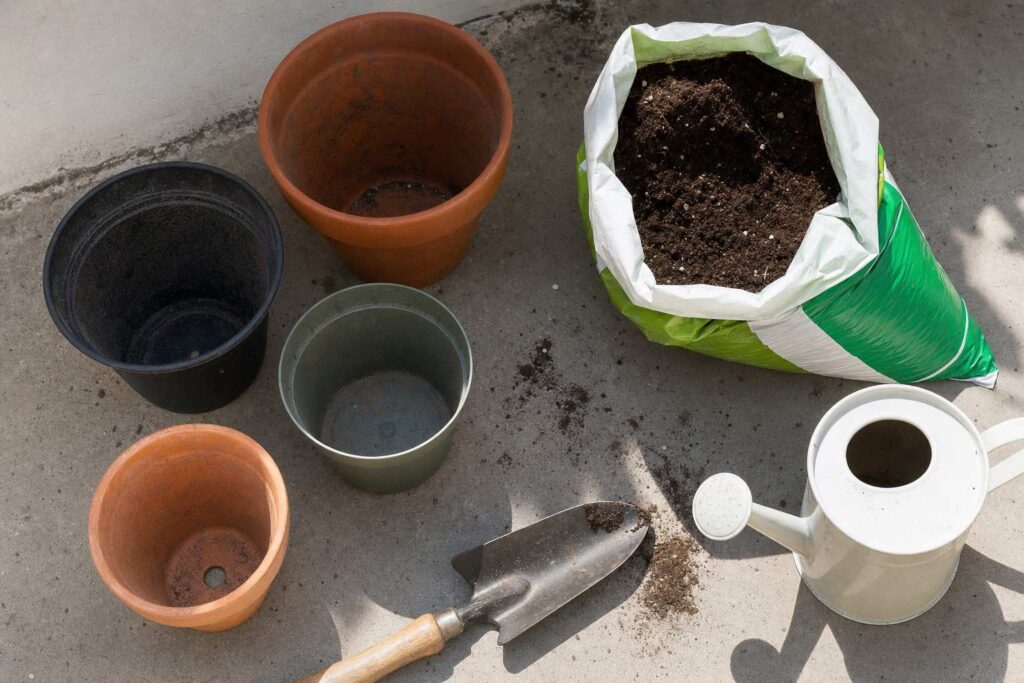
The terracotta pot on your apartment balcony isn’t just decoration anymore. Container gardening has evolved from a niche hobby into a multi-billion dollar segment of the broader gardening market, with participation rates jumping dramatically in recent years.
If you’re considering starting your first container garden, understanding what the data reveals can save you money, prevent common mistakes, and set realistic expectations about what’s actually achievable in a pot.
The Container Gardening Boom: Who’s Growing and Why
Container gardening is especially popular with younger and urban gardeners, though people of every age grow in pots.
Gardening participation rose sharply in the early 2020s, and container growing, which needs no yard, took a large share of that growth as more renters and apartment dwellers started growing their own food.
The demographics tell an interesting story. Millennials and Gen Z have led much of the recent growth in gardening spending, and urban dwellers take to container gardens at high rates.
Container gardening is not limited to any age group, but its no-yard format fits younger renters and city dwellers especially well.
These aren’t wealthy hobbyists with expansive yards. Many are renters on balconies, apartment dwellers on fire escapes, and suburbanites maximizing patios and decks.
Why people start container gardens:
- Many want fresh, high-quality produce they can trust
- A large share aim to lower grocery bills
- Some cite concerns about food prices and supply chain issues
- Many seek mental health benefits and outdoor activity
The National Gardening Survey has counted on the order of 70 million gardening households in the United States, with food gardening among the most common types.
Container growing ranks among the top approaches alongside raised beds and in-ground plots, and it is the natural choice for people short on space.
Why this matters to you: You’re not alone in starting small. The surge in container gardening means better product availability, more beginner resources, and active online communities for support.
What Container Gardens Actually Cost
The average food gardener spends several hundred dollars per season on their garden, though this varies wildly depending on approach.
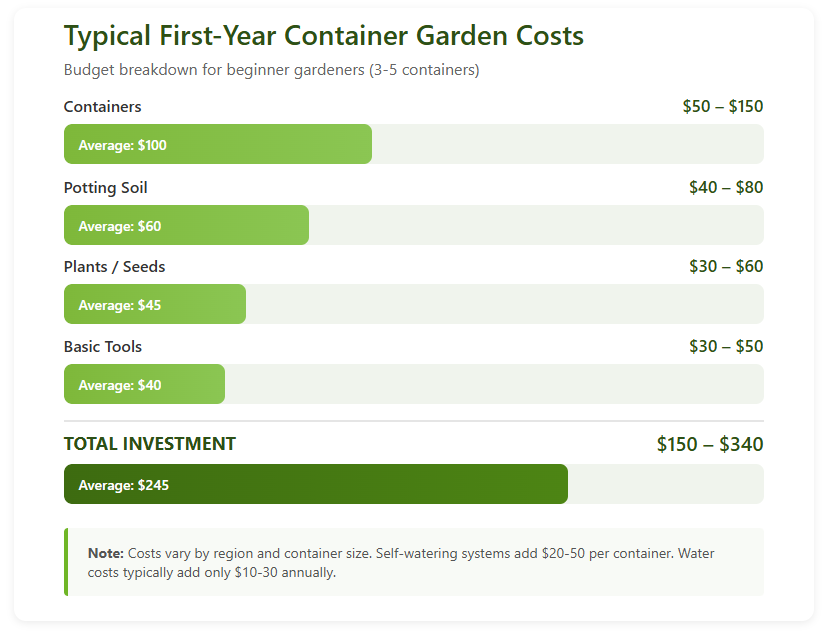
For container-specific setups, beginners can realistically start for $100-300 if they’re strategic, or spend $500-1000 for a more comprehensive first-year setup.
Typical First-Year Budget Breakdown:
- Containers: $5-50 each (plan on 3-5 containers to start)
- Potting mix: $8-15 per cubic foot (a 14-inch pot needs ~1.5 cubic feet)
- Plants or seeds: Seeds cost $2-5 per packet; starter plants cost $3-8 each
- Basic tools: Trowel, watering can, gloves add $30-50 for budget options
- Water costs: Typically only $10-30 annually added to municipal bills
Total estimated first-year investment: $150-300
Here’s what matters: most experts recommend starting with pots at least 12 inches wide and deep. Anything smaller dries out too quickly and stresses plants, leading to failure that has nothing to do with your gardening skills.
- The National Gardening Association’s often-quoted estimate, around 300 pounds of produce worth roughly $600 from about $70 of inputs, comes from a full in-ground vegetable plot, not a few pots. Container yields are smaller, so treat that figure as the ceiling of what home growing can return, not a container target.
- Individual results for container gardens vary considerably, but documented case studies show savings ranging from modest herb harvests worth $50-100 to more ambitious setups producing over $1,000 in produce value.
The takeaway on cost: Don’t expect immediate grocery bill savings. Your first year is about learning, not optimizing yields. Most gardens take 2-3 seasons to reach maximum productivity as you develop skills and efficient systems.
The Success Rate Reality: Common Beginner Pitfalls
Container gardening sounds simple, but data on common mistakes reveals why some beginners struggle while others thrive. University extension programs and experienced gardeners have identified consistent patterns in what goes wrong.
What Kills Container Plants Fastest:
- Containers too small: Small pots dry out fast, overheat in sun, and restrict root growth. Plants in undersized containers can require watering twice daily during hot weather: a schedule most beginners can’t maintain.
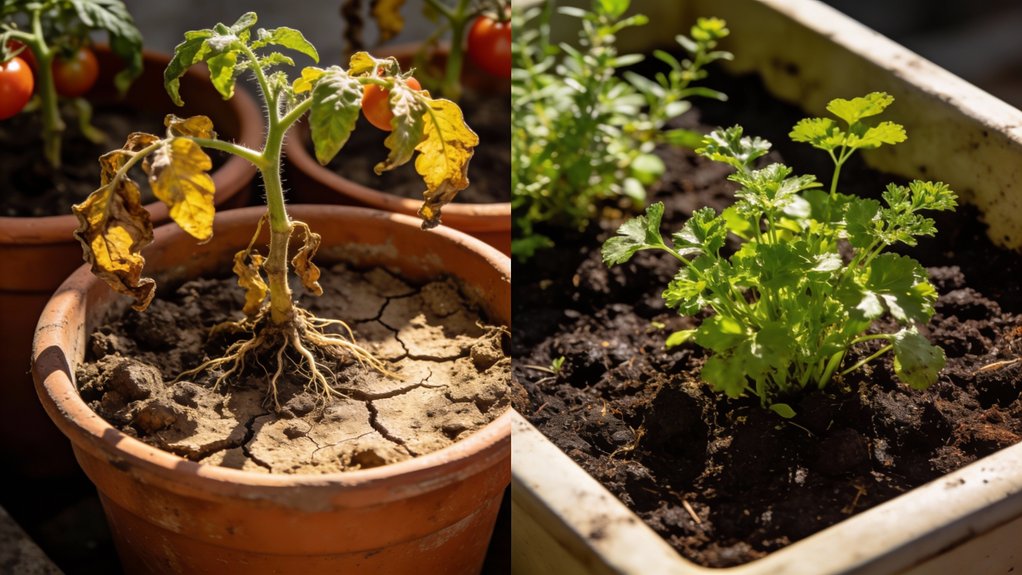
- Wrong soil choice: Regular garden soil compacts in containers, suffocating roots. Using proper potting mix matters more than most beginners realize.
- Inconsistent watering: Unlike ground gardens where roots can search for moisture, container plants depend entirely on you. Missing two days during summer heat can mean dead plants.
- Poor plant selection, Starting with tomatoes seems logical (they’re extremely popular among vegetable gardeners), but they’re actually difficult for beginners, requiring large containers, consistent care, and patience for fruit.
- Mismatched light needs, Pairing sun-loving plants with shade-tolerant ones in the same container means at least half won’t thrive. Reading plant tags carefully prevents this entirely avoidable mistake.
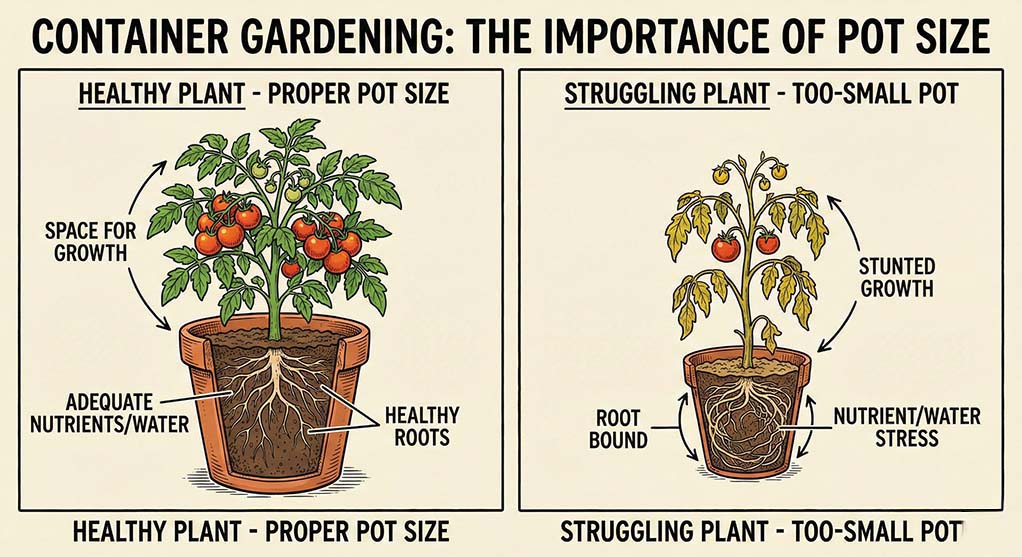
This explains why self-watering containers and drip irrigation systems have become increasingly popular, they remove the most challenging variable from the equation.
What to do about it: Most beginner failures aren’t about lacking a “green thumb.” They’re about setup mistakes that doom plants from the start. Invest in adequate containers and quality potting mix, then choose plants appropriate for your actual conditions.
Time Investment: The Hidden Cost
Container gardening takes less time than in-ground gardens but more than most beginners expect.
Industry surveys suggest the average gardener spends on the order of a few dozen hours per year on gardening overall, and small container setups sit at the lower end.
Realistic Time Expectations:
- Daily during growing season: 15-30 minutes for watering and checking plants
- Monthly maintenance: 2-4 hours for fertilizing, pruning, and addressing problems
- First-year setup: 10-20 hours for initial container selection, soil preparation, and planting
- Subsequent years: Time investment drops significantly as you reuse containers and develop routines
The time commitment becomes more manageable with systems. Drip irrigation can reduce daily watering from 20 minutes to 5 minutes of system checks.
Grouping containers by water needs means less individualized attention. These efficiency gains explain why experienced container gardeners often expand their setups: the per-plant time investment decreases with scale.
On your time: Budget 30 minutes daily during peak season. If that feels like too much, start with just 2-3 containers and self-watering systems to reduce the time pressure while you build habits.
What You Can Realistically Grow
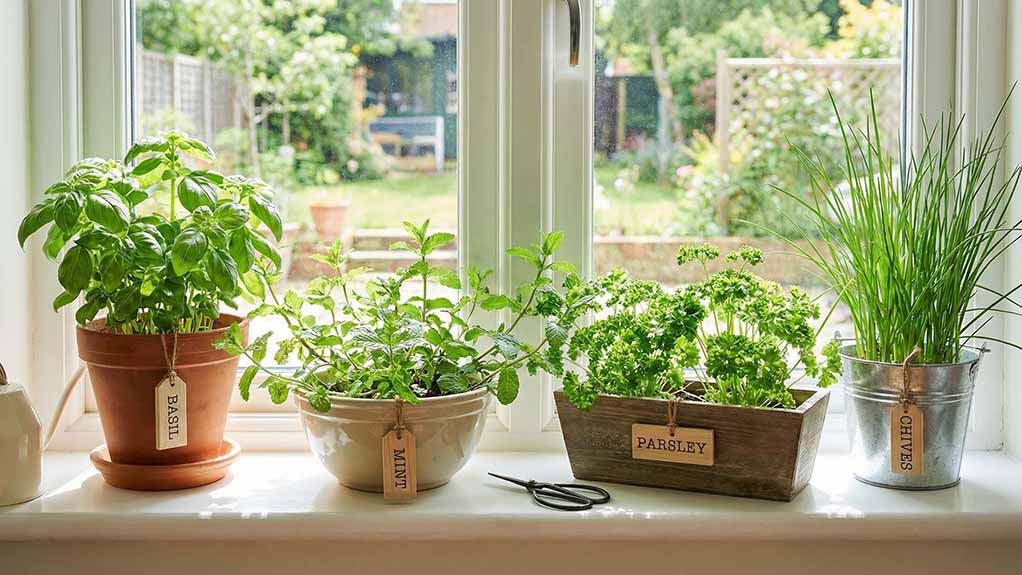
Success rates vary dramatically by plant type. Here’s what the data and expert experience reveal about which plants work best for beginners.
Top Beginner-Friendly Container Plants:
Herbs (Highest Success Rate):
- Basil, mint, parsley, and chives thrive in 8-10 inch pots with minimal fuss
- Provide immediate value for cooking
- Herbs offer the fastest “win” for new gardeners
Salad Greens & Lettuces:
- Succeed in shallow containers (6-8 inches deep)
- Produce harvests within 30-45 days
- Can grow multiple crops per season
Easy Vegetables (Once You Have Some Experience):
- Cherry tomatoes (in large containers, 5+ gallons)
- Bush beans and snap peas
- Peppers (determinate varieties)
- Radishes (quick results in 6-8 inch depth)
- Carrots (need 12-14 inch depth)
Low-Maintenance Flowers:
- Improve pollination for vegetables
- Require less precise care than food crops
- Options like marigolds, petunias, and geraniums tolerate beginner mistakes better
Research on container plant performance consistently shows that matching container depth to root requirements is critical. Shallow-rooted plants in deep containers waste soil and money. Deep-rooted plants in shallow containers fail to thrive.
For your first season: Start with one herb, one fast-growing green, and one flower. Resist the temptation to plant ten different vegetables your first season. Success with three plants teaches you more than failure with ten.
Environmental Impact: The Sustainability Factor
Container gardening offers environmental benefits alongside some considerations worth understanding.
Environmental Benefits:
- Reduces food transportation carbon footprint by growing produce locally
- Urban container gardens help combat heat island effects, plants and soil cool surroundings through evapotranspiration
- Even small collections of containers on balconies contribute measurably to neighborhood air quality
- Supports pollinators when you include flowering plants
Water Considerations:
Water usage in containers deserves careful thought. Containers can be more water-efficient than ground gardens when properly managed (water goes only to plant roots, not surrounding areas), but they dry out faster and need more frequent watering.
Self-watering containers can reduce water waste significantly compared to traditional pots, though how much depends on climate and plant type.
Many urban gardeners employ sustainable practices like:
- rainwater collection,
- composting kitchen scraps for container soil amendments,
- and using recycled materials for planters.
These approaches reduce environmental impact while lowering costs.
Sustainability Trade-offs:
Not all container gardening is environmentally neutral:
- Common potting mixes often contain peat moss, which is harvested from vital carbon-storing ecosystems.
- Plastic containers, while durable and affordable, have their own environmental footprint.
- Frequent use of municipal water (which requires treatment and transport) adds energy consumption.
The market is responding: alternatives made from bio-composites and recycled materials are growing rapidly. Ceramic containers retain moisture better than terracotta (which is porous and leaches water). More gardeners are choosing sustainable options when available.
At your scale: At small scale, the environmental benefits of growing local food and connecting with nature likely outweigh the modest resource use. As you gain experience, you can incorporate more sustainable practices like rainwater collection and peat-free potting mixes.
Market Trends That Matter to Beginners
The container gardening market has experienced consistent growth, with market research firms projecting continued expansion through the 2030s. This growth means more product options, better technologies, and competitive pricing for beginners.
Current Market Developments:
Smart containers with moisture sensors, automated watering, and app connectivity are expanding rapidly, though they remain a premium segment.
More relevant for beginners: simplified versions are becoming affordable. Basic moisture meters now cost under $10, making it easier to know when plants actually need water rather than guessing.
The rise in food gardening specifically responds to grocery inflation and supply concerns:
- Surveys consistently find that food prices and grocery costs are a common reason people start growing their own food.
- Many gardeners say they plan to grow more than they did in previous years.
This trend suggests container gardening is shifting from hobby to practical food security strategy for many households.
Product Innovation Helping Beginners:
- Better container designs with improved drainage
- Self-watering systems at lower price points
- Potting mixes specifically formulated for containers
- Compact vegetable varieties bred for container growing
For a beginner today: The beginner experience in 2025 is significantly better than five years ago. Take advantage of improved products, but don’t feel pressured to buy expensive “smart” systems. Basic containers and consistent care still produce the best results.
Regional Differences Worth Noting
Growing conditions vary significantly by region, and container gardening looks different depending on where you live.
Climate Considerations:
Container gardening in hot, arid climates like Arizona or Southern California requires different strategies than humid regions like Florida or the Pacific Northwest:
- Water needs can double or triple in desert conditions, making self-watering systems nearly essential.
- Hot climates also require shade cloth during peak summer to prevent leaf scorch.
Northern gardeners have shorter growing seasons (limiting harvest windows) but fewer pest pressures. Southern gardeners can grow year-round in containers but face more aggressive pests and diseases. Understanding your USDA Plant Hardiness Zone significantly impacts plant selection and success rates.
Urban Microclimate Effects:
Urban heat islands mean city container gardens on concrete surfaces experience temperatures 5-10 degrees higher than suburban gardens:
- This affects watering frequency (sometimes twice daily in summer) and plant selection.
- Heat-tolerant varieties become essential in these microclimates.
Balconies and rooftops face wind exposure that accelerates soil drying. Higher floors experience stronger winds. These factors require larger containers (harder to blow over), heavier potting mixes, and wind-tolerant plant varieties.
Quick Regional Tips:
- Hot/dry climates: Self-watering containers + shade cloth essential
- Humid/southern regions: Pest vigilance, year-round growing possible
- Urban/concrete settings: Heat-tolerant plants, larger pots for stability
- Always check: Your USDA Zone + local cooperative extension office
For your climate: Search for “[your city] container gardening” and “[your state] extension office container garden” to find advice specific to your climate. What works in Seattle fails in Phoenix, and vice versa.
What the Data Means for Your First Garden
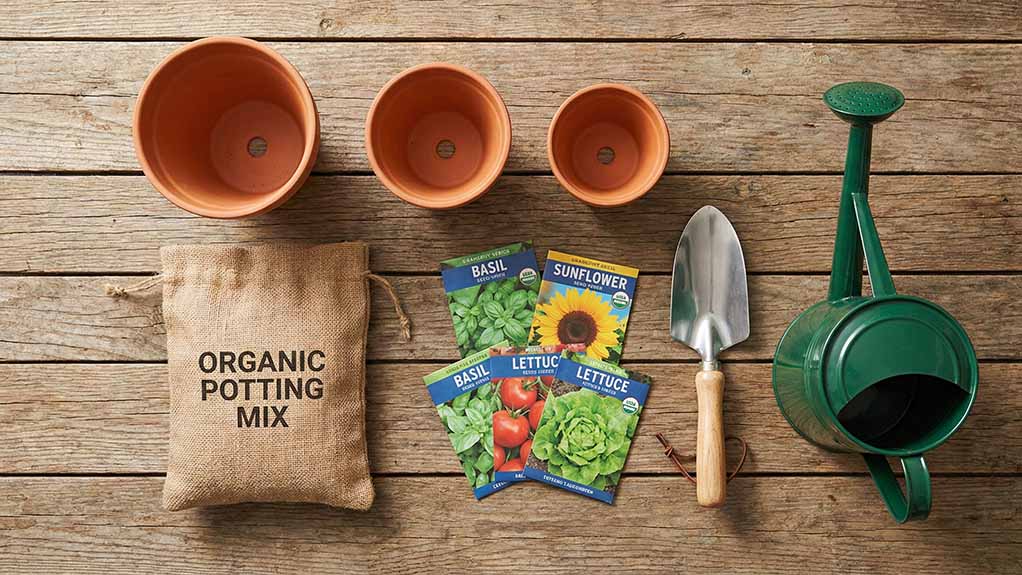
The statistics and research give a clear indication: container gardening succeeds when beginners start small, choose appropriate plants, invest in adequate containers and quality soil, and establish consistent watering routines.
Your First-Season Checklist:
Start Small:
- Begin with 3-5 containers maximum
- Choose one herb, one easy vegetable, one flower for pollinators
- Budget $150-250 for a quality setup that won’t frustrate you
Avoid These Proven Failures:
- Tiny decorative pots under 10 inches (they’re death traps that dry out twice daily)
- Regular garden soil (it compacts and suffocates roots)
- Starting with tomatoes despite their popularity (save these for year two)
- Planting ten different vegetables your first year (learn three well instead)
Invest in These Essentials:
- Containers at least 12″ wide and deep with drainage holes
- Quality potting mix (not garden soil)
- A moisture meter or self-watering containers
- Plants suited to your actual light conditions
Accept that you’ll make mistakes. Every experienced gardener killed plants as a beginner.
The huge increase in container gardening households over recent years means you’re joining millions of others learning simultaneously. Online communities, local garden centers, and cooperative extension services offer free advice specific to your region.
Setting Realistic Expectations:
Don’t expect your modest balcony garden to replace your grocery budget. Research suggests most container gardens take 2-3 seasons to reach good productivity as you learn what works in your specific conditions.
Your first year is an investment in knowledge, not immediate returns. You’re learning:
- How quickly your containers dry in your specific location
- Which plants tolerate your microclimate
- What your actual time availability realistically supports
- How to diagnose and fix problems early
By season three, you’ll have systems that work efficiently and plant choices matched to your conditions. That’s when productivity and enjoyment both increase significantly.
Looking Forward: Is Container Gardening Worth It?
For the millions of American households gardening in 2025, container growing offers accessibility that traditional gardens can’t match. You don’t need a yard, perfect soil, or extensive knowledge to grow food successfully in pots.
Beyond the Numbers:
- While studies estimate food gardens can produce several hundred dollars worth of produce annually, the value extends beyond monetary savings for most gardeners.
- The mental health benefits, time outdoors, connection to food sources, and satisfaction of growing something successfully matter as much as grocery savings.
Container gardening also provides tangible skills: understanding plant needs, diagnosing problems, developing daily routines, and learning patience. These competencies transfer to other areas of life and can expand into larger garden projects if your situation changes.
The Bottom Line:
Market growth indicates container gardening isn’t a passing trend but an established practice that’s becoming easier and more accessible. Product improvements, better information availability, and growing community support mean beginners have advantages earlier generations lacked.
The question isn’t whether container gardening works, the data and millions of successful gardeners confirm it does when done properly.
The question is whether you’re willing to invest the time learning, accept first-year mistakes as part of the process, and commit to consistent plant care.
Start with realistic expectations informed by actual data rather than aspirational Instagram photos. Your modest balcony garden won’t replace your grocery budget, but it can provide fresh herbs, some vegetables, and the satisfaction of growing something yourself.
For most people who try it, that’s worth more than statistics can measure.
Key Data Sources
This article synthesizes information from multiple authoritative sources:
- National Gardening Survey 2023/2024 (gardenresearch.com) – Participation rates, demographics, spending patterns, and year-over-year growth trends
- Garden industry market research (Petrus Landscape, Technavio, Coherent Market Insights) – Market size projections, growth rates (CAGR), product innovation trends, and smart container adoption
- University Extension programs (UC Master Gardeners, state cooperative extension offices) – Beginner mistakes, plant recommendations, regional growing guidance, and troubleshooting
- Academic research on urban agriculture: Environmental impacts, water usage studies, sustainability factors, and urban heat island effects
- American Time Use Survey & gardening industry reports: Time investment data and seasonal labor patterns
- Axiom Gardening Outlook Study & Garden Media Group: Consumer trends, motivations, and future planning data
Specific statistics have been rounded to “roughly,” “about,” and “approximately” where exact figures come from varied sources or time periods. For precise, current data specific to your region, consult your state’s cooperative extension office or local Master Gardeners program.